
 Pevita Pearce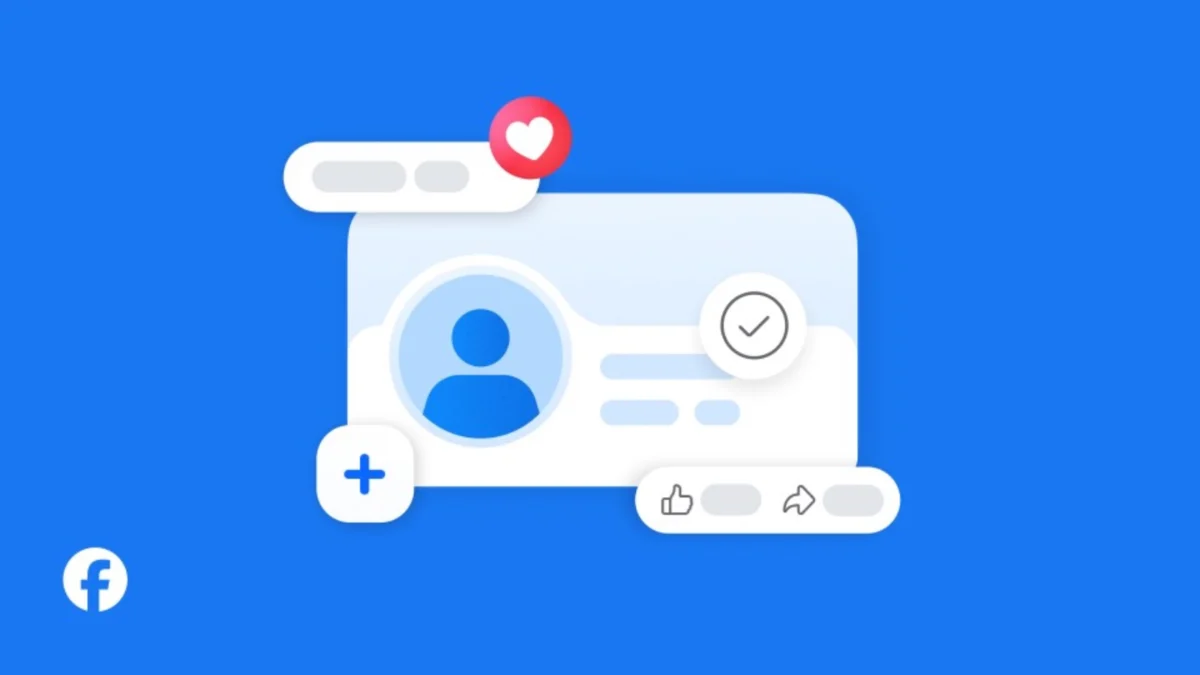
In a significant shift to its platform integrity strategy, Meta has officially begun the rollout of "Facebook Verified," a new verification system designed to allow users to authenticate their identities without the requirement of a monthly subscription fee. Announced on July 24, this feature marks a departure from the company’s recent trend toward paid premium services, focusing instead on establishing a baseline of human authenticity in an era increasingly defined by generative artificial intelligence and sophisticated bot networks. The initiative utilizes a short selfie video to confirm that the person behind an account matches their profile documentation, providing a visual indicator of legitimacy across various high-interaction sections of the social network.
As digital environments grapple with the proliferation of AI-generated content, deepfakes, and automated accounts, the introduction of a free verification tier represents Meta’s attempt to fortify the "human" element of its ecosystem. The feature is being launched in a phased approach, beginning in select regional markets before a planned global expansion. While it shares a similar name with the existing "Meta Verified" subscription service, the company has clarified that this new badge is strictly an identity confirmation tool rather than a status symbol or a gateway to premium customer support and reach-enhancement features.
The Mechanics of Selfie-Based Authentication
The core of the Facebook Verified system lies in its biometric verification process. To qualify for the badge, eligible users are prompted to record a brief selfie video using their mobile device’s camera. Meta’s internal systems then analyze this video, comparing the user’s facial features and movements against their existing profile photographs to ensure a match. According to official documentation from Meta, this process is automated and typically concludes within a few minutes, allowing for near-instantaneous verification if the data points align.
This technical approach is designed to be more accessible than traditional verification methods, which often required the submission of government-issued identification—a process that could take days or weeks for manual review. By leveraging video-based AI to confirm the "liveness" of the user, Facebook aims to prevent bad actors from using static photos or stolen imagery to verify fraudulent accounts. Once the system approves the video, a specific verification badge is appended to the user’s profile, signaling to the community that the account has been vetted as belonging to a real person.
Eligibility Requirements and Strategic Constraints
The rollout of Facebook Verified is governed by a strict set of eligibility criteria. Currently, the feature is limited to individual users who are at least 18 years of age. Furthermore, the account in question must be in "good standing," meaning it has no recent history of violating the platform’s Community Standards. Accounts that have been flagged for deceptive practices, spam, or harassment are generally excluded from the initial application process.
Notably, the free verification badge is not yet available for Facebook Pages or accounts operating in Professional Mode (ProMode). This suggests that Meta is prioritizing the verification of individual peer-to-peer interactions before extending the service to businesses, public figures, or creators who may already be utilizing the paid Meta Verified subscription. By focusing on the average user first, Meta is targeting the segments of the platform where interpersonal trust is most critical, such as private groups and direct commerce.
Integration Across the Facebook Ecosystem
The visibility of the new badge is strategically concentrated in areas of the platform where identity transparency is most vital for safety and commerce. Upon approval, the Facebook Verified badge will appear in the following sections:
- Facebook Marketplace: In the peer-to-peer economy, trust is the primary currency. Verified badges allow buyers and sellers to interact with a higher degree of confidence, knowing that the person on the other side of a transaction has undergone a liveness check.
- Facebook Dating: Verification serves as a safety layer in the dating space, potentially reducing the prevalence of "catfishing" and romance scams by ensuring that profiles represent real individuals.
- Facebook Groups: Admins and members can use the badge to vet new participants, helping to maintain the integrity of private communities and reducing the influence of bot-driven misinformation campaigns.
- User Profiles: The badge serves as a permanent fixture on the main profile page, acting as a digital "seal of authenticity" for any visitor.
While these features are currently live in the initial launch markets, Meta has confirmed that support for the badge within the main News Feed—appearing next to comments and posts—is a planned update for the near future.
Historical Context: The Evolution of Social Media Verification
To understand the significance of Facebook Verified, one must look at the turbulent history of social media verification over the past decade. Historically, the "blue checkmark" was a tool reserved for celebrities, journalists, and notable public figures, serving as a defense against impersonation. However, the landscape shifted dramatically in late 2022 and early 2023 when platforms like X (formerly Twitter) transitioned to a "pay-for-verification" model.

Meta followed suit in early 2023 with the launch of Meta Verified, a subscription service priced at approximately $11.99 to $14.99 per month. That service was marketed as a bundle of features including proactive account protection, direct access to customer support, and increased visibility in search and comments. However, the introduction of a paid model led to concerns that "authenticity" was becoming a luxury good, leaving non-paying users vulnerable to impersonation.
The launch of the free Facebook Verified badge appears to be a corrective measure. It acknowledges that while some users are willing to pay for "premium" features, every user deserves a basic mechanism to prove they are human. This move also aligns with Meta’s recent introduction of "Facebook Plus," a $3.99 monthly subscription that offers aesthetic and functional perks like anonymous story viewing. By bifurcating "identity" (free) from "perks" (paid), Meta is attempting to create a multi-tiered ecosystem that satisfies both its revenue goals and its platform safety obligations.
Addressing the Threat of Generative AI and Bot Networks
The timing of this rollout is not coincidental. The 2024-2026 period has seen an unprecedented surge in the capabilities of generative AI. Large language models (LLMs) can now generate human-like text at scale, while image and video generators can create realistic avatars that are indistinguishable from real people to the untrained eye. This technological leap has empowered "bot farms" to conduct more sophisticated influence operations, financial scams, and misinformation campaigns.
In a statement accompanying the launch, Meta emphasized the necessity of a "clear signal" to distinguish humans from machines. "As AI makes it easier to do more on Facebook, a clear signal that distinguishes real people becomes essential," the company stated. This sentiment echoes broader industry concerns regarding the "Dead Internet Theory"—the fringe but growing belief that a majority of internet traffic and content is now generated by AI rather than humans. By providing a free verification tool, Meta is effectively crowdsourcing the defense of its platform’s social fabric.
Privacy Considerations and Data Handling
The use of selfie videos for verification inevitably raises questions regarding biometric privacy and data security. Meta has been proactive in addressing these concerns, stating that the selfie videos are used solely for the purpose of identity verification and are not shared publicly on the user’s profile. The company maintains that the biometric data derived from these videos is handled in accordance with its established privacy policies, which include encryption and restricted access.
However, privacy advocates have historically been wary of social media giants collecting biometric data. Analysts suggest that the success of Facebook Verified will depend largely on user trust. If users perceive the video requirement as a privacy risk, adoption may stall. Conversely, if the badge becomes a prerequisite for successful interactions on Marketplace or Dating, users may feel compelled to provide the data despite reservations.
Broader Industry Implications and Future Outlook
Meta’s decision to offer free verification may exert pressure on other social media platforms to follow suit. LinkedIn recently introduced a similar verification system through a partnership with CLEAR, allowing users to verify their identities for free. As the industry moves toward a "human-centric" web, the era of anonymous, unverified social media participation may be reaching a turning point.
From a business perspective, this move could actually bolster Meta’s commerce and advertising divisions. A platform perceived as "real" and "safe" is more attractive to advertisers and more conducive to high-value transactions on Marketplace. By reducing the friction of fraud, Meta indirectly protects its bottom line, even if the verification service itself generates no direct revenue.
As the phased rollout continues, the global community will be watching to see how the badge affects platform dynamics. Will it successfully curb the tide of AI-driven scams, or will malicious actors find ways to spoof the selfie-video system? For now, Facebook Verified represents a bold experiment in digital identity—a necessary evolution for a platform trying to remain grounded in reality in an increasingly virtual world. Meta’s message is clear: while the perks of social media might come at a price, the right to be recognized as a real person should remain free.




 Yuyun Lusiyani
 Joko Widodo
 Eva Lovia
 admin
admin
 Lina Irawan