
 Lina Irawan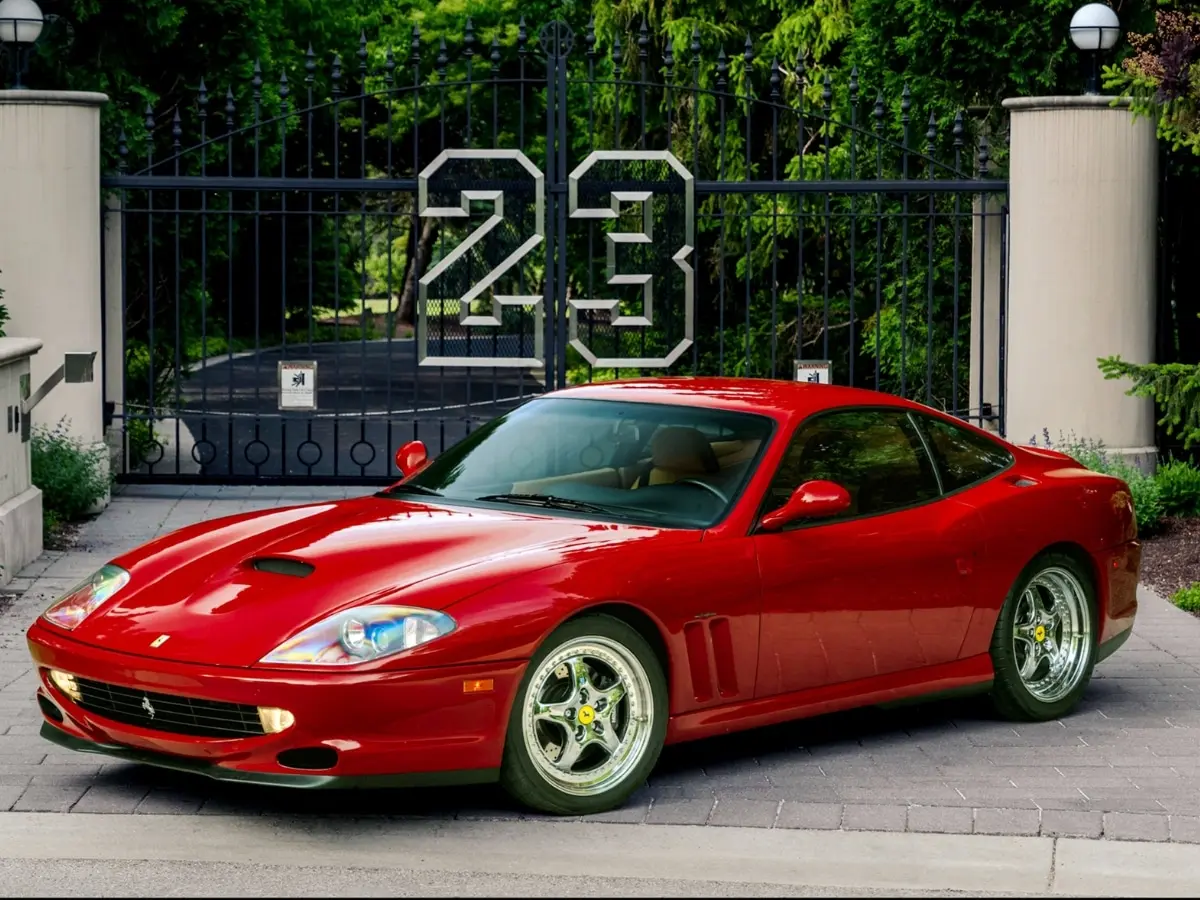
The intersection of sporting excellence, automotive engineering, and cultural history reached a new financial peak this week as the 1997 Ferrari 550 Maranello formerly owned by NBA legend Michael Jordan sold for a staggering $2.7 million. Conducted via the digital auction house JOOPITER, the sale price represents more than double the initial high estimate of $1.3 million, underscoring the enduring "Jordan Effect" on the memorabilia and collector car markets. This specific vehicle, finished in the elegant Rosso Barchetta over a tan leather interior, serves as a rolling testament to the most dominant era of Jordan’s career with the Chicago Bulls and stands as a pivotal piece of design history that influenced one of the most famous sneakers ever produced.
The Significance of the Sale and Auction Performance
The auction, titled "Driven to Greatness," was hosted by JOOPITER, the auction platform founded by Pharrell Williams. While standard Ferrari 550 Maranellos typically trade between $150,000 and $300,000 depending on mileage and condition, the $2.7 million hammer price (approximately $3.9 million AUD) places this specific chassis in a rarified atmosphere. The final price reflects a premium of nearly 1,000% over the market value of a non-celebrity-owned equivalent.
Industry analysts suggest the bidding war was fueled by the car’s impeccable provenance. Unlike many celebrity vehicles that pass through multiple hands or lack concrete documentation, Jordan’s Ferrari was accompanied by the original factory warranty card. This document, dated May 29, 1997, features Jordan’s signature and lists his then-home address in Durham, North Carolina. This level of verification is considered the "gold standard" in the collector car world, providing an unbreakable link to the athlete during his absolute professional prime.
Technical Mastery: The Ferrari 550 Maranello
To understand the value of the vehicle, one must first look at the machine itself. Launched in 1996, the 550 Maranello represented a seismic shift for Ferrari. For over two decades, the Italian marque’s flagship models—such as the Berlinetta Boxer and the Testarossa—had utilized a mid-engine layout. With the 550 Maranello, Ferrari returned to its roots: a front-mounted V12 engine in a two-seat grand tourer, a configuration that had defined legendary predecessors like the 365 GTB/4 Daytona.
The heart of the 550 Maranello is a 5.5-liter naturally aspirated V12 engine producing 485 horsepower and 419 lb-ft of torque. In 1997, these were supercar-shaming figures. The car could accelerate from 0 to 60 mph in just 4.4 seconds and reach a top speed of 199 mph. Perhaps most importantly for enthusiasts, the power is delivered to the rear wheels through a six-speed manual transmission featuring Ferrari’s iconic gated shifter—a mechanical tactile experience that has since vanished from modern supercar production.
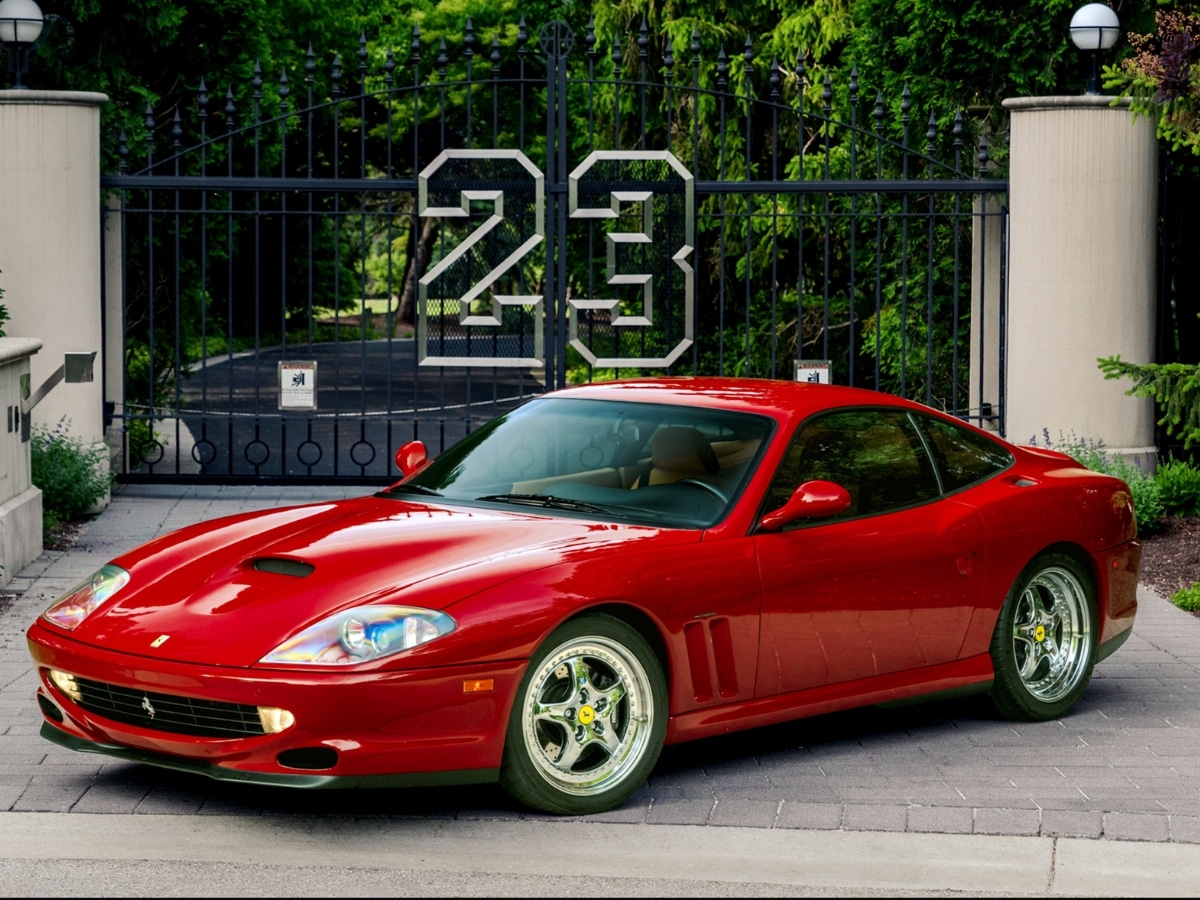
Designed by Pininfarina, the 550 Maranello’s silhouette is characterized by a long hood, a short rear deck, and functional aerodynamic elements, including a discreet rear spoiler and side vents for heat dissipation. Jordan’s choice of Rosso Barchetta—a deeper, more sophisticated burgundy-red compared to the common Rosso Corsa—suggested a preference for understated elegance over flashiness, a theme consistent with his off-court persona during the late 1990s.
A Chronology of Ownership: From the United Center to California
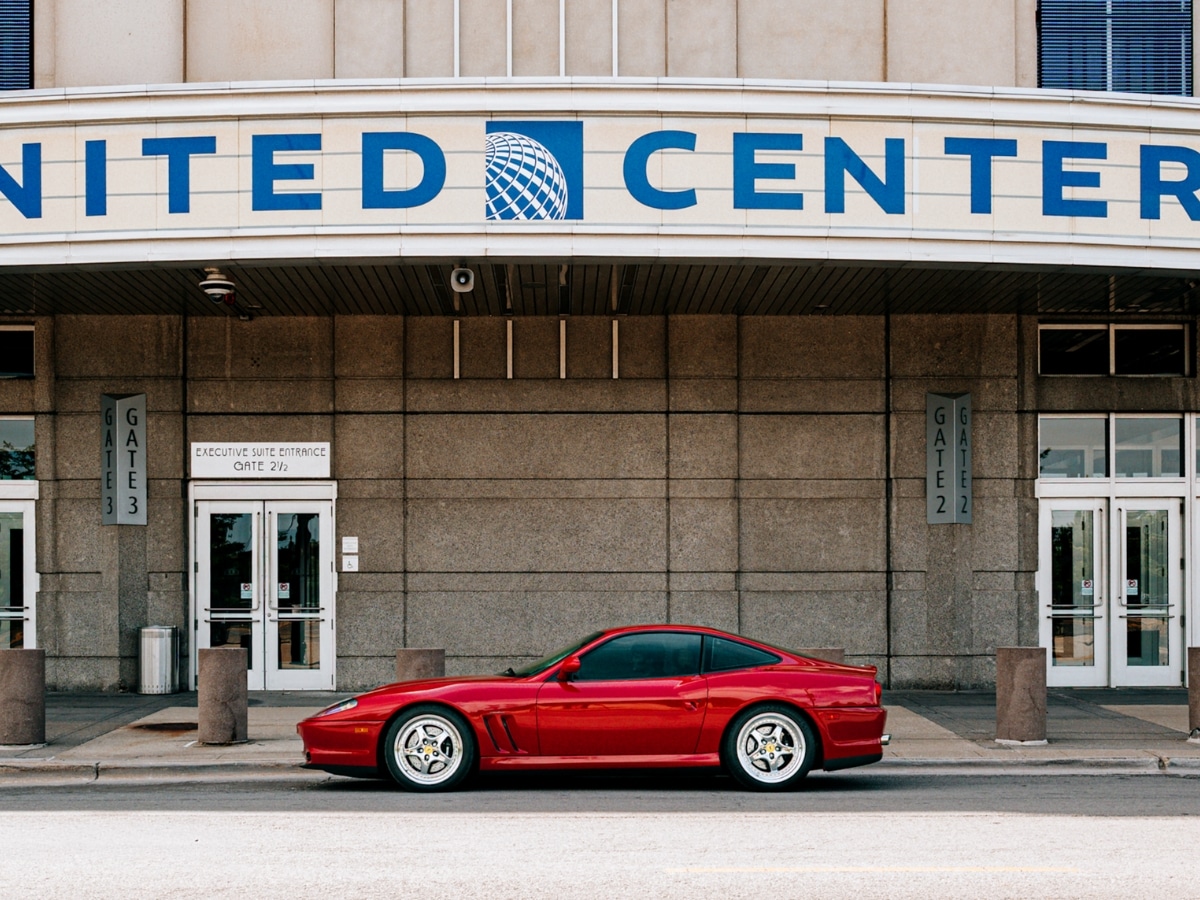
The timeline of this Ferrari is inextricably linked to the climax of the Chicago Bulls dynasty. Michael Jordan took delivery of the vehicle on May 29, 1997. At that moment, he was in the midst of the 1997 NBA Finals against the Utah Jazz. Just weeks after receiving the keys, Jordan was seen driving the Ferrari away from Chicago’s United Center, cigar in mouth and the Larry O’Brien Trophy in tow, after securing his fifth NBA championship.
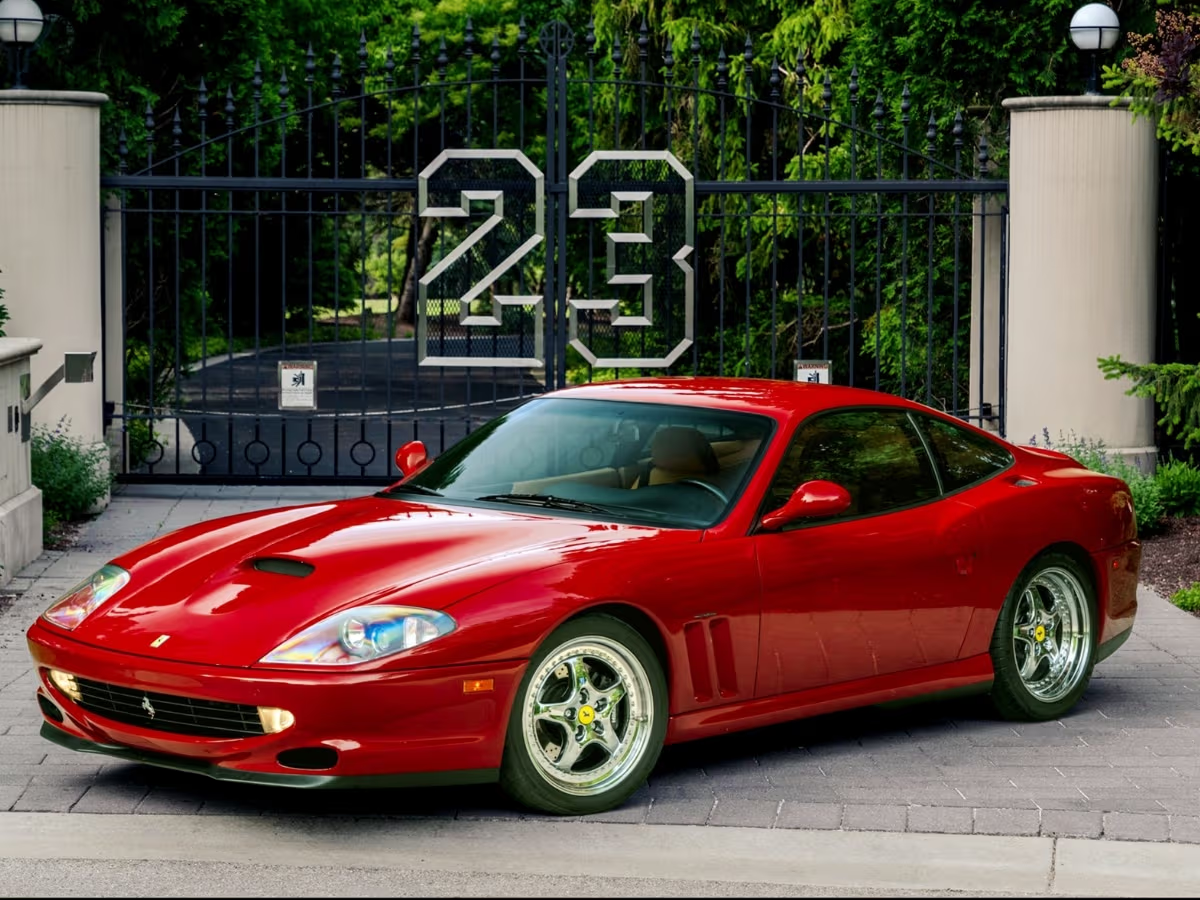
Throughout 1997 and 1998—the legendary "Last Dance" season—the Ferrari became a familiar sight for Bulls fans. Jordan frequently drove the car to practices at the Berto Center and to home games, sporting the Illinois vanity plate "MJ 5." During his ownership, Jordan covered approximately 6,400 miles, a figure that suggests the car was a genuine "driver" rather than a mere garage queen.
In December 2002, as Jordan transitioned into the final chapter of his playing career with the Washington Wizards, he sold the Ferrari through Lake Forest Sportscars in Illinois. Following this sale, the car effectively vanished from the public eye for nearly 24 years. It was maintained in private collections, eventually making its way to a long-term owner in California.
The car’s re-emergence is credited to John Temerian, co-founder of the specialized dealership CURATED. Temerian, known for his ability to track down historically significant "lost" supercars, successfully traced the vehicle and brought it back to Chicago in May 2026 for a commemorative return before the auction process began.
The Ferrari Behind the Air Jordan XIV
While the car’s automotive and athletic pedigree is undeniable, its most unique contribution lies in the world of fashion and footwear. The 1997 Ferrari 550 Maranello served as the primary inspiration for the Air Jordan XIV, the sneaker Jordan wore during his final championship run in 1998.

Tinker Hatfield, the legendary Nike designer behind many of the most iconic Jordans, observed Jordan’s affinity for the 550 Maranello and decided to translate the car’s design language into a shoe. The parallels are striking:
- The Shield Logo: The Jumpman badge on the side of the AJ XIV is encased in a yellow shield, a direct homage to the Ferrari "Cavallino Rampante" (Prancing Horse) emblem.
- The Vents: The sculpted intake vents on the side of the 550 Maranello were mimicked in the breathable mesh and rubberized vents on the sneaker.
- The Heel: The "tires" of the Ferrari inspired the rubberized heel counter of the shoe, which features a tread-like pattern.
- The Interior: The quilted leather found in the Ferrari’s cabin was replicated in the stitching patterns of certain AJ XIV colorways.
This cross-pollination between automotive design and sportswear solidified the 550 Maranello’s place in pop culture, making it a "holy grail" for both car collectors and "sneakerheads."
Market Analysis: The Rising Value of the "Jordan Brand"
The $2.7 million sale price reflects a broader trend in the investment market where items associated with Michael Jordan have become their own asset class. In recent years, we have seen Jordan’s 1998 NBA Finals jersey sell for over $10 million and his game-worn sneakers reach the $2 million mark.
Collectors are increasingly looking for "tangible history"—objects that were present during specific, documented moments of greatness. This Ferrari fits that criteria perfectly. It was not just a car Jordan owned; it was the car he was driving when he was at the zenith of his global influence.
From an investment standpoint, the buyer is betting on the continued appreciation of "Last Dance" era artifacts. As the generation that grew up watching Jordan enters its peak earning years, the demand for items that define that era continues to escalate. Furthermore, the 550 Maranello is currently experiencing a resurgence in the vintage market as one of the last great analog V12 Ferraris, making this a "double-blue-chip" investment.
Official Reactions and Broader Implications
While the buyer of the vehicle remains anonymous, the sale has sent ripples through the automotive community. John Temerian of CURATED noted that the car represents "the ultimate provenance," stating that finding a vehicle with such a clear and documented link to a figure of Jordan’s stature is a once-in-a-career event.
Representatives from JOOPITER highlighted the sale as a landmark moment for the platform, proving that high-end digital auctions can successfully move multi-million dollar automotive assets. The success of this auction is expected to encourage more high-profile owners of historic supercars to bring their vehicles to market via similar boutique auction houses.
Beyond the financial figures, the sale of Michael Jordan’s Ferrari 550 Maranello serves as a reminder of the power of storytelling in the luxury market. While the 550 is a magnificent machine in its own right, its value was ultimately quintupled by the stories of the man who sat in the driver’s seat. As the car heads to its new home, it carries with it the legacy of a championship era, the DNA of a world-famous sneaker, and the signature of the greatest basketball player to ever live. The "MJ 5" plate may no longer be on the car, but its history is now permanently etched into the record books of automotive auctions.


 Yuyun Lusiyani
 Ana Megawati
 Joko Widodo
 Eva Lovia
 Jia Lissa
 Pevita Pearce