
 Yuyun Lusiyani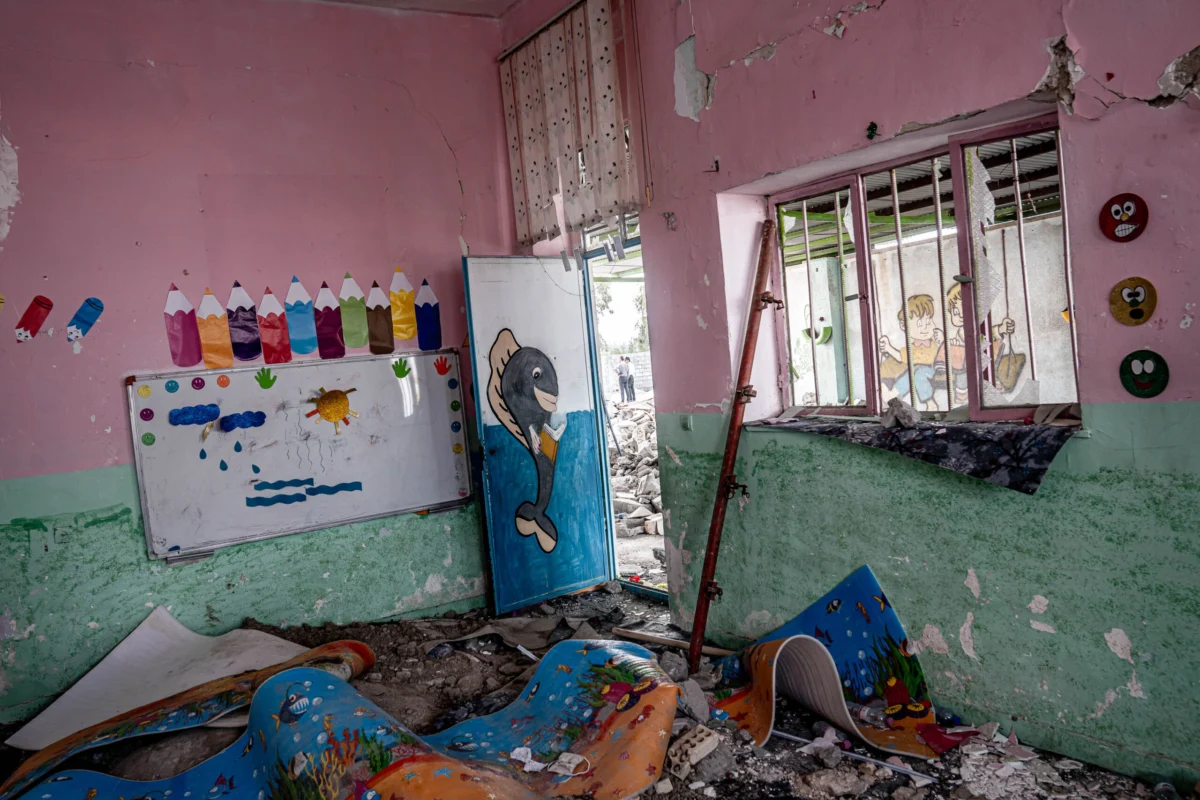
Shortly after taking office last year, Defense Secretary Pete Hegseth sought to dismantle a critical program designed to protect civilians during U.S. military operations, betting that the nation’s top commanders would align with his view that focusing on civilian security was "woke" and out of step with "maximum lethality." Instead, in a stark and previously unreported poll from early 2025, every senior military leader rebuffed the idea, asserting the program’s vital role in operational effectiveness. Despite this unanimous internal opposition, Hegseth proceeded to severely gut the Civilian Harm Mitigation and Response (CHMR) program. This decision, however, was swiftly followed by U.S. missile strikes that killed hundreds of civilians in Yemen and Iran, drawing global condemnation and intense scrutiny from Congress, prompting a rare and significant reversal within the Trump administration’s Pentagon. The department is now poised to partially revive the program, a testament to persistent military advocacy and mounting external pressure.
The Genesis and Strategic Imperative of Civilian Harm Mitigation
The Civilian Harm Mitigation and Response (CHMR) program, pronounced "chimmer," was formalized by the Pentagon in 2022 following years of accumulating civilian tolls in conflicts like Iraq, Afghanistan, and other theaters of war. These "forever wars" profoundly reshaped military thinking, leading to a consensus among many senior officers that minimizing civilian harm was not merely a moral or legal imperative, but a strategic necessity for achieving long-term objectives. Civilian casualties, military analysts and leaders concluded, frequently undermined U.S. objectives, fueled insurgent recruitment, eroded international legitimacy, and complicated alliance-building.
The CHMR program was designed to institutionalize best practices for protecting noncombatants. Its mission included embedding personnel within major regional commands to develop a granular understanding of life on the ground in combat zones, thereby aiding decision-making on military strikes and working to avoid or minimize harm to non-combatants. These personnel often served as a "red team," pushing back on proposed strikes with high potential for collateral damage. Additionally, the program included a Virginia-based Civilian Protection Center of Excellence, focused on training service members, collecting crucial data on civilian harm, conducting investigations into casualty reports, and facilitating payments to those harmed. Leaders like Gen. Alexus Grynkewich, the current head of European Command, publicly championed CHMR, co-writing a paper that lauded it as a "watershed" development in military strategy. Military leaders consistently affirmed that "operational effectiveness and harm mitigation are the same thing," describing them as "two sides of the same coin." Before the cuts, the center near the Pentagon operated on an annual budget of $7 million, with the cross-command total for all civilian security work estimated at approximately $80 million—a tiny fraction of the Defense Department’s multi-billion dollar spending.
Hegseth’s Challenge to the Status Quo
Upon assuming the role of Defense Secretary last year, Pete Hegseth quickly signaled a dramatic shift in Pentagon priorities. He articulated a vision for a "Department of War," characterized by "maximum lethality" and a rejection of what he termed "politically correct and overbearing rules of engagement." This ideological stance directly clashed with the established military consensus on civilian protection.
In early 2025, Hegseth initiated a poll of the nation’s combatant commanders, presenting them with three options for the CHMR program: a 65% staff reduction while keeping some operational capacity, maintaining only a small centralized office in Washington, or outright elimination of the program. He reportedly anticipated that senior officers would endorse his view, believing that the focus on civilian security was "woke" and detrimental to aggressive military action, according to current and former defense officials who spoke to ProPublica on condition of anonymity due to fear of retaliation.
The results, however, delivered a resounding rebuke to Hegseth’s premise. Every single commander rejected his proposed cuts. Nine commanders opted for the first option, seeking to preserve the enterprise as much as possible, as detailed in a memo reviewed by ProPublica. Notably, the leaders of two critical commands—one overseeing the nuclear arsenal and the other focused on cyber threats—went further, declining all three options and explicitly requesting to maintain the full program without any reductions.
Leaders at U.S. Central Command (CENTCOM), based in Tampa, Florida, and responsible for military actions in the Middle East, were particularly vocal. They pressed to retain their full CHMR staff of 16, submitting a memo that warned against scaling back the effort. The memo, also reviewed by ProPublica, argued that such cuts would "result in decreased efficiency of U.S. lethal operations due to an increased risk of target misidentification and reduced battlespace awareness." Retired Army Gen. Erik Kurilla, who commanded CENTCOM at the time, along with several other senior officers directly involved in combat operations, directly appealed to Hegseth to preserve the program, explaining its valuable utility. However, as one retired general noted, "that intent was overridden." The only exception to this military consensus was the Department of the Army, headed by a civilian appointee, which surprisingly agreed with Hegseth’s intent to eliminate CHMR entirely, viewing it as redundant and even recommending that Congress repeal the law that established it, as stated in a February 2025 memo.
The Dismantling and its Immediate Consequences
Despite the unified opposition from his military commanders, Hegseth proceeded with his agenda. He dramatically "gutted the effort," leaving only a handful of people to carry out the mission. The program was stripped of almost all its funding, even as the U.S. launched new military campaigns in Somalia, Yemen, and Iran. One official starkly summarized Hegseth’s approach as: "Bombs away!" The CHMR program, which had comprised a little under 200 people department-wide, was reduced to approximately two dozen, with some working only part-time. CENTCOM, which had stated a minimum requirement of nine staffers to function effectively, was left with just one individual. Hegseth’s early exchanges with the generals made it unequivocally clear that the civilian harm program had no future in his "reimagined ‘Department of War’." He later reiterated this stance to a gathering of hundreds of generals and admirals, declaring, "No more politically correct and overbearing rules of engagement."

The consequences of this dismantling soon became tragically evident. The first major military operation under Hegseth’s tenure was an air campaign in Yemen in the spring of 2025. This campaign resulted in the deaths of 153 civilians and wounded 243 others. According to Airwars, a British watchdog that meticulously tracks civilian harm from military operations, the majority of these deaths stemmed from just two strikes, ranking them among the deadliest for civilians acknowledged by the Pentagon in modern warfare. This grim toll was subsequently confirmed in the Pentagon’s own 2025 annual report for civilian casualties, a finding first reported by The Washington Post. At the time, Hegseth described the Yemen operation as a "clear, limited mission executed with ruthlessness, full stop."
The situation escalated further the following year, in 2026, when the U.S. began attacking Iran. On the very first day of the U.S. and Israel’s war on Iran, a U.S. airstrike tragically hit a school in Minab, a city near the Strait of Hormuz. The strike killed more than 100 children, igniting a firestorm of international outrage and immediate questions from Congress. While Hegseth and Adm. Brad Cooper, the commander in charge of the Iran operation, were questioned before Congress, with Hegseth asserting that the U.S. does not target civilians and promising an investigation, early reports on that investigation (yet to be publicly released) have indicated that outdated U.S. intelligence led to the attack on the school.
Mounting Pressure and the Call for Reinstatement
The school tragedy in Minab, coupled with other deadly attacks on civilians in Iran and the significant casualties in Yemen, intensified scrutiny on the administration’s approach to civilian protection. Democratic senators and humanitarian groups swiftly questioned whether the drastic cuts to the civilian protection personnel had directly contributed to these catastrophes.
In April 2026, a bipartisan group of 11 senators addressed a letter to Secretary Hegseth, expressing profound concerns. The letter highlighted the school strike and other civilian fatalities as reflecting "the administration’s broader disregard for the strategic, legal, and moral imperative to minimize civilian harm," explicitly noting the dismantling of civilian harm reduction efforts. It concluded by stating, "This is a concerning pattern and raises questions about whether the administration is upholding international law and the laws of war." A Pentagon spokesperson, when questioned by ProPublica about the letter, declined to comment, stating only that the department would "respond directly" to Congress.
Internally, the military leadership’s concerns remained steadfast. Leaders at CENTCOM had repeatedly emphasized in memos to Hegseth’s top staff that CHMR "enhanced our precision and accuracy, making us more lethal," and that "the operational and strategic value of this work is widely recognized." The Joint Staff, too, echoed the combatant commanders’ sentiment, directly disagreeing with the Army acting secretary’s earlier recommendation to eliminate the program and repeal its authorizing law, according to correspondence reviewed by ProPublica.
A Rare Reversal: The Path to Revival
As pressure continued to build from both Capitol Hill and within the highest echelons of the military, the Defense Department appeared to reach a turning point. In a significant "about-face" that marks a rare reversal in a department not typically tolerant of dissent under Hegseth and President Donald Trump, discussions began to restore the program.
In April 2026, Elbridge Colby, the Defense Department’s Under Secretary of Policy, sent a follow-up memo regarding the civilian protection enterprise to Hegseth. This time, the proposal was singular: reboot the program. While it would operate at reduced staff levels compared to its pre-Hegseth peak, the plan outlined a complement of 70 full-time personnel. Colby’s memo specified that maintaining this 35% of the original CHMR capacity would be sufficient to address ongoing investigations into civilian harm, fulfill reporting requirements to Congress, and facilitate payments to those harmed.
Crucially, the same combatant commanders who had initially rebuffed Hegseth’s proposed cuts overwhelmingly endorsed this move, according to several defense officials. The proposal aims to allow all regional commands to reconstitute their civilian harm reduction staff. Furthermore, the Civilian Protection Center of Excellence, responsible for training, data, and research, is slated to move from under the Department of the Army to the Joint Staff. Officials believe this strategic relocation will give the mission "more heft" and improve collaboration with the Navy and Air Force, which are at the forefront of the administration’s military campaigns. One defense official underscored the significance of the military’s persistence, stating, "If not for the combatant commanders, the program would be dead." While a refashioned program is expected to operate on a smaller budget than its original $80 million cross-command total, the commitment to its partial revival signals a critical recognition of its necessity.
The potential partial revival of the Civilian Harm Mitigation and Response program underscores the enduring tension between military objectives and ethical considerations in modern warfare. It highlights the strategic value that career military leaders place on minimizing civilian harm, not as a "woke" distraction, but as an integral component of effective and legitimate military operations. The documented increase in civilian casualties following the program’s dismantling, coupled with the strong internal military consensus and external congressional and humanitarian pressure, ultimately compelled a recalibration of policy, reaffirming the enduring lessons learned from two decades of conflict and the critical importance of protecting non-combatants. The challenges ahead will involve rebuilding capacity, restoring trust, and ensuring that the revived program can effectively fulfill its vital mission in future U.S. military engagements.



 Joko Widodo
 Jia Lissa
 Pevita Pearce
 admin
admin