
 Yuyun Lusiyani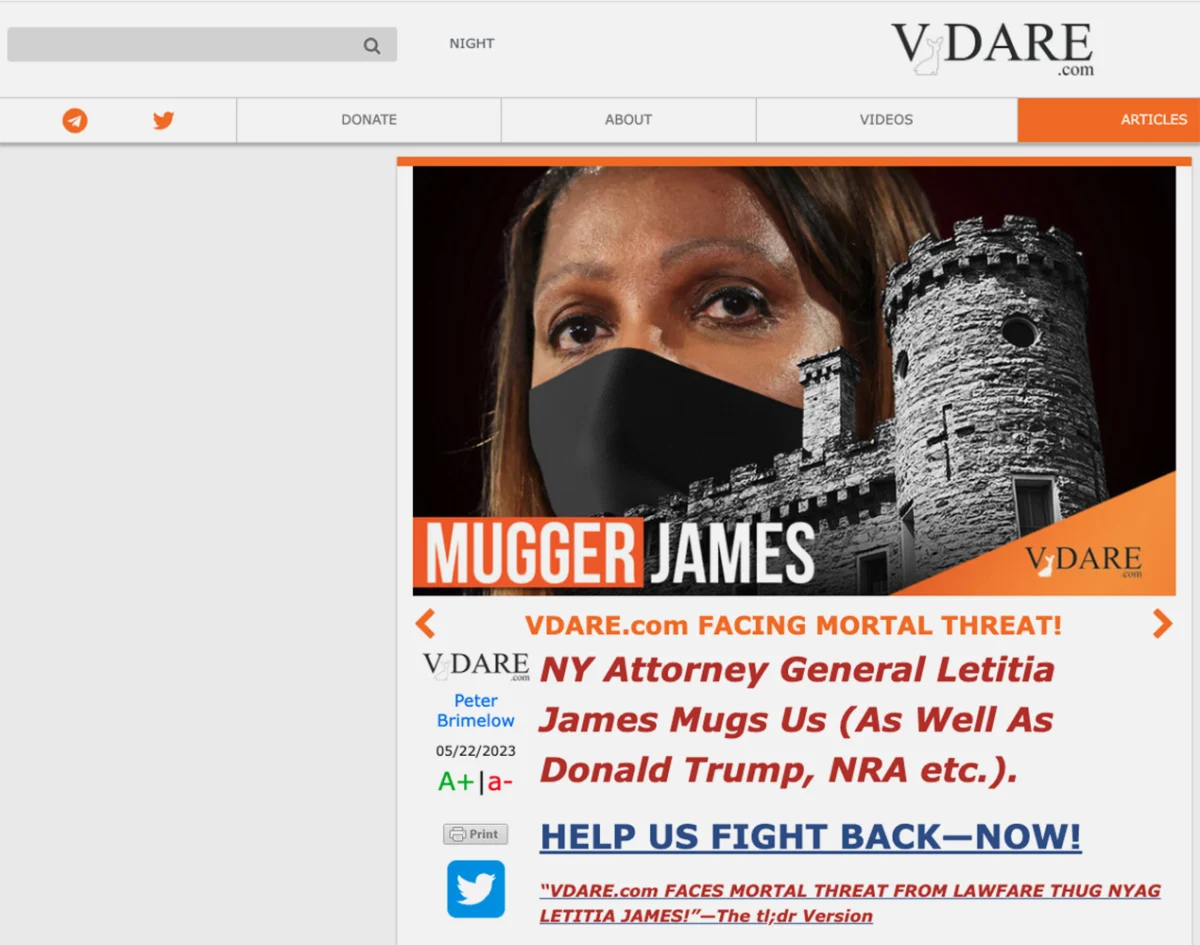
When the U.S. Justice Department indicted the Southern Poverty Law Center (SPLC) in April on controversial fraud charges, the venerable civil rights organization faced an existential threat not from a court conviction or an IRS revocation of its tax-exempt status, but from an unexpected source: the opaque decision-making of three Wall Street-affiliated grantmaking giants. Vanguard Charitable, Fidelity Charitable, and Charles Schwab’s DAFgiving360, major sponsors of donor-advised funds (DAFs), each independently decided to block donors from using their platforms to contribute to the embattled nonprofit. This move, which they largely refused to explain, plunged the SPLC into financial uncertainty and cast a stark spotlight on the largely unregulated power these DAF sponsors wield over American philanthropy.
The Ascendancy of Donor-Advised Funds: A New Era in Giving
Donor-advised funds have rapidly transformed the landscape of charitable giving in the United States. Once a niche financial product, DAFs have exploded in popularity over the past two decades, growing from a modest footprint to controlling over $327 billion in assets by 2024. This represents a more than tenfold increase, positioning DAFs as the conduit for approximately a quarter of all individual giving in the nation. These funds operate by allowing account holders to make an irrevocable contribution to a DAF sponsor—a public charity often affiliated with a major brokerage—receiving an immediate tax deduction. Donors then "advise" the sponsor on which qualified charities should receive grants from their fund, though the sponsor retains legal control over the assets and can ultimately deny any recommendation for any reason.
The appeal of DAFs is clear: they offer flexibility, tax efficiency, and the convenience of managing all charitable giving through a single platform. For high-income earners, they provide a powerful tool for philanthropic planning. However, their rapid growth has also brought questions about transparency, accountability, and the influence these financial intermediaries now exert over the flow of charitable dollars. The ProPublica investigation into the SPLC’s situation and similar cases revealed troubling inconsistencies in how some DAF sponsors apply their policies, often leaving both donors and affected charities in the dark.
The SPLC Under Siege: An Indictment and Its Financial Fallout
The SPLC, founded in 1971, has a long and often contentious history as a prominent civil rights advocacy group. Renowned for its legal work against hate groups and its "Hate Map" which tracks extremist organizations, the SPLC has been both praised for its vital work and criticized by some conservative groups who claim it unfairly labels them. Up until last year, its research was even utilized by the FBI to assist in law enforcement efforts, underscoring its historical credibility within certain government circles.
The April 2026 indictment by the Justice Department, however, marked a new and unprecedented challenge. Prosecutors alleged that the SPLC’s practice of paying confidential "field sources" to monitor extremist groups like the Ku Klux Klan constituted a fraudulent diversion of donor funds. The SPLC pleaded not guilty to 11 counts, including wire fraud, giving false statements to a federally insured bank, and conspiracy to commit money laundering. Former federal prosecutors swiftly critiqued the indictment as "stretched" and "not valid," and whistleblower reports to Democratic lawmakers suggested the prosecution was rushed despite weak evidence. Just this week, in August 2026, the legal pressure intensified with the arrest of Heidi Beirich, a former SPLC employee, on charges related to the case, alleging she facilitated secret payments to informants. Her attorney maintains her innocence, calling the case "without merit."
In the immediate aftermath of the indictment, the DAF sponsors acted decisively. Despite no conviction or revocation of tax-exempt status, Vanguard Charitable paused payments due to its policy concerning formal charges, while Fidelity Charitable and DAFgiving360 (formerly Schwab Charitable) invoked policies that allow them to halt donations if organizations come under investigation. The financial impact was significant: in the preceding three years, the SPLC had received $20 million through these three sponsors, with roughly 7% of its 2025 contributions originating from these now-blocked conduits. An SPLC spokesperson articulated the organization’s concern, stating that "when investment firms block donor-advised funds to nonprofits based on allegations and speculation, it not only impedes critical charitable work; it also sets a dangerous precedent that stifles the rights of donors and chills the rights of the organizations they seek to support."
A Pattern of Inconsistency: ProPublica’s Revelations
The ProPublica investigation, however, uncovered a troubling double standard. While the SPLC faced an immediate cutoff, Fidelity Charitable and DAFgiving360 appeared to apply their policies unevenly, allowing numerous other groups under government investigation to continue receiving donor funds. These cases spanned a wide ideological and operational spectrum, raising questions about the objective application of DAF sponsors’ stated policies.
- Providence Health and Services: In February 2022, then-Washington Attorney General Bob Ferguson sued Providence, a nonprofit Catholic healthcare system, alleging illegal billing and aggressive collection practices against low-income patients. Despite extensive media coverage and the AG’s emphasis on ongoing misconduct, both Fidelity Charitable and DAFgiving360 continued to funnel donations to Providence. The case ultimately resulted in a $150 million settlement for refunds and debt relief, the largest of its kind nationally, though Providence did not admit wrongdoing.
- Grand Canyon University (GCU): This Christian university faced a lawsuit and a $38 million fine following federal investigations for allegedly deceptive advertising regarding its doctoral programs and illegal consumer calls. Despite these significant government actions, records show both Fidelity and DAFgiving360 continued to support GCU throughout the two-year dispute. The Department of Education eventually rescinded the fine, and the FTC dismissed its case, but the continued DAF support during active investigations stands in contrast to the SPLC’s treatment.
- Idea Public Schools: Texas’s largest charter school network was investigated from 2021 to 2024 amid allegations of lavish spending, including on private jets. Fidelity Charitable maintained the flow of donations throughout this period. The network was eventually placed under state conservatorship and compelled to repay $28.7 million to the U.S. Department of Education, acknowledging improper fund administration.
- VDARE Foundation: Perhaps the most striking inconsistency involves VDARE, an organization known for its far-right, white nationalist website. In 2022, the New York Attorney General launched an investigation into VDARE for alleged misuse of millions in charitable assets. Despite clear evidence of the investigation prominently displayed on its website, DAFgiving360 continued to allow donations. The Attorney General subsequently sued VDARE in 2025, a case that remains open. While VDARE is no longer listed as an option for DAFgiving360 customers, the sponsor would not disclose when it was removed.
Furthermore, the Trump administration’s scrutiny of major universities for their handling of campus protests and alleged antisemitism tied to the crisis in Palestine and Israel, as well as over diversity, equity, and inclusion initiatives, led to dozens of formal government investigations. Yet, at least 20 of these universities remain listed as donation options on Fidelity Charitable’s and DAFgiving360’s websites, with one school confirming no decline in DAF donations. These disparities raise serious questions about the fairness and consistency of DAF sponsors’ policy application, undermining their claims of objective criteria.
Political Currents and Philanthropic Pressure
The broader political context surrounding these decisions cannot be overstated. President Donald Trump’s administration has placed nonprofits under intense scrutiny, alleging that many "undermine the security, prosperity, and safety of the American people." He has directed federal agencies to align funding decisions with administration priorities, creating an environment ripe for politically motivated challenges to charitable organizations.
Since 2025, members of Congress, predominantly Republicans, have initiated over 135 investigations into nonprofits, often citing concerns about foreign influence, support for terrorism, or the promotion of diversity, equity, and inclusion. This legislative pressure has tangible consequences. Republican lawmakers, for instance, sent letters to the IRS accusing several organizations supporting pro-Palestine efforts of funding terrorism and requesting investigations. ProPublica found that two such charities, despite not being charged in court or having their IRS status revoked, no longer appear on Fidelity Charitable’s donation portal. Fidelity declined to comment on whether these letters influenced their decisions, highlighting the opacity of the process.
Samuel Brunson, a Loyola University Chicago School of Law professor specializing in nonprofits, warned of the potential for abuse: "This is potentially a way that a hostile legislator could harm tax-exempt organizations without having to prove anything… Even if these letters are completely legitimate, you can take that same set of tools and use them illegitimately."

Voices of Concern: Donors, Experts, and Attorneys General
The actions of the DAF sponsors have not gone unnoticed, drawing criticism from various stakeholders. Sixteen state attorneys general, all Democrats, registered their objections in a letter, stating, "As attorneys general, many of us are the chief regulators of nonprofits, charities, and charitable trusts in our states, and serve as representatives of the public and donor intent. This decision raises serious concerns that you are allowing the DOJ’s selective political targeting of a charity to impact your donor-advised giving decisions." They further amplified their concerns over the sponsors’ refusal to disclose other charities whose donations they had paused, and as of yet, they have received no response.
Donors, too, have voiced their dismay. Dawn Piccolo, a retired Fidelity Investments senior vice president and long-time DAF account holder, expressed her disappointment directly to Fidelity Charitable. She noted the SPLC’s lack of conviction and the troubling precedent set by preemptively restricting donations. Piccolo, who has since stopped funding her Fidelity Charitable account and plans to move her existing balance, characterized the action as "out of band" and the case as "weak and politically motivated."
Legal experts echo these concerns about the DAF sponsors’ self-appointed role as arbiters of charitable eligibility. Lloyd Mayer, a professor at the University of Notre Dame Law School specializing in nonprofits, suggested that DAF sponsors should primarily defer to the IRS, which has the established authority to investigate and rescind tax-exempt status. "The wisest choice is probably to rely on the IRS list," Mayer stated, warning that cutting off IRS-eligible organizations risks appearing inconsistent or partisan. He also questioned the ambiguity of DAF policies: "An investigation by who? An indictment at what level? Is it only federal government indictments? Is it also state indictments? What about the local county prosecutor? Of the thousands of counties in the United States, if any one of them brings an indictment, you’re gonna stop? Where do you start drawing the lines?"
Affected charities also reported a wall of silence. Of 22 organizations that ProPublica identified as no longer listed on Fidelity Charitable’s portal, only one, the United Aid and Logistics Foundation, reported receiving a clear answer: "Our activities include providing aid to those defending the safety and human rights of Ukraine’s men, women and children, which Fidelity does not consider to be humanitarian," said Sytske de Boer, a director. Other groups, like Nonviolence International, a Palestinian activist-founded organization, reported being left with no or unclear answers, with co-director Michael Beer stating that "substantial funds have been paused by Fidelity DAF that were earmarked for our projects. If funding is not resumed, nonviolence training, education, and intervention programs for marginalized communities will be slashed."
DAF Sponsors’ Defense and Continued Silence
The DAF sponsors largely maintained their reticence when confronted by ProPublica. All three declined interviews or detailed questions. Fidelity Charitable stated it does not comment on decisions involving individual charities. DAFgiving360 issued a statement affirming it "communicates directly with donors when a grant recommendation is impacted by an eligibility determination" and provides alternatives. It insisted it does "not take charity eligibility decisions lightly" and "applies its policies consistently across all charitable organizations, regardless of their political viewpoint or orientation."
Vanguard Charitable, in its own statement, described its action as a "procedural pause" that is "not a value judgment; it is the application of objective criteria and reflects Vanguard Charitable’s responsibility, as the legal owner and steward of the charitable assets, to review and approve the grants made in its name." A spokesperson noted that it denies fewer than half a percent of donor recommendations annually and that "independent oversight is central to the value of donor-advised fund structure."
Deone Powell, a former general counsel for Vanguard Charitable who now advises nonprofits, offered a perspective on the sponsors’ internal rationale. He suggested these decisions are not about "moral policing" but about "protecting their own brands," speaking to "reputational risks for the sponsoring organizations." Powell acknowledged the weight of these choices, stating, "A single decision often establishes a precedent that’s going to affect thousands of other future recommendations." However, these explanations do little to address the apparent inconsistencies or the profound lack of transparency experienced by donors and charities.
The Broader Implications for American Philanthropy
The controversy surrounding the SPLC and other nonprofits highlights critical vulnerabilities within the increasingly dominant DAF structure. The power of DAF sponsors to unilaterally halt donations, often without clear explanation or recourse, raises fundamental questions about donor intent, charitable freedom, and the potential for these financial intermediaries to become unwitting or unwilling instruments of political pressure.
In an era of deep political polarization, the ability of a government administration or even individual lawmakers to instigate investigations or make accusations that can trigger a DAF freeze presents a potent, low-cost mechanism to target and potentially cripple organizations. This "soft power" bypasses traditional legal processes and judicial oversight, denying targeted charities due process and transparency. The consequences are not merely financial; they can chill free speech and association, particularly for organizations engaged in advocacy or operating in politically sensitive areas.
Joe Goldman, president of Democracy Fund, a foundation supporting democratic principles, suggested that DAF sponsors are "applying old rules to new circumstances without recognizing that the circumstances have changed." He implies that the traditional risk assessment models, designed for a less politically charged environment, are ill-suited for the current climate where politically motivated accusations can be weaponized.
Looking Ahead: Calls for Transparency and Accountability
The current situation calls for a serious re-evaluation of the role and responsibilities of DAF sponsors. Without greater transparency regarding their decision-making processes, consistent application of policies, and a clear appeals mechanism for affected charities and donors, the integrity of the DAF system and, by extension, a significant portion of American philanthropy, remains at risk.
While Powell, the former Vanguard Charitable attorney, does not foresee "immediate change" driven by public blowback, given the risk-averse nature of financial institutions, he anticipates that "any change is going to be driven by donors who are asking questions about how their philanthropy is defending democracy." The growing awareness among donors like Dawn Piccolo, who are prepared to move their funds in protest of opaque and seemingly arbitrary decisions, may eventually compel DAF sponsors to adopt more robust, transparent, and equitable processes. The future of charitable giving in the U.S. hinges on whether these powerful new gatekeepers can evolve to meet the challenges of an increasingly complex and politicized philanthropic landscape.


 Joko Widodo
 Jia Lissa
 Pevita Pearce
 admin
admin