
 Pevita Pearce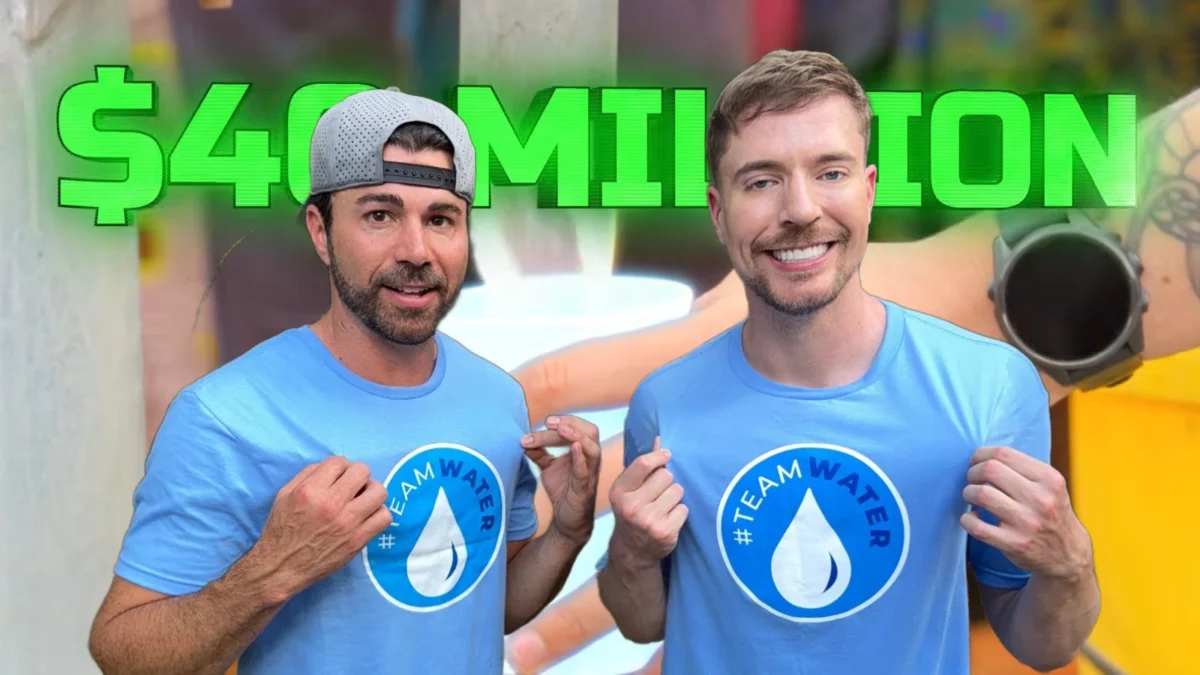
The ambitious creator-led philanthropic initiative known as TeamWater has officially completed its inaugural year, reporting that 225,472 individuals across five continents now have reliable access to safe, clean drinking water. This announcement, delivered via a detailed progress update from YouTube sensation Jimmy Donaldson, popularly known as MrBeast, provides the first comprehensive look at the logistical and humanitarian outcomes of the $40 million global campaign. Launched in collaboration with fellow creator Mark Rober and the international nonprofit organization WaterAid, TeamWater represents one of the most significant mobilizations of digital influence for humanitarian aid in the modern era.
The campaign, which commenced on August 1, 2025, sought to address the global water crisis through the implementation of sustainable, long-term infrastructure rather than temporary relief measures. By leveraging a massive network of over 10,000 content creators from 144 countries, the initiative successfully raised its $40 million goal within a 31-day window. This financial foundation was further bolstered by corporate support from Google and YouTube, which provided a $2 million matching grant during the early stages of the fundraiser. One year later, the transparency of the project’s execution is being met with scrutiny and acclaim alike as the organization transitions from a fundraising powerhouse to a large-scale infrastructure developer.
A Chronology of the TeamWater Initiative
The timeline of TeamWater is a testament to the speed at which digital communities can mobilize resources. The concept followed the successful "TeamTrees" and "TeamSeas" models, which focused on reforestation and ocean cleanup, respectively. However, TeamWater presented a more complex logistical challenge: the construction of permanent utility systems in varied geopolitical and geological environments.
Following the August 2025 launch, the primary focus for the remainder of that year was the assessment and engineering phase. Working with WaterAid’s established networks, the campaign identified regions with the highest level of "water poverty"—areas where residents spend hours each day fetching water or where available sources are contaminated with pathogens. By early 2026, construction had broken ground on major projects in East Africa, South America, and Southeast Asia.
The one-year update, released in August 2026, serves as the first major audit of these efforts. While the initial 225,472 people reached represents roughly 11% of the campaign’s ultimate goal to serve two million people by 2030, the project leads emphasize that the groundwork laid in this first year is designed for scalability and durability.
Global Infrastructure Projects and Regional Data
The diversity of the projects funded by TeamWater reflects a customized approach to the specific needs of different climates and communities. Unlike traditional "well-drilling" charities that have occasionally been criticized for leaving behind broken pumps that local communities cannot fix, TeamWater has invested in more sophisticated technology.
East African Solar-Powered Systems
In Tanzania, the campaign funded a solar-powered water farm capable of extracting 75,000 liters of groundwater daily. This system utilizes photovoltaic arrays to power high-capacity pumps, eliminating the need for expensive and environmentally taxing diesel generators. In neighboring Kenya, two additional off-grid water farms were established, contributing an additional 90,000 liters of daily capacity. These systems are managed by local committees trained in basic maintenance, ensuring that the technology remains operational long after the initial investment.
South American Filtration Technology
The approach in Brazil shifted from extraction to purification. In areas where water is physically accessible but biologically unsafe, TeamWater distributed advanced filtration systems to 700 households. These filters are capable of removing 99.9% of bacteria and protozoa, providing an immediate health benefit to families who previously relied on contaminated surface water.
Addressing the "Water Gap" in the United States
One of the more surprising components of the TeamWater portfolio is its work within the United States. In partnership with the organization DigDeep, TeamWater addressed the "water gap" in West Virginia. Here, the campaign funded the connection of 50 homes to a centralized municipal water line. Before this intervention, residents were forced to purchase bottled water for all needs or rely on untreated, often acidic, mountain springs. This project highlights a critical reality: even in developed nations, infrastructure decay and geographic isolation can lead to a lack of basic utilities.
Healthcare Integration in Rwanda
In Rwanda, the focus was on the intersection of water access and public health. TeamWater funded the construction of underground pipelines that transport treated water from a central plant to various community kiosks. Notably, this project provided a dedicated line to a local health post. The availability of running water allowed the facility to reopen its labor and maternity ward, which had previously been shuttered due to the inability to maintain sanitary conditions during childbirth.
The 2030 Roadmap and the Philosophy of Sustainability
The announcement of the 225,472-person milestone was accompanied by a reaffirmation of the project’s 2030 deadline. WaterAid and the project’s lead creators have been vocal about their refusal to engage in "quick fixes." This philosophy is rooted in the history of international development, where many water projects fail within the first five years due to a lack of spare parts or technical expertise.
A primary example of the long-term commitment is the ongoing project in Bangladesh. Scheduled to run through September 2030, this initiative aims to serve 210,000 people. The complexity of the Bangladeshi landscape—characterized by high salinity in coastal areas and arsenic contamination in others—requires the installation of "Water ATMs" and decentralized treatment systems. These ATMs allow residents to access water using a pre-paid card, with the small fees collected being reinvested into a maintenance fund for the machinery.
"We don’t do quick fixes," a representative from WaterAid stated in the update. "Our goal is to build systems that outlast the news cycle. This means working with local governments to ensure that these pipes and pumps are integrated into the community’s long-term planning."
Economic and Social Implications of Clean Water Access
The impact of the TeamWater campaign extends beyond the biological necessity of hydration. Factual analysis of clean water initiatives suggests a high return on investment for local economies. When clean water is available via a kiosk or a household tap, the time traditionally spent by women and children fetching water is reclaimed. This often leads to increased school attendance for children and greater economic participation for women.
Furthermore, the reduction in waterborne diseases—such as cholera, dysentery, and typhoid—decreases the burden on local healthcare systems. By providing clean water to the maternity ward in Rwanda, for instance, TeamWater is directly contributing to a reduction in infant and maternal mortality rates in that district. The $40 million raised by the campaign, when viewed through the lens of long-term economic productivity and healthcare savings, represents a significant infusion of capital into the developing world’s infrastructure.
Official Responses and Creator Accountability
Jimmy Donaldson’s update emphasized the role of the donor community. "The team is working so hard and making amazing progress," Donaldson wrote in his public statement. "Really grateful to all the creators who supported this and everyone who donated. YOU are the reason TeamWater is able to save lives."
Mark Rober, a former NASA engineer known for his focus on technical education, has also been instrumental in overseeing the engineering standards of the projects. Rober’s involvement has added a layer of technical credibility to the campaign, ensuring that the solar farms and desalination plants meet rigorous operational standards.
However, the scale of the $40 million fund also brings a high level of accountability. Observers in the philanthropic sector note that the challenge for TeamWater will be maintaining momentum over the next four years. While the initial "viral" phase of fundraising is over, the engineering and maintenance phase is just beginning. The decision to release a detailed one-year report is seen as a strategic move to maintain trust with the millions of small-scale donors who contributed to the cause.
Conclusion: A New Era of Digital Philanthropy
The first-year success of TeamWater marks a significant evolution in how global crises are addressed in the age of social media. By combining the massive reach of creators like MrBeast and Mark Rober with the technical expertise of established NGOs like WaterAid and DigDeep, the campaign has created a hybrid model of aid that is both fast-acting in its fundraising and methodical in its execution.
As the counter moves toward the two-million-person goal, the 225,472 individuals currently benefiting from the project serve as a tangible proof of concept. The transition from digital content to physical infrastructure—solar panels in Tanzania, pipelines in Rwanda, and filters in Brazil—demonstrates the potential for the "creator economy" to tackle some of the world’s most persistent challenges. The focus now shifts to the remaining 1.7 million people, as TeamWater continues its work through the end of the decade, aiming to turn $40 million of internet-driven goodwill into a lifetime of health and security for millions.



 Yuyun Lusiyani
 Joko Widodo
 Eva Lovia
 admin
admin
 Lina Irawan