
 Amara Maple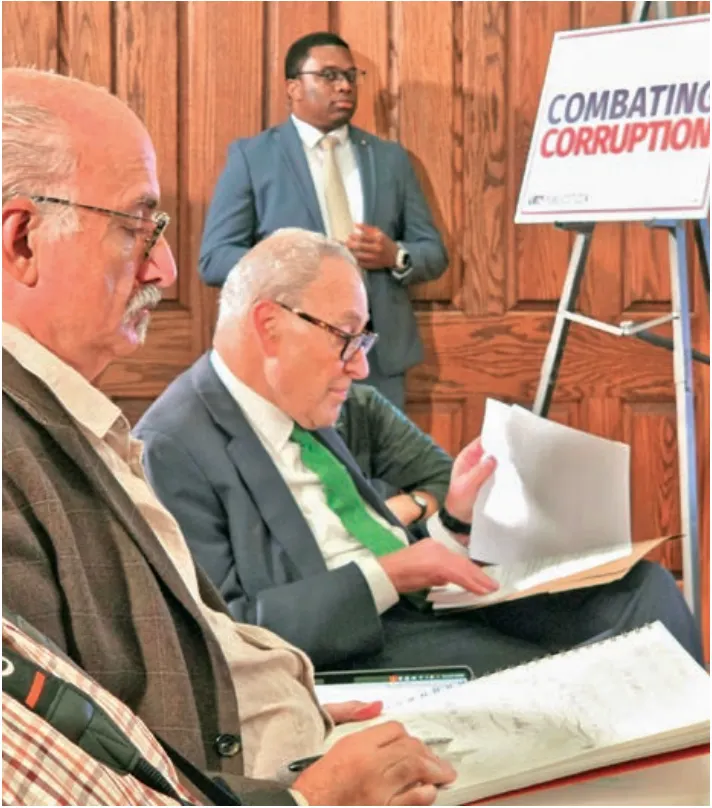
Yesterday, the National Press Club (NPC) issued a strong statement condemning President Trump’s decision to ban CNN, Politico, and MS Now from the White House, characterizing it as an "unprecedented assault on press freedom." This public stance, however, has drawn attention to internal questions regarding the Club’s own application of press freedom principles, following a recent incident involving a dues-paying member who faced disciplinary action after asking pointed questions at a Club-hosted event.
Mark Schoeff Jr., President of the National Press Club, articulated the organization’s concerns, stating, "Every American should understand what is at stake. If implemented, this ban would mark an unprecedented assault on press freedom." He further urged the President to "reverse this declaration immediately," adding, "President Trump is continuing his relentless and disturbing effort to bully the news media. This simply can’t happen in a democracy that has depended on a free and independent press to cover the country’s leaders for 250 years."
The NPC’s condemnation aligns with its long-standing mission to advocate for journalistic integrity and open access. Founded in 1908, the National Press Club is one of the nation’s leading professional organizations for journalists, routinely hosting newsmakers, providing educational programs, and championing First Amendment rights. Its role often places it at the forefront of defending the press against perceived infringements on its ability to report freely. However, the timing of this public statement has coincided with an unfolding controversy involving Russell Mokhiber, editor of Corporate Crime Reporter and Capitol Hill Citizen, a situation he describes as a stark contradiction to the Club’s declared principles.
The White House Press Access Debate
The President’s decision to ban specific media outlets from the White House is a significant development in the ongoing tension between the Trump administration and various news organizations. White House press credentials and access are typically managed by the White House Correspondents’ Association (WHCA) in conjunction with the Executive Office of the President. While administrations have historically had discretion over who receives credentials, outright bans of major news organizations are rare and typically trigger widespread condemnation from press freedom advocates. Critics argue such actions impede the public’s right to information by limiting the diversity of journalistic perspectives in the White House briefing room and other official events. Proponents of restricting access, often from within administrations, argue that certain outlets engage in biased reporting or act disruptively, justifying limitations. This incident adds to a pattern of strained relations, with the administration frequently labeling critical reporting as "fake news" and questioning the legitimacy of certain media organizations. The National Press Club’s statement underscores the gravity of such a move, framing it within the broader context of democratic principles and the historical role of a free press.
An Internal Conflict: A Reporter’s Suspension
Mokhiber, a veteran journalist with decades of experience covering corporate crime and public corruption, detailed his suspension from the National Press Club, which he alleges was a consequence of simply "being a reporter and asking questions." This incident occurred earlier this month, resulting in a two-week suspension of his Club privileges.
The events leading to Mokhiber’s suspension began on July 30, when he attended a press conference titled "Combating Corruption" at the Club’s Holeman Lounge. The event, hosted by Public Citizen, a consumer advocacy organization, featured prominent Democratic senators, including Senator Charles Schumer (D-New York), Senator Sheldon Whitehouse (D-Rhode Island), and Senator Alex Padilla (D-California). Mokhiber, as editor of publications focused on corruption, viewed the topic as directly relevant to his journalistic work.
Initially, Public Citizen confirmed that there would be a question-and-answer period for the press. However, the day before the event, Mokhiber received an update indicating that the Q&A session for Senator Schumer’s speech had been canceled. This change raised immediate concerns for Mokhiber, particularly given his view of Senator Schumer, whom he refers to as "the Senator from Wall Street" and a key figure in funding Israel’s military actions in Gaza, which some human rights groups have alleged could constitute complicity in genocide.
Chronology of Events at the Public Citizen Forum
- July 29: Public Citizen informs attendees, including Russell Mokhiber, that the Q&A session for Senator Schumer’s speech at the "Combating Corruption" event will be removed.
- July 30 (Event Day):
- Mokhiber attends the press conference at the National Press Club.
- Fellow journalist Sam Husseini stands up during Senator Schumer’s remarks and attempts to ask a question about Schumer’s alleged corruption related to AIPAC funding and the conflict in Gaza, citing a November 2023 notification from the Center for Constitutional Rights regarding potential criminal liability. Husseini is subsequently escorted out by Press Club security.
- After Schumer concludes his remarks, he exits the room without taking questions.
- Senator Sheldon Whitehouse speaks. Upon concluding, Mokhiber attempts to question him about funding for Israel’s actions in Gaza. Whitehouse ignores the question and leaves.
- Senator Alex Padilla speaks. After his remarks, Mokhiber asks if Padilla agrees that Senator Schumer, "the leader of our Democratic caucus," should resign due to alleged corruption. Padilla reiterates Schumer’s leadership role without directly answering.
- Mokhiber approaches Lisa Gilbert, Co-President of Public Citizen, after the event. Their initial conversation is interrupted by an aide.
- Mokhiber follows Gilbert into the hallway to continue his questioning about Public Citizen featuring Schumer at an anti-corruption event, given Mokhiber’s allegations of Schumer’s corruption related to AIPAC funding and Gaza.
- A woman identifying herself as the Press Club’s director of security approaches them. She addresses Gilbert, asking if she needs assistance.
- Mokhiber continues to press Gilbert for an answer, identifying himself as a reporter. The director of security tells Gilbert she can answer if she wishes.
- Gilbert responds to Mokhiber, stating the event was about an anti-corruption bill they supported and that Schumer’s alleged corruption was "not connected."
- Early August 2026: Mokhiber publishes an article titled "A Day at the National Press Club" in the Capitol Hill Citizen, detailing his experience.
- August 26: Mokhiber receives a letter from Darren Samuelsohn, Chair of the NPC’s Ethics Committee and Board of Governors, informing him of a two-week suspension (through September 10) for violating Club rules, specifically for allegedly failing to comply with directives from staff and disrupting the event.
- Late August/Early September: Mokhiber repeatedly requests specific evidence and the identity of his accusers from Samuelsohn. Samuelsohn clarifies the allegation: "Club personnel and security staff reported observing you persistently questioning and following Public Citizen President Lisa Gilbert as she attempted to leave the event area. The Club’s Director of Safety & Risk directed you to stop and subsequently instructed you not to continue following her."
- September: Mokhiber appeals his suspension to the Board of Governors, requesting to appear in person and face his accuser, and seeking an apology for what he claims are false accusations.
- September 17: Mokhiber receives a letter from Samuelsohn stating that the Board of Governors has denied his appeal. The letter reiterates that the concern was not the "substance of the questions…or your role as a journalist," but rather his "conduct after Club personnel intervened."
The Allegation of False Accusations and Suppressed Inquiry
Mokhiber vehemently denies the Club’s allegations, stating he possesses an audio recording of his interaction with the security director that contradicts the Club’s account. He asserts that the recording demonstrates the security director never explicitly directed him to stop questioning or following Lisa Gilbert. According to Mokhiber, the security director merely asked Gilbert if she wished to continue the interaction or leave, and Gilbert chose to answer his question. This discrepancy forms the core of Mokhiber’s grievance, leading him to label the Club’s accusation as "false and defamatory." He contends that the Club has failed to provide evidence supporting its claims or to identify his accuser, further undermining the fairness of the disciplinary process.
The Board of Governors, comprising Darren Samuelsohn (Chair), HyoJung Kim (Washington Post), Ian Kullgren (Bloomberg Industry Group), Casey Morell (NPR Politics Podcast), Delece Smith-Barrow (Politico), and Steff Thomas (The Hill), upheld the suspension. Their decision maintained that the issue was not the content of Mokhiber’s questions but his conduct after Club personnel intervened, a claim Mokhiber’s audio recording allegedly refutes.
Broader Implications for Press Freedom and Journalistic Ethics
This incident at the National Press Club raises several critical questions about press freedom, journalistic ethics, and the role of professional organizations in upholding their stated values.
Consistency in Press Freedom Advocacy: The juxtaposition of the NPC’s strong condemnation of the White House’s actions against media outlets and its internal disciplinary measures against a member for what he describes as aggressive questioning highlights a potential tension. Advocates for press freedom argue that the principle must be applied universally, both externally against government overreach and internally within journalistic institutions. If a journalist is disciplined for persistent questioning, particularly on sensitive topics like political corruption, it could be perceived as undermining the very freedom the Club seeks to protect.
The Right to Ask Uncomfortable Questions: Mokhiber’s questions targeted the perceived hypocrisy of politicians speaking on "combating corruption" while allegedly engaging in practices that critics deem corrupt, such as accepting funds from lobbying groups like AIPAC and influencing foreign policy. The ability of journalists to ask such uncomfortable questions, even when they challenge event organizers or speakers, is often considered fundamental to investigative journalism and holding power accountable. The cancellation of the Q&A session for Senator Schumer and the subsequent actions against journalists attempting to fill that void underscore the challenges faced by reporters trying to extract answers on contentious issues.
Role of Security and Event Management: The incident also prompts a discussion about the appropriate role of event security and management in a journalistic setting. While maintaining order is essential, drawing the line between disruptive behavior and legitimate, if persistent, journalistic inquiry can be subjective. Mokhiber’s claim that the security director permitted Gilbert to answer his question suggests that the interaction, at least from his perspective, was not an explicit directive to cease questioning, leading to a factual dispute about the nature of the "intervention."
Transparency and Due Process in Disciplinary Actions: Mokhiber’s inability to face his accuser or receive specific evidence to support the Club’s allegations raises concerns about transparency and due process within the National Press Club’s disciplinary procedures. For an organization dedicated to truth and accountability, ensuring a fair and transparent process for its own members is paramount. The lack of a direct response to his request for an apology further fuels his perception of an unjust outcome.
Political Influence and Media Coverage: The underlying issues raised by Mokhiber and Husseini—specifically, the influence of pro-Israel PACs like AIPAC on U.S. foreign policy and the debate surrounding the conflict in Gaza—are highly sensitive and often contentious in media circles. Mokhiber’s concluding remarks suggest a belief that the Club’s actions are a deliberate message to journalists to avoid questioning these specific topics. While the Club explicitly denied that the substance of his questions was the concern, Mokhiber’s interpretation highlights the chilling effect that disciplinary actions can have on journalists covering politically charged subjects, regardless of the stated reasons.
As the National Press Club continues its advocacy for press freedom in the face of external challenges, this internal controversy serves as a reminder of the complex and sometimes contradictory demands placed upon journalistic institutions. The incident involving Russell Mokhiber underscores the ongoing debate within the media landscape about the boundaries of aggressive reporting, the definitions of disruptive conduct, and the consistent application of press freedom principles across all contexts. The outcome of such internal disputes can significantly impact the credibility and moral authority of organizations that champion the rights of journalists globally.

 Yuyun Lusiyani
 Ana Megawati
 Joko Widodo
 Eva Lovia
 Jia Lissa
 Pevita Pearce