
 Jia Lissa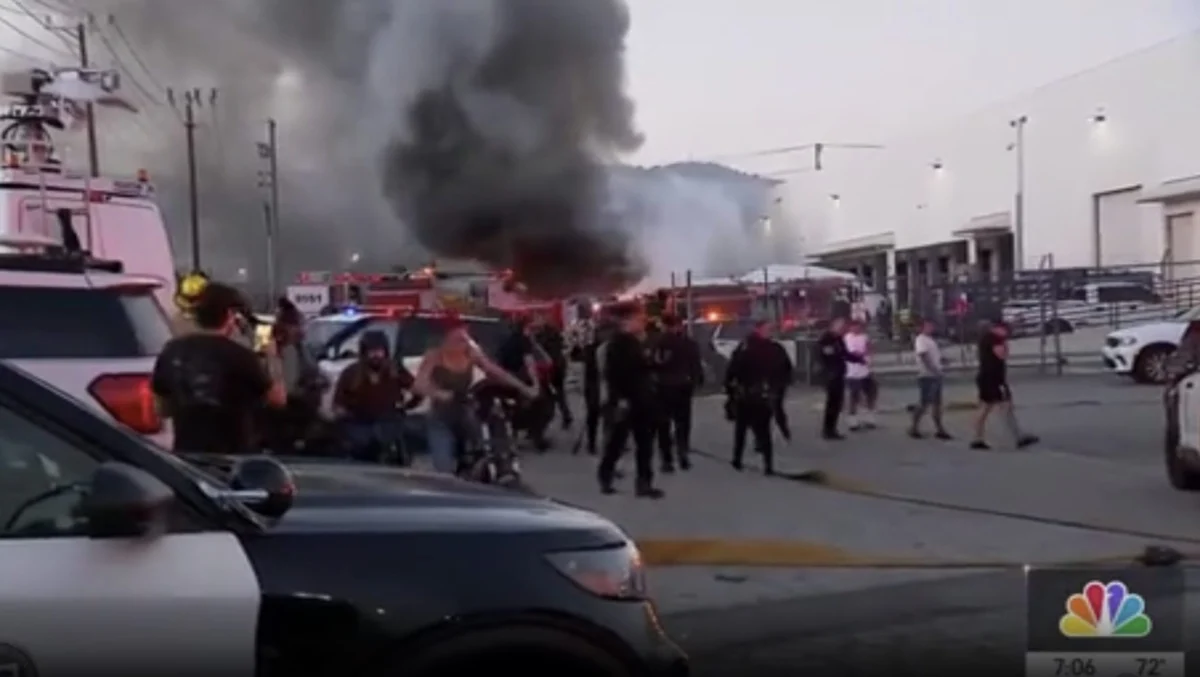
The evening news broadcast on NBC Los Angeles transitioned from routine local coverage to a scene of profound tragedy on Tuesday night as the station’s own newsroom was forced to report on a helicopter crash involving their colleagues. The incident, which occurred in the Chatsworth area of the San Fernando Valley, resulted in the deaths of three individuals, including one person on the ground. The unfolding drama provided a rare and somber glimpse into the professional fortitude required of journalists who must maintain objectivity while reporting on a catastrophe within their own professional family.
The Sequence of Events: From Routine Coverage to Catastrophe
The events began during the late afternoon hours as NBC Los Angeles, known locally as KNBC 4, dispatched its news helicopter to cover a fatal bus accident. Aerial newsgathering is a staple of Southern California journalism, where the vast geography and notorious traffic make helicopters essential for timely reporting. The crew was providing live visuals and updates on the bus incident when ground-based producers and anchors began to lose contact with the aircraft.
By the start of the 7:00 p.m. PT broadcast, the atmosphere within the studio had shifted from professional urgency to palpable dread. Anchor Colleen Williams opened the hour with a somber acknowledgment of the developing situation. "We know it’s something bad," Williams stated, her voice reflecting the gravity of the information trickling into the newsroom. At that moment, the station had received reports of a downed aircraft in the vicinity of their previous assignment but had not yet officially confirmed the identity of the helicopter.
As the broadcast continued, reporter Robert Kovacik was dispatched to the crash site. In a series of emotionally charged live segments, Kovacik was seen pleading with law enforcement officers to allow him closer to the wreckage. His dual role as a journalist and a concerned colleague was evident as he told an officer, "I’m taking care of my own crew." The officer, maintaining the perimeter for safety reasons, denied the request, highlighting the dangerous conditions at the scene.
Real-Time Confirmation and the Breaking News Dilemma
For nearly two hours, the newsroom operated in a state of agonizing uncertainty. Kovacik, reporting from the perimeter, noted the reactions of other media members at the scene. He observed a colleague from rival station ABC7 in tears, a sign that the tight-knit community of Los Angeles aerial journalists already suspected the worst. "We don’t know where the chopper is from, we don’t even know if it is a chopper, we don’t know if it’s a news chopper," Kovacik reported, even as the absence of their own "NewsChopper 4" from the sky became an undeniable reality.
Shortly after 9:00 p.m. PT, the station’s veteran reporter Conan Nolan delivered the definitive update. He informed the audience that while official confirmation from the National Transportation Safety Board (NTSB) was pending, the station could no longer ignore the facts. "We can tell you that we are not in contact with our television news helicopter," Nolan said. "We can only come to that conclusion, frankly, by the fact we can’t reach our own helicopter."
The confirmation that three people had died—two on board the aircraft and one bystander on the ground—turned the newsroom into a site of mourning. Nolan’s closing remarks during that segment summarized the collective sentiment: "There’s no other way of saying it. This is a very sad day in this newsroom."
The Geography and Risks of Aerial Newsgathering in Los Angeles
The crash occurred in Chatsworth, a neighborhood in the northwestern San Fernando Valley characterized by rugged terrain, sandstone rock formations, and unpredictable wind patterns known as the Santa Ana winds. While the specific cause of this crash remains under investigation, the topography of the area has historically presented challenges for low-flying aircraft.
Los Angeles is considered the birthplace of the news helicopter. In 1958, KTLA-TV introduced the "Telecopter," the world’s first flying television station. Since then, the city has maintained one of the densest populations of news aircraft in the world. On any given day, multiple helicopters from stations like KNBC, KABC, KCBS, and KTTV hover over the same location to cover police pursuits, brush fires, or traffic accidents.
This density necessitates strict adherence to "see and avoid" principles and constant communication between pilots on a shared frequency. Despite these protocols, the history of Los Angeles media is marked by several high-profile aviation accidents. The most notable occurred in 2007 in Phoenix, Arizona, when two news helicopters collided while covering a police chase, but Los Angeles has seen its share of near-misses and mechanical failures over the decades.
Technical and Investigative Framework
In the wake of the NBC Los Angeles crash, the Federal Aviation Administration (FAA) and the NTSB have launched a comprehensive investigation. The process typically follows a structured timeline:
- On-Scene Phase: Investigators document the wreckage, look for signs of engine failure, and examine the "four corners" of the aircraft (nose, tail, and wingtips) to ensure all parts were present at the time of impact.
- Data Recovery: While small news helicopters are not always required to carry "black boxes" (Flight Data Recorders), investigators will recover GPS units, engine monitoring equipment, and any recorded broadcast footage that might show the aircraft’s final moments.
- Preliminary Report: Within 15 days, the NTSB typically releases a preliminary report detailing the basic facts of the flight, weather conditions, and pilot experience.
- Final Report: A full analysis of the probable cause can take 12 to 24 months to complete.
Safety data from the General Aviation Manufacturers Association (GAMA) indicates that while helicopter safety has improved significantly over the last twenty years, the nature of newsgathering—which involves hovering at low altitudes and frequent maneuvering—carries a higher risk profile than standard point-to-point transit.
The Human Toll and Industry Reaction
The loss of life in this incident extends beyond the cockpit. The confirmation of a ground fatality adds a layer of tragedy to the event, highlighting the inherent risks that aviation poses to residential communities. In Chatsworth, the impact occurred near a residential area, prompting an immediate response from the Los Angeles Fire Department (LAFD) to prevent a post-crash fire from spreading to nearby structures.
The identities of the pilot and the camera operator have been withheld pending notification of next of kin, but the impact on the industry was immediate. Rival stations in the Los Angeles market, including KCAL and KTLA, expressed their condolences on air and via social media, briefly setting aside ratings competition in a show of solidarity.
"The newsgathering community is small," said a veteran pilot from a neighboring station. "We talk to each other every day on the radio. We look out for each other in the air. When one goes down, it feels like losing a member of the family."
Broader Implications for the Future of News Coverage
This tragedy is likely to reignite the debate over the necessity of manned news helicopters in an era of advancing drone technology. Unmanned Aerial Vehicles (UAVs) are increasingly being used by newsrooms to provide aerial perspectives at a fraction of the cost and risk. However, current FAA regulations and the limited range and battery life of drones mean that for large-scale markets like Los Angeles, helicopters remain the only viable option for sustained, high-speed pursuit coverage and long-distance travel.
The financial burden of maintaining a helicopter fleet is also a factor. Many stations now utilize "pool" helicopters or contract their aerial services to third-party companies like Helinet Aviation or Los Angeles News Service. These contractors provide the aircraft, pilots, and maintenance, while the stations provide the reporters and camera operators. The investigation into the NBC Los Angeles crash will undoubtedly look into the maintenance records and pilot training programs of whichever entity operated the aircraft.
Conclusion and Professional Integrity
The reporting by the NBC Los Angeles team on Tuesday night serves as a testament to the rigors of the profession. To report on one’s own tragedy requires a level of emotional compartmentalization that few other professions demand. As the station moves forward, the focus will shift from the shock of the event to the long process of mourning and the search for answers.
The NTSB’s investigation will eventually provide a technical explanation for why the helicopter fell from the sky. However, for the viewers who watched the heartbreak unfold in real-time, the story remains a stark reminder of the risks taken by those who work behind and above the camera to bring the news to the public. As Colleen Williams and Conan Nolan demonstrated, the duty to inform remains paramount, even when the news being delivered is the most difficult news of all.




 Yuyun Lusiyani
 Joko Widodo
 Eva Lovia
 Pevita Pearce