
 Jia Lissa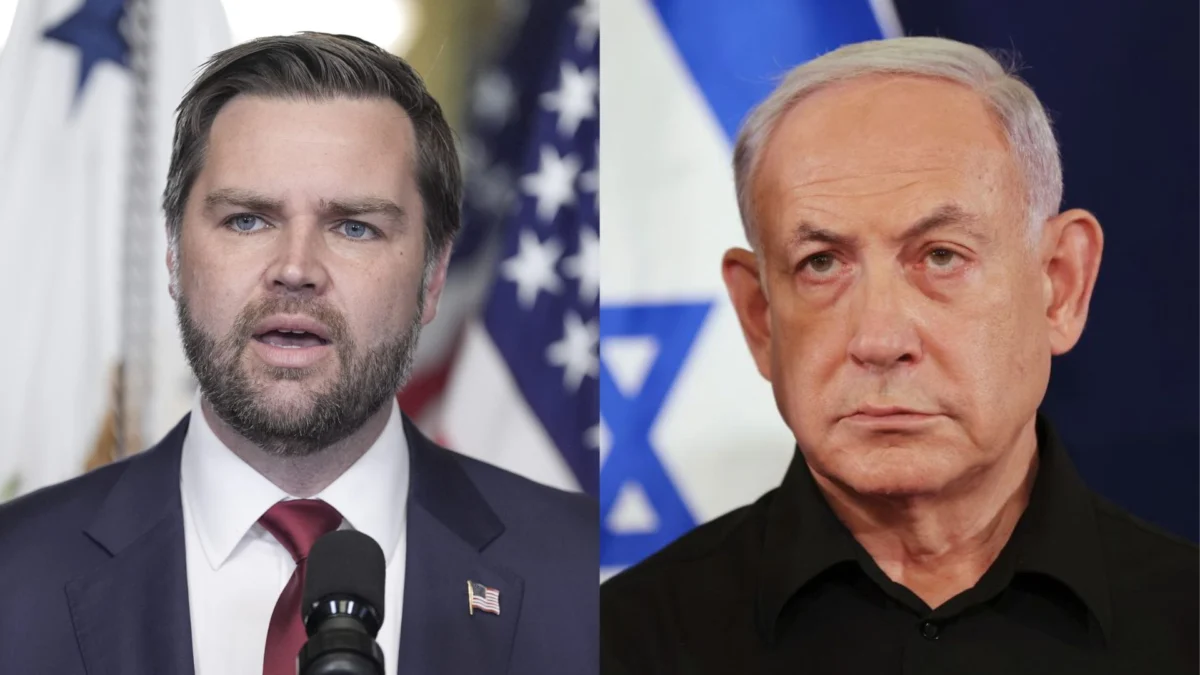
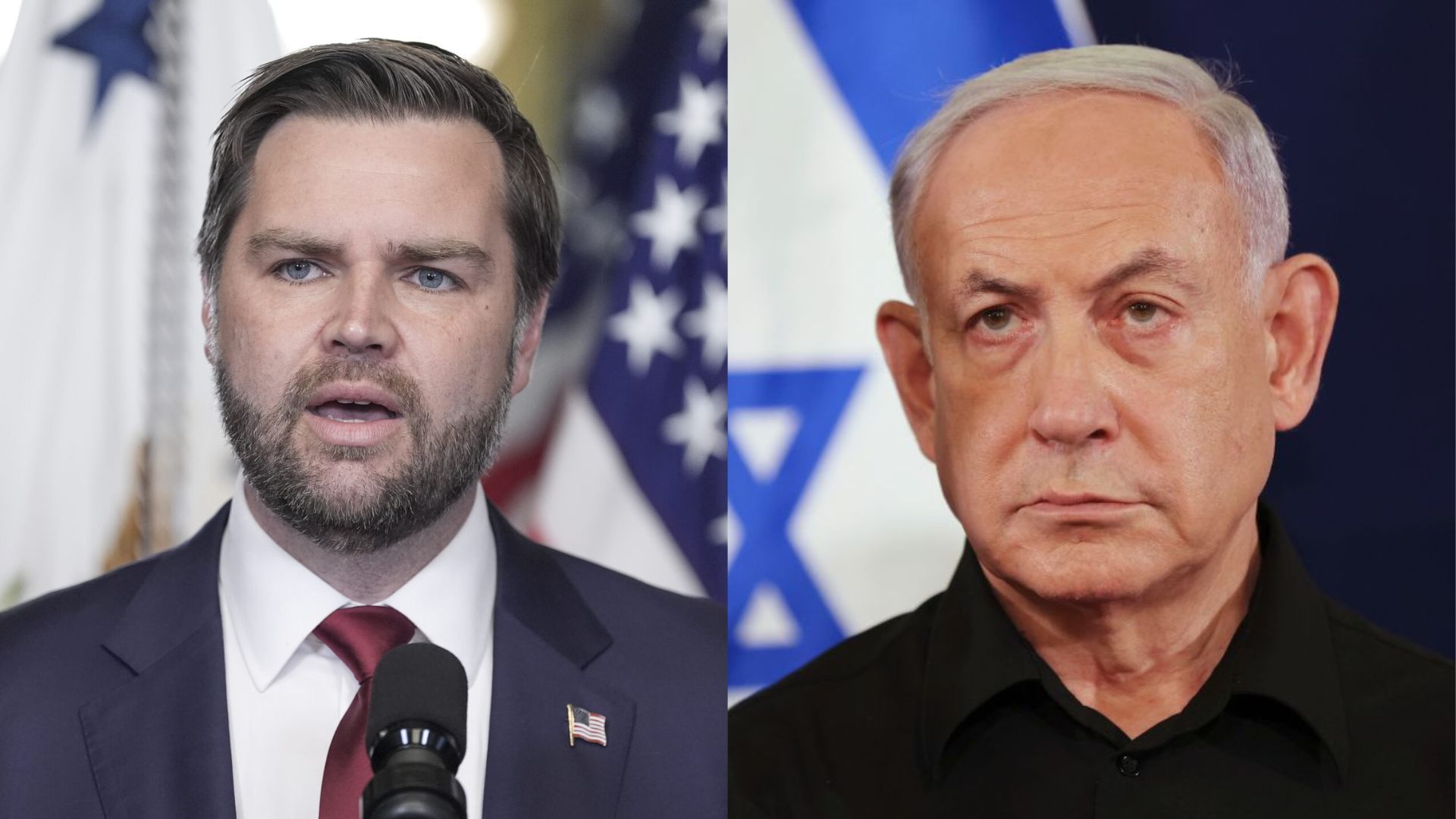
Israeli Prime Minister Benjamin Netanyahu reportedly engaged in a pointed confrontation with Vice President JD Vance during a private meeting at Blair House in Washington on Tuesday, addressing a series of public criticisms leveled by the Vice President against the Israeli government. The meeting, described by officials from both nations as "direct" and "candid," marks a significant escalation in the underlying tensions between the Netanyahu administration and the "America First" wing of the Republican Party, which Vance currently spearheads. According to reports first surfaced by Axios, the dialogue centered on Vance’s recent skepticism regarding Israel’s regional strategies, his accusations of foreign influence in U.S. policy-making, and lingering questions regarding diplomatic loyalty to former President Donald Trump.
The Blair House Meeting: A Confrontation Behind Closed Doors
The encounter took place at Blair House, the President’s official guest house, amidst Prime Minister Netanyahu’s broader diplomatic visit to the United States. While such meetings are typically characterized by public displays of solidarity, the atmosphere surrounding this session was notably different. Israeli and U.S. officials, speaking on the condition of anonymity, described the conversation as one of the most "frank" exchanges between the two leaders to date.
A senior Israeli official confirmed to journalist Barak Ravid that Netanyahu felt it necessary to address Vance’s public rhetoric directly. The Prime Minister reportedly expressed frustration over Vance’s suggestions that the Israeli government was attempting to undermine U.S. diplomatic efforts and his public questioning of the "special relationship" between the two nations. A U.S. official echoed this sentiment, confirming that the conversation was "direct," a diplomatic term often used to indicate that neither side pulled punches during the discussion.
Chronology of Escalating Tensions
The friction between Prime Minister Netanyahu and Vice President Vance did not emerge in a vacuum; it is the result of a multi-month trajectory of public disagreements regarding U.S. foreign policy in the Middle East.
June 2026: The Iran Memorandum Dispute
The rift became public in June when Vice President Vance openly criticized Israeli officials for their opposition to a new U.S.-led memorandum of understanding regarding Iran’s nuclear program. Vance, who has championed a more restrained U.S. foreign policy, argued that the agreement was a necessary step to prevent further regional escalation. When Israeli officials voiced their concerns, Vance issued a stern public rebuke, stating that Israel should "not be attacking the only powerful ally" it has "anywhere left in the entire world."
Netanyahu responded to this statement almost immediately, pushing back against the notion of Israeli isolation. He countered by asserting that while the U.S. remains a vital partner, Israel maintains "many, many friends" globally, signaling that the Israeli government would not be pressured into silence by threats of withdrawing U.S. support.
July 15, 2026: The Joe Rogan Podcast Appearance
The situation reached a boiling point following Vance’s appearance on a popular podcast hosted by Joe Rogan. During the wide-ranging interview, Vance alleged that elements within the Israeli government were funding a "discreet, extremely well-funded campaign" to derail U.S. negotiations with Tehran. He cited a specific Time magazine article that allegedly listed individuals paid by a former Trump campaign staffer, who was in turn purportedly funded by Israeli interests.
"I definitely think you have seen this very discreet, extremely well-funded campaign to try to derail the negotiation and try to derail the deal," Vance told Rogan. These comments were viewed by the Prime Minister’s office as an accusation of illicit foreign interference in American domestic affairs.
Allegations Regarding Intelligence Ties
Perhaps the most controversial moment of the Rogan interview occurred when Vance touched upon the history of convicted pedophile Jeffrey Epstein. Vance alleged that Epstein had ties to "the highest levels of Israeli intelligence," a claim that has long circulated in fringe political circles but had rarely been articulated by a sitting U.S. Vice President. This comment reportedly caused significant consternation within the Israeli security establishment, further complicating the diplomatic backdrop of Netanyahu’s Washington visit.
Strategic Divergence: The Iran Nuclear Policy
At the heart of the Netanyahu-Vance dispute is a fundamental disagreement over how to handle the Islamic Republic of Iran. Prime Minister Netanyahu has spent the better part of two decades warning the international community about the existential threat of a nuclear-armed Iran. His policy has consistently favored "maximum pressure," including economic sanctions and the credible threat of military action.
In contrast, Vice President Vance represents a shift within the Republican Party toward "realism" and "restraint." Vance has argued that the U.S. must prioritize its own national interests—specifically avoiding "forever wars" in the Middle East—even if that means pursuing diplomatic tracks that Jerusalem finds unacceptable. The now-defunct U.S.-Iran memorandum of understanding, which Vance supported, was seen by the Netanyahu government as a dangerous concession that would provide Iran with a pathway to a nuclear weapon while enriching the regime through sanctions relief.
The Loyalty Factor and the Trump Relationship
The confrontation also touched upon personal political loyalties. Officials noted that Netanyahu was frustrated by Vance’s accusations that the Prime Minister had failed to show sufficient loyalty to Donald Trump. The relationship between Netanyahu and Trump, which was exceptionally close during Trump’s first term, soured after Netanyahu congratulated Joe Biden on his 2020 election victory.
Vance, a staunch Trump loyalist, has occasionally used his platform to remind the Israeli leader of the benefits Israel received during the Trump administration—such as the relocation of the U.S. Embassy to Jerusalem and the Abraham Accords—implying that the Prime Minister’s perceived pivot toward the Biden-Harris administration was a betrayal of the political movement that had been most supportive of his agenda.
Supporting Data: The Shifting Landscape of U.S.-Israel Relations
The tension between Vance and Netanyahu reflects broader trends in American public opinion and political alignment. While support for Israel remains a cornerstone of U.S. foreign policy, the nature of that support is changing.
- Partisan Divide: Recent polling data suggests that while Republican voters remain overwhelmingly supportive of Israel, there is a growing "America First" contingent that questions the level of financial and military aid provided to foreign allies.
- The Iran Deal: Public opinion on a return to a nuclear agreement with Iran remains deeply polarized. A 2025 survey indicated that while 45% of Americans supported a diplomatic solution, 40% remained skeptical of Iran’s compliance, reflecting the same divide seen between Vance and Netanyahu.
- Foreign Aid Context: The U.S. currently provides approximately $3.8 billion in annual military aid to Israel under a 10-year memorandum of understanding signed during the Obama administration. Vance’s comments suggest a potential future where such aid is more closely tied to alignment with U.S. diplomatic priorities.
Official Responses and Diplomatic Fallout
Following the meeting, official statements were carefully curated to project a sense of ongoing cooperation, despite the underlying friction. A spokesperson for the Vice President’s office stated that Vance "remains committed to the security of the State of Israel" but emphasizes that "true friendship requires the ability to have difficult conversations about the best path forward for both nations."
The Prime Minister’s Office issued a brief statement noting that Netanyahu "reiterated Israel’s sovereign right to defend itself and its opposition to any agreements that empower the Iranian regime." The statement did not explicitly mention the "direct" confrontation regarding the Rogan podcast or the Epstein comments, focusing instead on the broader strategic issues.
Barak Ravid’s reporting suggests that Netanyahu left the meeting feeling that he had "set the record straight," though it remains unclear if Vance intends to temper his public rhetoric. The Vice President’s supporters argue that his willingness to challenge the Israeli government is a sign of a healthy, transparent relationship where the U.S. no longer reflexively defers to its allies’ preferences.
Broader Impact and Geopolitical Implications
The clash between Netanyahu and Vance has significant implications for the future of the U.S.-Israel alliance. For decades, the relationship was treated as a bipartisan absolute. However, as the Republican Party undergoes an ideological transformation, the "blank check" approach to Israeli security is being scrutinized by the same populist forces that Vance represents.
- GOP Internal Dynamics: The rift highlights a growing divide within the Republican Party between traditional neoconservatives, who advocate for robust interventionism and unwavering support for Israel, and the "America First" realists, who seek to reduce U.S. commitments abroad.
- Regional Stability: If Israel perceives a wavering of U.S. support, it may feel compelled to act unilaterally against Iranian nuclear facilities, potentially triggering a wider regional conflict that the U.S. is desperate to avoid.
- The 2028 Horizon: As JD Vance is widely considered a frontrunner for the 2028 presidential cycle, his views on Israel and Iran are being scrutinized as a preview of future U.S. foreign policy. His willingness to publicly challenge Netanyahu suggests that a Vance administration would likely demand more concessions from Jerusalem in exchange for American support.
As Prime Minister Netanyahu concludes his visit to Washington, the "candid" conversation at Blair House serves as a reminder that the U.S.-Israel relationship is entering a new and more complex era. While the fundamental security ties remain intact, the political and personal rapport between the leaders of the two nations has rarely been more strained. The coming months will determine whether this confrontation was a temporary friction point or a signal of a permanent shift in how Washington and Jerusalem interact on the world stage.


 Yuyun Lusiyani
 Joko Widodo
 Pevita Pearce
 admin
admin
