
 Jia Lissa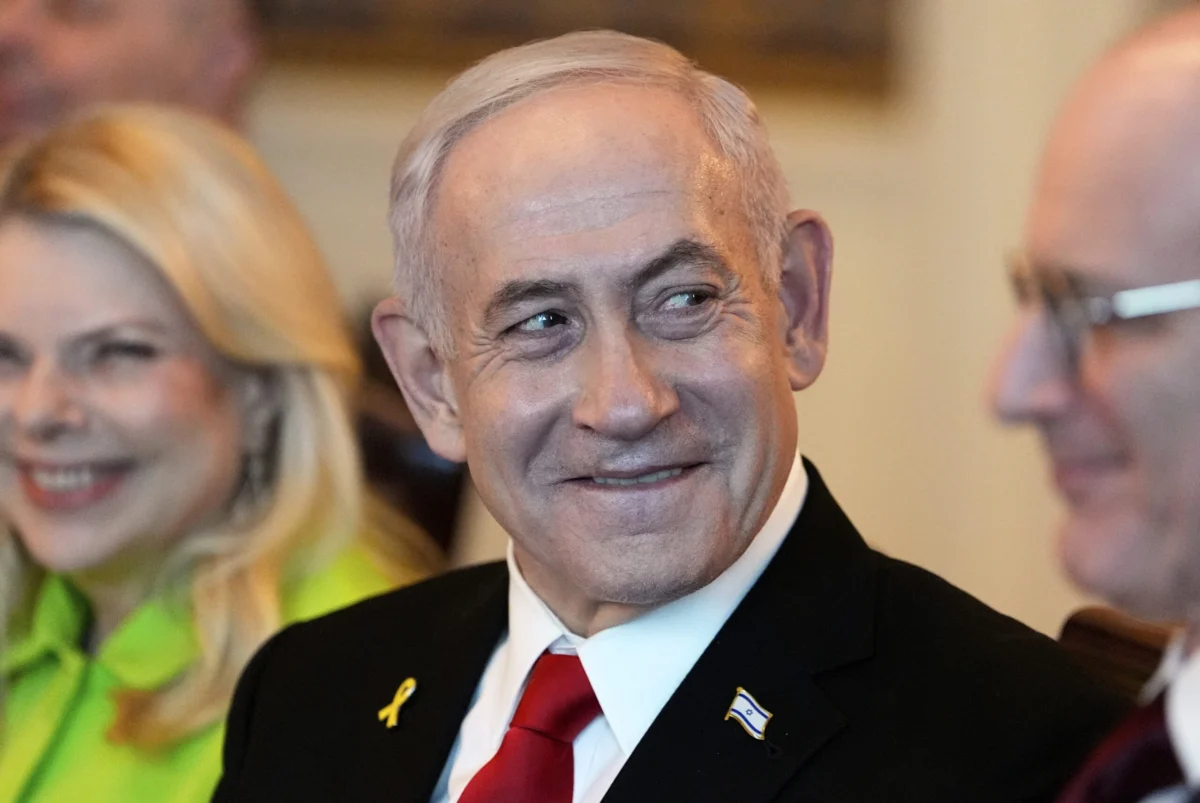
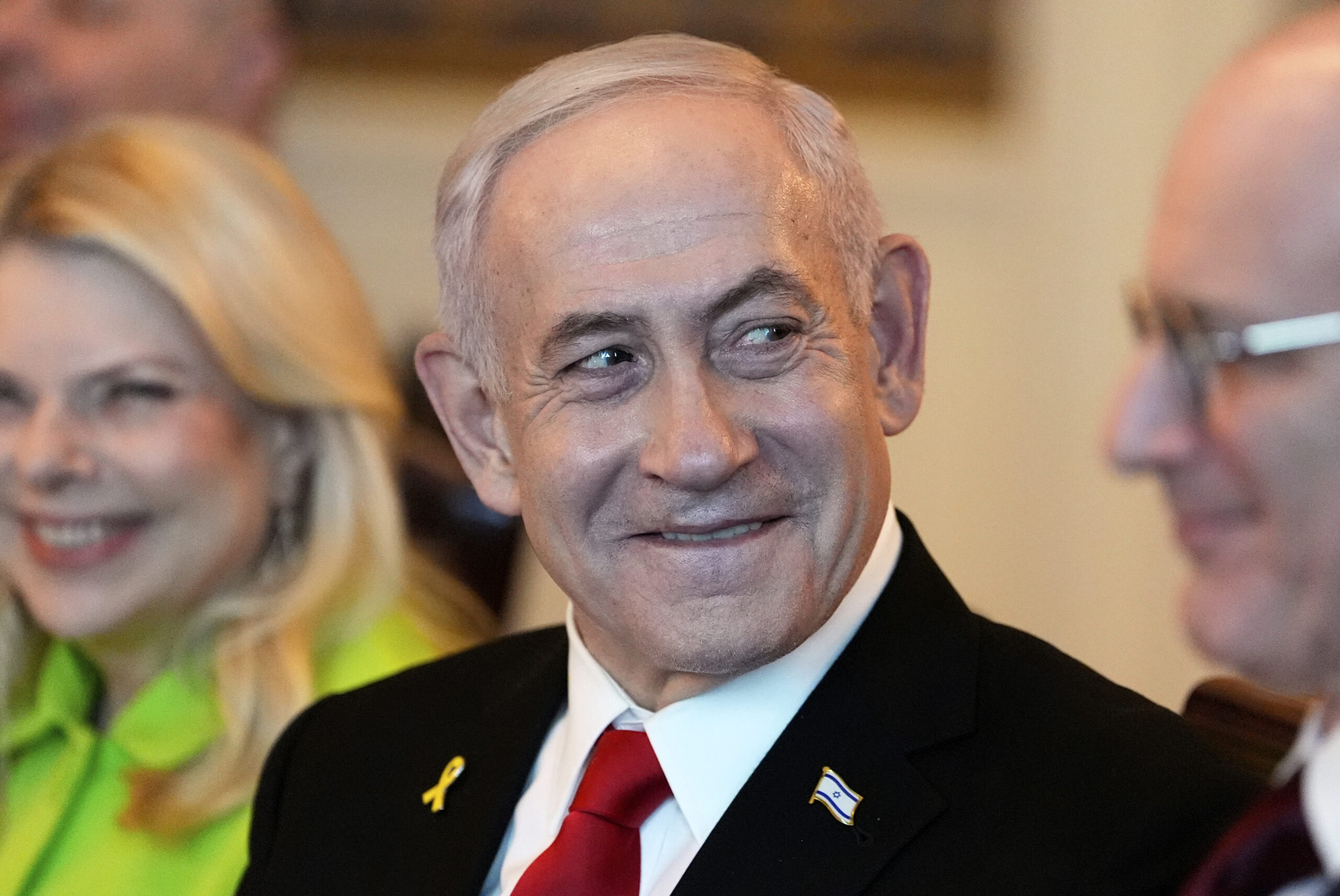
A new national survey conducted by The Economist and YouGov has revealed a significant shift in American public opinion regarding the Israeli-Palestinian conflict and the international legal standing of Israeli Prime Minister Benjamin Netanyahu. According to the poll results released on Tuesday, approximately 49% of Americans believe the United States should enforce the International Criminal Court’s (ICC) arrest warrant for the Israeli leader. This finding comes amid heightened diplomatic tensions as the Prime Minister prepares for a high-profile visit to the United States in September to attend the United Nations General Assembly.
The data suggests a deepening divide within the American electorate over the conduct of the war in Gaza and the responsibilities of the United States as a global arbiter of international law. While nearly half of the respondents supported the enforcement of the ICC warrant, 27% opposed such action, and 23% remained undecided. Furthermore, the survey explored public perception of the Prime Minister’s culpability, with 47% of respondents stating they believe Netanyahu is guilty of war crimes in the Gaza Strip.
The Evolution of the ICC Arrest Warrant and International Legal Standing
The International Criminal Court, headquartered in The Hague, issued arrest warrants in 2024 for Benjamin Netanyahu and then-Defense Minister Yoav Gallant, as well as several high-ranking leaders of Hamas. The charges leveled by ICC Prosecutor Karim Khan included the use of starvation as a method of warfare, willfully causing great suffering, and intentional attacks against a civilian population.
The legal status of these warrants remains a point of intense contention in Washington. The United States is not a party to the Rome Statute, the 1998 treaty that established the ICC. Although the Clinton administration originally signed the treaty, it was never ratified by the U.S. Senate due to concerns regarding the potential for politically motivated prosecutions of American service members and officials. This lack of ratification means the U.S. is not legally obligated to comply with ICC directives, a position that has been consistently maintained by both Democratic and Republican administrations, albeit with varying degrees of hostility toward the court itself.
In February 2025, President Donald Trump escalated the U.S. opposition to the court by imposing a series of sanctions against ICC officials. The administration characterized the court’s focus on Israel as "illegitimate and baseless," arguing that the ICC was overstepping its jurisdiction by targeting a non-member state that possesses its own robust independent judiciary.
A Chronology of Diplomatic and Legal Friction
The current impasse is the result of a multi-year escalation in both military conflict and legal maneuvering. To understand the current polling data, it is necessary to examine the timeline of events that led to this point:
- October 7, 2023: Hamas launches a massive terror attack on southern Israel, resulting in the deaths of approximately 1,200 people and the taking of over 240 hostages. Israel responds with a large-scale military offensive in the Gaza Strip.
- Early 2024: International humanitarian organizations raise alarms regarding the mounting civilian death toll and the collapse of infrastructure in Gaza. The ICC Prosecutor begins a formal investigation into potential war crimes committed by all parties.
- May 2024: ICC Prosecutor Karim Khan officially applies for arrest warrants for Netanyahu, Gallant, and Hamas leaders Yahya Sinwar, Mohammed Deif, and Ismail Haniyeh.
- Late 2024: The ICC Pre-Trial Chamber confirms the warrants, sparking international debate over the "moral equivalence" between a democratic state and a designated terrorist organization.
- February 2025: President Donald Trump, shortly after his inauguration, issues an executive order imposing sanctions on ICC personnel involved in the investigation of U.S. and Israeli actions.
- July 2025: The Economist/YouGov poll reveals that 49% of Americans support the enforcement of the warrant. Concurrently, New York City officials begin debating the legality of arresting Netanyahu upon his arrival for the UN General Assembly.
Domestic Political Conflict: The New York City Flashpoint
The debate over Netanyahu’s legal status has moved from the theoretical halls of international law to the practicalities of local governance. New York City Mayor Zohran Mamdani recently ignited a firestorm of controversy by suggesting that the city should explore its jurisdiction to arrest the Prime Minister during his upcoming visit.
In an interview with Lulu Garcia-Navarro, Mamdani described Netanyahu as a "war criminal" and stated that his administration was in "active" conversations regarding the possibility of enforcing the ICC warrant within city limits. "What you will find is that is an opinion that is held by many, purely because of what his actions have wrought over these last many years," Mamdani said.
However, legal experts have pointed out that such an action would likely be impossible under both federal and international law. As a visiting head of government attending a United Nations function, Netanyahu is shielded by diplomatic immunity and the Headquarters Agreement between the United States and the UN. Any attempt by a local municipality to interfere with a visiting foreign dignitary would likely be preempted by the federal government and could trigger a constitutional crisis regarding the executive branch’s sole authority over foreign policy.
The Trump Administration’s Strategic Counter-Narrative
President Donald Trump has remained a staunch defender of the Israeli Prime Minister, framing the ICC’s actions as an assault on Western sovereignty. In a recent statement on Truth Social, the President dismissed the possibility of an arrest and pivoted the focus toward the regional influence of Iran.
"Benjamin Netanyahu will not be arrested, in any way, shape, or form, while in the United States of America," Trump posted. He characterized the Prime Minister as a vital ally in the struggle against the "Islamic Republic of Iran," an administration he blamed for the "Spiral of Death and Destruction" in the Middle East. Trump’s rhetoric emphasizes a geopolitical strategy that prioritizes the containment of Iran and the strengthening of the Abraham Accords framework over the enforcement of international humanitarian law as defined by the ICC.
The President’s defense of Netanyahu also serves as a sharp critique of his predecessors and domestic political opponents. By framing the arrest warrant as a distraction from Iranian aggression, the Trump administration seeks to consolidate support among pro-Israel voters while painting the ICC and its supporters as tools of anti-Western interests.
Analysis of Shifting Public Opinion and Demographic Trends
The Economist/YouGov poll highlights a significant departure from the historical consensus in American politics, where support for Israel was often viewed as a bipartisan certainty. The fact that nearly half of the population supports an arrest warrant for an Israeli leader indicates that the "special relationship" is facing its most significant domestic challenge in decades.
Political analysts suggest that this shift is driven by several factors. First, there is a growing generational divide; younger Americans, particularly Gen Z and Millennials, are statistically more likely to sympathize with the Palestinian cause and hold a critical view of Israeli military strategy. This demographic is also more inclined to support international institutions like the ICC as a means of ensuring global accountability.
Second, the duration and intensity of the conflict in Gaza have dominated news cycles for nearly two years. The visual evidence of destruction in Gaza, combined with reports of famine and civilian casualties, has influenced public perception in ways that traditional diplomatic narratives have struggled to counter. The 47% of Americans who believe Netanyahu is guilty of war crimes reflects the impact of this sustained media coverage.
Broader Implications for International Law and U.S. Diplomacy
The refusal of the United States to recognize the ICC warrant creates a complex dilemma for international relations. If the U.S. continues to shield Netanyahu while simultaneously advocating for international law in other contexts—such as the ICC warrant for Russian President Vladimir Putin—it risks accusations of hypocrisy and a "double standard" from the Global South.
Conversely, if the U.S. were to allow the ICC to exert jurisdiction over its allies, it would set a precedent that could eventually be used against American officials and military personnel. This "sovereignty vs. accountability" debate remains the central tension in U.S. foreign policy.
As the September UN General Assembly approaches, the streets of New York are expected to become a theater for these conflicting ideologies. Pro-Palestinian activists have already begun organizing large-scale demonstrations to demand Netanyahu’s arrest, while pro-Israel groups and the federal government prepare to ensure his security and diplomatic passage.
The polling data from The Economist/YouGov serves as a harbinger of the atmospheric tension awaiting the Prime Minister. With 49% of the host nation’s public favoring his arrest, Netanyahu’s visit will be marked by a level of domestic hostility rarely seen for a close American ally. Whether this public sentiment eventually translates into a shift in formal U.S. policy remains to be seen, but the data suggests that the political ground upon which the U.S.-Israel alliance stands is becoming increasingly fractured.

 Yuyun Lusiyani
 Joko Widodo
 Pevita Pearce
 admin
admin
