
 Yuyun Lusiyani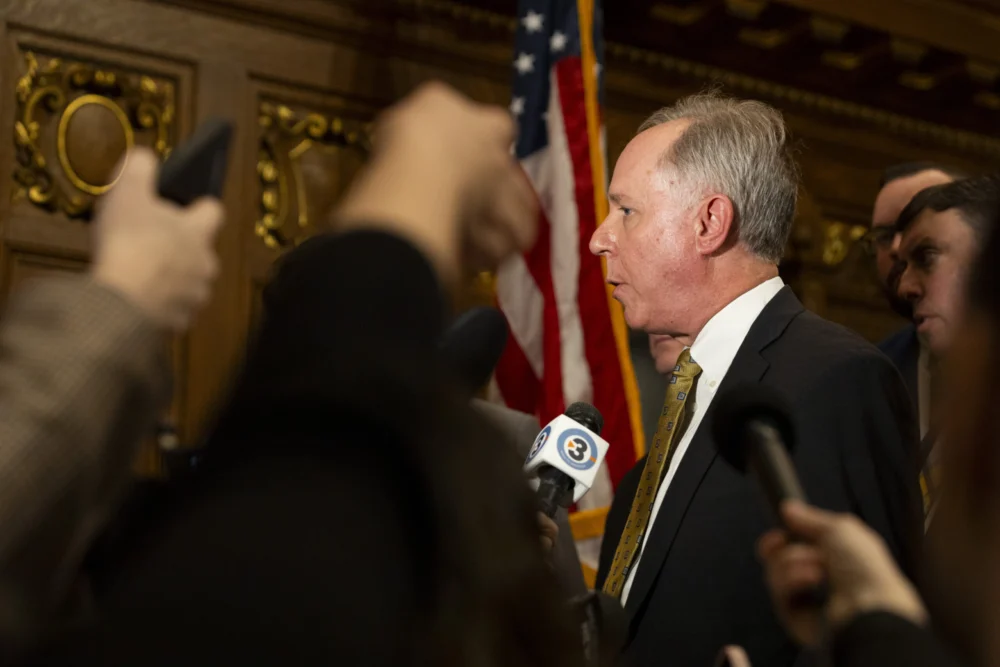
After years of staunch opposition from Wisconsin’s powerful Assembly Speaker, the state Legislature has finally passed a bipartisan bill to extend postpartum Medicaid coverage for new mothers from 60 days to a full year. The measure, which had long been stalled despite broad support, cleared the Assembly with an overwhelming 95-1 vote on Thursday, marking a rare capitulation for Speaker Robin Vos and a significant victory for maternal health advocates. The bill now heads to Democratic Governor Tony Evers, who has consistently championed such legislation and is expected to sign it swiftly into law, bringing Wisconsin in line with nearly every other state in the nation.
The Breakthrough: A Shift in the Political Landscape
The final vote in the Assembly was the culmination of sustained advocacy, internal Republican pressure, and a dramatic week in Wisconsin politics. Speaker Vos, a Republican who has served as Assembly leader for an unprecedented period, surprised many by relenting on a policy he had previously dismissed as an unnecessary expansion of welfare spending. According to one lawmaker present, Vos addressed his caucus late Wednesday, stating, "Go out and take your victory lap. You won." His own vote in favor of the bill underscored the magnitude of the policy shift.
This legislative turnaround occurred on a day of multiple surprises involving Vos. Earlier that morning, at the start of the session, the long-serving speaker announced his intention to retire at the end of the year, citing a minor heart attack he experienced in the fall and a need to reduce stress. "To my leadership team and my caucus colleagues, thank you for your trust, thank you for your candor and your willingness to carry responsibility when it is heavy," he reportedly told his peers. While not directly linked, the timing of his retirement announcement and the subsequent passage of the postpartum bill led many observers to speculate about a potential connection, suggesting a softening of his hardline stance in his final months or a desire to resolve long-standing issues.
A Long-Contested Measure: Understanding the Policy and Its Context
The legislation opts Wisconsin into a federal program, primarily funded through the American Rescue Plan Act (ARPA), which offers enhanced federal matching funds for states that extend Medicaid eligibility for new mothers from the standard 60 days to 12 months post-birth. This federal incentive was designed to address a growing national concern over maternal health outcomes and disparities. By extending coverage, the program aims to ensure low-income mothers continue to receive vital healthcare services during a critical and often vulnerable period, preventing gaps in care that can lead to adverse health events.
For years, Wisconsin had been an outlier, with only Arkansas remaining alongside it as states that had not adopted this federal option. The existing 60-day coverage window often left new mothers without access to necessary medical care for postpartum depression, hypertension, diabetes, cardiovascular issues, and other complications that can arise or worsen months after childbirth. Medical experts widely agree that the year following birth is crucial for a woman’s recovery and long-term health, directly impacting her ability to care for her newborn.
The Political Stalemate: Vos’s Historical Opposition and Its Roots
Speaker Vos’s prolonged opposition to the bill was a significant hurdle. A staunch fiscal conservative, Vos consistently framed the extension of Medicaid coverage as an expansion of "welfare" and an undue burden on state taxpayers. He argued against increasing state spending on social programs, even when federal matching funds significantly offset the cost. Wisconsin’s Legislative Fiscal Bureau estimated that, once fully phased in, the 12-month policy would cost the state approximately $9.4 million annually, with the federal government contributing an additional $14.1 million due to the enhanced ARPA match. This means the federal government covers nearly 60% of the program’s cost, making it a financially attractive option for states.
Vos’s control over the legislative agenda in the Assembly is legendary. As the longest-serving Assembly speaker, he wields immense power, influencing which bills are brought to a vote, allocating campaign funds to favored candidates, and often isolating those who challenge his authority. This formidable political leverage had effectively stifled the postpartum coverage bill for several legislative sessions, despite its bipartisan sponsorship and widespread support from various stakeholder groups.
A Week of Dramatic Turns: The Path to Passage
The final push for the bill intensified in recent weeks as the Republican-controlled Legislature approached the end of its session, with lawmakers keen to conclude legislative business and shift focus to upcoming campaigns. The urgency was palpable, and the dynamics changed significantly.
A key turning point came from within Vos’s own Republican caucus. Representative Patrick Snyder, a Republican and the lead sponsor of the postpartum bill, had made its passage a central promise to his constituents. Facing reelection in a competitive swing district, Snyder went to Speaker Vos with a clear ultimatum: he would not seek reelection if he failed to deliver on this legislative goal. This threat of an open, contested GOP seat, which would require significant party resources to defend, likely played a crucial role in shifting Vos’s calculations. Incumbents generally hold a significant advantage in elections, and losing one’s own party’s incumbent due to internal legislative stonewalling is a politically undesirable outcome. Snyder recounted his conversation with the speaker, stating, "I just said if we can’t get this thing passed, I just don’t feel I can come back. It was that important of a bill."
Adding to the internal pressure, a group of seven other Republican lawmakers, all representing competitive districts, joined Snyder in advocating for the bill. In a letter to Vos dated February 3, this group strategically argued that the legislation aligned with core Republican priorities, specifically highlighting the importance of safeguarding infants by ensuring their mothers remain healthy and supported. This framing helped recontextualize the bill from a "welfare expansion" to a "pro-family, pro-life" measure, making it more palatable to conservative members. Even amidst their pushback, these lawmakers were careful to acknowledge Vos’s power, with one calling him "a tough negotiator" and another publicly thanking him for "his understanding."
Democrats, sensing a potential opening, also intensified their efforts on Wednesday. Employing a tactic to force a vote, they aggressively proposed amendments to various unrelated bills, attempting to attach the postpartum Medicaid extension to them. This created legislative "havoc," as Republicans repeatedly ruled the amendments non-germane, but it kept the issue front and center and applied significant public pressure. While the tactic nearly derailed the carefully orchestrated GOP efforts to convince Vos, according to Snyder, it underscored the widespread demand for action. "I guess maybe they just didn’t think I could get it done," Snyder later told ProPublica, "And now we did." Democrats employed similar tactics for another stalled bipartisan bill concerning insurance coverage for breast cancer screenings, which also passed on Thursday, signaling a broader push to clear a backlog of popular, bipartisan measures.
Advocacy and the Public Pulse: A Force for Change
Beyond the legislative chambers, a powerful grassroots movement played a critical role in sustaining pressure for the bill’s passage. Hospitals and medical groups, including the Wisconsin Hospital Association and various physician organizations, consistently advocated for the extension, citing clear medical evidence of the benefits of comprehensive postpartum care. They highlighted research showing that the year after birth is a dangerous time for women, with significant risks for conditions like postpartum depression, blood clots, hypertension, and cardiovascular ailments, which contribute to maternal morbidity and mortality.
Notably, anti-abortion advocates also threw their weight behind the legislation, aligning it with their broader mission of supporting pregnant women and new mothers throughout and after pregnancy. This diverse coalition of support demonstrated the widespread recognition of the bill’s importance across the political spectrum and various interest groups.
A prominent figure in this advocacy was Kate Duffy, a Wisconsin mother who gained a substantial social media following under the moniker "Motherhood for Good." Duffy had been relentlessly challenging Speaker Vos and urging lawmakers to act on the extended postpartum coverage for approximately a year. Her efforts resonated particularly with Wisconsin women, many of whom responded to her calls to action, contacting their representatives and keeping the issue in the public discourse. Duffy credited the bill’s passage to "good old-fashioned organizing and relentless persistence," adding, "We just would not shut up about this." This sustained public pressure, amplified through social media and direct constituent outreach, likely contributed to the growing political cost of continued inaction.
The Costs and Benefits: A Deeper Dive into the Impact
The financial outlay for the state, estimated at $9.4 million, is a relatively modest investment given the potential health and economic benefits. This figure pales in comparison to the costs associated with untreated maternal health complications, which can lead to emergency room visits, long-term disability, and increased healthcare expenditures. For context, Wisconsin’s total state budget for the 2023-2025 biennium is over $100 billion, making the $9.4 million a fraction of the overall spending.
The human benefits, however, are immeasurable. Extending Medicaid coverage ensures that thousands of low-income mothers across Wisconsin will have access to crucial preventative care, mental health services, and treatment for chronic conditions that can emerge or worsen postpartum. This is particularly vital in addressing health disparities. National data consistently show higher rates of maternal mortality and morbidity among women of color, especially Black women, who are three to four times more likely to die from pregnancy-related causes than white women. While Wisconsin’s specific maternal mortality rates are not explicitly detailed in the original context, the national trend underscores the critical importance of extended coverage in improving equity in health outcomes. Access to continuous care can help identify and manage high-risk conditions, provide timely interventions for mental health crises like postpartum depression, and ultimately save lives.
Broader Context and Implications: A Glimpse into Wisconsin’s Future
Wisconsin’s decision to extend postpartum Medicaid coverage places it squarely within the national mainstream, leaving only Arkansas as the sole holdout. This move reflects a growing consensus across the country that supporting maternal health is a fundamental public health priority.
The passage of this bill also holds significant political implications for Wisconsin. For Speaker Vos, it represents a remarkable concession after years of unyielding opposition. While framed as a "victory lap" for his caucus, it also highlights the limits of even the most powerful legislative leader when faced with sustained bipartisan pressure, public advocacy, and internal caucus dissent, particularly in an election year. His impending retirement adds another layer of intrigue, suggesting a potential shift in the legislative environment in the coming years.
The successful navigation of this complex issue, despite significant political obstacles, could also signal a path forward for future bipartisan efforts in Wisconsin’s often-gridlocked Legislature. It demonstrates that when internal caucus pressure, external advocacy, and strategic legislative maneuvers align, even deeply entrenched positions can be overcome for the sake of public good. For the thousands of new mothers in Wisconsin, the extension of Medicaid coverage means a more secure and healthier start to their journey of motherhood, a testament to the power of persistence and political compromise.




 Jia Lissa
 Joko Widodo
 Eva Lovia

 Pevita Pearce