
 Yuyun Lusiyani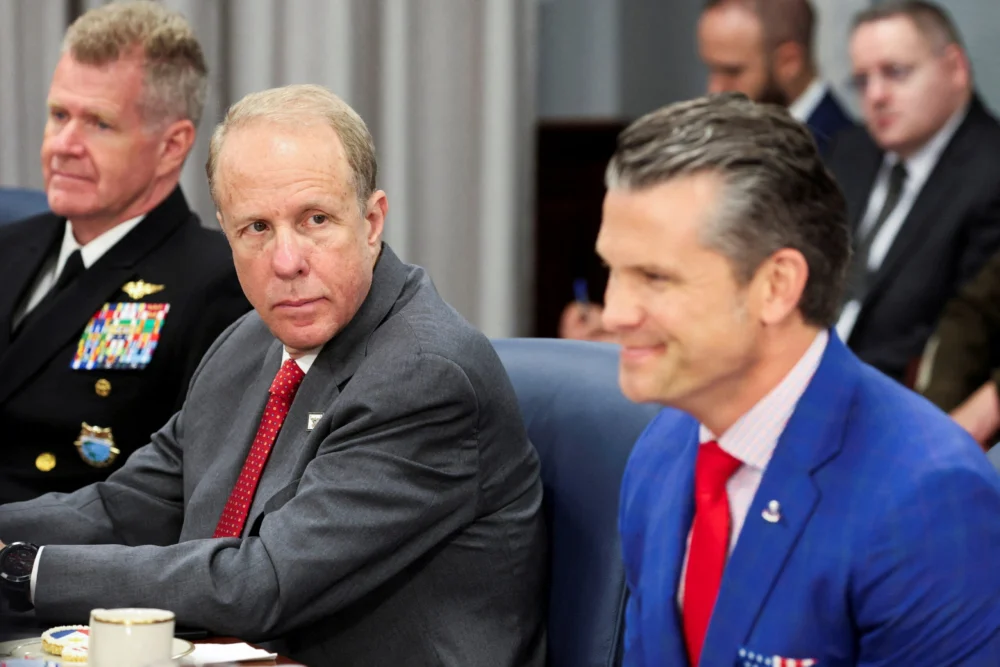
Thousands of companies are vying for a share of billions of dollars in Defense Department contracts to construct the "Golden Dome for America," a sophisticated missile defense shield designed to intercept and destroy incoming threats against the United States. However, amid this fierce competition for a project expected to command up to $151 billion, a discernible pattern of potential conflicts of interest has emerged, casting a shadow over the integrity of the procurement process. At the heart of this controversy is Steve Feinberg, the billionaire founder of Cerberus Capital Management, a private equity firm that owns or is a majority investor in at least four companies already awarded contracts for the ambitious initiative. Feinberg, until recently the head of Cerberus, now serves as the Deputy Secretary of Defense, the second-highest-ranking official in the Pentagon, and notably, oversees the very office responsible for the Golden Dome project.
The revelation stems from a comprehensive trove of nearly 3,200 financial disclosure records made public by ProPublica, detailing the intricate financial landscapes of over 1,500 federal officials appointed by President Donald Trump. These documents, including records for Trump himself and Vice President JD Vance, paint a stark picture of a governmental landscape where senior officials frequently maintain deep financial connections to the industries they are tasked with regulating or awarding contracts to. This backdrop is particularly concerning given the Trump administration’s dismantling of various ethics safeguards, which were originally designed to prevent such conflicts and ensure public trust in government operations.
The Golden Dome Initiative and Feinberg’s Dual Role
The concept of a space-based missile defense system is not new, echoing President Ronald Reagan’s "Strategic Defense Initiative" (SDI), famously dubbed "Star Wars," in the 1980s. President Trump rekindled this vision on the campaign trail, proposing the Golden Dome for America, a multi-layered defense system deployed from land, sea, and space, modeled after Israel’s highly effective Iron Dome missile defense system. The project, which commenced its contractor selection phase in December, has already seen awards granted to over 2,000 firms. Among these, Cerberus Capital Management’s portfolio companies—North Wind, Stratolaunch, Red River Technology, and NetCentrics Corp.—have secured a foothold, raising questions about preferential treatment.
Steve Feinberg’s connection to Cerberus is particularly noteworthy. Upon his nomination last year, Feinberg’s financial disclosures listed assets exceeding $2 billion. He formally filed paperwork asserting his divestment from Cerberus and its associated entities. However, his government ethics records include an unusual and extended clause: he is permitted to continue contracting with Cerberus for essential services such as tax compliance, accounting, and health care coverage. Initially approved with a short-term deadline of April 2026, this financial relationship was granted an indefinite extension earlier this year at Feinberg’s request, a decision approved by Defense Department officials. While Feinberg’s amendment to his ethics agreement states he would pay "customary and reasonable fees," the specific amounts remain undisclosed, adding to the opacity.
The Defense Department maintains that Feinberg "does not have direct responsibility for any Golden Dome acquisitions" and declined to comment on whether he or his office has met with contractor representatives. However, what remains undisputed is Feinberg’s overarching oversight of the Golden Dome initiative. Space Force General Michael Guetlein, the project’s lead, reports directly to Feinberg, establishing a clear line of authority that intertwines the Deputy Secretary’s office with the burgeoning defense project. This arrangement, according to ethics experts, creates at minimum a significant perception of conflict of interest, potentially undermining public confidence in the fairness and impartiality of the contracting process. Richard Painter, who served as a White House ethics lawyer under President George W. Bush, drew parallels to President Dwight D. Eisenhower’s cautionary address against the "military-industrial complex," highlighting the risks inherent in overly close relationships between government and private defense contractors.
A spokesperson for Cerberus Capital Management stated via email that "Mr. Feinberg divested his stake in Cerberus and any funds that it manages, and is not involved with the operations of Cerberus or any of its portfolio companies in any way." The spokesperson further clarified that the administrative services provided to Feinberg "are unrelated to any investment activities or operations of Cerberus or its funds and were pre-approved by the Department of War’s Ethics Office and the Office of Government Ethics."
Erosion of Ethics Safeguards Across the Administration
The concerns surrounding the Golden Dome project are not isolated but reflect a broader pattern observed across the Trump administration, characterized by a systematic weakening of ethical guardrails. On his first day back in office, President Trump rescinded an executive order signed by President Joe Biden, which had mandated a strict ethics pledge for appointees. This pledge explicitly barred officials from working on issues related to their former lobbying topics or clients for two years. Weeks later, the administration removed 17 inspectors general, officials specifically charged with investigating fraud, corruption, and conflicts of interest across federal agencies. Concurrently, the head of the Office of Government Ethics (OGE), the agency tasked with overseeing ethics compliance across the executive branch, was also removed, leaving the office without its leadership or a chief of staff for an extended period.
Against this backdrop, ProPublica’s investigative journalism, leveraging thousands of public disclosure records, has consistently highlighted how personal financial interests have intersected with government decision-making within the administration. The organization’s searchable online tool has become an invaluable resource, providing the public with unprecedented insight into the financial ties of powerful, often unseen, presidential appointees.

A Litany of Potential Conflicts: Beyond the Pentagon
The pattern of officials with direct ties to industries they oversee extends far beyond the Pentagon.
- Attorney General Pam Bondi: Disclosure documents revealed that Bondi made well-timed securities trades, on occasion selling stocks just prior to market plunges triggered by Trump’s announcements of new tariffs. While officials either did not respond to inquiries or claimed no insider information, the timing raised significant questions.
- Environmental Protection Agency (EPA): Two high-ranking scientists at the EPA, instrumental in downgrading the agency’s assessment of formaldehyde’s health risks, had previously held senior positions at the chemical industry’s leading trade group. The EPA asserted that the scientists had obtained ethics advice approving their work on the project.
- Justice Department and Cryptocurrency: Todd Blanche, Trump’s former criminal defense attorney and now the second-highest-ranking official in the Justice Department, exemplifies another significant conflict. His disclosure records indicated ownership of at least $159,000 in crypto-related assets last year. Simultaneously, he initiated actions to shut down investigations into various crypto companies, dealers, and exchanges. Following ProPublica’s reporting, six Democratic senators labeled this a "glaring" conflict of interest, and a watchdog group requested an investigation by the Justice Department’s inspector general. A departmental spokesperson defended Blanche, stating his orders were "appropriately flagged, addressed and cleared in advance," but did not specify who provided this clearance.
- National Highway Traffic Safety Administration (NHTSA): Jonathan Morrison, nominated to head NHTSA, disclosed a two-year tenure as a director of the Autonomous Vehicle Industry Association, a trade group representing self-driving car companies. Morrison, who left the position in February 2024, expressed his desire for NHTSA to establish national standards and lead the industry’s development of autonomous vehicles. An NHTSA spokesperson argued no recusal was necessary, citing his departure from the organization prior to the election and his nomination.
- U.S. Trade Representative (USTR): The USTR’s office, responsible for tariff policy, has seen its head, Jamieson Greer, withhold the names of over 50 former clients from his time at King & Spalding, a prominent law firm. Greer cited New York and D.C. bar rules protecting client confidentiality. Similarly, Kwan Kim, Greer’s senior adviser, an international trade lawyer formerly with Covington & Burling, kept the names of 52 companies he represented secret, also citing D.C. Bar rules. Kim’s prior work involved helping businesses secure federal exemptions from steel and aluminum tariffs and defending companies accused of import-related crimes. The USTR office did not respond to requests for comment.
Ethics experts like Kedric Payne, ethics director at the nonpartisan watchdog group Campaign Legal Center, find this lack of transparency deeply troubling. "When you see these types of close connections between the regulated community and the new regulators, it raises a yellow flag," Payne stated. "Because these officials are walking an ethical tightrope where any meeting or communication with their former employer and client could become a serious conflict of interest."
Marc Berkowitz and Lockheed Martin
Another high-ranking Defense Department official whose financial ties warrant attention is Marc Berkowitz, confirmed in December as Assistant Secretary of Defense for Space Policy. Berkowitz, who previously worked as a space industry consultant and vice president for strategic planning at Lockheed Martin, described the Golden Dome project as a top priority during his confirmation. Lockheed Martin, a giant defense and aerospace company, was among the firms awarded Golden Dome contracts mere days before Berkowitz’s confirmation. The company is poised for a significant role, having established a dedicated webpage for the Golden Dome, and Reuters reported it is one of several firms developing competing prototypes.
Berkowitz’s financial disclosure documents revealed he receives two monthly pensions from Lockheed and holds between $1 million and $5 million worth of stock in the firm. He agreed to divest these holdings by March 18. During his confirmation hearing, he downplayed any direct role in Golden Dome contract decisions, emphasizing his position as primarily policy-oriented. A senior Defense Department official informed ProPublica that Berkowitz is recusing himself from matters involving Lockheed until his remaining shares are sold. Pentagon spokesperson Sean Parnell defended the department’s ethics framework as "rigorous," asserting that both Feinberg and Berkowitz are in full compliance with the law, dismissing any claims to the contrary as "fake news."
Broader Implications and Official Defenses
Conflicts of interest have historically challenged both Democratic and Republican administrations. However, ethics experts contend that Trump’s second term marks a distinct departure from modern norms, characterized by an unprecedented erosion of established safeguards. President Trump has openly defended his family’s financial enrichment while in office, including through cryptocurrency deals that critics argue allow investors, potentially including foreign entities, to curry favor by boosting the president’s personal wealth. "I found out nobody cared, and I’m allowed to," Trump reportedly told The New York Times, referring to his family’s business dealings.
A stark example cited by Virginia Canter, chief counsel for ethics and corruption at Democracy Defenders Fund, a non-profit governmental watchdog group, is Trump’s unapologetic acceptance of a Boeing 747 aircraft, valued at approximately $400 million, from the Qatari government, followed by the transfer of nearly $1 billion from a nuclear weapons program to retrofit it. Canter, a former ethics lawyer across multiple administrations, bluntly stated, "Ethics is in the toilet."
White House spokesperson Anna Kelly offered a counter-narrative, defending the president and his appointees. "President Trump is leading the most transparent administration in history," Kelly asserted. "He has also nominated highly-qualified individuals across the Executive Branch who have a wide range of public and private sector backgrounds."
Despite these official assurances, the ongoing investigations and public disclosures by ProPublica underscore a persistent concern among watchdogs and a segment of the public regarding the transparency and integrity of government operations. The ability for high-ranking officials to maintain significant financial ties to entities benefiting from their policy decisions, coupled with the weakening of oversight mechanisms, poses a considerable challenge to democratic accountability and public trust in the federal government. The full implications of these intertwined financial and political relationships for national security, economic fairness, and the very foundation of ethical governance continue to unfold.


 Ana Megawati
 Joko Widodo
 Eva Lovia
 Jia Lissa
 Pevita Pearce