
 Jia Lissa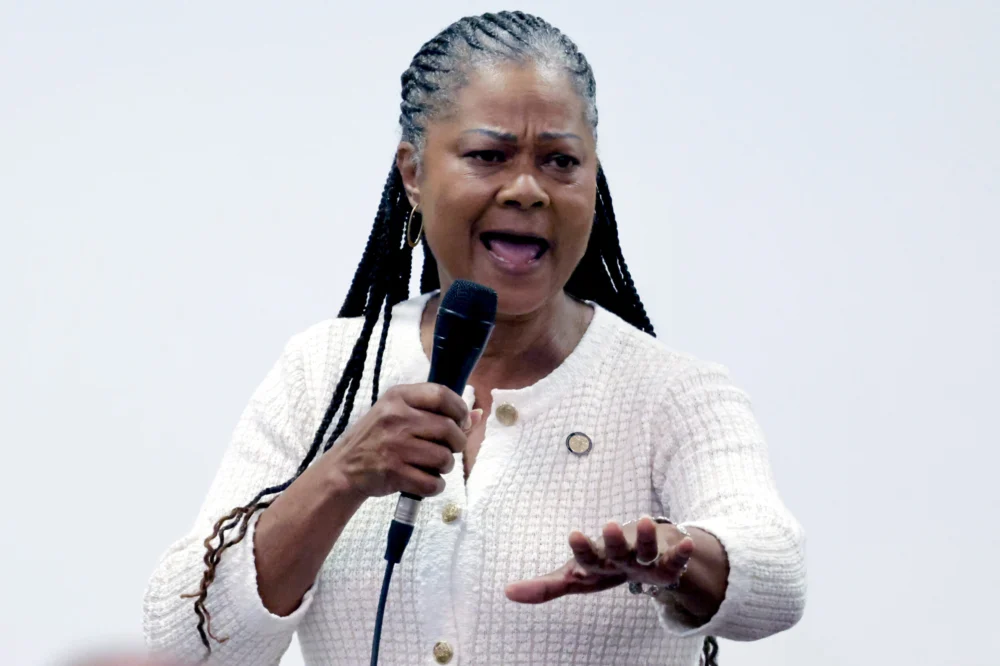
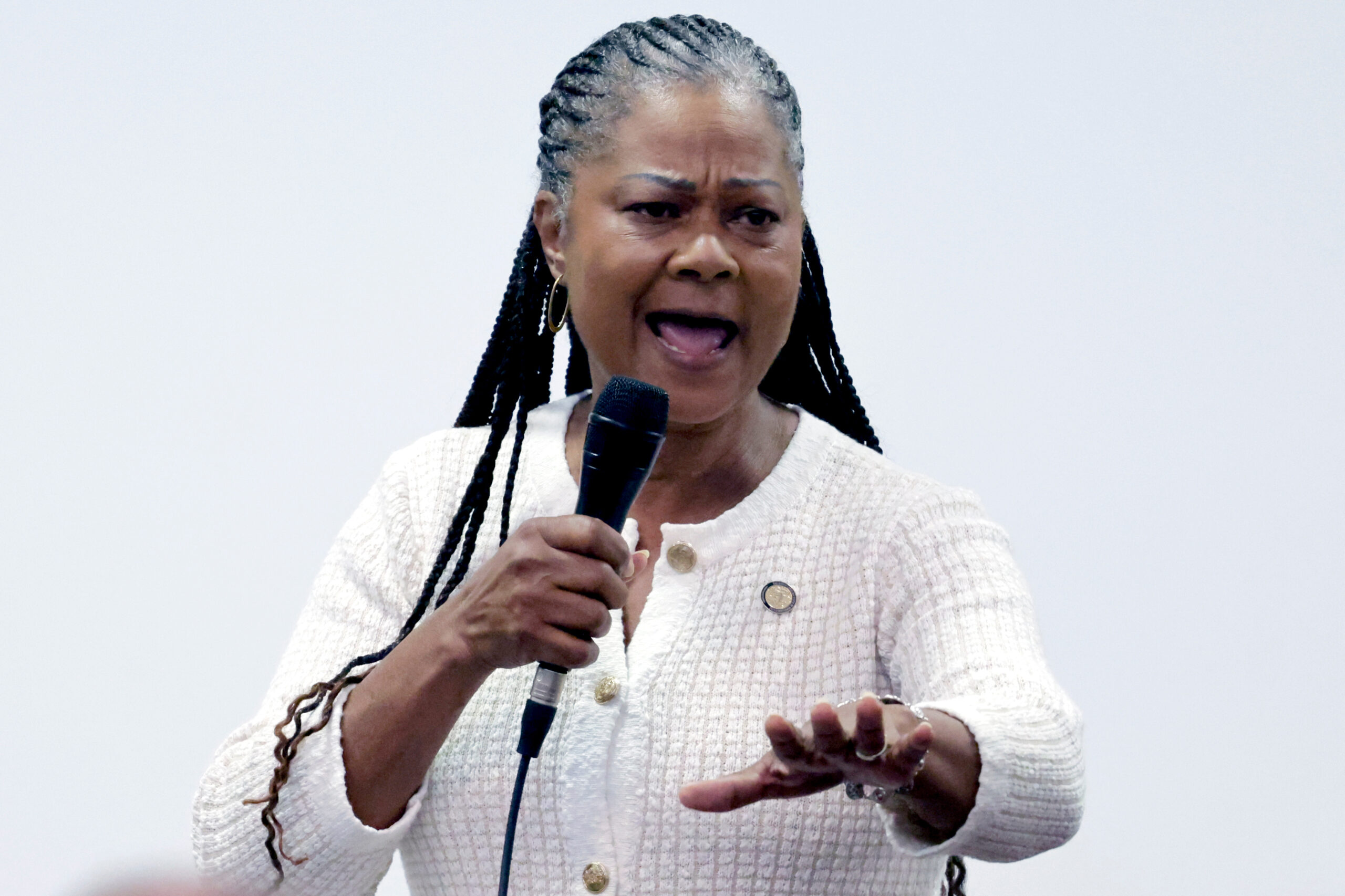
In a primary election that has sent shockwaves through the North Carolina political landscape, seven-term Democratic incumbent Carla Cunningham suffered a resounding defeat in her bid for re-election to the state’s 106th House District. On Tuesday night, voters in the Charlotte-based district chose to move in a different direction, handing a decisive victory to Reverend Rodney Sadler. The margin of defeat was historically significant for an established incumbent, with Sadler securing approximately 70% of the vote compared to Cunningham’s 22%. The nearly 50-point gap marks the end of a legislative career that began in 2013 and highlights a deepening ideological rift within the North Carolina Democratic Party regarding immigration policy and party discipline.
The results from Tuesday’s primary serve as a capstone to a tumultuous year for Representative Cunningham, whose relationship with her party leadership and her constituency soured following a series of high-profile legislative decisions and public comments. The 106th district, which covers significant portions of northeastern Charlotte and Mecklenburg County, is a diverse and traditionally Democratic stronghold. The rejection of a fourteen-year veteran of the General Assembly suggests that local voters prioritized ideological alignment and party loyalty over seniority.
The Legislative Flashpoint: House Bill 10 and the Veto Override
The primary catalyst for Cunningham’s political downfall can be traced back to July, during the most recent legislative session of the North Carolina General Assembly. At the center of the controversy was a Republican-sponsored bill designed to mandate cooperation between local law enforcement agencies and U.S. Immigration and Customs Enforcement (ICE). The legislation required county sheriffs to determine the citizenship status of inmates and to honor ICE detainer requests, effectively extending the period individuals could be held in custody if they were suspected of being in the country illegally.
Governor Josh Stein, a Democrat, had vetoed the bill, arguing that it overstepped the bounds of local governance and could potentially undermine trust between immigrant communities and local police. However, the Republican-led legislature sought to override the veto. In a move that stunned her colleagues, Representative Cunningham emerged as the lone Democrat in the House to vote with the Republican supermajority to override the Governor’s veto.
Cunningham’s single vote proved to be the decisive factor in the override’s success. The measure passed by the narrowest of margins, officially enacting the mandate into law. The decision was viewed by Democratic leadership not merely as a policy disagreement, but as a strategic betrayal that empowered the opposition and bypassed the executive authority of the state’s highest Democratic official.
Rhetoric and the "Assimilation" Controversy
Beyond the legislative mechanics of her vote, the rhetoric Cunningham employed on the House floor to justify her position drew intense scrutiny and condemnation from civil rights advocates and fellow Democrats. During the debate preceding the override vote, Cunningham delivered a speech in which she argued that "all cultures are not equal" and asserted that immigrants "must assimilate" and "adapt to the culture of the country they wish to live in."
These comments were widely interpreted as echoing nativist sentiments more commonly associated with the far-right wing of the Republican Party. For many in the 106th district, which boasts a significant and growing immigrant population, these remarks were seen as an affront to the multicultural fabric of the Charlotte community. The backlash was immediate. Local activists and community leaders argued that such language devalued the contributions of foreign-born residents and ignored the complexities of the American immigrant experience.
Reverend Rodney Sadler, an associate professor at Union Presbyterian Seminary and a well-known community advocate, capitalized on this sentiment during his campaign. Sadler argued that Cunningham’s rhetoric and her legislative record indicated she was no longer in touch with the values of the Democratic base. "At the end of the day, she didn’t sound any better than some of these ultra-conservative people who were demeaning Black and Brown folk on a regular basis," Sadler stated in a recent interview. He framed his candidacy as a necessary intervention to restore "authentic" Democratic representation to the district.
A Timeline of Political Isolation
The period between Cunningham’s controversial vote in July and the March primary was marked by a systematic effort by the Democratic establishment to distance itself from the incumbent. This isolation manifested in several unprecedented ways:
- July 2025: Cunningham provides the deciding vote to override Governor Stein’s veto of the ICE cooperation bill.
- August 2025: The North Carolina Democratic Party (NCDP) leadership issues a public rebuke, signaling a "purity test" regarding core party platform issues such as immigration and civil rights.
- September 2025: Governor Josh Stein breaks traditional protocol by endorsing Cunningham’s primary opponent, Reverend Rodney Sadler, a rare move against a sitting member of his own party.
- Late 2025: The NCDP takes the extraordinary step of denying Cunningham access to essential campaign infrastructure, including the VoteBuilder software and other voter data tools. This effectively crippled her ability to run a modern, data-driven ground game.
- February 2026: Internal polling begins to show Sadler with a commanding lead as the "betrayal" narrative takes hold in the Charlotte media market.
- March 2026: Cunningham is defeated by 48 percentage points in the primary.
The decision by the state party to cut off resources was particularly damaging. In contemporary politics, access to the Democratic National Committee’s voter file is considered essential for identifying supporters, organizing canvassing efforts, and managing get-out-the-vote operations. Without these tools, Cunningham was forced to rely on traditional name recognition, which ultimately proved insufficient to overcome the organized opposition of her own party.
Supporting Data: Shifting Sentiments on Immigration
The electoral outcome in North Carolina mirrors a broader national trend regarding public perception of federal immigration enforcement. According to a recent poll conducted by The Economist and YouGov, public opinion on agencies like ICE has become increasingly polarized, with a surprising shift toward skepticism. The poll found that 50% of Americans now support the idea of abolishing ICE entirely, while only 39% remain opposed to such a move.
In Charlotte, these statistics carry significant weight. The city has been the site of numerous high-profile ICE enforcement actions over the last several years. Reports from local advocacy groups and national outlets like The Guardian have documented raids that have targeted both non-citizens and, in some cases of mistaken identity or collateral enforcement, individuals with legal status. These actions have fostered a climate of apprehension in Charlotte’s immigrant-heavy neighborhoods, making any legislative move to increase cooperation with federal immigration authorities a highly sensitive issue.
For voters in the 106th district, Cunningham’s vote was not just a matter of administrative law; it was perceived as a direct threat to the safety and stability of their neighbors. The data suggests that Sadler’s message of "protecting the community" resonated far more effectively than Cunningham’s calls for "assimilation."
Official Responses and Political Implications
In the wake of the primary results, the North Carolina Democratic Party released a brief statement emphasizing unity and looking forward to the general election. While the party did not explicitly mention Cunningham by name in its victory announcement for Sadler, the subtext was clear: the party intends to maintain a cohesive front on issues it deems non-negotiable.
Governor Josh Stein’s office also issued a statement congratulating Sadler, noting that "North Carolinians deserve representatives who stand up for the values of inclusion and justice that define our state." The Governor’s early and vocal support for Sadler is seen by political analysts as a successful demonstration of executive influence over the legislative wing of the party.
The implications of this primary extend beyond the borders of Charlotte. Political observers suggest that Cunningham’s defeat serves as a warning to other "moderate" or "maverick" Democrats in the General Assembly. With the state legislature currently characterized by a Republican supermajority that can override vetoes if even a single Democrat defects, the party leadership has signaled that it will utilize every tool at its disposal to ensure discipline.
Analysis of the 106th District’s Future
Reverend Rodney Sadler now moves toward the general election as the heavy favorite in the safe Democratic seat. His platform focuses on expanding access to healthcare, investing in affordable housing in the rapidly gentrifying Charlotte area, and pursuing criminal justice reform. Perhaps most importantly, he has pledged to work toward repealing the very ICE cooperation mandates that Cunningham helped enact.
For Carla Cunningham, the defeat marks a stark end to a long tenure in the House. Once considered a reliable voice for her district, her shift toward conservative rhetoric on immigration ultimately alienated her from the coalition of voters—particularly Black, Latino, and progressive white residents—that had sustained her for over a decade.
The 106th district primary of 2026 will likely be remembered as a turning point in North Carolina politics. it demonstrated that in an era of hyper-polarization, the "big tent" of the Democratic Party has definitive boundaries. For the voters of Charlotte, those boundaries were drawn clearly at the intersection of immigration policy and community identity. As the state moves toward the general election, the focus will remain on whether this newly solidified Democratic alignment can effectively challenge the Republican supermajority in Raleigh.



 Yuyun Lusiyani
 Ana Megawati
 Joko Widodo
 Eva Lovia
 Pevita Pearce