
 admin
admin
The perplexing disappearance of Connor Litka, a man previously accused of breaking into the Florida home of OnlyFans model Sophie Rain, has intensified concerns among law enforcement and mental health professionals. Litka vanished shortly after making a series of alarming statements at a South Bend, Indiana, crisis center, including claims of a "blood oath" with Ms. Rain and expressing a fervent desire to reunite with her. This development, coming months after his arrest and subsequent probation for the alleged home invasion, underscores the complex and potentially dangerous intersection of mental health challenges, public figures, and personal security. The sudden absence of Litka, who had reportedly ceased his psychiatric medication over a year prior and recently faced new legal troubles, has triggered an urgent search, with authorities grappling with the implications of his increasingly erratic behavior. The incident, first reported on September 9, 2026, has cast a long shadow over Ms. Rain, who has publicly denied any personal connection to Litka and expressed profound fear for her safety.
Disturbing Revelations Precede Disappearance
Connor Litka’s disappearance became apparent following a series of highly concerning disclosures made to staff at a crisis center in South Bend, Indiana. Court documents, which have since come to light via TMZ, detail these disturbing remarks, painting a picture of a man whose grip on reality appears to have significantly deteriorated. According to reports from the crisis center, Litka informed an employee that he had stopped taking his prescribed psychiatric medication in July 2025, a critical turning point that predates many of his subsequent actions and statements, and potentially a key factor in his escalating instability.
Among the most unsettling claims was Litka’s assertion of having taken a "blood oath" with Sophie Rain, an experience he described as "intense." This declaration, relayed to crisis center personnel, stands in stark contrast to Ms. Rain’s unequivocal denial of any personal relationship with Litka. During his time at the center, Litka reportedly expressed a strong desire to leave South Bend and return to Florida, specifically "to be with Sophie." This persistent fixation on the OnlyFans model, even while under the care of a mental health facility, highlighted the deep-seated nature of his alleged delusion. Such parasocial fixations, where individuals develop one-sided emotional attachments to public figures, are an increasing concern in the digital age, often blurring the lines between admiration and dangerous obsession.

Further complicating the situation, Litka reportedly conveyed a belief that he was no longer under probation, despite having been sentenced to five years for the February 2025 home invasion. He also claimed to still be sending money to Ms. Rain, stating an amount of at least $500. These statements collectively indicated a profound disconnect from his legal circumstances and a distorted perception of his relationship with the alleged victim, raising immediate red flags for the crisis center staff regarding his mental stability and potential future actions. His financial claims, whether true or not, further illustrate a delusional commitment to a perceived relationship.
A Pattern of Escalating Erratic Behavior
The crisis center’s alarm over Litka’s mental state was not isolated; it echoed the growing fears of Litka’s own family. His mother had reportedly been in frequent contact with the facility, expressing profound concern over her son’s increasingly erratic behavior. She conveyed her struggles in finding effective ways to help him, underscoring the severe challenges families face when a loved one experiences severe mental health issues, particularly when they resist treatment or medication. The staff, noting Litka’s history of intrusive behavior and current presentation of "manic symptoms," concluded that there was a significant risk of his behavior escalating further. This professional assessment, documented in court records, pointed to a trajectory of worsening instability, making his subsequent disappearance even more perilous. The medical community often warns that untreated mania can lead to impulsive decisions, grandiose delusions, and increased aggression, all of which appear to be manifesting in Litka’s recent conduct.
Adding to the gravity of the situation, court documents reveal that prior to his disappearance, Connor Litka had recently been arrested for domestic battery against an unnamed woman. This arrest marked another serious breach of social conduct and potentially, his probation terms, indicating a pattern of aggression not solely directed at Ms. Rain. Furthermore, he failed a drug test, indicating substance use that could exacerbate existing mental health conditions or contribute to further instability. The combination of untreated mental illness, substance abuse, and a history of intrusive behavior toward a public figure created an exceptionally volatile profile, significantly increasing the perceived threat he might pose.
The February 2025 Home Invasion: A Chronology of Fear
The current crisis surrounding Connor Litka is inextricably linked to a terrifying incident that unfolded in February 2025. As first reported by TMZ, Litka was arrested after allegedly attempting to break into Sophie Rain’s Florida rental home. The events of that day cast a long shadow, fundamentally altering Ms. Rain’s sense of security and highlighting the vulnerabilities faced by individuals in the public eye.

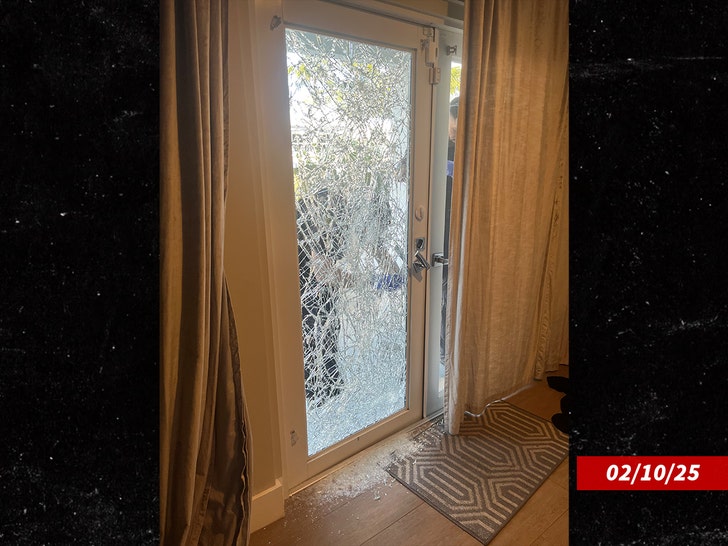
The incident occurred when Sophie Rain returned home from attending various Super Bowl parties in early February 2025. Instead of finding peace, she was confronted with a scene of violation: her windows were smashed, and Litka was reportedly found inside the residence. This brazen act of intrusion immediately escalated from a mere property crime to a deeply personal and frightening invasion of privacy and safety. The discovery triggered an immediate and robust response from local law enforcement.
The situation quickly developed into a high-stakes scenario, necessitating the involvement of a SWAT team. Specialized tactical units were deployed to the scene to safely extract Litka from the premises and ensure the safety of Ms. Rain and any other occupants. The successful intervention led to Litka’s arrest, bringing a temporary end to the immediate threat. Following legal proceedings, Connor Litka was subsequently sentenced to five years’ probation. This sentence, intended to monitor his behavior and prevent further incidents, now appears to have been insufficient in addressing the underlying issues that continue to drive his actions. Probation terms typically include strict conditions, such as regular check-ins with a probation officer, adherence to psychiatric treatment, and prohibitions against contacting the victim. His alleged cessation of medication and recent domestic battery arrest strongly suggest a profound failure to comply with these critical conditions, thereby negating the protective intent of the legal system.
Sophie Rain’s Plea for Safety and Denial of Connection
In the wake of Litka’s escalating behavior and subsequent disappearance, Sophie Rain has spoken out, articulating the profound fear and distress this ongoing situation has caused her and her family. Her statements underscore the psychological toll exacted on victims of persistent and delusional stalking, a form of harassment that often leaves victims feeling vulnerable and exposed.
"This situation has been deeply frightening for me and my family," Ms. Rain conveyed to TMZ. She vehemently denied Litka’s claims of a "blood oath" or any form of personal relationship. "I have never taken a ‘blood oath’ with this individual, and any belief that we have a personal relationship is completely untrue," she stated unequivocally. This clear and public refutation is crucial, as it attempts to dismantle the fabric of delusion that appears to motivate Litka’s actions. For victims of stalking, establishing clear boundaries and refuting false narratives is often a necessary, though sometimes dangerous, step, as it can occasionally provoke further erratic behavior from the perpetrator.

Ms. Rain further expressed a nuanced sentiment regarding Litka’s well-being, stating, "I sincerely hope he receives the treatment and support he needs." This acknowledgement of his apparent mental health struggles, even amidst her own fear, highlights the complexity of such situations where victims often grapple with both personal terror and a recognition of the perpetrator’s potential illness. However, she was resolute in prioritizing her own safety and that of her loved ones. "My priority has to be protecting my safety and the people around me," she affirmed. Due to the ongoing legal and security implications, Ms. Rain refrained from discussing specific precautions being taken, a common practice among individuals facing credible threats, as publicizing security measures could compromise their effectiveness. Her silence on these specifics serves as a stark indicator of the serious nature of the perceived threat and the comprehensive measures likely being implemented to ensure her protection.
The Broader Implications: Stalking in the Digital Age and Mental Health Gaps
The case of Sophie Rain and Connor Litka serves as a stark illustration of the escalating challenges faced by public figures, particularly those in the digital sphere, who often contend with the phenomenon of parasocial relationships. These one-sided attachments, where fans develop intense emotional connections with media personalities they’ve never met, can sometimes devolve into obsession, stalking, and, in extreme cases, violent acts. For OnlyFans creators, whose work often involves a heightened sense of intimacy and direct engagement with subscribers, the boundaries between professional interaction and personal delusion can become dangerously blurred for individuals predisposed to such fixations. Experts in cyberpsychology note that the perceived accessibility of online personalities can feed into delusions of personal connection, making it harder for disturbed individuals to differentiate between online persona and real-life interaction.
Litka’s alleged cessation of psychiatric medication in July 2025 is a critical detail, highlighting a significant gap in mental healthcare and probation oversight. Effective management of severe mental illnesses often relies on consistent medication and therapeutic intervention. When these are abandoned, the risk of relapse into delusional thinking, erratic behavior, and potential harm to self or others dramatically increases. The fact that he was on probation during this period raises serious questions about the efficacy of monitoring mechanisms designed to ensure compliance with treatment mandates, which are often a condition of release. The challenges of ensuring medication adherence for individuals with mental illness, particularly those prone to delusional thinking, are well-documented within the healthcare system.
Moreover, the incident brings to the forefront the broader societal struggle with identifying and managing individuals who pose a risk due to untreated mental health conditions. Crisis centers, while vital, often serve as points of contact during acute episodes. The long-term support and enforcement mechanisms required to prevent recidivism, especially when delusions are involved, demand a more integrated approach involving mental health services, law enforcement, and judicial oversight. The concerns voiced by Litka’s mother underscore the often-overlooked burden on families who are ill-equipped to manage severe mental illness without robust external support, highlighting the need for more comprehensive community mental health resources.
Legal Ramifications and Public Safety Concerns
Connor Litka’s disappearance, coupled with his history and recent statements, carries significant legal and public safety implications. As an individual on probation for a serious offense, his vanishing act constitutes a clear violation of his probation terms. This will almost certainly trigger a warrant for his arrest, transforming him from a person of interest into a fugitive. Law enforcement agencies will now be actively searching for him, not only to ensure he answers for his probation violation but also to assess the potential danger he may pose to himself or others.
The nature of his statements—the "blood oath," the desire to be with Sophie Rain, the belief he is off probation—suggests a high risk of re-engaging in stalking behavior or other forms of intrusion. His recent arrest for domestic battery further solidifies concerns about his propensity for violence and disregard for others’ safety. The police will undoubtedly consider him a person of interest who could be a danger to Ms. Rain, himself, or the broader public, particularly if he remains unmedicated and continues to experience manic or delusional symptoms. The absence of medication, combined with his expressed intent to travel to Florida, creates a scenario where the threat is mobile and potentially escalating.
The ongoing search for Litka will involve inter-state cooperation, given his expressed desire to travel from Indiana to Florida. Authorities will be coordinating efforts to track his movements, identify potential safe havens, and ultimately apprehend him. For Sophie Rain, the disappearance of her alleged stalker creates an agonizing period of uncertainty, as the absence of an immediate threat does not equate to its neutralization. Until Litka is located and brought back into a supervised setting, the shadow of potential harm will continue to loom large over her life, demanding constant vigilance and heightened security measures.
Conclusion
The disappearance of Connor Litka, the alleged burglar of OnlyFans model Sophie Rain, marks a deeply troubling turn in an already distressing saga. His bizarre "blood oath" claims and stated desire to reunite with Ms. Rain, made while at a crisis center and reportedly off his medication, highlight a severe mental health crisis that poses significant risks. Coupled with a history of home invasion, a recent domestic battery arrest, and a failed drug test, Litka’s vanishing act has escalated concerns among his family, mental health professionals, and law enforcement. Sophie Rain’s emphatic denial of any personal connection and her expressed fear underscore the profound impact of such relentless and delusional attention. As authorities launch an urgent search for Litka, the case serves as a stark reminder of the critical need for robust mental health support, effective probation oversight, and enhanced security measures for public figures navigating the complex and often dangerous landscape of online fame. The uncertainty surrounding Litka’s whereabouts leaves a pervasive sense of unease, both for the individuals directly involved and for the wider community observing this unsettling development. The situation remains fluid, with law enforcement efforts ongoing to locate Litka and mitigate any potential threat.




 Yuyun Lusiyani
 Joko Widodo
 Jia Lissa
 Pevita Pearce

