
 Jia Lissa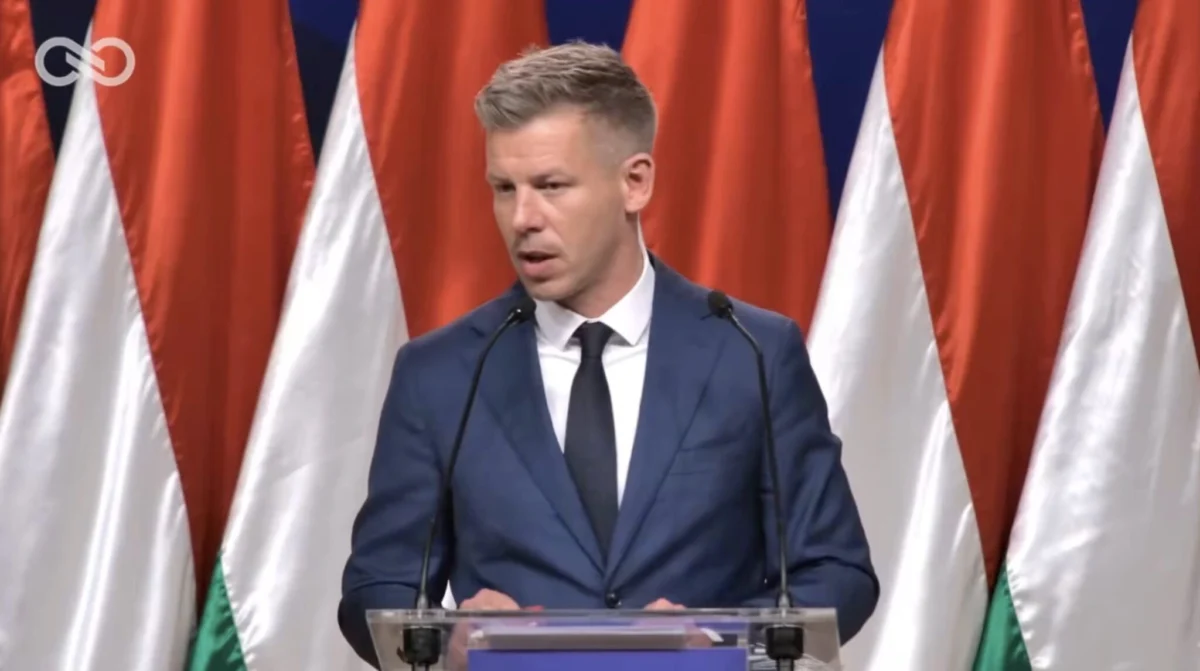
In a move that signals a seismic shift in Central European geopolitics and the international conservative movement, Hungarian Prime Minister-Elect Péter Magyar has announced a total cessation of state funding for the Conservative Political Action Conference (CPAC). Magyar, whose center-right opposition party recently unseated long-time leader Viktor Orbán in a historic landslide victory, characterized the outgoing administration’s financial support for the American-based organization as a "crime" that warrants a comprehensive criminal investigation. The announcement marks the end of a sixteen-year era of "illiberal democracy" under Orbán and threatens to sever the lucrative financial and ideological pipeline that had transformed Budapest into a primary hub for the American "New Right."
The revelation that the Hungarian government was directly subsidizing CPAC—an arm of the American Conservative Union—confirms long-standing suspicions regarding the financial entanglement between the Fidesz party and Western political influencers. For years, Orbán had positioned Hungary as a laboratory for national-conservative policies, attracting high-profile endorsements from former U.S. President Donald Trump and active support from key Republican figures. However, Magyar’s victory and his subsequent pledge to audit state expenditures suggest that the "Budapest model" was supported not only by ideological affinity but by the systematic diversion of Hungarian taxpayer funds into foreign political ventures.
The End of the Orbán Era: A Landslide Mandate for Change
The electoral defeat of Viktor Orbán on Sunday, April 12, 2026, brought an abrupt conclusion to a regime that had governed Hungary since 2010. Orbán’s tenure was defined by the consolidation of power, the restructuring of the judiciary, and the implementation of restrictive media laws that drew frequent condemnation from the European Union and international human rights organizations. Despite these criticisms, Orbán remained a hero to a specific wing of the American Republican Party, which viewed his stances on immigration, LGBTQ+ rights, and national sovereignty as a blueprint for the future of the United States.
Péter Magyar, a former government insider turned whistleblower, spearheaded the opposition movement that eventually toppled the Fidesz machine. His campaign focused heavily on government corruption, the enrichment of a narrow circle of oligarchs, and the misuse of public funds for propaganda. The landslide victory provided Magyar with a clear mandate to dismantle the structures Orbán had built, beginning with the international networks that provided the outgoing Prime Minister with global legitimacy.
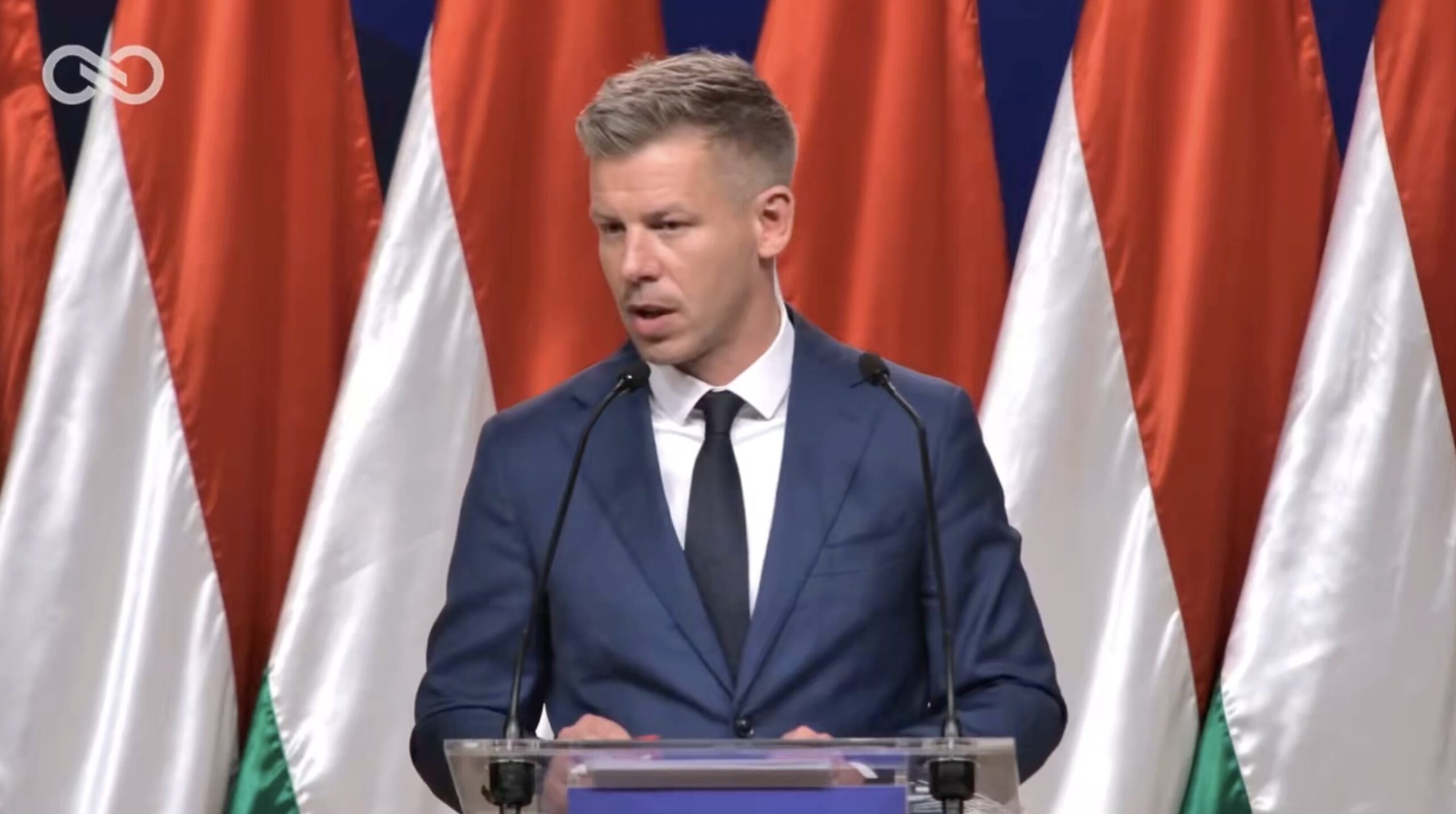
In his victory speech, Magyar was unequivocal regarding the financial relationship between the Hungarian state and CPAC. "The state will not finance these things, neither the event called CPAC nor other related institutions such as the Mathias Corvinus Collegium and similar attached bodies," Magyar stated. "I believe the state should never have financed them in the first place; it was a crime. Mixing party financing with government spending from the state budget is, in my view, a criminal offense."
Chronology of the Hungary-CPAC Partnership
The relationship between the American Conservative Union (ACU), which organizes CPAC, and the Hungarian government began to formalize in the early 2020s. As Orbán sought to build a "transatlantic coalition of conservative forces," Budapest became the first European city to host a satellite CPAC event.
- May 2022: The inaugural CPAC Hungary is held in Budapest. Viktor Orbán delivers a keynote address titled "The How-to of Nation Building," in which he offers a 12-point plan for conservatives to seize and hold power.
- May 2023: CPAC Hungary returns, further cementing the bond between Fidesz and the MAGA movement. American influencers and media figures begin to visit Budapest with increasing frequency.
- 2024-2025: CPAC expands its presence in Hungary, holding multiple events and workshops. During this period, the Mathias Corvinus Collegium (MCC), a state-funded educational foundation, becomes a primary node for hosting foreign conservative scholars and activists.
- Early 2026: As the Hungarian election approaches, high-ranking U.S. officials, including Vice President JD Vance and Secretary of State Marco Rubio, travel to Budapest. Their visits are widely interpreted as an attempt to bolster Orbán’s domestic standing.
- April 12, 2026: Orbán is defeated in a landslide. CPAC issues an official statement via X (formerly Twitter) standing "firmly with Prime Minister Viktor Orbán."
- April 13, 2026: Prime Minister-Elect Péter Magyar announces the termination of all state funding for CPAC and calls for a criminal probe into the legality of the previous payments.
Institutionalized Subsidy: The Role of the MCC and Public Assets
Central to Magyar’s allegations is the role of the Mathias Corvinus Collegium (MCC) and other "attached bodies." Under the Orbán administration, the MCC was transformed from a modest private college into a massive educational behemoth, endowed with billions of dollars in state assets, including shares in the national oil company MOL and the pharmaceutical giant Gedeon Richter. Critics have long argued that the MCC served as a "shadow state," used to bypass traditional government oversight and fund ideological projects under the guise of education.
Magyar’s critique highlights a fundamental legal distinction in Hungarian law: the separation of the state budget from party political activity. By using the national budget to fund an American political conference that explicitly campaigned for the Fidesz party, Magyar argues that the Orbán administration committed a "criminal offense." He has signaled that the National Office for the Recovery and Protection of Public Assets will be tasked with tracing the flow of funds to determine the total amount of taxpayer money transferred to CPAC and its affiliates.
While Magyar clarified that CPAC is "very welcome" to continue holding events in Budapest, he emphasized that they must do so on their own dime. "It should not be financed with Hungarian taxpayers’ money," he added, noting that if Fidesz wishes to continue the partnership, they must use their own party funds rather than the public treasury.
The American Connection: Trump, Vance, and Rubio
The fallout from Magyar’s announcement is expected to reverberate through the halls of the U.S. Capitol and the 2026 American political landscape. Donald Trump had been one of Orbán’s most vocal supporters, frequently praising the Hungarian leader’s "strongman" style and his "America First" equivalent policies. The relationship was reciprocal; Orbán was one of the few European leaders to openly endorse Trump’s re-election bids.
The involvement of JD Vance and Marco Rubio has also come under renewed scrutiny. Both men traveled to Budapest to campaign for Orbán shortly before his defeat. Political analysts suggest that these visits were part of a broader strategy to maintain a friendly, ideologically aligned government in Central Europe that could serve as a logistical and intellectual base for the American right.
With the revelation of state funding, critics in the U.S. are now questioning the ethics of American lawmakers participating in events subsidized by a foreign government. Billy Binion, a reporter for Reason, noted that the funding of CPAC by the Hungarian state raises questions about which other American organizations or influencers may have been receiving "cash from the Hungarian government." This has led to calls for greater transparency regarding foreign financial influence on American political discourse, particularly from "New Right" figures who have championed the Hungarian model.
Broader Implications and Analysis
The cessation of funding represents more than just a local budget cut; it is a significant blow to the international infrastructure of the global right. For years, Budapest served as a sanctuary for conservative intellectuals who felt marginalized in Western academia and media. The "Budapest-DC pipeline" allowed for a cross-pollination of ideas regarding immigration restriction, pronatalist policies, and the use of state power to promote traditional values.
Without Hungarian state subsidies, the viability of CPAC Hungary and similar international outposts is in doubt. The American Conservative Union, which has faced its own internal financial and leadership challenges in recent years, may find it difficult to maintain its ambitious international schedule without the backing of foreign state treasuries.
Furthermore, Magyar’s victory offers a potential roadmap for other opposition movements in countries experiencing democratic backsliding. By focusing on the "crime" of misusing public assets rather than purely ideological disagreements, Magyar was able to build a broad coalition that appealed to voters weary of corruption. His commitment to the National Office for the Recovery and Protection of Public Assets suggests a focus on "legal lustration"—using the rule of law to hold the previous administration accountable for financial improprieties.
Future Outlook
As Péter Magyar prepares to take office, the international community is watching closely to see how he navigates Hungary’s relationship with both the European Union and the United States. While he remains center-right and shares some of the traditional values of the Hungarian electorate, his insistence on transparency and the proper use of state funds marks a radical departure from the Orbán years.
The investigation into CPAC funding is likely to be one of the first major tests for the new administration’s anti-corruption bodies. If evidence of criminal activity is found, it could lead to legal challenges not only for former Hungarian officials but potentially for the recipients of the funds. In the meantime, the "special relationship" between the American MAGA movement and the Hungarian government appears to be at an end, replaced by a new era of scrutiny and the reassertion of the boundary between state resources and party politics.
The implications for the 2026 U.S. midterms and the broader trajectory of conservative politics are profound. The loss of a state-sponsored "home base" in Europe forces the American right to look inward or find new, self-funded methods of international cooperation. For the people of Hungary, the end of CPAC funding is presented by the incoming government as a return to fiscal sanity and a necessary step in restoring the integrity of the nation’s public institutions.



 Yuyun Lusiyani
 Joko Widodo
 Eva Lovia
 Pevita Pearce
 admin
admin
 Lina Irawan