
 Jia Lissa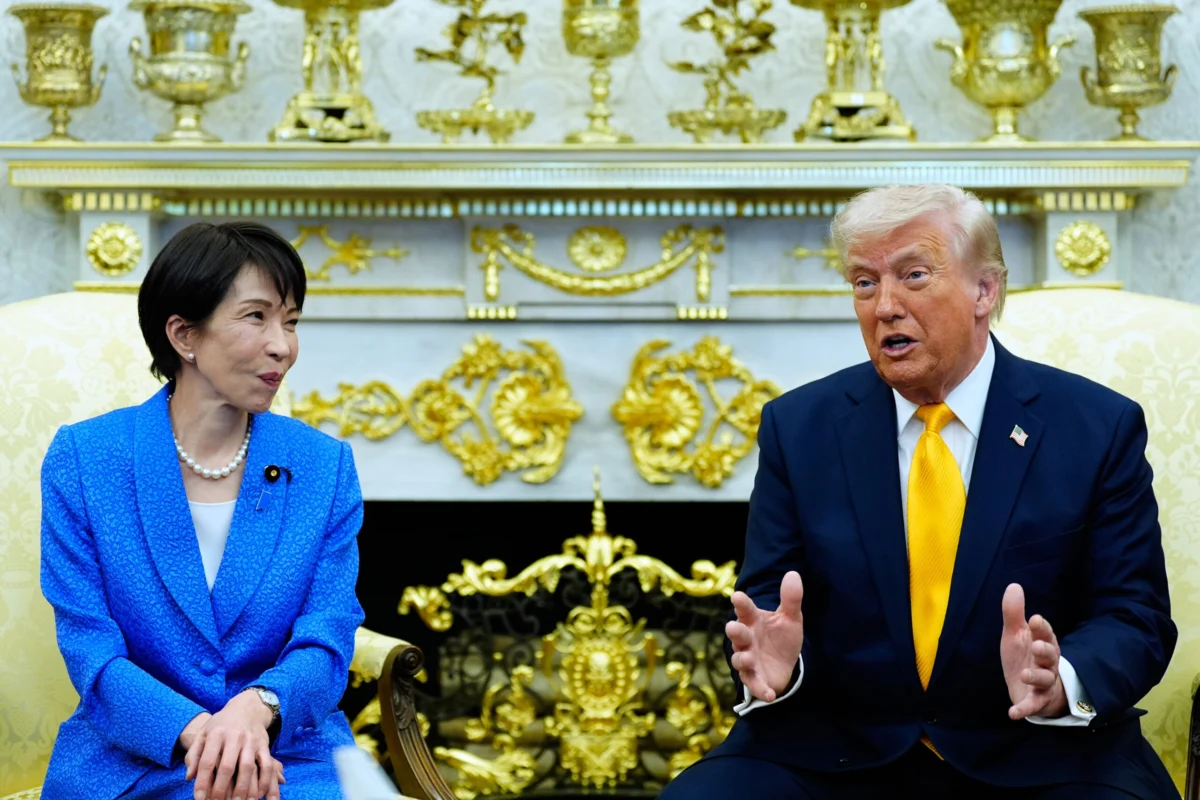
President Donald Trump has intensified his criticism of traditional North Atlantic Treaty Organization (NATO) allies, asserting in a recent interview that Japan currently stands as a more reliable partner to the United States than the European members of the alliance. Speaking via telephone with Fox News anchor Martha MacCallum on Friday, the President expressed deep-seated frustration over what he characterized as a lack of military commitment from NATO nations regarding the ongoing maritime crisis in the Strait of Hormuz. This shift in rhetoric follows a week of high-stakes diplomacy and escalating tensions in the Middle East, highlighting a significant pivot in the administration’s assessment of its global security partnerships.
The President’s remarks were catalyzed by the perceived hesitation of European allies to provide direct military assistance in securing the Strait of Hormuz, a critical chokepoint for global oil shipments that has recently seen a surge in Iranian-linked hostilities. According to MacCallum, who detailed the exchange on the social media platform X, the President "doubled down on his anger at NATO," suggesting that the alliance’s response to Iranian aggression has been insufficient. Conversely, he praised Japan’s willingness to cooperate, despite the country’s legal and constitutional limitations regarding offensive military operations.
The Strategic Importance of the Strait of Hormuz
The Strait of Hormuz remains the world’s most sensitive oil transit point. Located between Oman and Iran, it connects the Persian Gulf with the Gulf of Oman and the Arabian Sea. According to the U.S. Energy Information Administration (EIA), approximately 21 million barrels of oil pass through the strait daily, representing roughly 21% of global petroleum liquids consumption. For Japan, the stakes are particularly high; nearly 90% of the island nation’s crude oil imports flow through this narrow waterway.
The current crisis stems from a series of attacks on commercial tankers and the disruption of shipping lanes, which the White House has attributed to Iranian regional influence. During his interview, President Trump dismissed the complexity of the naval challenge, stating that "numbers" in the strait are all that is required to maintain order. He further asserted that "Iran has nothing left," suggesting that a robust show of force would be sufficient to deter further interference with international commerce.
The economic ramifications of the instability have already begun to manifest in the United States. During Friday’s broadcast of America Reports, Fox News correspondent John Roberts noted that gas prices are reaching "the stratosphere," creating domestic political pressure on the administration to find a swift resolution. The President’s focus on Japan is largely predicated on this shared economic interest, as both nations seek to prevent a protracted energy crisis.
A Chronology of Diplomatic Friction and Engagement
The current diplomatic rift follows a rapid succession of events in mid-March 2026. The timeline reflects a growing divergence between the White House and its European counterparts:
- March 18, 2026: Reports emerge of increased Iranian naval activity near the Strait of Hormuz, leading to a spike in global Brent crude prices.
- March 19, 2026: A joint statement is issued by the leaders of the United Kingdom, France, Germany, Italy, the Netherlands, and Japan. The statement condemns the attacks on tankers and expresses a "readiness to contribute to appropriate efforts" to ensure safe passage. However, the document lacks a specific commitment to a U.S.-led military task force.
- March 19, 2026 (Evening): President Trump hosts Japanese Prime Minister Sanae Takaichi at the White House. The meeting focuses on trade and maritime security. During the visit, Trump makes a controversial reference to Pearl Harbor while discussing the history of the U.S.-Japan relationship but emphasizes the current strength of the bond.
- March 20, 2026 (Morning): President Trump takes to Truth Social to lash out at NATO allies, labeling them "cowards" and warning that "we will remember" their refusal to commit immediate military resources to the Gulf.
- March 20, 2026 (Mid-day): In a phone interview with Martha MacCallum, Trump explicitly labels Japan a "better ally than NATO," citing their reliability despite constitutional restraints.
Evaluating the Japanese Partnership under Prime Minister Takaichi
The President’s preference for Japan is significant given the historical context of the U.S.-Japan security alliance. Prime Minister Sanae Takaichi, Japan’s first female head of government, is known for her hawkish stance on national security and her desire to see Japan take a more proactive role in regional defense. Since taking office, Takaichi has navigated the delicate balance between Japan’s pacifist Constitution—specifically Article 9, which renounces war—and the increasing necessity for a robust defense posture in the face of threats from North Korea and maritime instability.
During their White House meeting, the President noted that while Japan faces constitutional restraints that limit its ability to engage in collective self-defense in the same manner as NATO members, he believes the Japanese government "would be there for us if we needed them." This perception of loyalty appears to outweigh the formal military commitments of the NATO charter in the President’s current estimation.
"In the case of Japan, I hear they get more than 90% of their oil through the strait," Trump said during the meeting. "So that’s a great reason to step up." This transactional view of alliances—where support is measured by shared economic risk and immediate cooperation—has become a hallmark of the administration’s foreign policy.
The Growing Rift with NATO and the "Paper Tiger" Accusation
The President’s criticism of NATO is not a new phenomenon, but the intensity of his recent rhetoric marks a new low in transatlantic relations. For years, the administration has pressured European nations to meet the 2% GDP defense spending target agreed upon at the 2014 Wales Summit. In the context of the Hormuz crisis, the President appears to view the joint statement issued by European leaders as a "paper tiger"—a gesture of rhetorical support that lacks the necessary hardware and personnel to impact the situation on the ground.
John Roberts characterized the President’s social media posts as "presidential persuasion," but the language used—specifically the term "cowards"—suggests a deeper ideological break. The President’s frustration lies in the fact that while European nations are heavily dependent on Middle Eastern energy and the stability of global trade routes, they remain hesitant to join a U.S.-coordinated naval mission that could lead to a direct military confrontation with Iran.
The European perspective, often voiced by leaders in Paris and Berlin, emphasizes de-escalation and diplomatic channels to revive maritime security agreements. This cautious approach stands in stark contrast to the President’s preference for "numbers" and naval dominance.
Economic Implications and Domestic Pressure
The volatility in the Strait of Hormuz has direct consequences for the American consumer. As gas prices climb, the administration faces the dual challenge of managing foreign policy while mitigating inflation at home. The President’s insistence that the strait can be easily "opened" with a sufficient naval presence is likely intended to project confidence to the energy markets.
However, market analysts warn that any miscalculation in the Gulf could lead to a full-scale blockade or a regional conflict, which would send oil prices well beyond current levels. The reliance on Japan as a primary partner in this endeavor is a calculated risk; while Japan possesses one of the world’s most advanced maritime self-defense forces, its operational scope remains legally restricted. Should the U.S. require offensive support, it remains unclear how the Takaichi administration would bypass constitutional hurdles without significant domestic political fallout in Tokyo.
Broader Geopolitical Impact and Future of Alliances
The declaration that Japan is a superior ally to NATO may signal a long-term shift in U.S. strategic priorities toward the Indo-Pacific. As the "America First" doctrine continues to evolve, the administration appears increasingly willing to bypass traditional multilateral institutions in favor of bilateral partnerships that demonstrate immediate alignment with U.S. objectives.
This shift has left many NATO members questioning the future of the North Atlantic Treaty’s Article 5, which guarantees collective defense. If the U.S. President views the alliance as secondary to bilateral ties with Pacific nations, the foundational security architecture of the post-WWII era could be at risk of fragmentation.
Furthermore, the President’s assertion that "Iran has nothing left" suggests a belief that the maximum pressure campaign has reached its zenith, leaving the Islamic Republic with limited options for retaliation. This assessment is debated by intelligence officials who point to Iran’s asymmetric warfare capabilities, including its vast arsenal of sea mines and fast-attack boats, which are specifically designed to disrupt traffic in the narrow confines of the Strait of Hormuz.
Conclusion
The President’s comments to Martha MacCallum underscore a period of profound transformation in international relations. By elevating Japan over NATO in the hierarchy of U.S. alliances, President Trump is redefining the criteria for "friendship" on the global stage—prioritizing economic alignment and immediate cooperation over long-standing institutional ties. As the situation in the Strait of Hormuz continues to unfold, the world will be watching to see if this pivot toward Tokyo results in a more secure maritime corridor or if the widening gap between the U.S. and its European allies creates a power vacuum that further destabilizes the region. For now, the administration remains firm in its stance: those who do not "step up" in the face of rising energy costs and maritime threats will find themselves on the periphery of Washington’s strategic orbit.


 Yuyun Lusiyani
 Joko Widodo
 Eva Lovia
 Pevita Pearce