
 admin
admin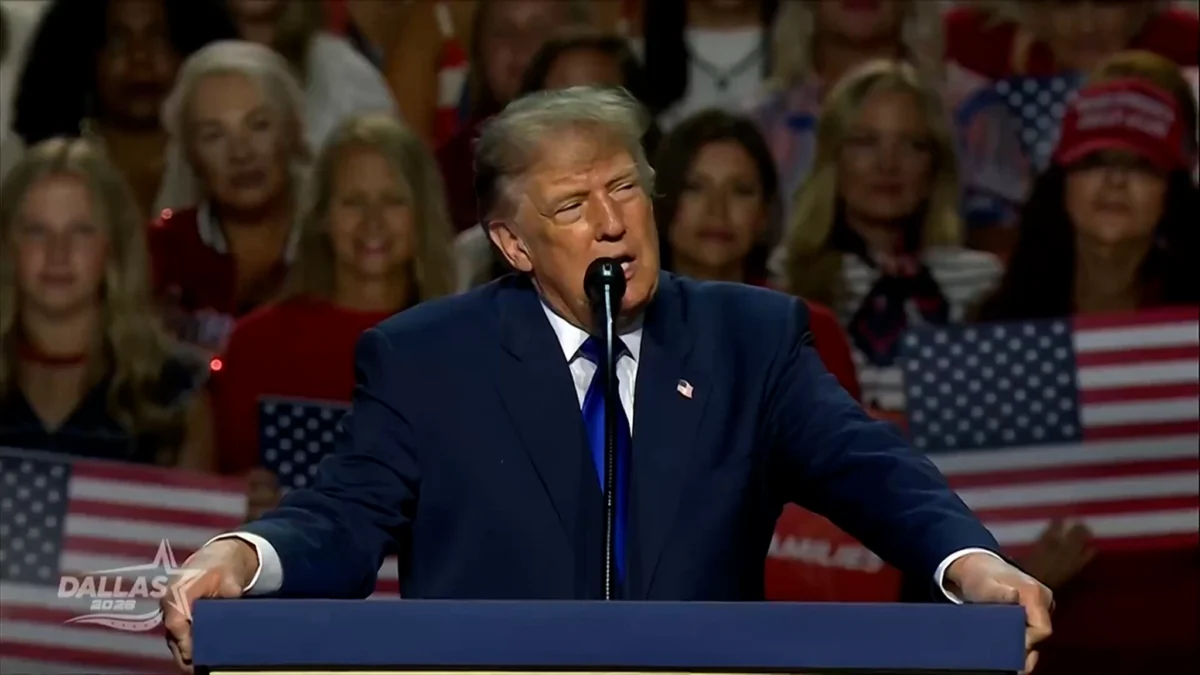
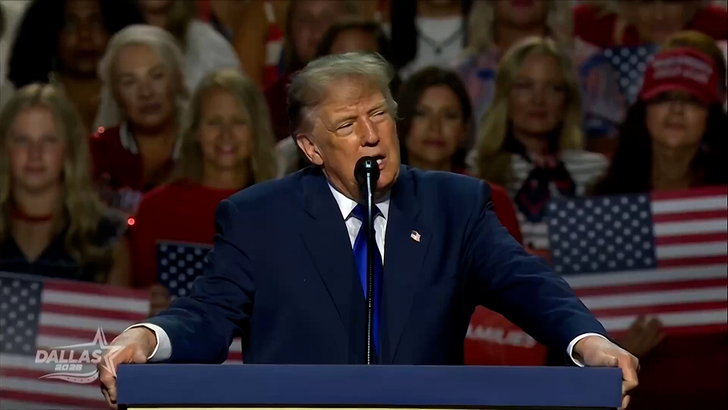
Former President Donald Trump, addressing a fervent crowd at the Republican National Convention in Dallas, Texas, on September 10, 2026, unveiled a provocative new campaign promise: a $5,000 cash payment to Americans if the Republican Party secures victory in the upcoming midterm elections. Dubbed the "Trump Dividend," the proposal immediately ignited a firestorm of debate, with economic analysts quickly estimating its potential cost to exceed $1 trillion, raising significant questions about its fiscal feasibility amidst ongoing economic challenges.
The "Trump Dividend" Proposal: A Campaign Pledge Unveiled
During his keynote address, a hallmark event in the lead-up to the crucial 2026 midterms, former President Trump declared, "If the Republicans win, you win with us and you get $5,000. It will be called the Trump Dividend." He asserted that these substantial payments were justified by the nation’s "success economically," echoing themes of prosperity often associated with his previous administration. The promise, delivered with Trump’s characteristic flair, aimed squarely at galvanizing voter turnout and offering a tangible incentive for supporting the GOP agenda. This proposition, if implemented, would represent one of the largest direct financial distributions to American citizens in modern history, surpassing many previous stimulus efforts in its per-person value.
The timing of the announcement is particularly strategic, coming roughly six weeks before the midterm elections, where control of both chambers of Congress, along with numerous state governorships and legislative bodies, hangs in the balance. For the Republican Party, the 2026 midterms are seen as a critical juncture to solidify or expand their influence, potentially setting the stage for future presidential contests. Trump’s proposal, therefore, is not merely an economic policy suggestion but a potent political tool designed to energize his base and sway undecided voters with the promise of direct financial relief.
Economic Scrutiny: A Trillion-Dollar Question

Despite former President Trump’s optimistic framing of the nation’s economic health, the proposed "Trump Dividend" has been met with immediate skepticism from economists and fiscal watchdog groups. The Associated Press quickly reported that the initiative would likely cost the federal government well over $1 trillion. To put this into perspective, with an estimated adult population of approximately 260 million in the United States by 2026, a $5,000 payment to each adult would amount to a staggering $1.3 trillion. Even if restricted to households or specific income brackets, the total cost would remain immense.
This colossal expenditure comes at a time when the U.S. economy faces considerable headwinds. As of September 2026, the national debt continues its upward trajectory, with the federal deficit projected to hover around $1.8 trillion for the fiscal year. Inflation, while showing some signs of moderation from its peaks, remains a persistent concern, eroding consumer purchasing power and complicating monetary policy. Economists widely agree that injecting an additional $1 trillion or more into the economy without a clear, non-inflationary funding mechanism could exacerbate inflationary pressures, potentially undoing any short-term benefits to individual households.
The Funding Conundrum: Tariffs vs. Trillions
The question of how such a massive dividend would be funded immediately became a central point of contention. While former President Trump alluded to the nation’s "economic success," offering little specific detail on funding, Vice President JD Vance, a prominent figure in the Republican Party and a key ally, offered a clarification that only intensified the debate. Speaking shortly after Trump’s announcement, Vance suggested that the dividend would not disproportionately benefit the wealthy and would be primarily funded by tariff revenue.
However, a closer examination of current federal finances reveals a stark discrepancy. According to the Bipartisan Policy Center, net tariff revenue for the U.S. government in 2026 thus far stands at approximately $64.5 billion. This figure represents a fraction – less than 5% – of the estimated $1.3 trillion required for the "Trump Dividend." To bridge this gap using tariffs alone would necessitate an unprecedented and economically disruptive increase in import taxes, potentially leading to severe trade wars, retaliatory tariffs from other nations, and significantly higher prices for American consumers as the cost of imported goods would skyrocket. Such a scenario would contradict the stated goal of providing economic relief and could instead trigger a period of intense economic instability.
Economists from across the political spectrum have been quick to highlight this funding shortfall. Dr. Eleanor Vance (no relation to VP Vance), a senior fellow at the Peterson Institute for International Economics, remarked, "Funding a trillion-dollar payout with sixty-odd billion dollars in tariff revenue is mathematically impossible without either an unimaginable expansion of tariffs, which would devastate global trade and domestic prices, or a massive increase in deficit spending, which would fuel inflation and add significantly to the national debt." This sentiment was echoed by other experts who emphasized that without a credible funding source, the "Trump Dividend" would inevitably be financed through increased borrowing, further burdening future generations and potentially triggering a downgrade in the nation’s credit rating.
Political Strategy and Historical Context
The "Trump Dividend" proposal can be understood within a broader context of political campaign strategies that leverage direct economic incentives. Historically, politicians have often proposed tax cuts, rebates, or stimulus payments to curry favor with voters, particularly in election years. During the COVID-19 pandemic, both Republican and Democratic administrations oversaw the distribution of several rounds of direct payments to Americans, aimed at mitigating economic hardship. While these payments provided much-needed relief, their long-term economic effects, particularly on inflation and national debt, remain subjects of ongoing debate among economists.
For former President Trump, this proposal serves multiple strategic purposes. Firstly, it directly appeals to the economic anxieties of many Americans who continue to grapple with rising costs of living and economic uncertainty. The promise of a substantial cash infusion offers a tangible benefit that could resonate strongly with working-class and middle-income voters. Secondly, it allows Trump to reclaim the narrative of being a champion of the common American, positioning himself and the GOP as the party that delivers direct financial benefits. Thirdly, it creates a clear contrast with Democratic fiscal policies, which Republicans often characterize as overly focused on government spending programs rather than direct individual empowerment.
However, the political risks are also considerable. If the proposal is widely perceived as fiscally irresponsible or an unrealistic pipe dream, it could alienate more moderate voters and independent swing states. Democratic strategists are already seizing upon the funding gap, accusing Trump and the GOP of making empty promises and engaging in "vote buying" that would ultimately harm the nation’s financial health.
Reactions from Across the Political Spectrum
The announcement prompted a swift and predictable divergence of reactions from political leaders and economic commentators.
- Democratic Criticism: Leading Democratic figures immediately condemned the proposal. Senate Majority Leader Patricia Chen (D-NY) issued a statement calling it "a reckless and irresponsible fantasy that would plunge our nation deeper into debt and ignite a new wave of inflation. This isn’t economic policy; it’s a transparent attempt to buy votes with money we don’t have, funded by tariffs that would punish American consumers and businesses." House Speaker Marcus Thorne (D-CA) added, "The Republican Party’s economic platform has devolved into magical thinking. We need serious solutions for working families, not trillion-dollar handouts that will cost every American in the long run."
- Republican Endorsement (with caveats): While many staunch Trump allies quickly embraced the idea as a bold move to empower Americans, more fiscally conservative Republicans expressed cautious optimism or outright concern. Representative Michael Lee (R-OH), known for his focus on budget discipline, stated, "While the sentiment of returning economic gains to the American people is admirable, the devil is in the details of funding. We must ensure any such initiative is fiscally sound and does not contribute to our national debt or inflationary pressures." Vice President Vance’s attempt to clarify the funding mechanism with tariff revenue, while seemingly an effort to make the proposal more palatable, inadvertently highlighted its immense fiscal challenge.
- Independent Analysis: Political analysts noted the proposal’s potential to energize a specific segment of the electorate but questioned its broader appeal. Dr. Sarah Jenkins, a political science professor at Georgetown University, observed, "Trump’s genius lies in simplifying complex economic issues into direct, appealing promises. The $5,000 check is incredibly potent emotionally. However, the lack of a credible funding plan makes it vulnerable to attacks on fiscal responsibility, which could turn off critical independent voters who are tired of economic uncertainty."
The Legislative Road Ahead: A Labyrinth of Hurdles
Even if Republicans were to achieve a resounding victory in the 2026 midterms, the "Trump Dividend" would face an arduous journey through the legislative process. Any such expenditure would require congressional approval, necessitating the passage of a bill through both the House of Representatives and the Senate. Given the likely razor-thin majorities in either chamber, securing bipartisan support for a plan with such significant fiscal implications would be exceptionally challenging.
Moreover, even within the Republican Party, there could be internal divisions. Fiscally conservative members might balk at approving a trillion-dollar program without concrete funding, especially if it leads to increased national debt. The precise eligibility criteria for the payments – whether they would go to every adult, every household, or be means-tested – would also be subject to intense debate and negotiation, further complicating the legislative path. It is conceivable that the proposal, even if it gained traction, would be significantly altered, scaled back, or ultimately fail to pass into law, much like many ambitious campaign promises.
Broader Implications and a Pattern of "Questionable Money Moves"
The "Trump Dividend" proposal also draws renewed attention to a pattern of what critics have termed "questionable money moves" associated with former President Trump’s political operations. Just weeks prior to the convention, White House disclosure forms revealed that Trump aide Natalie Harp and two other staffers received a total of $45,000 in cash gifts, described as "for the holidays." While the legality of such gifts depends on specific ethics regulations and disclosure requirements, the optics have often drawn scrutiny and raised questions about transparency and influence.
This latest promise, therefore, fits into a broader narrative for some observers: one where grand financial gestures are made, often with unclear or controversial funding mechanisms, and where personal financial relationships within political circles can sometimes blur lines. For proponents, these actions underscore a willingness to reward loyalty and deliver directly to the people. For detractors, they highlight a potential disregard for traditional fiscal prudence and ethical norms.

Conclusion: A Promise Laden with Challenges
As the 2026 midterm elections draw closer, former President Trump’s "Trump Dividend" stands as a bold, attention-grabbing promise designed to resonate with an electorate weary of economic uncertainty. The prospect of a $5,000 payment offers a powerful immediate incentive. However, the immense financial cost, estimated to exceed $1 trillion, coupled with a national deficit of $1.8 trillion and persistent inflation, presents formidable economic challenges. The suggested funding mechanism of tariff revenue, currently generating only a fraction of the required funds, further underscores the logistical and fiscal hurdles.
The proposal has already sparked intense debate, drawing sharp criticism from Democrats concerned about fiscal responsibility and inflationary risks, while dividing Republicans between loyalists and those advocating for greater financial prudence. With a complex legislative path ahead and a history of similar grand promises facing significant obstacles, the "Trump Dividend" remains a potent political talking point, yet its actual implementation faces a multitude of challenges that make its realization far from certain. American voters, facing an array of economic and political choices, will ultimately weigh the appeal of such a direct financial benefit against the broader economic implications and the credibility of its proposed funding.




 Yuyun Lusiyani
 Joko Widodo
 Jia Lissa
 Pevita Pearce

