
 Pevita Pearce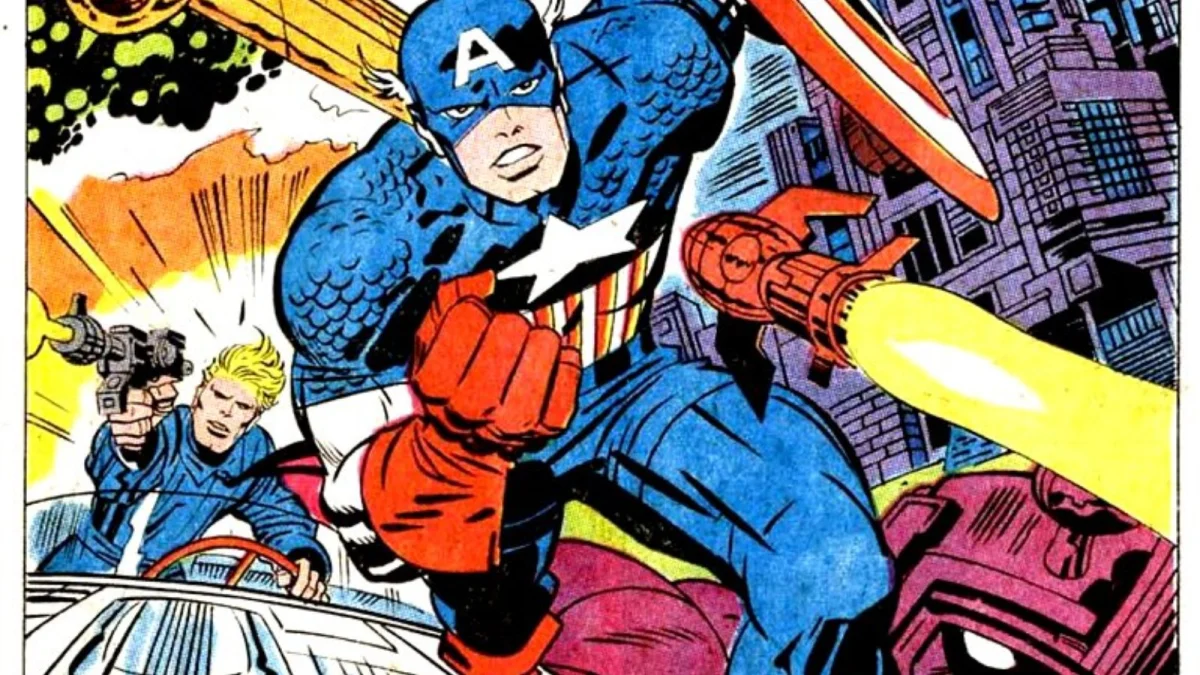
The high-stakes world of vintage comic book collecting reached a new milestone this week as a remarkably well-preserved copy of Captain America Comics No. 1 was sold for $716,750. The transaction took place during Heritage Auctions’ Comic Books Signature Auction, held in Dallas, Texas, between September 24 and 26. This particular specimen, which has remained largely unseen by the public for nearly eight decades, emerged from what experts are calling the Merrimack Valley Collection—a trove of Golden Age periodicals that had been stored in a simple cardboard box since the early 1940s. The sale not only highlights the enduring cultural legacy of the "Star-Spangled Avenger" but also underscores the robust financial appetite for high-grade "key" issues in the current collectibles market.
The Discovery of the Merrimack Valley Collection
The provenance of this specific issue is as compelling as the comic itself. The Merrimack Valley Collection represents a rare "original owner" find, a term used in the industry to describe books purchased directly from newsstands by a single individual and kept in continuous possession until their eventual discovery. In this instance, the original owner had bought the books off the rack in the 1940s and stored them in a cardboard box in a climate-stable environment, inadvertently preserving them against the typical ravages of time, such as humidity, sunlight, and pests.
The collection was unearthed in the Merrimack Valley region, which spans parts of northeastern Massachusetts and southern New Hampshire. When Heritage Auctions’ specialists first examined the contents of the box, they were reportedly stunned by the vibrancy of the colors and the structural integrity of the newsprint. Aaron White, Vice President at Heritage Auctions, noted that the condition of the books was "stunning" given their eighty-year dormancy in a non-specialized storage container. Such "fresh-to-market" finds often command a premium because they have not been subjected to the wear and tear of multiple trades or previous restoration attempts.
Grading and Technical Specifications
To determine the market value of such a rarity, the issue was submitted to the Certified Guaranty Company (CGC), the industry standard for third-party authentication and grading. The CGC awarded the book a grade of 9.0 (Very Fine/Near Mint) on a 10-point scale. For a comic book printed on highly acidic, fragile paper during the wartime era of 1941, a 9.0 grade is considered extraordinary.
Most surviving copies of Captain America Comics No. 1 suffer from "spine roll," "staple tears," or significant "foxing" (browning of the pages). The Merrimack Valley copy, however, retained much of its original gloss and structural stiffness. According to the CGC census, while several hundred copies of this issue are known to exist in various states of decay, only a handful exist in a 9.0 grade or higher, placing this specific book in the top tier of all surviving specimens. The "Off-White to White" page quality designation further increased its desirability, as collectors prioritize books that have avoided the brittle, yellowing common in 80-year-old paper.
Historical Significance of Captain America Comics No. 1
The astronomical price tag is a direct reflection of the book’s historical weight. Released in December 1940 (with a cover date of March 1941), Captain America Comics No. 1 was the brainchild of legendary creators Joe Simon and Jack Kirby. At the time of its publication, the United States had not yet entered World War II, yet the cover featured a bold, provocative image of Captain America punching Adolf Hitler in the jaw.
This act of political defiance was controversial at the time, leading to threats against Simon and Kirby from American Nazi sympathizers, but it also catapulted the character to instant stardom. The issue serves as the debut for several pillars of the Marvel Universe:
- Steve Rogers/Captain America: The scrawny patriot transformed by the Super-Soldier Serum.
- Bucky Barnes: The youthful sidekick who would eventually become the Winter Soldier.
- The Red Skull: Captain America’s arch-nemesis and a high-ranking Nazi operative.
Beyond the character debuts, the issue established the visual language of the superhero genre. Jack Kirby’s kinetic art style, characterized by explosive action and forced perspective, redefined how stories were told on the page, moving away from the static, stage-like panels of earlier comic strips.

Comparative Market Data and Auction Performance
The $716,750 sale price fits into a broader trend of escalating values for Golden Age "Keys"—the first appearances of major characters. While this 9.0 copy did not break the all-time record for the title (a CGC 9.4 copy famously sold for $3.1 million in 2022), it represents a significant increase in value for the 9.0 grade tier.
The Heritage Auctions event as a whole was a resounding success, generating a total of $8.4 million for the comic book portion and an additional $9.7 million for original comic art. Other notable sales during the three-day event included:
- Detective Comics No. 68 Original Cover Art: The first cover appearance of Two-Face, illustrated by Jerry Robinson in 1942, fetched $475,000.
- High-Grade Silver Age Keys: Several Marvel "Silver Age" books from the 1960s also saw competitive bidding, though the Golden Age "Merrimack Valley" books remained the centerpiece of the auction.
Industry analysts point to several factors driving these prices. First is the "Marvel Cinematic Universe (MCU) effect," which has turned characters like Captain America into global icons, expanding the collector base from niche hobbyists to high-net-worth investors. Second is the increasing recognition of comic books as an alternative asset class, similar to fine art or rare coins.
Chronology of the Sale and Market Evolution
The journey of this comic book from a newsstand to a $716,750 asset follows a distinct timeline that mirrors the evolution of the comic book industry:
- March 1941: The comic is purchased for 10 cents. At this time, comics were considered disposable entertainment for children.
- 1941–2024: The book is placed in a cardboard box in the Merrimack Valley. It survives the transition from Timely Comics to Marvel Comics and the eventual rise of the superhero genre in film.
- Early 2024: The Merrimack Valley Collection is discovered and consigned to Heritage Auctions.
- Summer 2024: The book is graded by CGC, confirming its "investment-grade" status.
- September 2024: The auction takes place in Dallas, attracting international bidders via phone and online platforms.
This timeline illustrates the shift in the perception of comics. What was once a "dime-store" commodity is now a historical artifact. The fact that a paper product designed to be read and thrown away survived eighty years in near-pristine condition is, in itself, a statistical anomaly that drives value.
Broader Implications for the Collectibles Industry
The success of the Merrimack Valley Collection sale has significant implications for the market. It suggests that there are still "undiscovered" hoards of Golden Age material in attics and basements across North America. For the auction industry, these finds are essential for maintaining momentum, as they provide "fresh" material that hasn’t been cycled through the market repeatedly.
Furthermore, the sale reinforces the dominance of the "Big Two" (Marvel and DC) in the high-end market. While independent or smaller-press books have their following, the "blue-chip" status of Captain America, Superman, and Batman remains unchallenged. Investors are increasingly looking for "survivor" copies of these specific icons as a hedge against market volatility in other sectors.
From a sociological perspective, the sale of Captain America Comics No. 1 for nearly three-quarters of a million dollars reflects the enduring power of the American mythos. Steve Rogers’ origin story—a man of moral character granted the physical power to fight tyranny—continues to resonate. As these physical artifacts become rarer, they transition from being mere "books" to becoming symbols of a specific era in American history and art.
Final Analysis
The $716,750 acquisition of Captain America Comics No. 1 is more than a simple transaction; it is a testament to the preservation of history. As the Merrimack Valley Collection continues to be liquidated, collectors and historians alike will be watching closely to see how other titles from the same cardboard box perform. For now, the "Star-Spangled Avenger" has proven once again that his value is not just in the stories told on the screen, but in the fragile, ink-stained pages that introduced him to the world in 1941. The sale stands as a high-water mark for the year and a reminder that, in the world of collectibles, condition and provenance are the ultimate arbiters of value.



 Yuyun Lusiyani
 Ana Megawati
 Joko Widodo
 Eva Lovia
 Jia Lissa