
 Amara Maple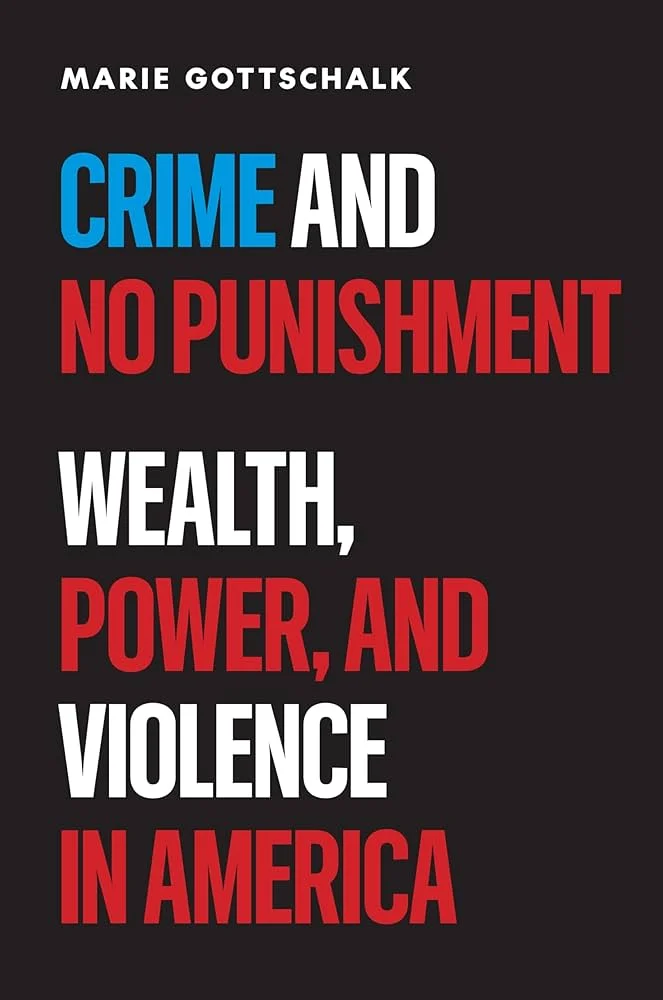
Professor Marie Gottschalk, a distinguished scholar of Political Science at the University of Pennsylvania, has launched a profound critique of the American justice system with her new book, Crime and No Punishment: Wealth, Power, and Violence in America (Princeton University Press, 2025). Building on her acclaimed work in criminal justice, race, and health policy, Gottschalk’s latest contribution expands her analytical lens beyond mass incarceration to confront the pervasive issue of corporate crime and its far-reaching, often overlooked, societal harms. This pivotal work challenges conventional understandings of crime, urging a reevaluation of what constitutes violence in America and how power dynamics dictate accountability.
From Mass Incarceration to Corporate Impunity: A Scholar’s Evolving Focus
Marie Gottschalk is widely recognized for her expertise in the intricacies of the American carceral state. Her award-winning 2006 book, The Prison and the Gallows: The Politics of Mass Incarceration in America, firmly established her as a leading voice in understanding the historical and political roots of the nation’s unprecedented incarceration rates. For years, her research and teaching were primarily concentrated on the dynamics of mass incarceration, particularly its disproportionate impact on racial minorities.
However, Gottschalk recently acknowledged a significant "blind spot" in her own academic journey: the relative neglect of corporate and white-collar crime. In a candid interview with Corporate Crime Reporter, she described her new book as a "mea culpa," admitting, "Like most scholars of crime in the criminal legal system, I mostly ignored white collar and corporate crime in my teaching and research." This self-reflection led her to pivot, recognizing that a comprehensive understanding of American violence and injustice necessitated a broader scope. While her initial focus stemmed from a political science background, rather than traditional criminology which often overlooks corporate offenses, she now sees the omission as a critical failing, shared even by many criminology and sociology programs.
The Interconnected Web of Violence: Gottschalk’s Core Argument
Crime and No Punishment posits a bold and unsettling thesis: a complex interplay of corporate impunity, the financialization of the economy, militarized policing, the burgeoning carceral state, and endless military engagements abroad collectively foster corporate, economic, and state violence within America. Gottschalk argues that these intertwined developments have profoundly eroded the legitimacy of the nation’s political and economic institutions.
She meticulously analyzes how the concentration of economic, political, and military power diverts crucial resources, preying on vulnerable communities and normalizing various forms of violence and premature death. This systemic neglect, she contends, obstructs genuine efforts to address the root causes of violent street crime and exacerbates the crisis of "deaths of despair"—fatalities stemming from suicide, alcoholism, drug overdoses, and chronic diseases. The irony is stark: while the United States maintains one of the highest incarceration rates globally, it simultaneously decriminalizes or turns a blind eye to elite-level corporate offenses. Public and academic discourse, however, remains largely fixated on street crime, despite the fact that corporate and white-collar malfeasance, alongside state and economic violence, directly and indirectly inflict harm on a significantly larger portion of the American populace.
The Hidden Toll: Corporate Violence and "Social Murder"
A central theme of Gottschalk’s work is the redefinition of "violence" to encompass the devastating, yet often unacknowledged, impact of corporate actions. She passionately argues that the term "corporate crime" or "white-collar crime" often fails to convey the gravity of these offenses, leading the public to perceive them as victimless or minor. Instead, she advocates for using the broader concept of "violence" to describe preventable deaths, injuries, and systemic suffering caused by corporate negligence or malfeasance.
The opioid crisis serves as a harrowing example. At its peak, this epidemic claimed approximately 108,000 lives annually from drug overdoses—a figure more than double the number of American fatalities during the entire Vietnam War, and over four times the annual homicide rate. Gottschalk describes this staggering loss as "social murder," distinguishing it from direct acts of individual violence but emphasizing its profound societal impact. She attributes the crisis to complex factors, including the aggressive marketing and over-prescription of highly addictive painkillers by pharmaceutical companies, highlighting how corporate greed contributed to a public health catastrophe.
Historical precedents underscore this disconnect. Nearly forty years ago, a Republican prosecutor in Indiana pursued homicide charges against Ford Motor Company following the deaths of three teenage girls in a Ford Pinto, who were burned alive after a rear-end collision. Internal Ford memos revealed the company’s awareness of the Pinto’s defective fuel tank design and its cost-benefit analysis that prioritized profits over safety. Although Ford was ultimately acquitted, this case marked one of the last instances of a major American corporation facing homicide charges in a product liability case. More recently, the Boeing 737 MAX crashes, which resulted in 346 deaths, raised similar questions about corporate accountability for preventable fatalities, yet these incidents were largely not investigated as cases of corporate manslaughter. These examples illustrate a systemic failure to categorize corporate negligence leading to death as a form of "murder" or "homicide" in the public consciousness and legal system.
The Connections: Inequality, Financialization, and Deflection
Gottschalk draws clear lines between corporate crime and street crime, asserting that they are deeply interconnected. Rising inequality, often fueled by corporate practices and financialization, diminishes the resources available to address the root causes of street crime and to fund alternatives to incarceration. The "financialization of the economy"—a shift where financial markets and institutions increasingly dominate economic activity—has led to a concentration of economic and political power. This, in turn, makes it less likely for crimes committed by powerful entities to be vigorously prosecuted, leading to an unequal distribution of wealth and a regressive tax system that further starves social programs.
Furthermore, a deliberate "hysteria over street crime" serves to deflect public attention from corporate malfeasance. By creating a panic around one form of crime, the systemic issues contributing to corporate impunity are effectively ignored, perpetuating a cycle where the powerful evade accountability while vulnerable communities bear the brunt of both street crime and the consequences of corporate neglect.
The Entrenched System: Power, Politics, and the "Revolving Door"
A critical aspect of corporate impunity, as Gottschalk illuminates, is the "revolving door" between government service and lucrative private sector positions. This phenomenon facilitates a culture where regulatory bodies and justice departments are often staffed by individuals with strong ties to the industries they are meant to oversee, or who anticipate future employment within those industries.
The 2019 New York Times report on a secret opioid memo serves as a potent example. Line prosecutors in West Virginia were reportedly poised to criminally prosecute those responsible for instigating the opioid crisis, but their efforts were quashed by political appointees within the Justice Department. This episode, highlighted in Gottschalk’s book, exemplifies how political influence can derail accountability for corporate wrongdoing. Similarly, during the 2008 financial crisis, the Obama administration saw numerous individuals with Wall Street backgrounds filling key administrative roles, leading to widespread criticism, notably from Senator Elizabeth Warren, regarding the lack of aggressive criminal prosecutions for those responsible for the economic meltdown. Despite criminal referrals, the Department of Justice under James Comey faced accusations of failing to pursue these cases adequately.
The recently publicized "Epstein Files" further expose the entrenched nature of this "untouchable class" that transcends political affiliations and sectors—from Wall Street and academia to Hollywood. Gottschalk points to an email exchange in the files, where Kathy Ruemmler, a former White House counsel for Barack Obama and then a corporate lawyer, discussed a "PR strategy for MJ White v. Elizabeth Warren" with Jeffrey Epstein, explicitly calling Warren "the worst." This revelation occurred precisely when Senator Warren was issuing a scathing report criticizing the SEC, then led by Mary Jo White, for its inaction. Such instances reveal a concerted effort by powerful figures, across the political spectrum, to contain and undermine those who seek to expose corporate wrongdoing.
Challenges in Accountability: Deferred Prosecution Agreements and Regulatory Oversight
The issue of accountability for corporate crime is further complicated by the prevalent use of deferred prosecution agreements (DPAs). These agreements allow corporations to avoid criminal conviction by agreeing to certain conditions, often involving fines, monitoring, and promises of future compliance. While proponents argue DPAs offer a flexible tool for enforcement and encourage corporate reform, critics, including Gottschalk, point to their inherent flaws.
Mary Jo White, who later served as Chair of the SEC, is credited with pioneering the modern DPA framework. In a 2005 interview with Corporate Crime Reporter, White recounted cutting the first major corporate DPA with Prudential Securities in 1994 as a U.S. Attorney. Gottschalk raises concerns that these deals are often negotiated in opaque "back rooms," with limited public disclosure of their terms or the corporations’ adherence to them. This lack of transparency and public oversight can lead to insufficient deterrence and a perception that corporations can buy their way out of criminal liability without truly addressing systemic issues.
The discussion around "defunding the police" also brings nuance to the debate. While some advocate for redirecting resources from traditional policing, Gottschalk argues that resources for investigating and prosecuting corporate crime have been severely "defunded." The problem, however, extends beyond mere resources. It encompasses a deeply ingrained habit within the Justice Department of prioritizing settlements over robust criminal prosecutions. Gottschalk warns against the allure of "non-reformist reforms," such as a few high-profile "show trials" of corporate executives. While symbolic, such actions alone would not address the "structural rot" within the system. Instead, she calls for much more extensive regulation and accountability that tackles the root causes of corporate malfeasance.
Academic Isolation and the Call for Interdisciplinary "Big Thinking"
Gottschalk acknowledges the professional challenges of pursuing such expansive, interdisciplinary research within academia. She notes that current trends in political science often favor highly specialized, quantitative research that can be "nailed to the wall with a mathematical formula," rather than "big thinking" that crosses disciplinary boundaries into criminology, sociology, and history. She suggests that scholars engaging in critical analyses of corporate power and "empire"—a term rarely used in mainstream American political science to describe the United States—might face difficulties in securing tenure or gaining mainstream acceptance.
Despite these potential hurdles, Gottschalk emphasizes that her work has garnered significant recognition and awards. More importantly, she senses a palpable "hunger in society for understanding what’s going on," particularly in making sense of complex phenomena like the rise of populism. She finds solidarity among colleagues across disciplines who share her commitment to challenging simplistic explanations and exposing the intricate connections between various forms of power and violence. Her critique of neoliberalism, for instance, highlights the hypocrisy of advocating for "small government, low taxes, and anti-regulation" while simultaneously expanding the carceral state, increasing military spending, and providing massive corporate subsidies.
Charting a New Course: Gottschalk’s Vision for Systemic Reform
In the concluding chapter of Crime and No Punishment, Marie Gottschalk outlines a transformative path forward, urging society to "think big" and move beyond superficial reforms. Her proposed solutions are structural and far-reaching:
- Follow the Money: A radical re-evaluation of the immense expenditures on the military-industrial complex, currently exceeding $1.5 trillion, is imperative. These resources could be redirected to address pressing domestic issues, strengthening social safety nets, investing in infrastructure, and improving healthcare, thereby ameliorating many societal problems that contribute to crime and despair.
- Address Income Inequality: Implementing a truly progressive tax system and considering a wealth tax are crucial steps to counteract rising income inequality. Such measures would provide the necessary resources for a larger, more effective regulatory state capable of holding corporate power accountable.
- Strengthen Regulation and Accountability: Beyond simply increasing resources, there needs to be a fundamental shift in how regulatory bodies and justice departments operate. This includes greater transparency in enforcement actions, stricter oversight of deferred prosecution agreements, and a renewed commitment to aggressively prosecute corporate executives who engage in criminal behavior.
- Invest in Social Safety Nets: By creating robust social safety nets, including universal healthcare, affordable housing, and educational opportunities, the underlying conditions that foster both street crime and "deaths of despair" can be addressed. This proactive approach offers alternatives to incarceration and reduces the societal vulnerabilities exploited by corporate practices.
- Reconceptualize Violence: A broader public understanding of violence that encompasses corporate, economic, and state-sanctioned harms is essential. By recognizing that issues like the opioid crisis, environmental degradation, and unsafe working conditions constitute forms of violence, society can begin to demand appropriate accountability and preventive measures.
Gottschalk’s Crime and No Punishment is more than an academic text; it is a clarion call for a fundamental rethinking of justice in America. By meticulously connecting the dots between seemingly disparate issues—from financialization to forever wars, from mass incarceration to corporate impunity—she provides a compelling framework for understanding the systemic roots of violence and offers a visionary roadmap for a more equitable and just society. Her work challenges not only policymakers and legal professionals but also the public to confront uncomfortable truths about power, privilege, and the true cost of unaccountability in contemporary America.




 Jia Lissa
 Yuyun Lusiyani
 Joko Widodo
 Eva Lovia

 Pevita Pearce