
 Yuyun Lusiyani
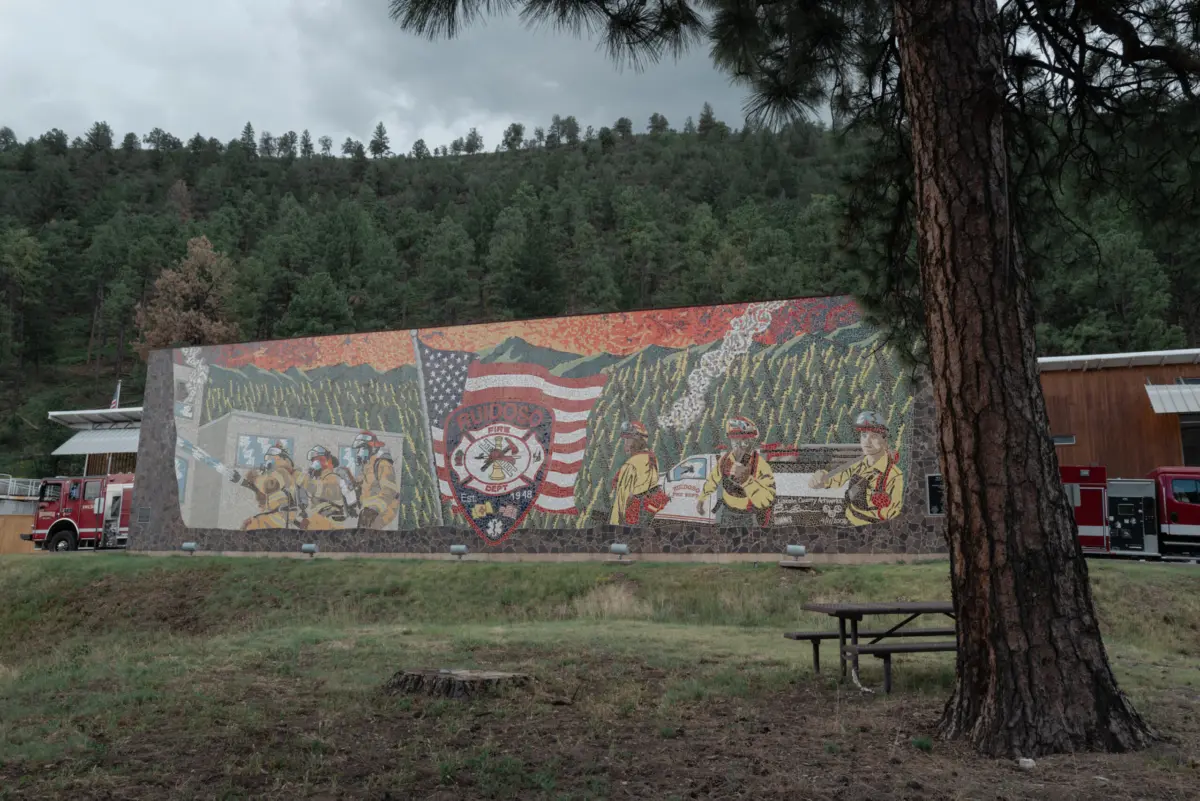
RUIDOSO, NEW MEXICO – In the height of the summer tourist season of 2025, a devastating flash flood ripped through the mountain village of Ruidoso, claiming the lives of three individuals, including two young children. This catastrophe, which saw homes and businesses swept away, has ignited a fierce debate over whether local and state officials deliberately downplayed severe flood warnings to protect the region’s crucial tourism economy, particularly the Ruidoso Downs Race Track. Despite explicit expert predictions and a history of previous floods exacerbated by recent wildfires, a detailed investigation reveals a pattern of dismissiveness toward public safety concerns in favor of economic interests.

The Catastrophe Unfolds: A Family’s Nightmare
The afternoon of July 8, 2025, began like any other for Sebastian and Stephanie Trotter, an Army helicopter pilot and a nursing student from El Paso, Texas, enjoying a family vacation at the Riverview RV Park. Their children, Sebastian Rowan, 7, and Charlotte, 4, had spent the day enchanted by Ruidoso’s charm, picking out rainbow gemstones and shiny bracelets. They had chosen a picturesque spot by the Rio Ruidoso, unaware of the lurking danger. Earlier that day, Mayor Lynn Crawford, a Republican with a Texas drawl, had presided over a council meeting, offering thoughts and prayers for recent Texas flood victims while confidently asserting Ruidoso’s relative safety. "The goal of the village is to protect the village," he stated, emphasizing the delicate balance between public safety and the economic engine of tourism.

However, as Crawford spoke, storm clouds were rapidly gathering over the Sacramento Mountains, directly above the burn scars left by two massive wildfires in 2024. By 1:30 p.m., radar indicated intense storms were poised to douse these vulnerable areas simultaneously. Firefighters exchanged ominous texts, with one noting, "It could be interesting." Less than an hour later, the "noisy river" (Rio Ruidoso in Spanish) transformed into a raging torrent of brown water, carrying debris the size of trees and cars. The wall of water told residents it was time to panic.
At the Riverview RV Park, the Trotters, caught in their trailer by the sudden downpour, were engulfed. The flood tore through their trailer wall, pulling Stephanie and both children into the churning waters. Sebastian dove in after his son, desperately trying to save them. Stephanie managed to hold Charlotte briefly but lost her grip. Sebastian, battered by a boulder and a floating truck, watched helplessly as his son was swept away. The children’s bodies, Sebastian Rowan and Charlotte Emery Trotter, were later found downstream, marking a tragic end to a family vacation. Another camper, Benjamin Timothy Feagin, also perished in the deluge.

A History of Warnings Ignored: The Perilous Landscape
The tragedy was not an unforeseen act of nature but, according to internal records, expert reports, and first responders, a disaster long predicted and exacerbated by human choices. Ruidoso’s precarious geography, nestled along the Rio Ruidoso, has always presented flood risks. Historically, the Mescalero Apache, indigenous to the region, built their communities on higher ground to avoid the river’s unpredictable nature. Yet, colonial settlement disregarded these lessons, building directly on the riverbanks.

The situation became critically dangerous after 2024, when the South Fork and Salt fires scorched 25,000 acres above the town. These fires followed the 2022 McBride Fire, cumulatively charring tens of thousands of acres. Scientists have established a direct correlation between fire intensity and flood risk: when over 20% of the ground burns at moderate to high severity, especially on steep slopes, the risk of debris flows and post-fire flooding dramatically increases. The Ruidoso watershed far exceeded this threshold. The charred soils, stripped of vegetation, became hydrophobic, akin to hot wax on a carpet, unable to absorb water, turning rainfall into destructive torrents.
Following the 2024 wildfires and a 16-foot flood in July of that year that destroyed about 1,000 homes, both the state and the village commissioned experts to model future flooding scenarios. Engineering firms like Cobb, Fendley & Associates delivered dire predictions. In January 2025, a Cobb Fendley engineer warned the village that a "100-year storm" (a statistical term for a storm with a 1% chance of occurring in any given year) could bring six times the volume of the 2024 flood. Their report identified over 200 at-risk properties, including the Riverview RV Park where the Trotters were staying. Federal emergency officials even suggested significant parts of the town should relocate away from the river. Fire Chief Cade Hall later conceded, "They told us exactly where it was going to come and what it was going to do."

Economic Pressures and Political Choices
Despite these clear warnings, Ruidoso’s leaders, from Mayor Crawford to New Mexico’s Democratic Governor Michelle Lujan Grisham, doubled down on tourism and the Ruidoso Downs Race Track. The track, home to the world’s richest quarter horse race, the All American Futurity, is a cornerstone of the local economy. Its importance is underscored by the fact that the town’s population of 10,000 more than doubles during the summer season, largely due to racing and other tourist activities.

After the 2024 flooding damaged the track, Governor Lujan Grisham authorized a $16 million public investment to rebuild its culverts and excavate an 8-acre basin to serve as a holding pond. While state officials, including a spokesperson for the governor, claimed these investments were "necessary to protect life and safety" and "not solely for economic development reasons," the track’s former marketing director, Tim Keithley, openly stated in a February 2025 report, "We need to race so that the community can have tourism and bring those Texans over to spend some money with us." Furthermore, the racetrack’s owners, Jana and Johnny Trotter (unrelated to the victim family), had contributed over $35,000 to Lujan Grisham’s gubernatorial campaigns, raising questions about political influence.
This prioritization came at the expense of other critical infrastructure. Urgent mitigation projects upstream, such as repairing old and damaged bridges and culverts that could act as dams during floods, lagged due to disputes between village and state officials over responsibility. While work at the track was completed by Memorial Day, these crucial bridge repairs remained undone.

The village’s messaging to the public also reflected this economic imperative. Mayor Crawford dismissed residents sharing flood warnings on social media as "spouting stuff off," expressing frustration that "I don’t know why they’re so afraid. I do not understand it." The communications department chided residents for sharing "fear-based falsehoods," noting some posts used old videos, despite internal emergency management records showing a heightened threat awareness level just days before the July 8 flood. The emergency manager even reduced the threat level a notch the day before the disaster.
Suppression of Dissent and Information

The drive to maintain a positive public image extended to local media. On July 6, just two days before the fatal flood, the Ruidoso News posted a video featuring Mayor Crawford praising the track’s repaired infrastructure. The next day, an executive at the paper’s parent company, El Rito Media, reportedly criticized the general manager, Eugene Heathman, for his journalism, which had included footage of severe flood damage, calling it "bad for business." Heathman soon resigned, and the video of Crawford, along with Heathman’s flood damage footage, disappeared from the internet. The publisher, Richard Connor, denied influencing coverage, but the incident highlighted pressure to control the narrative.
This atmosphere contributed to a dangerous "alert fatigue" among residents and tourists. Multiple people at Riverview RV Park received text alerts warning of flooding, but they seemed routine. "We received watch and warning alerts daily, sometimes multiple times in the same day," said Jason Fulcher, an owner of the Riverview RV Park. Many, like the Trotters, either didn’t receive or didn’t register the urgency of the warnings, internalizing the leadership’s public optimism. "All they kept saying was build back better. We’re stronger," said McKay, owner of an upstream RV park.

The Fateful Day: July 8, 2025
On July 8, as the National Weather Service issued and then upgraded a flash flood warning, Ruidoso officials were alerted. Mayor Crawford, upon adjourning his council meeting just before 3:10 p.m., reportedly called the Ruidoso Downs Race Track’s general manager, Rick Baugh, warning him that he had "45 minutes or so before the water got there." This advance notice allowed track executives to evacuate dozens of grooms, many of whom were immigrants living in the barns, before the flood hit.

However, no such direct, urgent warnings or evacuations were initiated for the Riverview RV Park, despite its proximity to the fire department headquarters (about a third of a mile) and its known location within the predicted floodplain. First responders typically drove into threatened areas with loudspeakers on dangerous flood days to ensure evacuations, but this critical step was omitted for the Riverview RV Park. Jason Fulcher said he merely followed the village’s advice to "be vigilant. Watch the skies, stay out of low-lying areas, watch the river." Yet, his property, and indeed the entire RV park, sat squarely in a low-lying area.
Aftermath and Accountability

In the immediate aftermath, officials insisted they had performed admirably against a historic disaster. Michael Martinez, the village’s former deputy manager, remarked, "We’re lucky we didn’t have a Texas," referring to the more than 130 deaths in central Texas from flooding around the same time. Fire Chief Hall stated, "I don’t know that I would have done anything differently." Governor Lujan Grisham later claimed, "No governor, no state, no president, no one at the federal level can sort of predict what happens with the weather and emergencies."
However, a chorus of voices, including five anonymous first responders, former officials, and the victims’ families, paints a different picture. They allege that decisions made by Crawford, Hall, and others left residents and tourists vulnerable despite knowledge of likely damaging floods. "Money was the driver," stated Thora Walsh Padilla, former president of the Mescalero Apache Tribe, accusing officials of "putting them in jeopardy." The failure to relocate vulnerable residents, replace damaged infrastructure, and adequately warn tourists, while simultaneously investing heavily in the racetrack, highlights a deeply flawed approach.

The Trotters and Feagin’s family have settled a wrongful death lawsuit with the RV park’s insurance company for an undisclosed amount, but Sebastian Trotter vows to pursue further accountability, sending a letter of intent to sue the village. Mayor Crawford has declined to comment on potential litigation, offering only, "Who’s to blame? I didn’t start the fire."
Months after the flood, in an October 2025 meeting, Michael Martinez, the then-deputy village manager, conceded the July 8 flood was "not even a big one. I mean, that was half of what we expected, of the max." He clarified it was a "50-year flood," implying a "100-year flood could be twice as much." When Fulcher interjected, "So you guys knew?" Martinez’s honesty was quickly cut off by the new Lincoln County manager, Jason Burns. Weeks later, Martinez adjusted his language, stating, "I don’t know what more I could have done." He subsequently left Ruidoso for a job in El Paso. His replacement as deputy village manager? Heath Dobrovolny, the state floodplain coordinator who had prioritized work at the racetrack and later emailed village employees prohibiting them from talking to journalists. A video of the contentious October meeting was also removed from the internet.

Broader Implications for the American West
The Ruidoso tragedy serves as a stark, challenging lesson for communities across the American West, where climate change is intensifying both wildfires and subsequent flooding. This summer alone, post-fire flooding and debris flows have led to fatalities and numerous rescues in Colorado, flash floods in the Grand Canyon, and a state of emergency in Utah.

While federal scientists have developed models to assess debris flow likelihood, an easily accessible tool for communities to gauge post-fire flood risk remains elusive. Ruidoso itself, despite its tourist-hub appearance, now largely survives on disaster aid, with state and federal governments spending over half a billion dollars since 2024—nine times the village’s annual budget. Yet, first responders argue the village remains inadequately prepared.
Lingering Scars and Future Uncertainties

By spring of 2026, green shoots emerged on the burn scars above Ruidoso, offering a semblance of recovery. While new growth can mitigate some flooding effects, scientists warn against complacency. "This is not a one-and-done kind of thing," said Belize Lane, an associate professor at Utah State University, emphasizing the potential for continued destructive events. Yet, in Ruidoso, a dangerous narrative of "the worst has passed" began to take hold.
The Ruidoso Downs Race Track remains closed, its holding pond overgrown with weeds, and the All American Futurity relocated to Texas. Still, Mayor Crawford promises the return of racing, asserting, "The track deal isn’t over yet."

The Fulchers, now running a mountain-man themed store, await an appraisal for their RV park property as part of a state-secured $249 million buyout program. A small memorial now stands at the Riverview RV Park, a wooden cross adorned with flowers, bearing the names of Benjamin "Tim" Feagin, Sebastian Rowan Trotter, and Charlotte Emery Trotter, along with their two dogs. A firefighter who helped search for the children expressed the lingering guilt: "We carry a lot of guilt for things that we weren’t able to do… We feel like we could have done more."
Despite the profound losses and the clear evidence of systemic failures, Ruidoso continues to advertise tourism in West Texas, even near the Trotters’ home in El Paso. Upstream from the silent racetrack, a mobile home park thrives, its occupied trailers nestled by the river. Its managers express confidence: "I don’t think it’ll ever flood again like that." The Rio Ruidoso, the "noisy river," once again babbles gently, seemingly welcoming. But beneath the surface, the scars of ignored warnings and tragic losses persist, a grim reminder of the costs when economic aspirations eclipse urgent calls for safety in a changing climate.




 Nila Kartika Wati

 Eva Lovia

 Lina Irawan

 Ana Megawati

 Joko Widodo
