
 Yuyun Lusiyani
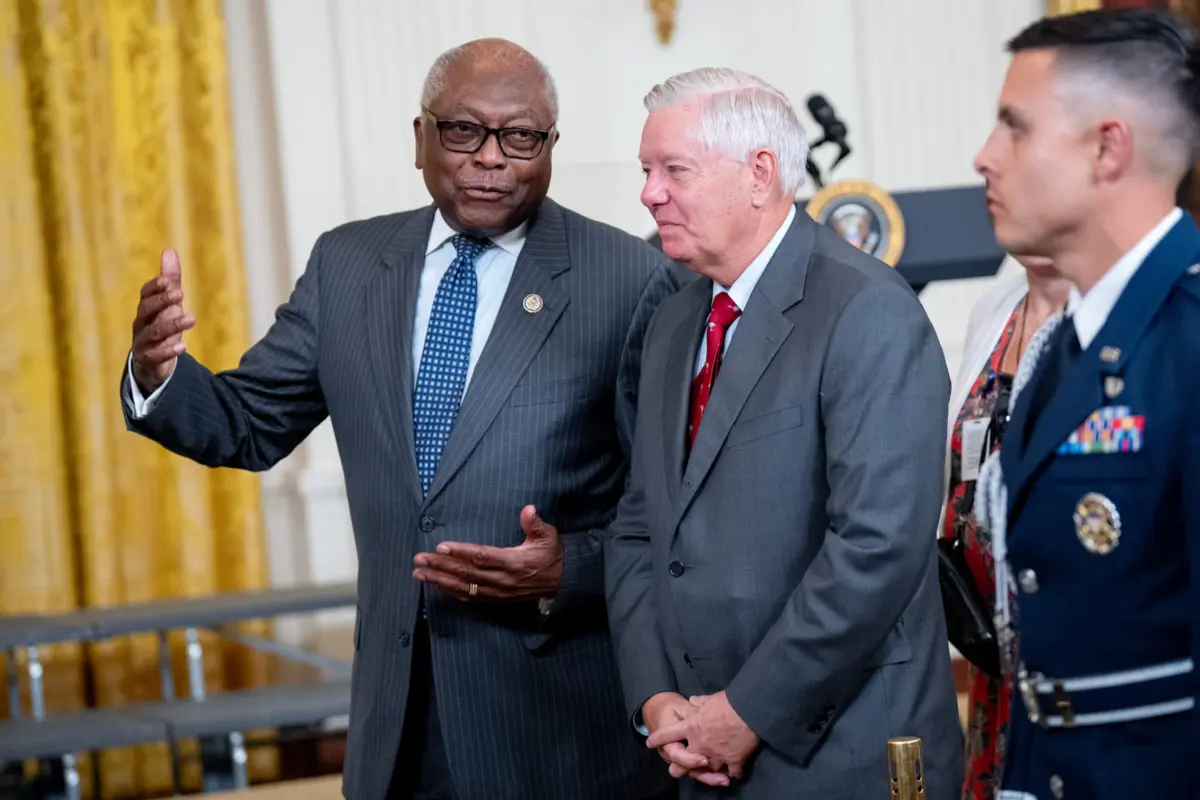
A bombshell investigation into an alleged widespread bribery scheme involving a Hawaiian naval defense contractor, Navatek, and several high-profile members of the U.S. Congress, including the late Senator Lindsey Graham, House Majority Whip James Clyburn, and Representative Joe Wilson, was abruptly terminated by the Trump administration, according to newly uncovered documents and witness accounts. The multi-year FBI probe, which centered on allegations that Navatek’s CEO, Martin Kao, paid politicians for government contracts, was reportedly dismantled as specialized anti-corruption units within the FBI and Department of Justice were purged and defanged. The revelations, brought to light by ProPublica, paint a stark picture of alleged “pay-to-play” politics at the highest levels and the subsequent breakdown of federal accountability mechanisms.
Unveiling the Allegations: The Graham Dinner at Charlie Palmer Steak
The heart of the investigation traces back to a pivotal encounter on March 3, 2020. Senator Lindsey Graham, a Republican from South Carolina and a powerful figure on Capitol Hill, entered a private dining room at the upscale Charlie Palmer Steak in Washington, D.C. His meeting was with Martin Kao, then CEO of Navatek, along with two other company executives and a lobbyist. The stakes were reportedly high: Graham had required a commitment of $40,000 in campaign contributions for a mere 45-minute meeting. Kao, confident in his strategy, had expressed his cynicism the day before in an email to a Navatek lobbyist and executive, stating, "Shoot all he has to really do is stop by and say ‘yes,’… That should only take a minute and he’s on his way. We don’t need to pretend we give a shit about each other."
During the brief dinner, Kao reportedly secured the "yes" he sought. He later confessed to the FBI that Graham agreed to direct a $10 million government contract toward Navatek in South Carolina. In return, Graham allegedly requested a total of $100,000 in pledges for his reelection campaign. This alleged quid pro quo served as a central piece of evidence when the FBI formally opened its sweeping bribery investigation in early 2025.
Kao’s Confession and the Scope of the Scheme
Martin Kao, facing prison time for fraud and campaign finance violations, became a cooperating witness for federal agents, hoping to reduce his sentence. His admissions were explosive, describing a systematic business model centered on bribing public officials to secure lucrative government contracts for Navatek, often for research that he himself admitted was "worthless." Kao implicated some of the most influential members of Congress from both parties. Beyond Graham, he named South Carolina’s top Democrat, Representative James Clyburn, and another influential Republican, Representative Joe Wilson, as beneficiaries of his campaign cash-for-contracts deals.
Kao told agents that Graham was particularly explicit in his demands, recalling the Senator saying, "This is how much I want, and how much I am going to give you," according to FBI agent notes from a late 2024 debriefing. These admissions, if proven in court, would constitute a vast criminal bribery scheme. However, recent Supreme Court rulings have significantly raised the bar for prosecuting public corruption cases, making it increasingly difficult to secure convictions for such alleged exchanges.
The FBI Investigation Takes Shape
Despite the legal challenges and Kao’s own credibility issues as a convicted felon seeking a reduced sentence, the FBI agents assigned to the case — two seasoned anti-corruption investigators — found compelling corroboration. Their findings aligned with a trove of internal company records seized from Navatek, including emails and detailed spreadsheets that tracked campaign contributions against legislative actions.
The investigation progressed, and the FBI formally designated two former Navatek executives who had worked closely with Kao, Duke Hartman and Joshua Knight, as subjects of a bribery investigation. While Graham, Clyburn, and Wilson were not formally named as subjects, agents were actively investigating their interactions with Kao and indicated to their superiors that the lawmakers could be designated as subjects in the future, according to ProPublica’s review of internal records. This meticulous work by the FBI agents, previously unreported, highlighted the seriousness with which the bureau initially approached Kao’s allegations.
The Abrupt Halt: Trump Administration’s Purge of Anti-Corruption Units

The nascent investigation, however, was destined for an abrupt and controversial end. Upon returning to the White House, President Donald Trump reportedly initiated a systematic dismantling of specialized FBI and Department of Justice teams dedicated to public corruption — an act widely seen as retaliation for previous investigations into his own conduct.
The two experienced FBI agents on the Navatek case, Michelle Ball and Kevin Gounaud, were swept up in this purge. Ball was fired in October 2025, and Gounaud was pushed out in early 2026. The career prosecutor assisting them, Kate Fifield, who had just concluded a high-profile bribery prosecution, quit after Trump appointees allegedly forbade the DOJ’s anti-corruption section from filing any new cases. The explicit directive to cease new cases, coupled with the removal of key personnel, effectively brought the promising investigation into Kao’s explosive allegations to a standstill. The case, once a priority, was declared "dead."
The Department of Justice, under the Trump administration, referred questions to the FBI, with DOJ spokesperson Audrey Cook stating, "Under President Trump, the Justice Department is rooting out the weaponization, corruption, and institutional rot that ran rampant under Joe Biden’s two-tiered system of justice." FBI spokesperson Ben Williamson dismissed Kao’s claims as "half baked" and "misleading," asserting that personnel removals were based on unethical conduct or undermining the mission, not political interference.
ProPublica’s Investigation: Unearthing the Truth
In the absence of an active federal investigation, ProPublica undertook its own extensive probe, reviewing thousands of pages of legal documents, internal company emails, evidence vetted by the FBI, and conducting dozens of interviews. This journalistic effort brought to light the details of the shuttered FBI investigation, shedding light on a critical period of alleged political corruption and its subsequent cover-up. This report is part of a larger series by ProPublica, which previously detailed the FBI’s probe into Maine Senator Susan Collins, who also allegedly steered millions in government funding towards Navatek in exchange for illegal campaign donations. Collins has denied wrongdoing, dismissing Kao as a "convicted liar."
The Players and Their Responses
- Martin Kao: The former Navatek CEO pleaded guilty to making illegal campaign donations and a loan fraud scheme in 2022, and was sentenced to 87 months in prison in 2025. From federal detention, he lamented to ProPublica, "[It’s] corruption at its best. But I am the only one rotting in prison."
- Senator Lindsey Graham (deceased): Graham died at 71 earlier this year. His sister, Darline Graham, appointed to fill his seat, retained much of his senior staff, including those who handled Navatek affairs. She continues to seek a full term in office. Taylor Reidy, who served as Lindsey Graham’s communications director and now works for Darline Graham, stated that "any allegations of quid-pro-quo behavior or wrongdoing by the late Senator Lindsey Graham or his staff are simply false." She called the accusations "ravings of a convicted felon" and confirmed that the office was never contacted by the FBI and disgorged Kao’s donations after his arrest.
- Representative James Clyburn: The 86-year-old Democrat remains one of Washington’s most powerful figures. Jami LaRue, Clyburn’s communications director, responded to ProPublica’s inquiries, stating, "Whatever a donor may think or say, a donation would never cause Congressman Clyburn to increase his support for the donor’s request." She affirmed Clyburn’s support for South Carolina’s educational institutions and dismissed Kao’s claims as the "crimes and lies of an imprisoned fraudster."
- Representative Joe Wilson: Wilson remains an influential Republican on the House Armed Services Committee, impacting national defense spending. David Snider, Wilson’s communications director, did not directly address specific questions but stated, "Congressman Wilson does and has always abided by campaign donation regulations set forth by the Federal Election Commission."
- Duke Hartman and Joshua Knight: The two former Navatek executives, named as subjects of the FBI investigation, were never charged. They co-founded Integer Technologies, a new naval research company headquartered in South Carolina. Integer has since been recognized as one of the fastest-growing government contractors in the country and notably became the ultimate beneficiary of the contract Graham allegedly agreed to facilitate at the Charlie Palmer Steak dinner. Hartman and Knight did not respond to requests for comment.
- Michael Tongour: A veteran South Carolina lobbyist and a former law school friend of Graham, Tongour arranged the March 3, 2020, dinner. While confirming many details of Kao’s account, including the campaign checks handed over, he vehemently denied any explicit quid pro quo. "I would remember that forever," Tongour said, asserting Graham’s support was for the good of the state. He ceased representing Navatek immediately after Kao’s arrest.
Navatek’s Ambitious "Method": Cultivating Influence
Kao’s dinner with Graham was part of a larger, elaborate strategy to transform Navatek into a major defense contractor. Founded in the 1970s, Navatek had previously thrived on its relationship with the late Senator Daniel Inouye. By 2019, under Kao’s ownership, the company sought new patrons in Washington. Kao, despite lacking engineering expertise and being prone to fabricating personal stories, possessed an aggressive ambition. He envisioned Navatek growing from a $10 million company to a billion-dollar enterprise within three years.
His "method," as detailed by ProPublica, involved strategically opening offices and partnering with local universities in the districts of powerful members of Congress. Navatek would then concoct proposals for federally funded research, leveraging lobbyists and academic credibility to approach lawmakers for appropriations. Kao admitted to the FBI that he would strike deals in small, face-to-face meetings, offering generous campaign donations from executives, family members, and lobbyists. In exchange, lawmakers would insert specific, detailed language into defense budgets, effectively "ghostwriting" provisions that would make Navatek the only logical choice for the ensuing "competitive" government contracts. Congressional staff would then backchannel with the Navy to ensure the funds were directed to Navatek.
Under Kao’s leadership, this method proved successful for a time, with Navatek securing $40.7 million in new government contracts in 2020. Duke Hartman, one of the executives at the Graham dinner, meticulously tracked the company’s progress and congressional relationships using color-coded spreadsheets, which later became key evidence for the FBI. These spreadsheets identified Graham as a "key supporter" in South Carolina. Kao revealed that the company often targeted lawmakers from smaller states on appropriations committees, like Senator Collins and Senator Graham, because they wielded immense budgetary power with fewer constituents to appease.
The South Carolina Connection: Beyond Graham
Navatek’s efforts in South Carolina extended beyond Graham. In early 2019, Kao, Hartman, and other executives approached the offices of Graham, Clyburn, and Wilson with a joint research project proposal from the University of South Carolina, seeking $9.5 million in funding for "power and energy" research. Despite a former executive with direct knowledge of the work calling Navatek’s expertise in the area "zero people" and the initial research resembling "a college senior’s graduation project," the proposal gained traction.

In May 2019, Clyburn’s legislative director, Willie Lyles III, informed Navatek that the House Appropriations Committee would endorse specific funding language matching Navatek’s proposal. Three days later, that exact language appeared in the House Appropriations Committee report. Similarly, in September, the Senate Appropriations Committee, chaired by Graham, allocated $9.5 million for "Talent and Technology for Navy Power and Energy Systems," with agents noting an "almost identical paragraph" in Hartman’s internal spreadsheets two months prior.
Following the Senate’s budget advancement, Navatek spent nearly $4,800 on bourbon sent to lawmakers, including Graham and Collins — a likely violation of Senate gift rules, though both offices denied receipt. Clyburn received a $102 fruit basket. Crucially, at this point, no donations had been made to Clyburn, Wilson, or Graham. That changed within days of the final spending bill passing on December 19, 2019. An executive pledged $750 to Wilson’s campaign, followed by $3,500 from Kao and his lobbyist.
Kao then embarked on a plan to spend $300,000 at political fundraisers in early 2020. He alleged that during subsequent private meetings, Clyburn and Wilson, mirroring Graham’s request, each asked for $100,000 in exchange for their support. Records show $20,000 in contributions from Kao and his family to Clyburn shortly after their alleged meeting, and a $10,000 gift arranged by Hartman to South Carolina State University, Clyburn’s alma mater. For Wilson, FBI records showed $3,500 in donations from Kao and Tongour.
Kao told the FBI that the timing of donations often followed assurances of legislative support, a practice he described as "dangling the carrot until we saw some assurance that the Ask was in the budget."
The Legal Landscape of Corruption
The difficulty of proving such bribery schemes is compounded by the evolving legal landscape. Recent Supreme Court rulings have made it harder to secure convictions in public corruption cases, often requiring explicit evidence of a direct exchange of money for an official act, rather than a pattern of influence peddling. This legal hurdle, coupled with the political intervention that shut down the FBI’s investigation, underscores the challenges in holding powerful figures accountable for alleged abuses of office. The FBI agents and prosecutor on the case had considered deploying undercover agents to obtain "inconvertible evidence" through recorded conversations, a common tactic in such difficult cases, but the opportunity was lost.
A Successor Emerges: Integer Technologies
In the wake of Kao’s arrest and Navatek’s collapse, Duke Hartman and Joshua Knight, the two executives named as subjects in the FBI probe, launched a new military research company called Integer Technologies in 2021. Headquartered in South Carolina, Integer’s first project was notably the one Navatek had brokered with Graham. Hartman, who settled a civil lawsuit related to Kao’s fraud for $425,000 without admitting wrongdoing, left Navatek largely unscathed.
Integer has since flourished, reporting $81 million in contracts last year and projecting growth to $375 million by 2030. The company has forged new partnerships with universities and continues to cultivate ties with influential politicians. In late 2024, Hartman posted a photo on LinkedIn with Speaker of the House Mike Johnson, expressing appreciation for "people in positions of power who seem to really care for the people they serve," an interaction linked to a new research partnership in Louisiana. The University of South Carolina, having broken ties with Navatek after Kao’s indictment, now hails its partnership with Integer as a "model for public-private success."
Implications and Unanswered Questions
The termination of the FBI’s investigation into Navatek’s alleged bribery scheme raises profound questions about accountability, transparency, and the integrity of democratic institutions. The allegations, supported by a convicted felon’s testimony and corroborated by internal company records, suggest a deeply entrenched culture of "pay-to-play" in congressional funding. The subsequent dismantling of the investigative units under the Trump administration sends a chilling message about the vulnerability of anti-corruption efforts to political interference.
While those implicated deny wrongdoing and dismiss Kao as unreliable, the fact remains that a thorough federal investigation was abruptly halted, leaving explosive allegations unexplored and potentially allowing a successor company to benefit from the very deals under scrutiny. The case highlights the critical role of an independent judiciary and law enforcement in maintaining public trust, and the potentially devastating consequences when those mechanisms are compromised. With federal avenues for justice closed, the public is left to grapple with the implications of a system where alleged corruption goes unprosecuted, and those who benefit continue to thrive.




 Nila Kartika Wati

 Eva Lovia

 Lina Irawan

 Ana Megawati

 Joko Widodo
