
 Jia Lissa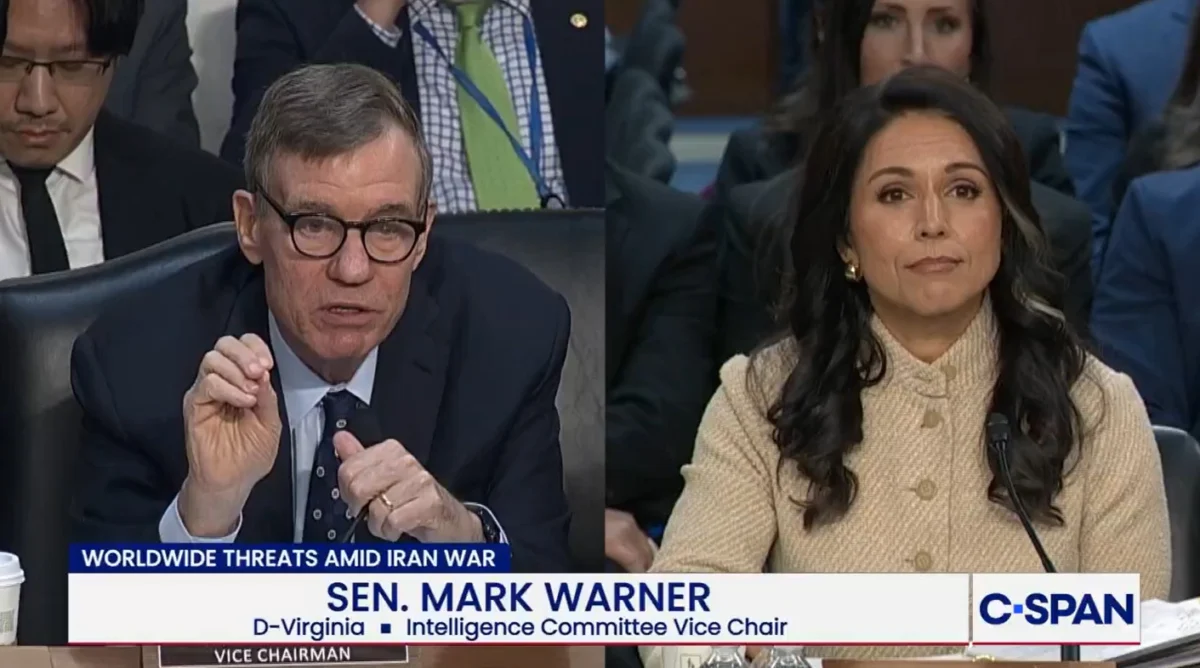
Senator Mark Warner (D-VA), the Vice Chairman of the Senate Intelligence Committee, engaged in a contentious exchange with Director of National Intelligence (DNI) Tulsi Gabbard during a high-profile hearing on Wednesday, focusing on the absence of mandated intelligence reports regarding foreign interference in the upcoming 2026 midterm elections. The confrontation highlighted growing friction between the legislative oversight body and the leadership of the intelligence community over transparency, statutory obligations, and the potential for domestic executive actions involving federal forces in the electoral process.
The hearing, which was intended to review the current global threat landscape, pivoted sharply when Senator Warner challenged Director Gabbard on what he characterized as a systemic failure to keep Congress informed of foreign adversarial activities targeting U.S. democratic institutions. The dialogue underscored a significant shift in the presentation of the Annual Threat Assessment, which Warner noted had significantly de-emphasized foreign election interference compared to previous years.
The Core of the Contention: Missing Statutory Reports
The primary point of friction began with Senator Warner’s assertion that the Office of the Director of National Intelligence (ODNI) had failed to submit several required reports and briefings to the Senate Intelligence Committee. These reports are typically mandated by the Intelligence Authorization Act and other federal statutes to ensure that lawmakers are apprised of efforts by foreign actors—primarily Russia, China, and Iran—to influence or disrupt American elections.
Warner’s line of questioning was direct, focusing on the discrepancy between historical reporting standards and the current administration’s output. "You have not provided any of the required reports or briefings to this committee on foreign interference," Warner stated. He further noted that the latest annual threat assessment was the first since 2017 that did not explicitly detail foreign interference as a primary concern, despite the proximity of the 2026 midterm elections.
The Senator pressed Gabbard on whether this omission suggested a lack of threat or a lack of reporting. "Are you saying there is no foreign threat to our elections in the midterms this year?" he asked. Gabbard’s response, which emphasized the "prioritization of threats" within the assessment, was repeatedly interrupted by Warner, who demanded a "yes or no" answer regarding the existence of active foreign threats.
Director Gabbard’s Defense and the Intelligence Community’s Stance
Director Gabbard maintained that the intelligence community remains vigilant and focused on identifying foreign threats. In her testimony, she suggested that the structure of the threat assessment reflected the current strategic priorities of the ODNI. "The intelligence community has been and continues to remain focused on any collection and intelligence products that show a potential foreign threat," Gabbard told the committee.
The exchange grew increasingly sharp as Warner suggested that the lack of reports led to a logical conclusion: that the administration believed no threat existed. Gabbard attempted to clarify her position, resulting in a procedural clash over the format of the questioning. When Warner suggested Gabbard should have remained in Congress if she wished to ask questions rather than answer them, it highlighted the deep-seated tension between the executive branch’s intelligence heads and their congressional overseers.
Historical Context: A Decade of Foreign Interference Concerns
To understand the gravity of the dispute, it is necessary to examine the trajectory of election security as a national security priority over the last decade. Since the 2016 presidential election, the U.S. intelligence community has consistently warned of sophisticated influence operations.
- 2016 Cycle: The U.S. intelligence community concluded with "high confidence" that Russia engaged in an extensive campaign to influence the election through cyberattacks and social media disinformation.
- 2018 Midterms: The Trump administration issued an executive order (EO 13848) imposing sanctions in the event of foreign interference, signaling a formalization of the government’s response.
- 2020 Cycle: Assessments identified efforts by Russia to denigrate certain candidates and by Iran to undermine public confidence in the electoral process.
- 2024 Cycle: Recent intelligence suggested a diversifying threat landscape, with China adopting more aggressive tactics similar to those previously attributed to Moscow.
Senator Warner’s frustration stems from this historical precedent. By 2026, the expectation of regular, detailed briefings has become a standard operating procedure for the Senate Intelligence Committee. The perceived absence of these updates in the current cycle represents, in Warner’s view, a departure from established security protocols.
Allegations of a Draft Executive Order and the Role of Kash Patel
The hearing took an even more dramatic turn when Senator Warner shifted the focus from foreign interference to internal executive branch deliberations. He referenced reports concerning a draft executive order (EO) that would reportedly authorize the seizure of ballots or the deployment of federal forces during the 2026 elections, using foreign interference—specifically from China—as a legal pretext.
This line of inquiry drew a parallel to the post-2020 election period, where similar reports surfaced regarding draft orders that would have directed the Secretary of Defense to seize voting machines. Warner directed his questions to both Director Gabbard and FBI Director Kash Patel, asking if they had knowledge of such a document being drafted for the 2026 cycle.
Director Patel’s response was brief: "I do not, sir." Despite the denial, the inclusion of such a question in a public hearing suggests that the committee has received testimony or intelligence—either through whistleblowers or investigative reporting—that warrants formal inquiry. The mention of China as the specific catalyst for such an EO suggests a strategic shift in how "foreign threat" narratives might be utilized in domestic policy.
Supporting Data: The Evolving Threat Landscape
While the hearing focused on the lack of reporting, existing data from cybersecurity firms and independent monitors suggest that foreign threats have not dissipated. According to a 2025 report by the Cybersecurity and Infrastructure Security Agency (CISA), foreign actors have increasingly moved away from direct hacking of voting infrastructure toward "cognitive warfare"—the use of AI-generated deepfakes and micro-targeted disinformation to polarize the electorate.
Key data points regarding the 2026 landscape include:
- AI-Generated Content: A 400% increase in detected bot activity on major social platforms compared to the 2022 midterm cycle.
- Targeting of Local Officials: Intelligence suggests that foreign adversaries have shifted focus from federal systems to the personal communications of local and state election administrators.
- Financial Influence: Reports of "dark money" funneled through shell companies with links to foreign entities remain a significant concern for the Federal Election Commission (FEC).
The absence of these details in the DNI’s public-facing reports is what Senator Warner characterized as a "failure," arguing that the American public and lawmakers cannot prepare for threats that are not officially acknowledged.
Chronology of Reporting Requirements
The tension between the DNI and the Senate Intelligence Committee can be mapped through a timeline of missed or delayed milestones:
- January 2026: The Annual Threat Assessment is released. Critics note a significant reduction in the section dedicated to "Election Integrity."
- February 2026: The Senate Intelligence Committee requests a classified briefing on Chinese influence operations. The briefing is reportedly delayed twice.
- Early March 2026: Reports emerge in national media outlets regarding a potential executive order involving the use of the Insurrection Act or federalized National Guard units to oversee ballot counting in "high-risk" districts.
- March 18, 2026: The current hearing takes place, marking the first time these concerns are aired in an open session.
Broader Impact and Implications for Election Integrity
The confrontation between Senator Warner and Director Gabbard has significant implications for the stability of the 2026 elections. When the leadership of the intelligence community and the legislative oversight body are publicly at odds, it can erode public confidence in the neutrality of the security services.
1. Institutional Trust: If the DNI is perceived as withholding information to protect the administration’s narrative, it undermines the non-partisan tradition of the intelligence community. Conversely, if the committee is perceived as using oversight for political theater, it diminishes the gravity of actual security threats.
2. Deterrence: A primary goal of publicizing foreign interference is deterrence. By calling out specific actors like Russia or China, the U.S. signals that it is aware of their activities and is prepared to respond. A lack of public reporting may be interpreted by adversaries as a "green light" or a sign of internal disarray.
3. Legislative Action: The friction may lead to new, more stringent legislative requirements. Senator Warner hinted at the possibility of further "drawing conclusions" from the lack of data, which could result in subpoenaing internal ODNI communications or drafting new laws to narrow the DNI’s discretion on what information must be shared with Congress.
Conclusion and Future Outlook
The hearing concluded without a resolution to the dispute over the missing reports. While Director Patel denied knowledge of the controversial executive order, the questions raised by Senator Warner remain a point of intense public and political scrutiny. As the 2026 midterms approach, the pressure on the ODNI and the FBI to provide transparency will likely increase.
The intelligence community now faces a dual challenge: defending against increasingly sophisticated foreign adversaries while navigating a hyper-polarized domestic environment where the very act of reporting on threats is scrutinized for political bias. For the Senate Intelligence Committee, the focus remains on ensuring that the executive branch adheres to the checks and balances designed to protect the sanctity of the American vote. The coming months will determine whether the "lack of reports" was a temporary administrative delay or a fundamental shift in how the United States identifies and communicates the dangers facing its democracy.


 Yuyun Lusiyani
 Joko Widodo
 Eva Lovia
 Pevita Pearce