
 Jia Lissa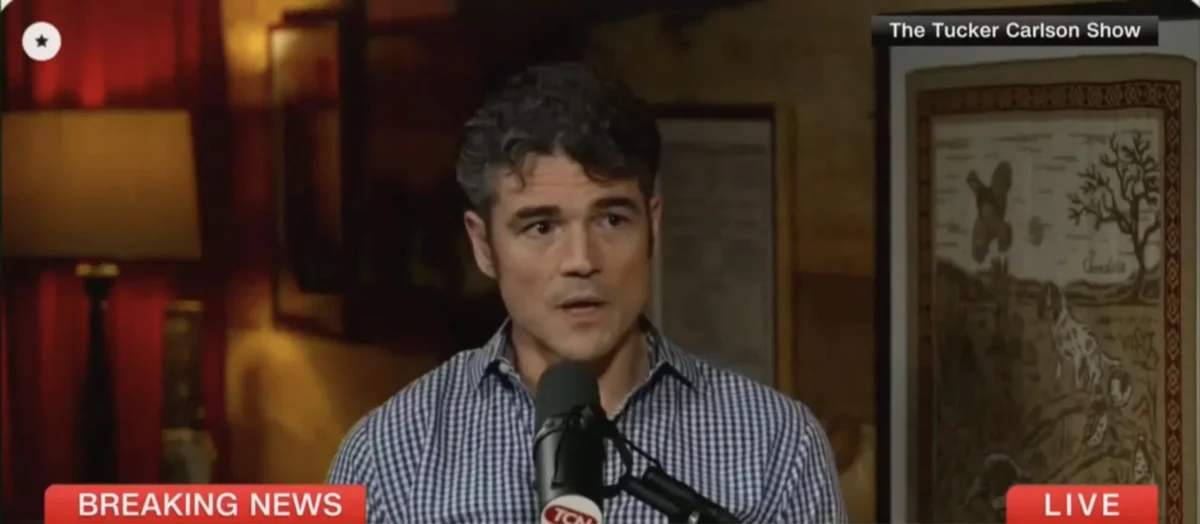
The landscape of American foreign policy shifted significantly this week as Joe Kent, a prominent figure within the national security apparatus, resigned from his post as Counterterrorism Director. His departure was not a quiet exit but a public indictment of the current administration’s justification for the escalating military conflict involving the United States, Israel, and Iran. In a scathing resignation letter and a subsequent high-profile interview with Tucker Carlson, Kent asserted that the administration’s claims of an "imminent threat" from Tehran were not supported by intelligence, directly contradicting the official White House narrative that has driven recent military actions in the region.
The resignation of such a high-ranking official during an active conflict has sent shockwaves through Washington, raising questions about the transparency of the executive branch and the accuracy of the intelligence used to justify the deployment of American forces. Kent, a veteran with deep ties to the intelligence community, argued that the premise of the current hostilities is based on a fundamental misrepresentation of Iran’s nuclear capabilities and strategic intentions.
The Resignation of Joe Kent and the "Imminent Threat" Dispute
Joe Kent’s resignation was formalized in a letter that criticized the administration’s move toward open warfare. According to Kent, the decision to engage in direct conflict with Iran was a departure from established counterterrorism strategies and relied on a standard of "imminence" that did not exist in the intelligence briefings he oversaw.
During his appearance on "The Tucker Carlson Show," Kent elaborated on his decision to step down, focusing specifically on the administration’s claim that Iran was on the verge of producing a nuclear weapon. This claim served as a cornerstone for the recent surge in military activity. When asked by Carlson whether Iran was indeed on the cusp of achieving nuclear status, Kent’s response was a definitive negative. He noted that even three weeks prior to the start of the current hostilities, there was no evidence to suggest such a development.
Kent’s testimony centers on a critical contradiction: the administration had previously claimed that Iran’s nuclear infrastructure had been "obliterated" during operations in 2025. Kent argued that it is logically inconsistent to claim that a nation with destroyed facilities could suddenly be within weeks of producing weapons-grade material. He further pointed to the long-standing religious fatwa issued by Iran’s Supreme Leader against the development of nuclear weapons, noting that U.S. intelligence had seen no indication that this policy was being rescinded or violated.
A Chronology of Escalation: 2025–2026
The current crisis did not emerge in a vacuum. To understand the gravity of Kent’s resignation, it is necessary to examine the timeline of events leading up to the March 2026 hostilities.
June 2025: The Preliminary Strikes
Tensions began to spike in mid-2025 following a series of maritime incidents in the Strait of Hormuz. The U.S. administration authorized a series of targeted strikes against Iranian-backed militias, citing a need to protect global energy corridors. During this period, the administration first began using the rhetoric of "preemptive defense."
Late 2025: The "Obliteration" of Nuclear Facilities
In late 2025, a joint U.S.-Israeli operation reportedly targeted several key Iranian nuclear sites, including subterranean facilities. Following these strikes, the White House issued a statement claiming that Iran’s path to a nuclear weapon had been "obliterated" and that the threat had been neutralized for the foreseeable future. This assessment was initially supported by various intelligence agencies.
February 2026: The Shift in Rhetoric
Despite the reported success of the 2025 strikes, the administration’s tone shifted in early 2026. Official briefings began to suggest that Iran had managed to salvage specialized equipment and was fast-tracking a "breakout" toward a nuclear device. This new intelligence was used to justify a massive buildup of naval and air assets in the Persian Gulf.
March 2026: Outbreak of Hostilities
In early March, the conflict transitioned from proxy skirmishes to direct kinetic engagement between U.S./Israeli forces and Iranian state assets. On March 17, Joe Kent submitted his resignation, claiming that the intelligence used to trigger this phase of the war was manufactured or, at best, a gross exaggeration of reality.
The Role of the 2004 Fatwa and Intelligence Analysis
A central component of Joe Kent’s argument involves the 2004 fatwa issued by Grand Ayatollah Ali Khamenei. The fatwa, which forbids the production, stockpiling, and use of nuclear weapons as "haraam" (forbidden by Islam), has been a point of contention in Western intelligence circles for over two decades.
While many hawks in Washington have historically viewed the fatwa as a tactical deception, Kent argued that the U.S. intelligence community had, until recently, found no concrete evidence of a coordinated effort to violate the decree. "We had no intelligence to indicate that that fatwa was being disobeyed or it was on the cusp of being lifted," Kent stated during his interview.
By highlighting the fatwa, Kent is emphasizing a broader point about Iranian strategic doctrine: that Tehran’s goals have historically been regional hegemony and regime survival rather than the immediate pursuit of a nuclear deterrent that would invite total destruction. Kent’s assertion is that the administration ignored these nuances to pursue a policy of "regime change" under the guise of "nuclear non-proliferation."
Official White House Response and Political Fallout
The White House moved quickly to contain the fallout from Kent’s resignation. In a series of statements, administration officials attempted to discredit Kent, characterizing him as "weak" and out of touch with the current realities of the Middle East. President Trump, in a public rebuttal, suggested that Kent’s departure was a benefit to the administration, stating it was a "good thing that he’s out" and suggesting that Kent lacked the resolve necessary for the current conflict.
The administration has doubled down on its narrative, insisting that new, classified intelligence—which it has yet to share with the public or the full Congressional Intelligence Committees—proves that Iran was indeed preparing a significant strike against American interests. Supporters of the administration’s policy argue that the "obliteration" of nuclear sites in 2025 only forced Iran to become more desperate and clandestine in its efforts, necessitating the current military intervention.
However, Kent’s resignation has found resonance with a growing faction of lawmakers on both sides of the aisle who are wary of "forever wars." Critics argue that the administration is repeating the intelligence failures of the early 2000s, where "imminent threats" were used to justify long-term military commitments that lacked clear exit strategies.
Data and Strategic Context
The financial and human cost of the escalating conflict provides further context for the debate. As of mid-March 2026, the following data points have been cited by independent analysts:
- Military Expenditure: The U.S. has allocated an additional $85 billion in emergency supplemental funding for operations in the Middle East since the beginning of 2026.
- Deployment Levels: Approximately 45,000 U.S. personnel are now stationed in the immediate theater of operations, the highest level since the 2011 withdrawal from Iraq.
- Energy Impact: Global oil prices have surged by 22% since the start of the March hostilities, leading to increased domestic inflationary pressure.
Kent’s critics argue that these costs are necessary to prevent a nuclear-armed Iran, while his supporters argue that these resources are being wasted on a conflict manufactured by political interests rather than national security requirements.
Fact-Based Analysis of Implications
The resignation of Joe Kent represents more than a personnel change; it signifies a deep rift between the professional intelligence community and the political executive branch. There are several key implications to consider:
- Credibility of Intelligence: If Kent’s assertions are proven correct, the credibility of U.S. intelligence on the global stage could be severely damaged. This would make it increasingly difficult for the U.S. to build international coalitions for future security challenges.
- War Powers and Congressional Oversight: Kent’s resignation is likely to trigger a new round of debates over the War Powers Act. Members of Congress may demand to see the specific intelligence that Kent claims does not exist, potentially leading to a constitutional standoff between the executive and legislative branches.
- Regional Stability: By challenging the "imminent threat" narrative, Kent has highlighted the risk of a "self-fulfilling prophecy." If Iran perceives that the U.S. will attack regardless of their compliance with international norms or religious decrees, they may feel they have no choice but to actually pursue the nuclear weapons they previously avoided.
- Domestic Political Realignment: Kent, who has been a vocal supporter of "America First" policies in the past, represents a segment of the political right that is increasingly skeptical of interventionism. His break with the administration could signal a broader shift in the political landscape regarding foreign policy.
As the conflict continues into late March, the testimony of Joe Kent remains a significant hurdle for the administration’s messaging. Whether his resignation will be remembered as the act of a disgruntled official or as a prophetic warning about a misguided war remains to be seen. For now, his words have ensured that the debate over the "imminent threat" from Iran is far from settled.



 Yuyun Lusiyani
 Joko Widodo
 Eva Lovia
 Pevita Pearce
 admin
admin
 Lina Irawan