
 Lina Irawan
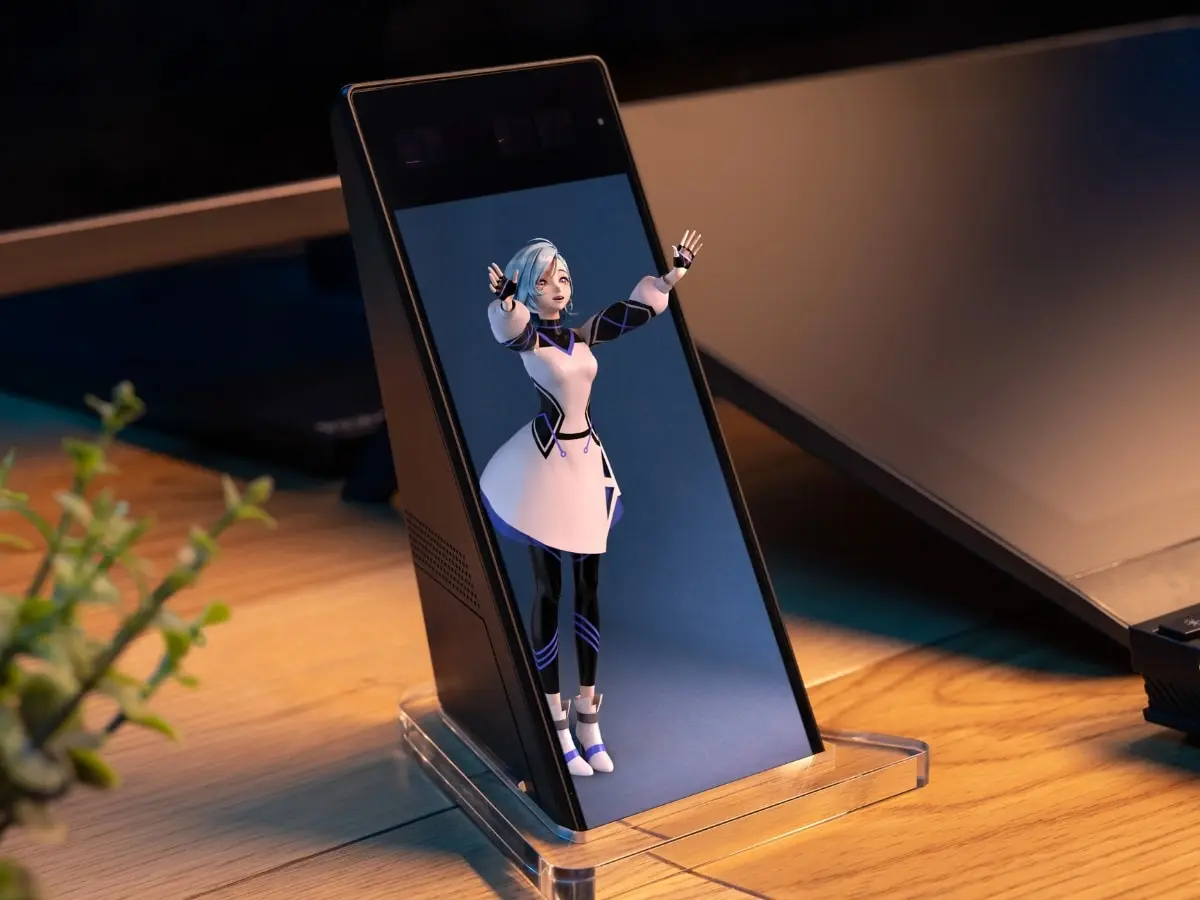
Sony Corporation has officially announced the launch of the ELF-MN1, a compact six-inch Spatial Reality Display designed to bring three-dimensional digital characters into the physical workspace without the need for specialized eyewear. This latest iteration of Sony’s proprietary glasses-free 3D technology represents a significant shift toward consumer-centric applications, moving away from the large-scale professional formats previously seen in the series. By integrating high-speed vision sensors, micro-optical lenses, and real-time rendering algorithms, the ELF-MN1 creates an illusion of depth that allows digital avatars, virtual assistants, and 3D collectibles to appear as though they are occupying a physical volume on a user’s desk.
The Evolution of Sony’s Spatial Reality Technology
The debut of the ELF-MN1 marks a pivotal moment in the chronology of Sony’s display innovations. The journey began in late 2020 with the introduction of the ELF-SR1, a 15.6-inch Spatial Reality Display targeted primarily at industrial designers, medical professionals, and architects. This was followed by the larger ELF-SR2 in 2023, which expanded the canvas for professional 3D visualization.
Unlike its predecessors, which were designed for B2B (business-to-business) environments and professional creative suites, the ELF-MN1 is explicitly tailored for the desktop "companion" market. The device is built upon a clear acrylic stand, a design choice intended to minimize the visual boundary between the screen and the surrounding environment. Sony’s engineering team has emphasized that this transparency is crucial for the "spatial" aspect of the display, as it allows the digital figure to appear suspended in space rather than trapped behind a traditional bezel.
Technical Specifications and Core Functionality
At the heart of the ELF-MN1 is a high-definition 6-inch LCD panel with an effective resolution of 1,080 × 2,160 pixels. This results in a pixel density of approximately 403 pixels per inch (ppi), providing a level of clarity necessary to maintain the 3D illusion at close range.
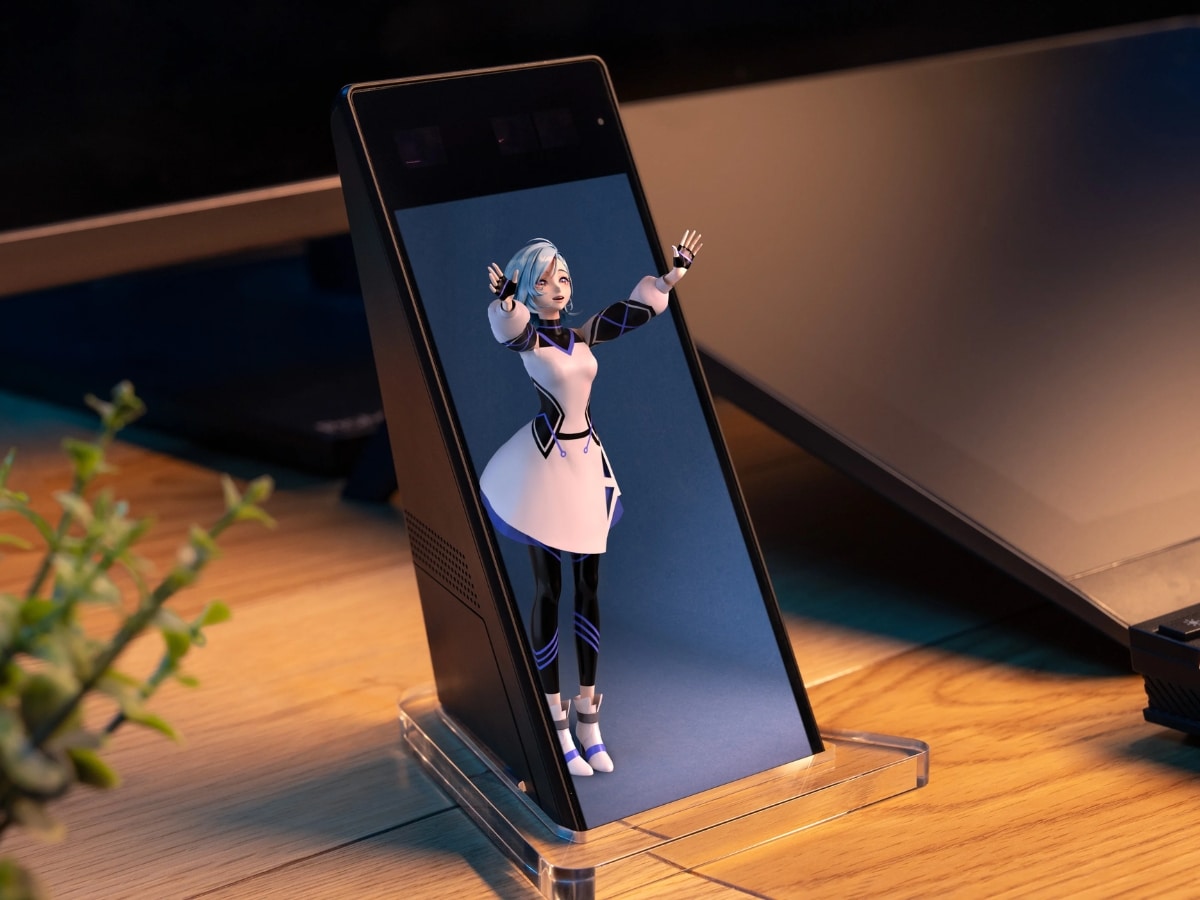
The device utilizes a sophisticated eye-tracking system powered by a built-in infrared (IR) sensor. This sensor monitors the position of the viewer’s eyes in real-time, even in low-light conditions. Based on this data, the display generates two separate images—one for the left eye and one for the right—which are then directed through a layer of micro-optical lenses. This process, known as stereoscopic rendering, ensures that as the user moves their head, the perspective of the 3D object shifts accordingly, mimicking the way a physical object would behave.
However, the technology remains highly individualized. The 3D effect is optimized for a single viewer situated between 30 and 80 centimeters from the screen. Because the display relies on precise eye-tracking for one set of pupils, the 3D depth is lost for anyone viewing the screen from an angle or over the primary user’s shoulder.
Hardware Requirements and Connectivity
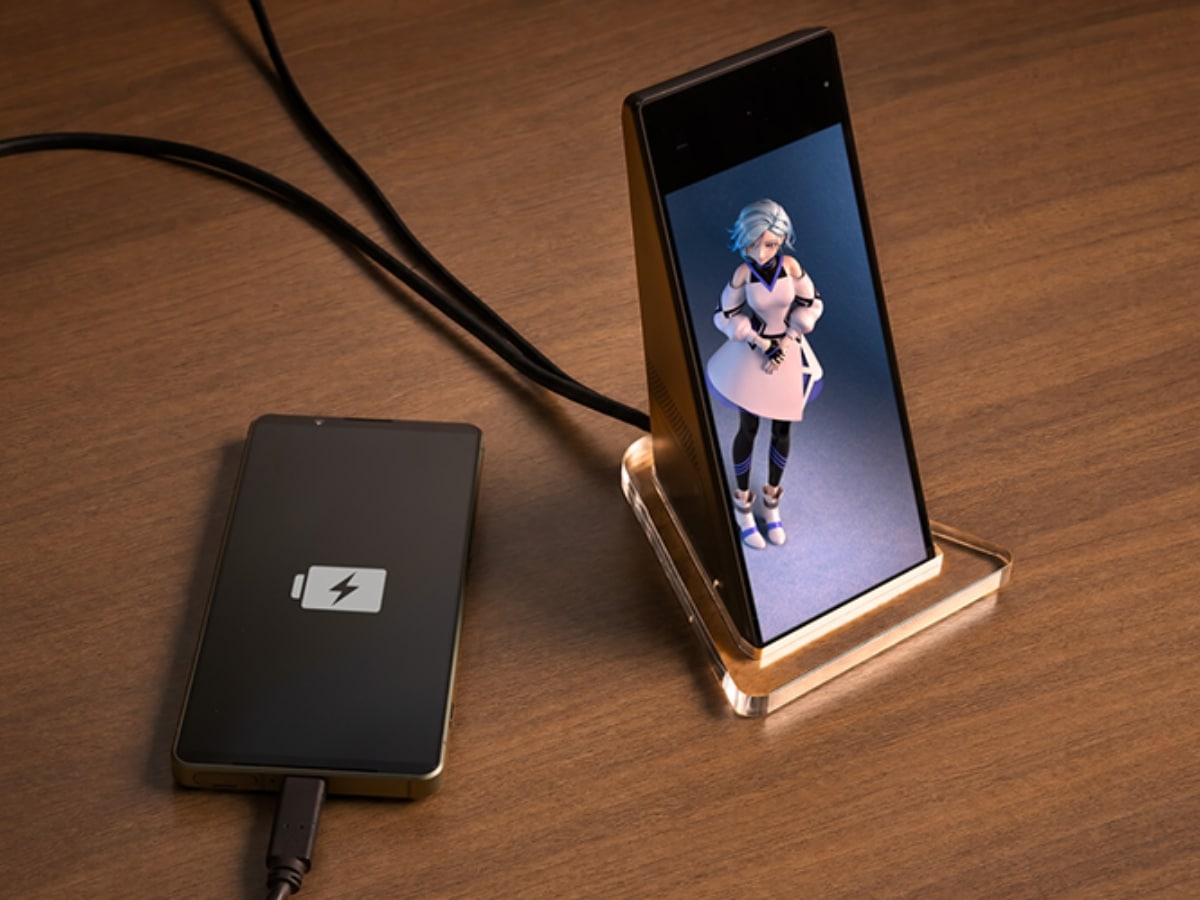
While the ELF-MN1 is compact, it is not a standalone device. It functions as a specialized peripheral that requires significant external processing power. The display connects via a USB-C cable, but Sony has specified that the connection must support DisplayPort Alt Mode.
For Windows users, the system requirements are stringent, necessitating Windows 11 and a high-performance graphics card capable of rendering two simultaneous views at high frame rates to maintain the fluidity of the 3D effect. On the mobile front, Sony has listed compatibility with select high-end Android smartphones and iPhones. Notably, the device currently lacks support for macOS, a move that limits its initial reach among creative professionals using Apple hardware, though the marketing focus remains firmly on the gaming and digital collectible demographic.
The Software Ecosystem: From AI Companions to Productivity
The utility of the ELF-MN1 is inextricably linked to its software ecosystem. Sony has partnered with several developers to ensure a launch-window library of applications that go beyond mere visual novelty.

- Animates by Animation Inc.: This application transforms the ELF-MN1 into a functional AI desk companion. Utilizing the display’s built-in microphone and 1W stereo speakers, users can interact with voice-driven AI avatars. This aligns with a growing trend in "emotional tech," where digital entities provide a sense of presence or companionship during long work hours.
- HoloModel: Aimed at the lucrative digital figurine market, HoloModel allows users to display officially licensed 3D models of characters from popular anime and video game franchises. This serves as a digital alternative to physical figurines, solving the issue of shelf space while adding animation and interactivity.
- Fenestra (My Focus, Her Future): This upcoming application merges productivity with gamification. Users work or study alongside a digital character; as the user completes tasks or remains focused, the character "evolves" or progresses within a companion narrative, providing a psychological incentive for productivity.
- Deskrium and Unity SDK: For the developer community, Sony is releasing a comprehensive Unity SDK. This allows creators to build custom 3D models and interactive experiences specifically for the ELF-MN1, potentially opening the door for its use in niche fields like digital retail or specialized educational tools.
Market Context and Competitive Landscape
The launch of the ELF-MN1 does not occur in a vacuum. It follows the recent reveal of "Project AVA" by Razer at CES 2026. While Razer’s concept focuses heavily on an AI assistant that is aware of the user’s PC screen content and gaming performance, Sony’s approach is more hardware-agnostic regarding the character’s "personality." Sony provides the "stage" (the display), while third-party apps provide the "actor."
Industry analysts suggest that Sony is tapping into the "Character Economy," a sector that has seen explosive growth through VTubing (Virtual YouTubers) and digital ownership. In markets like Japan, where the ELF-MN1 is seeing its primary rollout, the demand for high-quality, interactive character merchandise is substantial. By offering a 3D display that fits on a standard computer desk, Sony is effectively modernizing the traditional hobbyist’s "shrine" of plastic figurines.
Broader Implications and Analysis
The shift from 2D screens to spatial displays carries significant implications for human-computer interaction. While the ELF-MN1 is currently marketed as a "waifu" or character display, the underlying tech suggests a future where virtual assistants are no longer confined to voice-only speakers or flat windows on a monitor.
From a professional standpoint, the 403 ppi resolution and eye-tracking accuracy could eventually find a home in telepresence. Imagine a video call where the caller’s face appears in 3D, providing better non-verbal cues and a stronger sense of connection. However, the high cost of production for micro-optical lenses and the necessity for high-end GPUs currently keep this technology in the enthusiast and "prosumer" price brackets.
Furthermore, the ELF-MN1 addresses a specific limitation of Augmented Reality (AR) and Virtual Reality (VR): friction. To experience 3D in AR or VR, a user must don a headset, which can be heavy and isolating. The ELF-MN1 provides a "glanceable" 3D experience. A user can look away from their main work monitor to check on their digital companion or 3D data and then look back without any physical transition.
Future Outlook and Global Availability
As of the current announcement, the Sony ELF-MN1 is primarily targeted at the Japanese market, with no confirmed pricing or release dates for Australia, Europe, or North America. Historically, Sony’s Spatial Reality products have seen staggered global releases, often appearing in the United States and Europe several months after their domestic debut.
The success of the ELF-MN1 will likely depend on the breadth of the content available. If developers embrace the Unity SDK to create a diverse range of "companions" and utility apps, the device could move beyond a niche collectible and become a staple of the modern high-end desktop setup. For now, it remains a high-tech bridge between the digital and physical worlds, offering a glimpse into a future where the characters we interact with are no longer flat, but occupy the very space we inhabit.
Sony’s decision to integrate a microphone and speakers further suggests that the ELF-MN1 is intended to be a conversational hub. As Large Language Models (LLMs) become more sophisticated, the integration of a spatial display with a "living" AI could redefine the concept of the personal computer, turning it from a tool into a collaborator. For the time being, the ELF-MN1 stands as a bold experiment in miniaturizing high-end spatial tech for the everyday consumer.




 Nila Kartika Wati

 Eva Lovia

 Yuyun Lusiyani

 Ana Megawati

 Joko Widodo
