
 Pevita Pearce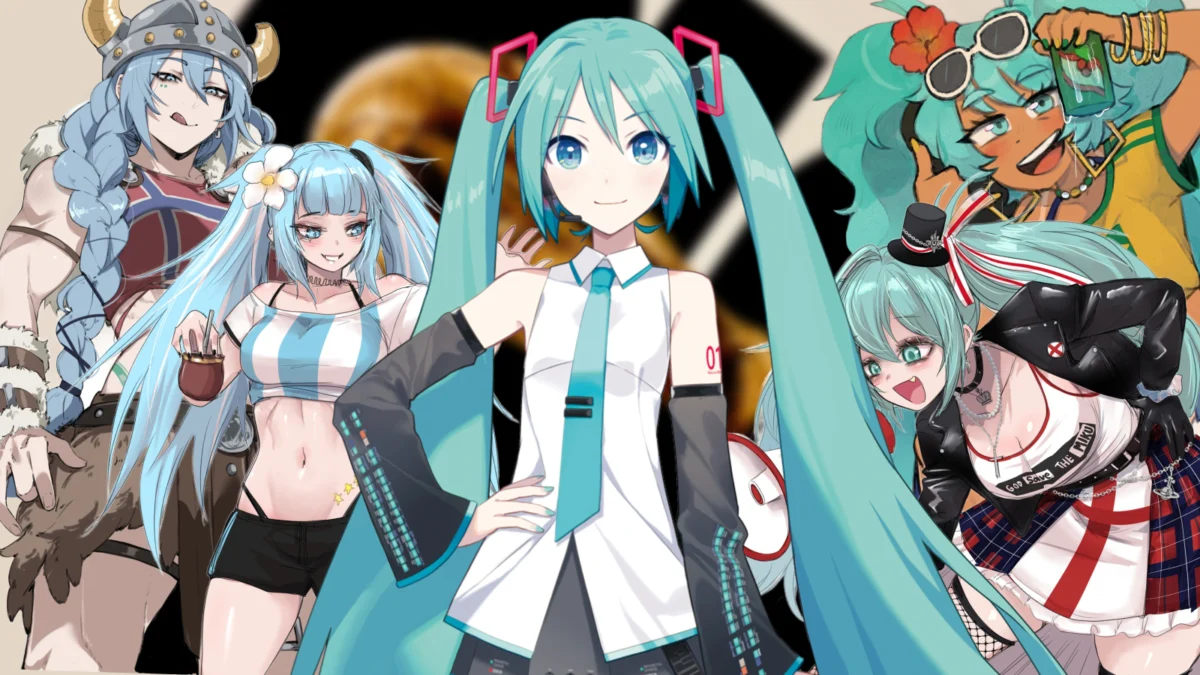
The 2026 FIFA World Cup reached its sporting and cultural zenith on July 19, as Spain secured a 1-0 victory over Argentina in the final, simultaneously claiming the World Cup trophy and final custody of the virtual pop star Hatsune Miku. While the athletic achievement marks Spain’s second world title, the conclusion of the tournament also signaled the end of one of the most significant digital folklore events in modern internet history: the "Hatsune Miku Custody Battle." This online phenomenon, which saw the Japanese Vocaloid character change "nationalities" based on match results, generated hundreds of millions of impressions across social media platforms and transformed the knockout stages into a multi-layered cultural exchange.
The final match in New Jersey saw a disciplined Spanish side break Argentinian hearts in a tense 1-0 affair, a result that notably broke the "2-1 curse" that had haunted previous owners of the virtual singer. By defeating Argentina, Spain became the sixth and final nation to hold "custody" of Miku, ending a journey that began in Tokyo and traveled through Brasília, Oslo, London, and Buenos Aires.
The Genesis of the Digital Custody Battle
The movement began not on the pitch, but on the social media platform X. On June 26, three days before Japan’s Round of 32 clash against Brazil, user Rosco Graves posted a simple ultimatum: "Japan vs Brazil in the World Cup, whoever wins keeps Hatsune Miku." This post, which eventually garnered over 1.6 million views and 118,000 likes, tapped into a pre-existing artistic trend known as "World Miku."
The "World Miku" trend had its roots in 2024, when a "Brazilian Miku" fan illustration went viral, prompting artists globally to redesign the character with regional clothing, skin tones, and cultural motifs. By the start of the 2026 World Cup, the community-run "Miku.earth" map had documented over 3,000 unique regional variants of the character. The tournament provided a high-stakes framework for these designs to compete, effectively turning the World Cup into a bracket-style elimination for the character’s "official" nationality.
Chronology of Possession: From Japan to Scandinavia
Hatsune Miku, a software voicebank developed by the Japanese company Crypton Future Media, began the tournament with her native Japan. However, her tenure was short-lived. On June 29, Japan faced Brazil in the Round of 32. Despite an early lead provided by Kaishu Sano in the 29th minute, Brazil rallied to win 2-1. Following the "winner takes Miku" rule established by the community, custody was transferred to Brazil. This transition sparked a wave of "Brazilian Miku" fan art, featuring the character in the iconic yellow and green kits, often depicted celebrating alongside the team.
The joke evolved from a one-off post into a running narrative when Brazil faced Norway in the Round of 16 on July 5. In a surprising upset, Norway eliminated the South American giants with a 2-1 victory, fueled by a brace from striker Erling Haaland. The internet reacted immediately; a post declaring "Hatsune Miku is Officially Norwegian," featuring a photoshopped image of Haaland carrying a Miku plush, surpassed 4.1 million views.
The "Viking Era" of Miku saw the character reimagined as a warrior of the north, equipped with fur-lined armor and traditional Norse iconography. A viral comic by the artist widvnhak, titled "Goodbye, Brazilian Miku," depicted the somber but inevitable passing of the character from one culture to another, amassing nearly 2 million views. This stage of the tournament also saw the emergence of the "2-1 pattern," as both Japan and Brazil had lost their custody by the exact same scoreline.
The Quarter-Finals and the "Coming Home" Narrative
On July 11, the custody battle moved to England after a grueling quarter-final match against Norway. Andreas Schjelderup had initially put Norway ahead, but a late equalizer and an extra-time winner from Jude Bellingham secured another 2-1 result. The irony of the scoreline was not lost on the digital community, who began to theorize that the character carried a specific mathematical curse.
The English "ownership" of Miku revived a long-standing niche meme within the Vocaloid community which claimed that "Hatsune Miku does not talk to British people." This led to a surge in comedic fan art depicting Miku looking disgruntled in London-themed attire or refusing to speak to the English squad. Simultaneously, fans adopted the "It’s Coming Home" mantra, applying it to Miku’s arrival in the United Kingdom. Artists like Kivo produced high-quality illustrations of "English Miku" in punk-rock aesthetics and medieval knight armor, further fueling the engagement metrics.
The Semi-Finals and the 2-1 Curse
The superstition surrounding the custody battle reached its peak during the semi-final between England and Argentina on July 15. For much of the match, it appeared England would break the cycle after Anthony Gordon scored early in the second half. However, Argentina staged a dramatic late-game comeback. Enzo Fernandez equalized in the 85th minute, followed by a stoppage-time winner from Lautaro Martinez.
The final score was 2-1, marking the fourth consecutive time a nation had inherited and then lost Miku by that specific scoreline. The statistical improbability of this sequence—Japan (1-2), Brazil (1-2), Norway (1-2), and England (1-2)—solidified the "Miku Curse" in the eyes of the public. Argentinian fans celebrated by circulating edits of Lionel Messi with the virtual singer, while artists like ramen.png illustrated the four previous owners warning Argentina of their impending doom in the final.
The Final: Spain’s Victory and the End of the Curse
The World Cup final on July 19 pitted Argentina, the current "owner" of Miku, against Spain, a team that had reached the final without ever holding the character. The stakes were twofold: Argentina sought to become the first nation to survive a match while holding Miku, while Spain represented the final opportunity for the character to change hands.
In a departure from the high-scoring drama of the previous rounds, Spain utilized a suffocating defensive strategy to neutralize the Argentinian attack. The match ended 1-0 in favor of Spain. While the victory ended the "2-1 curse," it confirmed the transfer of custody one last time. Spain became the sixth nation to claim Miku, concluding a journey that saw the character traverse three continents in less than a month.
The final lineage of custody for the 2026 World Cup was officially recorded by the community as:
Japan → Brazil → Norway → England → Argentina → Spain.
Statistical Impact and Digital Metrics
The "Hatsune Miku Custody Battle" represents a landmark case in organic digital marketing and fan-driven engagement. According to preliminary social media analytics:
- The primary hashtags associated with the custody battle reached an estimated 450 million impressions during the knockout stages.
- Fan art submissions related to the tournament exceeded 50,000 unique pieces across X, Pixiv, and Instagram.
- The "Miku.earth" map saw a 400% increase in traffic, with users from over 150 countries contributing regional designs.
The intersection of a global sporting event with a decentralized fan movement provided a unique form of "second-screen" entertainment. While FIFA manages the official commercial rights of the World Cup, the Miku phenomenon operated entirely within the realm of fair use and transformative fan culture, demonstrating the power of internet subcultures to influence the narrative of mainstream events.
Broader Implications and Cultural Analysis
Sociologists and digital media experts have noted that the Miku custody battle served as a form of "digital nationalism" that was collaborative rather than exclusionary. Unlike traditional sports rivalries, which can occasionally turn hostile, the exchange of Miku was marked by a celebration of the winning country’s culture through art. Each "transfer" was an opportunity for artists to showcase their nation’s heritage, from Brazilian street style to Norwegian folklore and Spanish flamenco motifs.
Furthermore, the "2-1 curse" highlights the human tendency to find patterns in random data. While the scores were a coincidence of the tournament’s competitive nature, the narrative provided a compelling "meta-game" for viewers who might not otherwise have been interested in football.
As the 2026 World Cup concludes, Spain stands as the double champion of the pitch and the pixel. While the physical trophy will reside in Madrid, the digital version of Hatsune Miku remains a global icon, her "Spanish era" marking the final chapter of a tournament that blurred the lines between the physical stadium and the digital landscape. The custody battle of 2026 is expected to serve as a blueprint for future fan engagements, proving that the most enduring stories of a World Cup are often those written by the fans themselves.




 Yuyun Lusiyani
 Joko Widodo
 Eva Lovia
 admin
admin
 Lina Irawan