
 Jia Lissa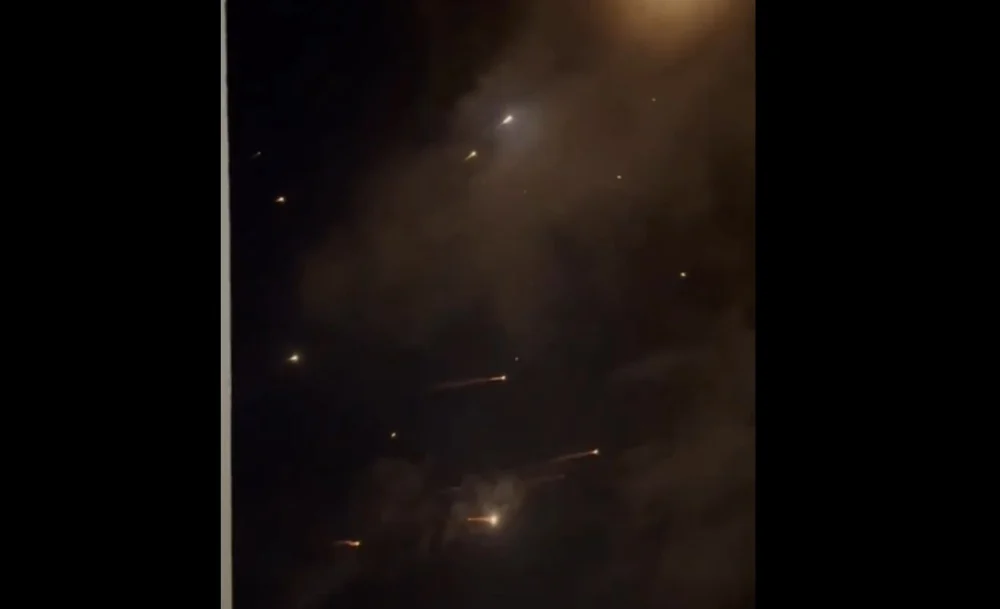
The security situation in the Levant reached a critical inflection point on Wednesday, March 11, 2026, as Hezbollah forces in southern Lebanon unleashed what military analysts and on-the-ground correspondents are describing as the most significant rocket offensive since the current regional conflagration began. Fox News’s Chief Foreign Correspondent Trey Yingst, reporting live from the Israel-Lebanon border, documented the scale of the assault, noting that the Iran-backed group launched well over one hundred rockets in a concentrated barrage aimed at civilian and military infrastructure across northern Israel. This escalation serves as a direct retaliatory response to a series of high-profile U.S.-Israeli joint airstrikes targeting strategic assets within the Islamic Republic of Iran, an initiative known as Operation Epic Fury.
The barrage triggered air raid sirens across the Galilee and the Golan Heights, forcing tens of thousands of Israeli civilians into reinforced shelters. According to reports from the Israel Defense Forces (IDF), the Iron Dome aerial defense system intercepted a significant portion of the incoming projectiles, though several impacts were recorded in open areas and near urban centers. The sheer volume of the fire, however, suggests a shift in Hezbollah’s tactical approach, moving from sporadic harassment to a sustained campaign of saturation fire intended to overwhelm Israeli defense batteries.
The Genesis of Operation Epic Fury
The current spike in hostilities is rooted in the broader objectives of Operation Epic Fury, a multi-national military campaign launched approximately two weeks prior. The operation was initiated following a series of intelligence reports indicating that Iran was preparing to deploy advanced precision-guided munitions to its proxies in the Levant and Yemen. In response, a coalition primarily led by the United States and Israel conducted a series of "surgical yet devastating" strikes on Iranian soil, targeting drone manufacturing plants, missile silos, and command-and-control centers in Isfahan and outside Tehran.
Hezbollah, which operates as Iran’s primary proxy in Lebanon, has historically functioned as a "second-strike" deterrent for the Islamic Republic. Following the strikes on Iranian territory, the group’s leadership in Beirut signaled that a response was forthcoming. The March 11 barrage marks the realization of those threats. Military historians note that Hezbollah’s arsenal, estimated to consist of over 150,000 rockets and missiles of varying ranges, remains one of the most significant non-state military threats in the world.
Chronology of the March 11 Escalation
The day’s events began in the early evening hours when Israeli intelligence detected unusual movement among Hezbollah mobile launch units in the rugged terrain of southern Lebanon. By 7:00 pm local time, the first wave of Katyusha and Grad-style rockets was detected crossing the Blue Line—the UN-recognized border between the two nations.
- 19:05: Initial salvos target Kiryat Shmona and the surrounding panhandle of the Galilee.
- 19:20: A second, larger wave of projectiles is launched, targeting the city of Safed and Israeli military installations on Mount Meron.
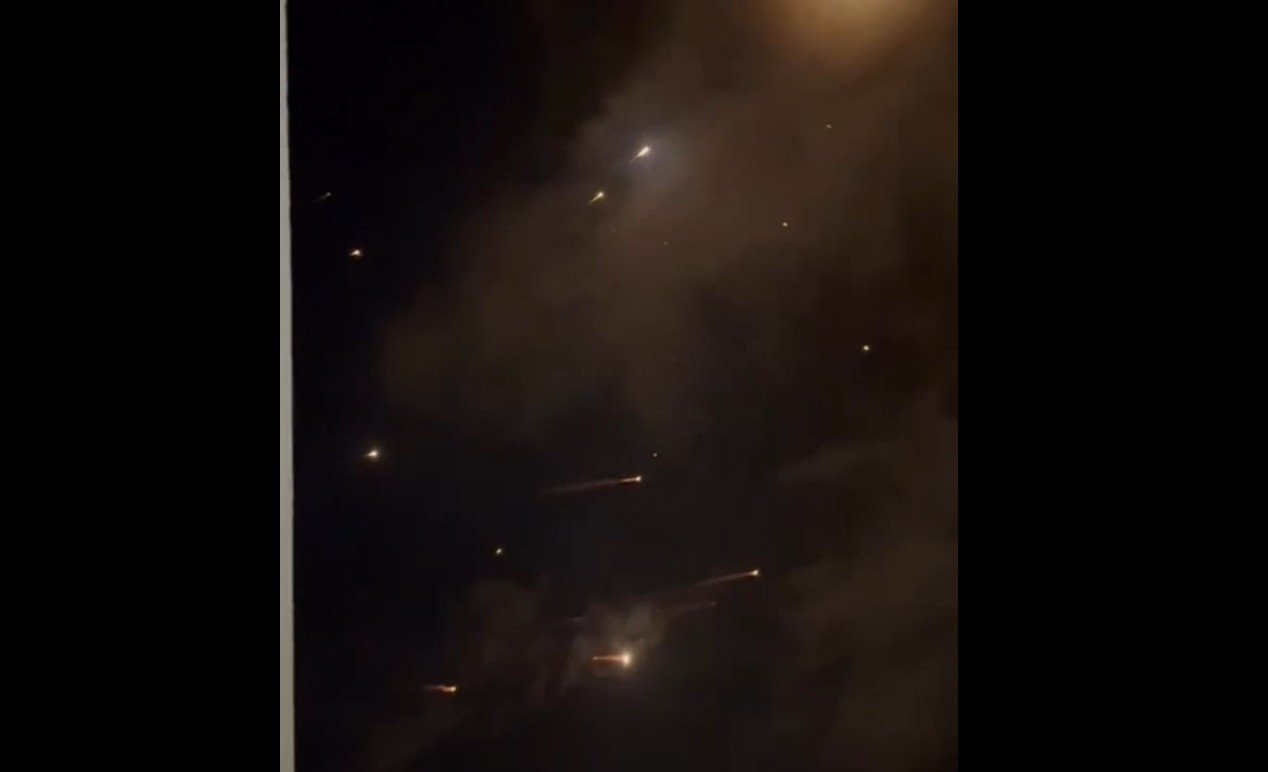
- 19:45: Trey Yingst captures footage of the night sky illuminated by the tandem of rocket motors and Iron Dome interceptors. He reports that the scale of the barrage is unprecedented in the context of the current two-week war.
- 20:15: Senior IDF officials confirm that Israeli Air Force (IAF) fighter jets have been scrambled to conduct counter-battery fire against the launch sites.
- 21:00: Reports emerge from Beirut of heavy Israeli bombardment in the southern suburbs, specifically the Dahiyeh district, a known Hezbollah stronghold.
Following the rocket fire, an IDF spokesperson stated that the military is now actively striking Hezbollah positions in Lebanon to "degrade the group’s capability to launch further attacks against Israeli sovereignty."
Humanitarian Impact and Mass Displacement
The human cost of the escalation has been staggering on both sides of the border. In southern Lebanon, the intensification of the conflict has led to a massive humanitarian crisis. Since the commencement of Operation Epic Fury, an estimated 750,000 Lebanese civilians have been displaced from their homes. Many have fled northward toward Beirut or the Bekaa Valley, seeking refuge from the persistent Israeli airstrikes that have targeted Hezbollah’s entrenched infrastructure.
The Times of Israel reported that prior to the latest exchange, the IDF had already struck over 70 high-value targets in Beirut’s southern suburbs. These operations included the demolition of approximately 50 multi-story buildings. Israeli military officials claim these structures were not merely residential but served as "dual-use" facilities, housing Hezbollah intelligence offices, weapons caches, and underground bunker systems. The use of civilian infrastructure for military purposes remains a central point of contention in the international discourse surrounding the conflict, with Israel accusing Hezbollah of using the local population as human shields.
In northern Israel, the constant threat of rocket fire has effectively turned once-thriving communities into ghost towns. Businesses remain shuttered, and schools have transitioned to remote learning as the "largest barrage" yet proves that the group’s stockpiles remain a potent threat despite two weeks of concentrated Israeli efforts to neutralize them.
Technical Analysis of Hezbollah’s Arsenal
Military analysts are closely monitoring the types of weaponry used in the March 11 attack. While many of the rockets were unguided short-range projectiles, there are increasing concerns regarding Hezbollah’s use of the Fateh-110, an Iranian-made surface-to-surface missile with a range of 300 kilometers and a 500-kilogram warhead.
The strategy behind the "hundred rocket" barrage is a classic example of saturation tactics. By launching a high volume of low-cost rockets simultaneously, Hezbollah attempts to "drain" the Iron Dome’s interceptor missiles (Tamir missiles), which are significantly more expensive to produce. This tactic is designed to create a window of opportunity for more sophisticated, precision-guided missiles to penetrate the defense envelope and strike high-value targets, such as power plants or military airbases.
Official Responses and International Reactions
The international community has reacted with alarm to the widening scope of the war. In Washington, the State Department issued a statement reaffirming Israel’s right to self-defense while urging for measures to minimize civilian casualties. "The United States remains committed to the security of Israel against the threats posed by Iran and its regional proxies," the statement read. "However, we continue to stress the importance of humanitarian corridors and the protection of innocent lives in Lebanon."
Conversely, Iranian officials have lauded Hezbollah’s actions, framing the rocket barrage as a "legitimate act of resistance" against "Zionist and American aggression." The Iranian Foreign Ministry warned that any further strikes on Iranian soil would result in "unimaginable consequences" for the region’s stability.
Within Israel, the political landscape is under immense pressure. Prime Minister Benjamin Netanyahu’s cabinet has faced calls from both the left and right to define the "endgame" of Operation Epic Fury. While the military objectives include the dismantling of Hezbollah’s border infrastructure, the long-term geopolitical goal appears to be the permanent severing of the "land bridge" that allows Iran to transport weapons through Iraq and Syria into Lebanon.
Broader Geopolitical Implications
The events of March 11 signify that the conflict is no longer a localized border skirmish but a theater of a much larger war involving major regional and global powers. The involvement of the United States in the initial strikes of Operation Epic Fury marks a significant departure from previous years of "shadow warfare," bringing the U.S. into a more direct confrontational stance with Tehran.
Analysts suggest several potential trajectories for the coming weeks:
- Limited Escalation: The conflict continues as a high-intensity exchange of fire without a full-scale Israeli ground invasion of southern Lebanon.
- Ground Maneuver: The IDF may decide that airstrikes alone cannot neutralize the rocket threat, leading to a ground operation to push Hezbollah forces north of the Litani River, in accordance with UN Resolution 1701.
- Regional Contagion: The conflict could spread to include other Iranian proxies, such as the Houthis in Yemen or militias in Iraq, leading to a multi-front war that could disrupt global oil supplies and maritime trade in the Red Sea and the Persian Gulf.
As the sun rose over the scarred landscape of the border region on Thursday morning, the smoke from the previous night’s exchange hung heavy in the air. The report from Trey Yingst and the subsequent confirmation of IDF counter-strikes underscore a grim reality: the largest barrage yet may only be the beginning of a much more violent chapter in the history of the Middle East. With 750,000 people displaced and the "largest barrage" of rockets recorded, the window for a diplomatic resolution appears to be closing, replaced by the cold logic of military attrition and strategic retaliation.

 Yuyun Lusiyani
 Joko Widodo
 Eva Lovia
 Pevita Pearce