
 Nila Kartika Wati
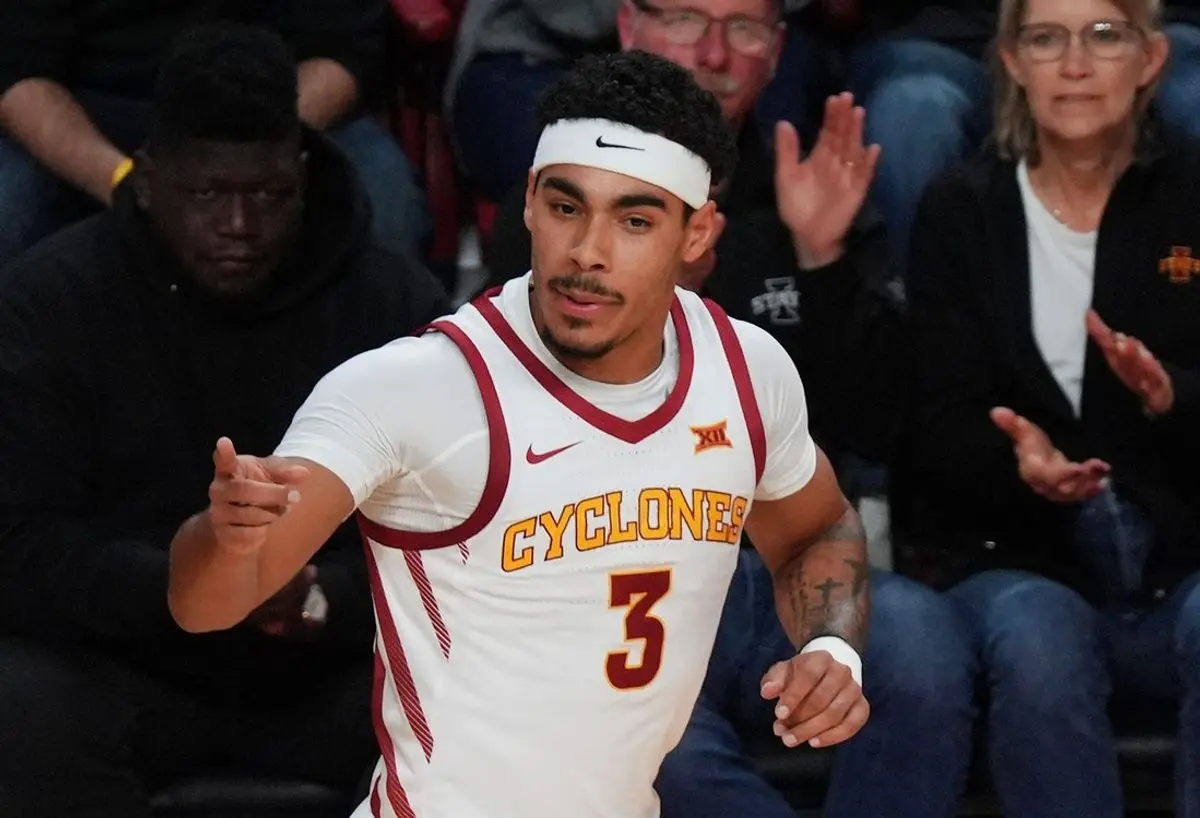
The landscape of collegiate athletics is undergoing significant transformations, and the Iowa State Cyclones are poised to benefit from a notable development as senior guard Tamin Lipsey has been granted a fifth year of eligibility. This crucial extension of his collegiate career, facilitated by ongoing litigation challenging the NCAA’s eligibility rules, injects a potent dose of experience and leadership into an Iowa State program already demonstrating championship aspirations. The Cyclones, ranked No. 18 in the preseason Associated Press poll, showcased their readiness in their 2026 preseason debut, a dominant 94-59 victory over Northwestern. Lipsey, a pivotal figure for the Cyclones, contributed 14 points in this exhibition, signaling his impactful return to the court.
The presence of Lipsey on the floor is widely considered a significant factor in the Cyclones’ potential to not only compete but contend for titles within the highly competitive Big 12 conference and beyond. His ability to impact the game on both ends of the court, coupled with his seasoned understanding of collegiate play, provides a critical advantage. Following their strong preseason performance, the Cyclones are now firmly focused on their official season opener, scheduled for Monday against Memphis in Sioux Falls, South Dakota. This matchup promises to be an early test of mettle for both squads as they embark on their respective 2026 campaigns.
Iowa State head coach T.J. Otzelberger expressed profound appreciation for Lipsey’s continued presence, highlighting his character and the positive impact he has on the team. "Tamin is (as) high character and classy a person as you could be," Otzelberger stated following the win over Northwestern. He acknowledged the potential for Lipsey to feel a sense of displacement, having missed a portion of the team’s summer and fall preparations due to the eligibility proceedings. However, Otzelberger emphasized the importance of moving forward, underscoring Lipsey’s immense value. "But it’s time to put that all behind us. The season’s almost here and I can’t tell you how much it means to have him out there," he added, underscoring the emotional and strategic significance of Lipsey’s return.
Last season, the Iowa State Cyclones achieved a remarkable 29-8 record, culminating in an appearance in the NCAA Tournament’s Sweet Sixteen. Their impressive run was ultimately halted by a 76-62 loss to Tennessee. This success built upon a foundation of consistent program development under Otzelberger, who has instilled a culture of resilience and high-level performance in Ames. The Cyclones have consistently been a force in the Big 12, known for their tenacious defense and efficient offensive execution.
In contrast, the Memphis Tigers are entering the 2026 season with a strong desire to rebound from a disappointing 13-19 record in the previous year. This marked a significant downturn after a stellar 29-6 campaign the season prior. For head coach Penny Hardaway, the upcoming season represents a critical juncture, an opportunity to "flip the script" and re-establish the Tigers as a formidable opponent that no team can afford to overlook. The Tigers aim to prove that their struggles last season were an anomaly rather than a sign of a declining program.
The Road to Redemption: Memphis Tigers’ Quest to Reassert Dominance
Memphis’s approach to the 2026 season is characterized by a clear objective: to demonstrate their renewed competitive spirit and reclaim their status as a national contender. Head coach Penny Hardaway has been vocal about the team’s motivation to prove themselves on the court, particularly within a challenging non-conference schedule. "The biggest thing for me is us having to go prove ourselves," Hardaway commented after a decisive 75-58 exhibition victory over Mississippi State. He articulated the strategic rationale behind their demanding schedule: "That’s why we play the nonconference schedule that we play. We want to play against the P4s to kind of put ourselves in position to have an automatic bid (to the NCAA Tournament) and also challenge ourselves against the best in the nation." This philosophy underscores a commitment to facing top-tier competition to prepare for the rigors of conference play and the NCAA Tournament.
Hardaway acknowledged the team’s shortcomings in the previous season, admitting that they did not adequately prove their capabilities. However, he expressed confidence that this year will witness a significant turnaround. "It’s always where we’ve kind of been under the radar and have to prove ourselves. Last year we didn’t do so. In previous years we have, and we look forward to doing it this year," Hardaway stated, conveying a sense of urgency and determination within the Memphis program. The Tigers are eager to shed the perception of inconsistency and re-establish themselves as a program that consistently competes at a high level.
Key Personnel and Strategic Outlooks
Iowa State Cyclones:
The Iowa State Cyclones will undoubtedly place significant reliance on the veteran leadership and all-around game of Tamin Lipsey. Last season, Lipsey was a catalyst for the Cyclones’ success, averaging an impressive 13.5 points and 5.1 assists per contest. His ability to orchestrate the offense, coupled with his tenacious defense, makes him the engine of the team. Beyond Lipsey, the Cyclones have made a strategic addition in transfer Ryan Prather Jr. from Robert Morris. Prather Jr. has already made a strong impression, notably by hitting 6 of 7 three-pointers against Northwestern in the exhibition. His statistical contributions from last season—averaging 15.7 points, 3.9 rebounds, and 3.6 assists—indicate he possesses the offensive firepower to complement Lipsey and provide another dynamic scoring threat. The integration of such experienced and skilled players is crucial for Iowa State’s ambitions of sustained success.
Coach Otzelberger’s coaching philosophy emphasizes continuous improvement and a focus on controllable factors. "What’s important is that each day we maximize how we can get better individually and collectively," Otzelberger remarked. He stressed the importance of maintaining a process-oriented approach, rather than fixating solely on immediate results. "So, it’s gonna be important that we don’t get focused on scoreboards and outcomes, and we keep our focus on, ‘Let’s control what we can. Let’s get better every single day, and let’s keep moving forward as a team.’" This mentality is designed to foster a resilient and adaptable team capable of navigating the ups and downs of a long season and challenging conference schedule.
Memphis Tigers:
On the Memphis side, junior guard Julius Thedford emerges as a key returning player, having averaged 8.4 points and 5.0 rebounds per game last season. His consistent production provides a solid foundation for the Tigers’ offense. The team has also bolstered its roster with a significant influx of new talent, featuring thirteen new players. Among these newcomers, Pittsburgh transfer Brandin Cummings is expected to be a significant contributor. Cummings averaged 12.5 points per game last season before his campaign was unfortunately cut short by an injury. His return to full health and integration into the Tigers’ system will be critical for their offensive production. The blend of experienced returners and promising new additions presents Hardaway with a deeper and more versatile roster to work with.
Contextualizing NCAA Eligibility and the Evolving Collegiate Sports Environment
Tamin Lipsey’s fifth year of eligibility is a direct consequence of the ongoing legal challenges against the NCAA concerning name, image, and likeness (NIL) compensation and broader eligibility rules. These legal battles, which have been unfolding over several years, are fundamentally reshaping the collegiate sports landscape. Historically, NCAA rules strictly limited athletes’ eligibility, typically capping participation at four years. However, the increasing complexity of NIL deals and the legal scrutiny of transfer portal rules and other regulations have led to a more fluid environment.
The NCAA has, in response to legal pressures and a changing collegiate sports culture, begun to relax some of its traditional eligibility restrictions. This includes granting blanket eligibility for immediate transfers and, in certain cases, allowing for extended periods of competition. Lipsey’s specific situation, granted through ongoing litigation, highlights the judicial influence on NCAA policy. This development is not isolated; numerous athletes across various sports have seen their eligibility extended or modified due to similar legal interventions or evolving NCAA interpretations.
The implications of these changes are far-reaching. For programs like Iowa State, securing a veteran player like Lipsey for an additional year provides continuity, leadership, and a proven track record of success. It allows coaches to build around a core of experienced talent, enhancing their competitiveness in the short and long term. Conversely, for programs like Memphis, the challenge lies in adapting to a more dynamic roster environment, where player movement is more frequent, and program building requires constant attention to recruitment and retention.
The broader impact on college basketball includes a potential increase in parity, as experienced players can remain in the collegiate game for longer, spreading talent across more teams. It also raises questions about the long-term sustainability of traditional collegiate sports models and the increasing influence of legal and business considerations on athletic programs. As the NCAA continues to navigate these challenges, the 2026 season promises to be a compelling showcase of how these evolving dynamics will play out on the court. The Iowa State Cyclones, with the invaluable addition of Tamin Lipsey for his fifth year, are strategically positioned to capitalize on this new era of collegiate athletics.
Looking Ahead: Season Opener and Broader Implications
The season opener between Iowa State and Memphis in Sioux Falls is more than just the start of a new season; it is a microcosm of the broader trends shaping college basketball. Iowa State, with its established veteran leadership and championship aspirations, faces a Memphis squad determined to re-establish its identity and prove its mettle. The game will provide an early indicator of both teams’ progress and their capacity to execute their respective game plans under pressure.
For the Big 12, Iowa State’s continued strength, bolstered by Lipsey’s return, reinforces the conference’s reputation as one of the nation’s most challenging. The conference has consistently produced NCAA Tournament contenders and champions, and the Cyclones are poised to be a significant factor once again. Their ability to integrate new talent like Ryan Prather Jr. and maintain their defensive intensity will be key to their Big 12 title hopes.
For Memphis and the American Athletic Conference (AAC), this season is about rebuilding momentum and challenging established hierarchies. Penny Hardaway’s focus on playing tough non-conference opponents signals an intent to elevate the program’s national standing and secure crucial wins that can boost their NCAA Tournament resume. The Tigers’ success will hinge on the collective performance of their returning core and the immediate impact of their numerous new additions.
The legal and administrative shifts within the NCAA continue to shape the collegiate sports landscape. The implications for athlete welfare, competitive balance, and the very definition of collegiate athletics are profound. As Tamin Lipsey embarks on his fifth collegiate season, his journey serves as a tangible example of these evolving rules and their direct impact on individual athletes and their teams. The 2026 college basketball season will undoubtedly be a dynamic and compelling one, reflecting both the timeless appeal of the sport and the significant transformations it is currently undergoing.




 Eva Lovia

 Lina Irawan

 Yuyun Lusiyani

 Ana Megawati

 Joko Widodo
