
 Nila Kartika Wati
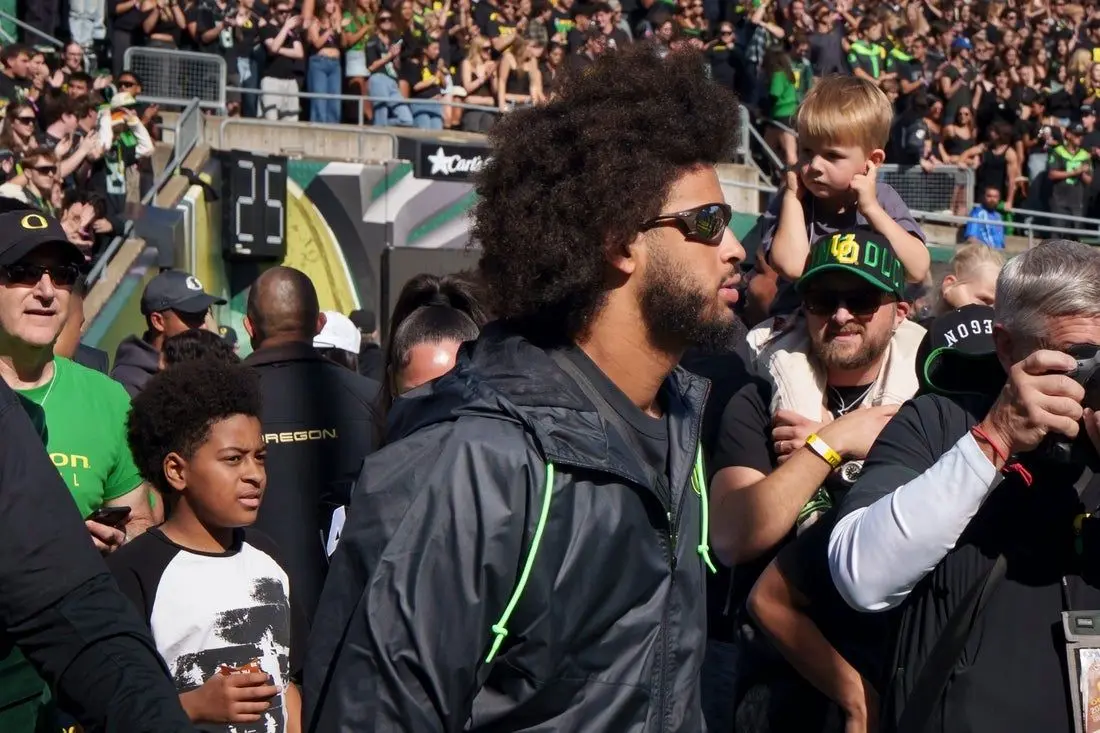
The promising senior season of Oregon Ducks quarterback Dante Moore has been abruptly cut short due to a concussion, forcing him to miss the remainder of the 2026 campaign. The devastating news, confirmed by head coach Dan Lanning on Monday, casts a significant shadow over the Ducks’ aspirations for a national championship and marks a pivotal moment in the team’s trajectory. Moore, widely considered one of the top prospects for the 2026 NFL Draft, had been a preseason Heisman Trophy favorite, setting high expectations for his final collegiate year in Eugene. His absence represents a substantial blow, not only to the team’s on-field performance but also to the morale of a program that had positioned itself as a national contender.
Timeline of a Season-Ending Injury and Its Aftermath
The concussion that has sidelined Moore occurred during the second quarter of Oregon’s pivotal September 26th matchup against the USC Trojans. The injury stemmed from a late hit by USC linebacker Desman Stephens II, which led to Moore being transported by ambulance to Los Angeles General Medical Center. While initial diagnostic scans, including an MRI and CT scan, revealed no structural damage, the diagnosis of a concussion was confirmed, initiating a protocol that ultimately led to his season-ending removal from play. This incident marked the beginning of a challenging period for the Ducks, who have since struggled to maintain their offensive prowess without their star signal-caller.
Moore’s absence has been deeply felt over the past three games, during which Oregon has posted a disappointing 1-2 record. More concerningly, the Ducks’ offense has failed to reach 20 points in any of these contests, a stark contrast to their offensive firepower with Moore at the helm. The team’s struggles have highlighted the critical role Moore played in orchestrating their attack. Before his injury, Moore was enjoying a stellar start to his senior season, demonstrating exceptional form. He had amassed 926 passing yards, thrown for nine touchdowns, and crucially, maintained an unblemished interception record. His completion percentage stood at an impressive 69.7%, showcasing his accuracy and decision-making.
Despite ongoing efforts to facilitate his return, including throwing sessions in recent weeks during practice, both Moore and the Oregon coaching staff ultimately prioritized his long-term health. Coach Lanning emphasized that the decision to keep Moore sidelined was not a reflection of any reluctance on the player’s part, nor was it a response to the team’s recent struggles. "If it was up to Dante in any shape, way, he would be out there playing for the guys," Lanning stated, underscoring Moore’s commitment to his teammates. "This isn’t a selfish decision on Dante’s part, saying, ‘I don’t want to come back, the season doesn’t look the way I want it to look.’ That’s not at all what this is." This sentiment highlights the difficult balance between athletic ambition and player safety, a recurring theme in collegiate and professional sports.
Coaching Carousel and Offensive Overhaul
The ripple effect of Moore’s injury extended beyond the quarterback position, triggering a significant shake-up within the Oregon coaching staff. The team’s offensive struggles and inability to generate consistent scoring led to the dismissal of offensive coordinator Drew Mehringer on Sunday, a day after a disheartening 21-10 loss to Illinois. This swift action underscores the pressure on the coaching leadership to address the team’s declining performance.
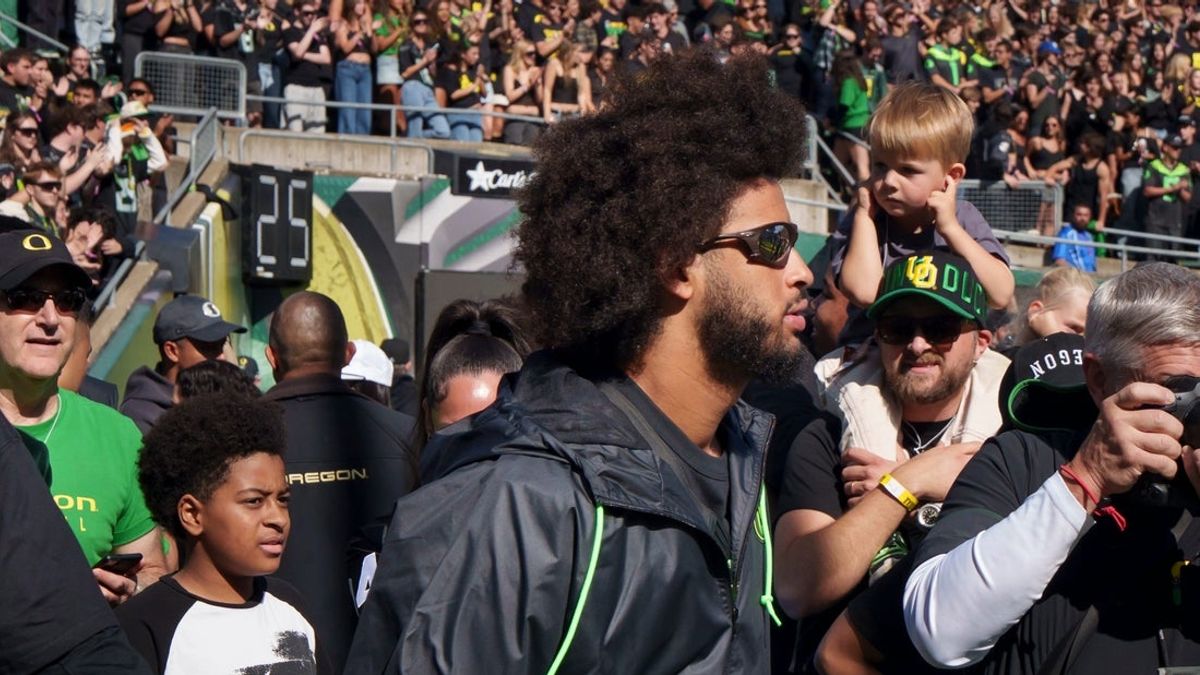
In response to Mehringer’s departure, Coach Lanning announced on Monday evening that offensive analyst and quarterbacks coach Jay Johnson would assume playcalling duties. Johnson, a seasoned veteran in the college football coaching ranks since 1994, brings a wealth of experience to the role. His previous stints as offensive coordinator at Wyoming and Michigan State provide a solid foundation for him to step into this critical position. This transition marks a new chapter for the Ducks’ offense, with Johnson tasked with revitalizing the unit and finding a way to compete effectively in Moore’s absence.
The Road to Oregon and Past Successes
Dante Moore’s journey to becoming the celebrated leader of the Oregon Ducks is a narrative shaped by significant collegiate moves and a consistent display of talent. His college career began at UCLA in 2023, where he spent his freshman season. He then transferred to Oregon, sitting out the entire 2024 season as a backup to then-starter Dillon Gabriel. This period of observation and development proved invaluable, allowing him to acclimate to the Oregon system and prepare for his opportunity.
The 2025 season was when Moore truly announced his arrival on the national stage. Taking the reins as the primary starter, he delivered an outstanding performance, throwing for 30 touchdowns and accumulating 3,565 passing yards. His impressive accuracy was further demonstrated by a 71% completion rate. Under his leadership, Oregon achieved a remarkable 13-2 record, solidifying their status as a national powerhouse and hinting at the potential for even greater achievements in the seasons to come. This success story makes his current season-ending injury all the more poignant.
The Impact on the 2026 Season and Beyond
The implications of Dante Moore’s season-ending injury are far-reaching. For the Oregon Ducks, it immediately transforms their outlook for the remainder of the 2026 season. The team, which began the year ranked No. 2 in the AP preseason poll, now faces the daunting challenge of navigating conference play and potential playoff contention without their star quarterback. The success of third-string quarterback Brock Thomas and backup Dylan Raiola in stepping up to fill Moore’s shoes will be a critical storyline to watch. Their ability to provide stability and spark the offense will determine whether the Ducks can salvage their season.
Beyond the immediate impact on the current season, Moore’s injury also carries significant weight for his NFL draft prospects. While he was widely projected as a top pick, a season-ending injury, particularly one involving a concussion, can introduce uncertainty into draft evaluations. Medical assessments and the player’s ability to fully recover and perform in his final year will be crucial factors for NFL teams considering him. However, given his established track record of success and the generally positive outlook on his talent, it is likely that he will remain a highly sought-after prospect, provided he makes a full recovery.
The broader implications of Moore’s injury also extend to the competitive landscape of college football. The Pac-12 Conference, already a fiercely contested league, now sees one of its top teams significantly handicapped. This opens up opportunities for other conference rivals to potentially gain ground and contend for the league title. Furthermore, the injury serves as a stark reminder of the physical toll football takes on its athletes and the paramount importance of player safety protocols. The decision to prioritize Moore’s long-term health over the immediate pursuit of a championship reflects a growing awareness and commitment to player well-being within collegiate athletics. The Ducks’ ability to adapt and overcome this significant adversity will be a defining narrative of their 2026 season, testing the depth of their roster and the resilience of their coaching staff.



 Eva Lovia

 Lina Irawan

 Yuyun Lusiyani

 Ana Megawati

 Joko Widodo
