Pevita Pearce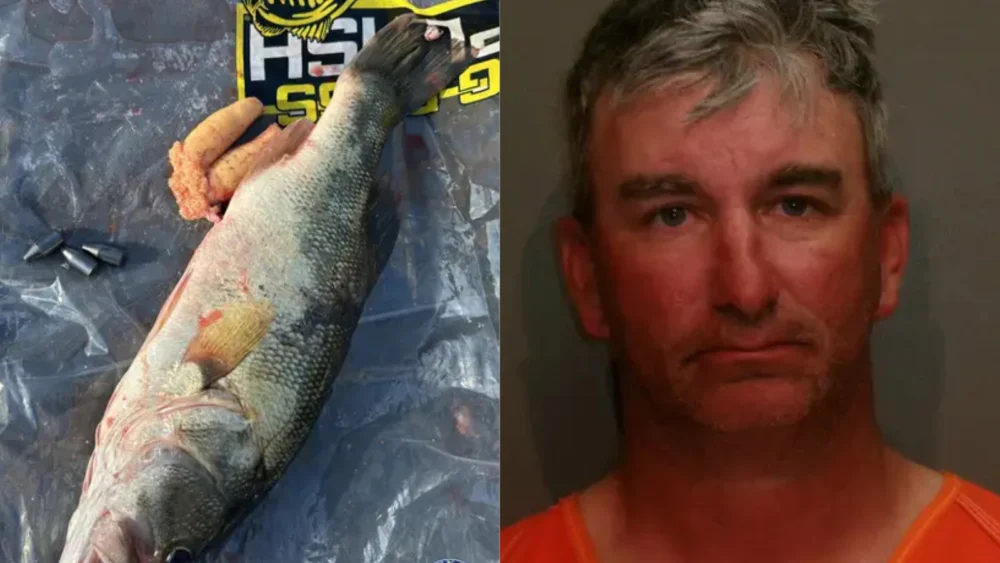
In a case that has sent shockwaves through the competitive angling community, a Texas man faces a potential decade-long prison sentence following allegations of high-stakes cheating during a prominent bass fishing competition. Curtis Lee Daniels was arrested and charged with a third-degree felony after tournament officials at the Lake Fork Lure Company Tournament discovered lead weights concealed within a largemouth bass he submitted for weigh-in on March 8. The incident, which took place at Lake Fork—a reservoir renowned globally for its trophy bass—has reignited national conversations regarding the integrity of professional fishing and the increasing legal scrutiny applied to tournament fraud.
The arrest occurred after tournament organizers utilized specialized equipment to verify the legitimacy of the catches submitted by competitors. During the standard weigh-in procedure, a metal detector alerted staff to the presence of foreign objects inside the fish presented by Daniels. Upon further inspection, officials recovered three lead weights from the specimen. Subsequent investigations by the Texas Game Wardens led to a search of Daniels’ boat, where authorities reportedly discovered additional weights identical in style to those found inside the largemouth bass.
Chronology of the Incident and Immediate Investigation
The Lake Fork Lure Company Tournament is a highly anticipated event, drawing hundreds of anglers vying for significant cash prizes distributed through various categories, including hourly "big bass" rewards. On the day of the incident, March 8, the competition was proceeding according to schedule until the suspicious entry was flagged.
According to official reports, Daniels had already achieved significant success earlier in the day. He had been awarded two hourly prizes, totaling $2,500 in winnings. However, as the event progressed toward its conclusion, the oversight protocols established by the tournament directors identified a discrepancy in a later submission. When the metal detector triggered an alarm, the situation escalated from a rules violation to a criminal investigation.
Texas Game Wardens were called to the scene immediately to take over the inquiry. The wardens, who operate under the Texas Parks and Wildlife Department (TPWD), are tasked with enforcing the state’s strict regulations regarding the taking of wildlife and the conduct of competitive sporting events. Following the discovery of the weights in the fish and the matching weights on the vessel, Daniels was taken into custody. He was subsequently transported to the Wood County Jail, where he was held on a $20,000 bond.
Legal Framework and the Severity of the Charges
While cheating in a recreational game might seem like a minor infraction to the uninitiated, Texas law treats tournament fraud with extreme gravity, particularly when significant monetary values are involved. Under the Texas Parks and Wildlife Code, specifically Section 66.023, it is a criminal offense to "knowingly or intentionally" cheat in a fishing tournament.
The severity of the charge is determined by the total value of the prizes offered in the competition. In this instance, because the total prize pool for the Lake Fork Lure Company Tournament exceeded $10,000, the offense was elevated to a third-degree felony. In the state of Texas, a conviction for a third-degree felony carries a mandatory minimum of two years and a maximum of 10 years in a state prison, along with a fine of up to $10,000.
This legal structure is designed to protect the economic interests of tournament organizers and sponsors, as well as the fair-play rights of honest competitors. By classifying high-stakes cheating as a felony, the Texas legislature has signaled that the state will not tolerate fraudulent activities that undermine the multi-million dollar competitive fishing industry.
The Reputation of Lake Fork and the Economic Stakes
The location of the incident adds a layer of significance to the scandal. Lake Fork, located approximately 70 miles east of Dallas, is widely considered one of the premier bass fishing destinations in the United States. Since its impoundment in 1980, the lake has produced 15 of the top 20 heaviest largemouth bass ever caught in Texas.
Because of its reputation, Lake Fork is a vital engine for local tourism and the broader fishing economy. High-profile tournaments attract sponsors, equipment manufacturers, and professional anglers from across the country. The integrity of these events is paramount; any perception of widespread cheating could deter sponsors and participants, potentially causing long-term damage to the local economy and the sport’s credibility.
William McDaniel, who ultimately won the tournament with a legitimate 10.22-pound catch, represents the standard of excellence that these events seek to celebrate. The contrast between McDaniel’s fair-square victory and the allegations against Daniels highlights the tension currently felt within the angling community between tradition and the pressures of professionalization.

Official Responses and the Role of Oversight
Following the arrest, the organizers of the Lake Fork Lure Company Tournament released a statement on social media addressing the incident and reaffirming their commitment to transparency. The organizers emphasized that the detection of the alleged fraud was proof that their internal safeguards—including the use of metal detectors and rigorous weigh-in protocols—were functioning as intended.
"Late in the event, a situation arose involving an individual who allegedly violated tournament rules and applicable law," the statement read. "Thanks to the oversight and safeguards in place, the issue was identified and addressed. Maintaining the integrity of the sport and ensuring a fair competition for all anglers is extremely important to us."
The organizers also extended their gratitude to the Texas Game Wardens for their rapid intervention. They noted that the swift enforcement of the law helps protect the reputation of the sport and ensures that "honest anglers can compete on a level playing field."
Historical Context: A Growing Trend of Tournament Fraud
The Daniels case is not an isolated incident but rather part of a troubling trend that has plagued professional fishing in recent years. The most notable precursor occurred in September 2022 during the Lake Erie Walleye Trail tournament in Ohio. In that case, competitors Jake Runyan and Chase Cominsky were caught stuffing lead weights and fish fillets into their catches to artificially inflate their weight.
The 2022 scandal went viral after a video captured the moment the tournament director sliced open the fish to reveal the weights, leading to a scene of public outcry. Runyan and Cominsky were eventually sentenced to ten days in jail, fined $2,500, and had their fishing licenses suspended. The fallout from the Ohio case led many tournament directors across the nation to implement more stringent security measures, including polygraph tests for winners and the mandatory use of metal detectors at weigh-in stations.
The incident at Lake Fork suggests that despite the high-profile nature of previous scandals and the increased risk of felony prosecution, some individuals continue to attempt to circumvent the rules for financial gain.
Analysis of Implications for the Sport
The recurring nature of these scandals has led to an analytical shift in how the fishing community views competition. There is a growing call for a standardized national regulatory body for fishing tournaments, similar to those found in other professional sports. Currently, rules and enforcement vary significantly from one tournament circuit to another, often leaving it to local law enforcement and individual organizers to manage disputes.
Furthermore, the "hourly prize" format, while popular for its ability to keep more anglers engaged throughout the day, creates multiple opportunities for fraud. When prizes are distributed every 60 minutes, the pressure to produce a winning fish is constant, which some experts argue may tempt ethically compromised individuals to take risks they might not take in a traditional three-day aggregate weight format.
The legal repercussions for Daniels will likely serve as a benchmark for future cases in Texas. If the maximum sentence is pursued, it will send a clear message to the angling community that the state views tournament fraud as a serious crime against the public and the economy, not merely a violation of sporting ethics.
Conclusion and Future Outlook
As Curtis Lee Daniels awaits further legal proceedings in Wood County, the competitive fishing world remains on high alert. The use of technology, such as the metal detector that caught the weights in this case, is no longer an optional luxury for tournament directors but a necessary tool for survival in an era where prize money can reach six or seven figures.
The incident at Lake Fork serves as a reminder of the fragility of trust in competitive sports. While the swift action of the tournament staff and the Texas Game Wardens successfully preserved the results of this specific event, the broader challenge remains: ensuring that the spirit of the sport—centered on patience, skill, and a respect for nature—is not permanently eclipsed by the pursuit of illicit gain. For now, the "honest anglers" of Lake Fork can take some solace in the fact that the systems designed to protect them worked, but the shadow cast by the incident will likely linger over the water for seasons to come.




 Jia Lissa
 Yuyun Lusiyani
 Joko Widodo
 Eva Lovia