
 Nana Wu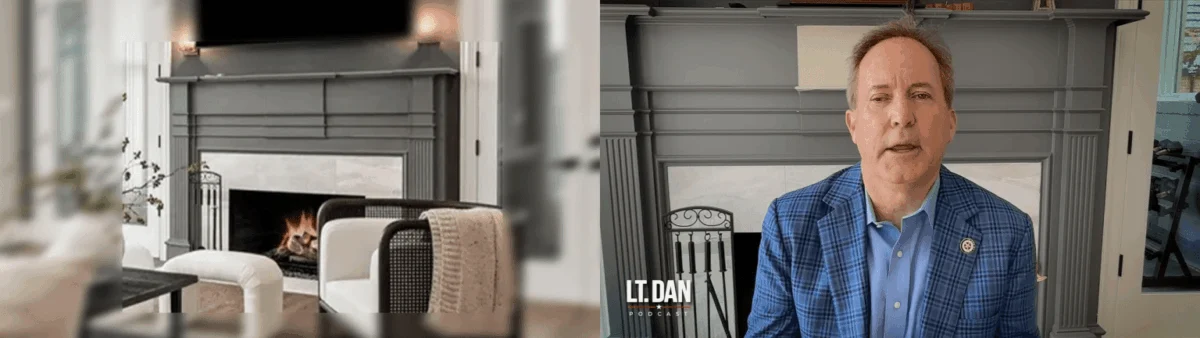
The integrity of Texas elections has become a focal point for Attorney General Ken Paxton, who has aggressively promoted measures to combat voter fraud. However, recent reporting by ProPublica and The Texas Tribune has cast a spotlight on the Attorney General’s own voting practices, revealing allegations that he may have violated the very election laws his office champions. These revelations raise significant questions about consistency and adherence to legal standards at the highest levels of state law enforcement.
A Public Stance on Election Integrity
In the lead-up to the 2026 primary elections, Attorney General Ken Paxton made a prominent announcement regarding his office’s commitment to safeguarding the electoral process. On February 15th, just two weeks before the primaries, Paxton unveiled a new public tip line designed to empower citizens to report suspected instances of voter fraud. This initiative was framed as a critical component of ensuring "free and fair elections," which Paxton described as "a cornerstone of a thriving republic."
Accompanying the announcement was a detailed advisory from the Attorney General’s office outlining key provisions of Texas election law. This guidance explicitly addressed requirements for voter registration, including the necessity of U.S. citizenship and the prohibition of collecting mail-in ballots on behalf of others. Crucially, the advisory issued a stern warning against misrepresenting one’s residence for voting purposes, stating, "it is illegal to misrepresent your residence on election records or to establish a residence for the purpose of influencing the outcome of an election." The document further emphasized, "You must register to vote using the address where you reside."
Allegations of Residency Misrepresentation
Despite these strong pronouncements and legal directives, investigative reporting by ProPublica and The Texas Tribune has uncovered evidence suggesting that Attorney General Paxton may have voted in six elections over the past two years using an address where he does not reside. This period includes the May runoff election, which secured his nomination as the Republican candidate for U.S. Senator.
Records obtained by the investigative outlets indicate a discrepancy between Paxton’s registered voter address in Collin County and his actual living situation. State Senator Angela Paxton, Ken Paxton’s wife, stated in a 2025 divorce filing that her husband had moved out of their Collin County home approximately one year prior. Despite this separation and subsequent relocation, Paxton’s voter registration has continued to list the address of their shared Collin County residence. Sources close to the couple have reportedly confirmed that the Attorney General has not returned to the home since his departure.

While Paxton’s exact place of residence over the past two years remains undisclosed, reporting has linked him to a property in neighboring Denton County since February. This situation has led three election law experts to suggest that Paxton may be in violation of the same Texas statutes his office has actively warned the public about.
A Pattern of Scrutiny and Silence
ProPublica and The Texas Tribune made multiple attempts to solicit comment from Paxton’s campaign regarding his voter registration and connection to the Denton County property, with outreach occurring on June 3rd, 15th, and 25th. A voicemail was also left on the Attorney General’s personal cellphone on June 25th. Detailed questions were submitted via email to both his government office and campaign staff on Monday, including a specific request for his response to the election lawyers’ assessment of potential legal violations.
The response from Paxton’s office and campaign, which arrived on Monday, did not directly address the specific questions posed. Campaign spokesperson Madison Cercy issued a statement defending Paxton’s record as a "national leader on election integrity" and a "long record of defending Texas elections." Cercy characterized the reporting as an attempt to "insinuate otherwise and tear him down with a baseless, lie-filled tabloid story," asserting that it "is not real reporting." When pressed for specifics regarding the alleged inaccuracies in the reporting, the campaign declined to provide further comment.
Legal Ramifications and Interpretations
Under Texas law, voting in an election when one is ineligible is classified as a second-degree felony, carrying a potential penalty of up to 20 years in prison and a $10,000 fine. However, election lawyers interviewed for this report noted that prosecutors rarely pursue cases challenging individual voters’ residency claims due to the inherent difficulty in proving such violations.
Texas state courts have established that determining an individual’s domicile for voting purposes involves a multifaceted assessment, considering factors such as where a person sleeps and stores their personal belongings. Crucially, prosecuting such cases requires demonstrating that a voter "knowingly" or "intentionally" contravened the law. Furthermore, state law includes a provision allowing individuals to maintain their voter registration at a previous address if their absence is temporary and they possess a genuine intent to return. This exception is commonly applied to college students and military personnel.
Beth Stevens, an election lawyer with experience at the Harris County Clerk’s office and the Texas Civil Rights Project, explained, "So long as you truly intend to return, I think you’re fine. When you start doing things that suggest, ‘Oh, I’ve fully moved. I’m just wink-wink saying I intend to return,’ that’s when you get into questionable territory.”

David Becker, a former voting rights lawyer for the Department of Justice and now director of the Center for Election Innovation and Research, suggested that Paxton’s contentious separation from his wife could complicate any claim of intent to return to the Collin County home. "I think there would be questions raised about a residence where someone does not live, does not spend the night and can in no way have the intent to continue to reside. Those would probably raise red flags in any state," Becker stated. He emphasized that the situation is particularly concerning given Paxton’s role as the state’s chief law enforcement officer responsible for upholding election laws. "Certainly, the chief law enforcement officer of the state of Texas, someone who has made claims about election integrity and made it a priority of his office, should be charged with knowing the laws of residencies of the state of Texas with regard to voting," Becker added.
A History of Vigorous Enforcement
Attorney General Paxton has a well-documented history of advocating for strict enforcement of Texas’s election fraud statutes. His office’s voter fraud unit has previously pursued cases against individuals accused of residency misrepresentation. In 2018, nine individuals were arrested on suspicion of using false addresses to vote in a municipal election in Edinburg. Although county prosecutors, acting on behalf of Paxton’s office, later dismissed the charges against the alleged ringleader, Richard Molina, due to an inability to secure a conviction, the case highlighted the Attorney General’s aggressive stance on such matters. Molina maintained his innocence, asserting the prosecution was politically motivated.
Clark Birdsall, an attorney who represented another individual prosecuted by Paxton for illegal voting, expressed dismay at the allegations against the Attorney General. "It’s especially egregious that someone such as Ken Paxton appears he’s not conforming to the law," Birdsall commented.
Voter Registration and Public Scrutiny
While state privacy laws permit certain public officials and law enforcement officers to shield their voter registration information, Ken Paxton has not availed himself of this option. His opponent in the U.S. Senate race, Democratic State Representative James Talarico, has chosen to keep his registration private. Talarico’s campaign has stated he is registered at his north Austin home, purchased in 2022, though ProPublica and The Texas Tribune were unable to independently verify this claim. Paxton’s campaign has not raised public objections to Talarico’s voter registration status.
In her statement, campaign spokesperson Madison Cercy did, however, accuse Talarico of "actively campaign[ing] against voter security measures" and opposing voter identification requirements. Cercy referenced a 2021 Fox News interview where Talarico expressed opposition to stricter voter ID rules for mail-in ballots, arguing that such requirements could disenfranchise Texans who lack driver’s licenses. Talarico’s campaign did not respond to a request for comment regarding these assertions.
Indications of a Denton County Residence
Information obtained by ProPublica and The Texas Tribune provides several indicators suggesting Paxton has been residing in Denton County since February. In mid-February, a trust purchased a 5,000-square-foot home in a gated community in Denton County for $2.4 million. While trusts are not legally required to disclose ownership details to county officials, records show that the address associated with the Paxtons’ separate blind trust, which has been used for property acquisitions, was changed to the Denton County home one week after its purchase.
Angela Paxton, through a spokesperson, has denied any connection to the Denton County home or the trust that acquired it. The trustee of the Paxtons’ trust, Chip Loper, has not responded to inquiries regarding the address change.
Further corroborating evidence emerged in June when a reporter visited the Denton County home. While no one answered the door, an envelope addressed to "Warren Paxton," the Attorney General’s given name, was visible in the mailbox. Later that week, in a podcast appearance with Lieutenant Governor Dan Patrick, Paxton was shown seated in front of a fireplace and mantle that closely matched the online real estate listing for the Denton County property. Additionally, a resident of the gated community reportedly informed the newsrooms that they had seen Paxton in the area.
Broader Implications for Public Trust
The reporting also includes a May article from the Daily Mail alleging that Paxton has been living in the Denton County home with Tracy Duhon, whose extramarital affair with Paxton was cited in his wife’s divorce filing. The Daily Mail also published a video purportedly showing Paxton and Duhon at an airport in Iceland in late June, a detail seized upon by Talarico’s campaign to portray Paxton as out of touch with Texans. Duhon has not responded to requests for comment regarding her connection to the Denton County property or the Daily Mail’s reporting.
Voter rolls confirm that Ken Paxton is not registered to vote in Denton County. Instead, he has cast ballots twice since February in Collin County, participating in the March Republican primary and the May runoff. The requirement for voters to register in the county where they reside is fundamental to Texas’s system of electing local officials.
Ekow Yankah, a law professor at the University of Michigan specializing in election law, suggested that Paxton’s situation should serve as a reminder of the rarity of intentional illegal voting, as consistently shown by studies. "You would think that somebody who’s going through this would learn a little bit of humility that lots of things which look on their face, like technical violations of the law, are usually explained by totally ordinary things," Yankah remarked. "It’s only if you’re utterly cynical and ignore all the evidence that you make a claim that, in fact, these cases are attributable to nefarious criminal intent."
Joshua Blank, research director of the Texas Politics Project at the University of Texas at Austin, underscored the significance of Paxton’s position. "We expect these laws to be understandable by ordinary citizens," Blank stated. "When our elected officials who are tasked with passing and enforcing these laws exhibit troubles in engaging with the voting process themselves, that raises serious questions." He added that as Attorney General, Paxton is expected to not only understand but also to avoid even the appearance of impropriety in his adherence to the law.




 Yuyun Lusiyani
 Joko Widodo
 Eva Lovia
 Pevita Pearce
 admin
admin
 Lina Irawan