
 Nana Wu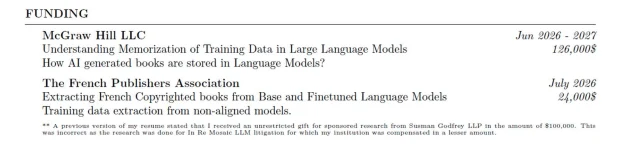
The ongoing legal battle between The New York Times and OpenAI, now consolidated into a broader class-action lawsuit, has taken a dramatic turn with a recent filing by OpenAI and Microsoft that accuses the plaintiffs’ legal counsel, Susman Godfrey, of engaging in a sophisticated scheme to introduce questionable evidence into the case. This filing, far more significant than earlier offhand statements from employees, alleges that Susman Godfrey deliberately circumvented standard discovery and evidence rules by secretly funding research intended to bolster their clients’ claims, concealing this funding, and then introducing the research into the proceedings outside the established expert witness process. This development has been described by legal observers as a potential "bombshell" and has raised serious questions about the integrity of the evidence presented.
The core of the legal dispute centers on whether the training of artificial intelligence models on copyrighted material constitutes "fair use" under copyright law, or if it amounts to infringement. This question has been a focal point of numerous lawsuits across the United States, with courts grappling with differing interpretations. For instance, in California last year, two judges in the same district reached opposing conclusions: Judge William Alsup found AI training to be "somewhat obviously fair use," while Judge Vince Chhabria concluded it was "somewhat obviously not fair use."
A critical element in these fair use analyses, particularly concerning the "effect on the market" argument, is whether new AI-generated works "dilute" the market for existing copyrighted works. Judge Alsup, in the Anthropic case, dismissed claims of dilution, which aligned with his finding of fair use. More notably, in the Meta case, Judge Chhabria, despite ruling against fair use, expressed skepticism about dilution arguments, stating: "As for the potentially winning argument—that Meta has copied their works to create a product that will likely flood the market with similar works, causing market dilution—the plaintiffs barely give this issue lip service, and they present no evidence about how the current or expected outputs from Meta’s models would dilute the market for their own works." This judicial observation served as a clear signal to plaintiffs that concrete evidence of market dilution was crucial for their case.
The Emergence of Contested Research
In response to this judicial prompting, a preprint paper titled "Generative AI floods and dilutes the market for books" appeared on Arxiv earlier this year. The paper, authored by Tuhin Chakrabarty and three other researchers, including prominent copyright scholar Jane Ginsburg, purported to provide the evidence of market dilution that judges had been seeking. Chakrabarty, a recent PhD graduate and now a computer science professor at SUNY Stony Brook, received his doctorate from Columbia University, where Ginsburg is a professor. Ginsburg, known for her staunch defense of copyright maximalism and skepticism towards broad interpretations of fair use, lent significant academic weight to the study.
However, the research quickly drew scrutiny. Thad McIlroy, who runs "The Future of Publishing" and is a contributing editor at Publishers Weekly, conducted an in-depth examination of the paper and found its methodology deeply problematic. McIlroy’s primary criticism centered on the study’s reliance on Kindle Unlimited (KU) for its data. He argued that KU’s unique payment model, which compensates authors based on pages read rather than downloads or sales, distorts the findings. McIlroy highlighted that authors earn income on KU solely based on the number of pages read by a subscriber, with mere downloads providing no income. The complex formula for KU compensation makes estimating actual page reads and income for a book difficult, if not impossible, to ascertain accurately. Chakrabarty himself acknowledged this limitation in the paper, stating, "We measure Kindle Unlimited as whether a title is available on the service, not as how much of it readers actually read. The panel does not tell us whether a given unit is a Kindle Unlimited borrow, a page read allocation, or an ordinary purchase."
McIlroy further contended that AI-generated books on KU would only generate significant revenue if readers found them to be of sufficient quality to compete with human-authored genre books on the platform. Low-quality AI-generated books, if discovered as such by readers, would likely be abandoned, resulting in negligible earnings for the author. This dynamic, McIlroy argued, suggested that the prevalence of KU titles in the study was a significant distorting influence, as AI-generated books are more likely to appear on KU than across the broader Amazon Kindle platform, and there is no reliable method to estimate a book’s actual KU income.

Adding to the concerns about the study’s objectivity, when McIlroy shared his critique with Chakrabarty, he reportedly received a dismissal on "moral grounds." Chakrabarty allegedly claimed that McIlroy’s advocacy for ethical AI use in publishing was "morally not okay with me," indicating a pre-existing bias rather than an open-minded engagement with the research.
Prior to the market dilution paper, Chakrabarty, along with co-author Xinyue Liu and Professor Ginsburg, published another paper in March 2026 titled "Alignment Whack-A-Mole: Finetuning Activates Verbatim Recall of Copyrighted Books in Large Language Models." This paper claimed to present evidence that AI models "store copies of copyrighted works" and suggested this capability "undermines a key premise of recent fair use rulings." The paper explicitly referenced the Alsup and Chhabria rulings, positioning its findings as a direct response to the judges’ concerns regarding market effects.
The combined thrust of these publications by Chakrabarty, Liu, and Ginsburg appeared to be an effort to fill evidentiary gaps identified by the courts and to bolster the argument against fair use by demonstrating concrete harm to authors and publishers. The fact that other potential plaintiffs had not presented such evidence suggested, to some observers, that it might not exist without significant methodological stretching.
OpenAI and Microsoft’s Accusations
The filing by OpenAI and Microsoft on Wednesday evening, however, shifts the focus dramatically from the academic merits of the research to the alleged ethical and procedural misconduct of the plaintiffs’ legal team. The core of their accusation is that Susman Godfrey secretly orchestrated and funded Tuhin Chakrabarty’s research into AI-generated book market dilution, deliberately concealed this financial relationship, and then strategically introduced the research into the case through unconventional means to bypass scrutiny.
According to the filing, Susman Godfrey paid Professor Chakrabarty $100,000 in December 2025 for sponsored research specifically on "How AI generated books dilute the market for human authors." This research culminated in the "Chakrabarty Paper." While Susman Godfrey had disclosed Chakrabarty and a co-author as potential experts months earlier, the resumes they provided to the court and to the defendants omitted any mention of this substantial funding from Susman Godfrey. Even after defendants raised objections about the incompleteness of the provided resumes, Susman Godfrey allegedly submitted an "updated resume" that still failed to disclose their funding of Chakrabarty’s research. Crucially, neither Chakrabarty nor the other disclosed expert ever submitted a formal expert report in the case.
The alleged scheme continued with the introduction of the Chakrabarty Paper itself. Published first as a non-peer-reviewed preprint on July 22, 2026, the paper was updated several times in the subsequent weeks. Critically, the initial versions of the paper did not disclose its funding source, nor did they make the underlying data publicly available.
The plaintiffs’ legal strategy, as detailed in the filing, appears to have involved a calculated move to introduce this research after the deadlines for expert reports had passed. On Sunday, August 2, 2026, the afternoon before a deposition, the plaintiffs’ counsel served a "supplemental report" entirely dedicated to the Chakrabarty Paper. This report cited a version of the paper published just days prior. At the deposition of a different expert, Mr. Lasinski, on August 3, 2026, he testified that he had not analyzed the data underlying the Chakrabarty Paper and had never spoken with Chakrabarty or his co-authors about it. When questioned about whether Chakrabarty and another individual were retained as experts by the plaintiffs, Susman Godfrey counsel objected. Lasinski ultimately testified that he did not know if they were retained. Furthermore, when asked about the funding sources for the research, Lasinski stated he did not know, adding, "to be clear . . . funding something like this would be inconsistent with what I’ve known the Susman Godfrey firm to do." The Susman Godfrey lawyers present at the deposition did not correct this misrepresentation or comment on the funding issue.

Discovery of the Funding
The full extent of Susman Godfrey’s alleged involvement came to light when OpenAI independently discovered a more comprehensive version of Dr. Chakrabarty’s resume on his personal website. This version, unlike the "updated" resume provided by Susman Godfrey in February, explicitly detailed a "$100,000 Unrestricted Gift for sponsored research" from Susman Godfrey LLP in December 2025, earmarked for research on "How AI generated books dilute the market for human authors." This funding had commenced approximately two months before Susman Godfrey had provided the incomplete resume to the defendants.
The situation further unraveled when, two days after this discovery, Dr. Chakrabarty revised the resume on his website. The revised version now contains a disclaimer in very small print, stating that a previous version incorrectly indicated a $100,000 gift from Susman Godfrey, claiming the research was for "In re Mosaic LLM litigation for which [his] institution was compensated in a lesser amount." However, even this revised statement does not deny that Susman Godfrey funding facilitated the research presented in the Chakrabarty Paper, as the same researcher was investigating the same market dilution question relevant to the present litigation.
Implications and Legal Ramifications
OpenAI and Microsoft are now urging the court to dismiss the Chakrabarty Paper entirely. They argue that this paper represents crucial evidence for the plaintiffs’ market dilution claims, precisely the type of evidence that Judge Chhabria noted was missing in the Meta case. More significantly, they contend that the actions of Susman Godfrey constitute a potential "fraud on the court."
The filing cites legal precedent, including the Supreme Court’s decision in Hazel-Atlas Glass Co. v. Hartford-Empire Co. (1944), where a judgment was vacated because counsel had ghostwritten an article presented as the work of a disinterested expert. OpenAI and Microsoft argue that Susman Godfrey engaged in a similar tactic: concealing their role in creating and funding research that was then presented as neutral academic inquiry. The deliberate omission of funding details, the introduction of the paper through a different expert after the deadline for expert reports, and the subsequent misrepresentations during depositions are all cited as evidence of an intentional effort to deceive the court and the opposing parties.
The implications of these allegations are substantial. If the court finds that Susman Godfrey engaged in a "fraud on the court," it could lead to severe sanctions, including the dismissal of the plaintiffs’ case. The integrity of the evidence presented by the plaintiffs would be severely compromised, and the court’s faith in the fairness of the discovery process would be shaken. This development underscores the critical importance of transparency and adherence to procedural rules in legal proceedings, particularly in complex, high-stakes litigation involving novel technologies and significant financial interests. The outcome of this specific motion could have far-reaching consequences for how evidence is gathered and presented in future AI-related lawsuits.


 Yuyun Lusiyani
 Ana Megawati
 Joko Widodo
 Eva Lovia
 Jia Lissa
 Pevita Pearce