
 Lina Irawan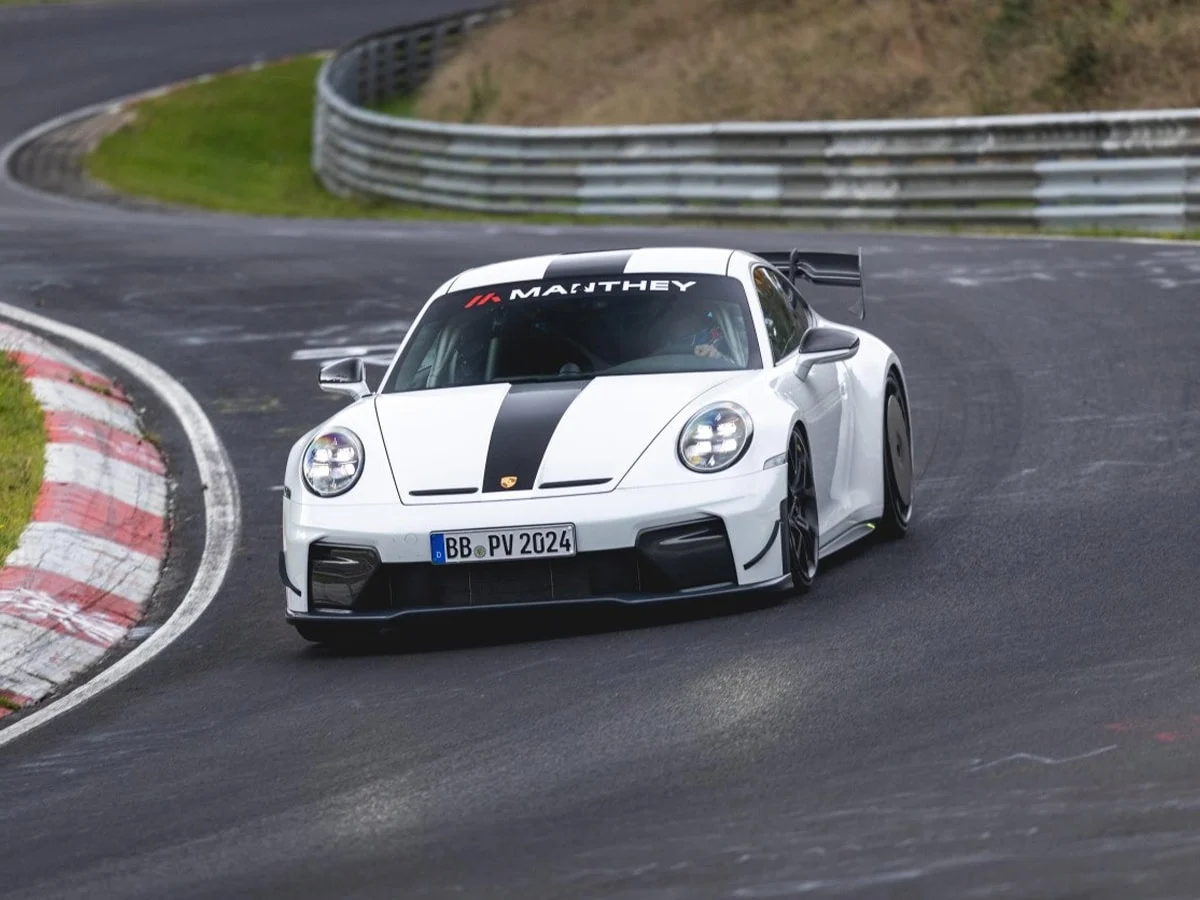
The Nürburgring Nordschleife, often referred to as the "Green Hell," remains the ultimate proving ground for the global automotive industry. In an era where digital simulations can predict performance with startling accuracy, the physical reality of the Eifel mountains’ 20.832-kilometer circuit continues to serve as the definitive benchmark for mechanical endurance and aerodynamic efficiency. Since 2019, the Nürburgring has implemented a standardized timing system supervised by independent notaries and certified by TÜV Rheinland. This rigorous protocol ensures that "production car" claims are verified against strict criteria, including road-legal status and availability to the general public. The current leaderboard reflects a fierce technological arms race between established European titans and ambitious American challengers, with the 6:30-minute barrier recently falling to Formula One-derived hybrid technology.
The Evolution of Official Timing and Production Standards
The transition to a notarized timing system in 2019 marked a turning point for automotive marketing. Prior to this, lap times were often self-reported by manufacturers, leading to discrepancies regarding the exact start and finish lines. The official distance is now set at 20.832 kilometers (12.94 miles), encompassing the full length of the Nordschleife. To qualify for the "production car" category, vehicles must be road-legal in their respective markets and maintain the factory-standard configuration available to customers.
This certification process is vital for manufacturers. A record at the Nürburgring is more than a trophy; it is a powerful marketing tool that validates a brand’s engineering prowess. For consumers, these times offer a standardized metric to compare the limits of high-performance machinery, even if few drivers will ever possess the skill to replicate them.
The Reigning Champion: Mercedes-AMG ONE
At the summit of the production car rankings stands the Mercedes-AMG ONE. On August 23, 2024, racing driver Maro Engel piloted this hypercar to a staggering lap time of 6:29.090. This achievement was particularly noteworthy as it marked the first time a production vehicle broke the 6:30 barrier, effectively distancing itself from the competition by more than ten seconds.
The Mercedes-AMG ONE is a technological marvel that utilizes a 1.6-liter V6 hybrid powertrain directly adapted from Mercedes-Benz’s Formula One program. Delivering 1,063 horsepower, the vehicle features complex active aerodynamics and a sophisticated energy recovery system. Engel’s record-setting run was performed on Michelin Pilot Sport Cup 2 R tires, a common thread among the top-tier record holders. Despite damp conditions in certain sections of the track, the AMG ONE’s ability to manage its electric-gasoline power delivery allowed it to maintain higher average speeds through the "Mutkurve" and "Flugplatz" sections than any predecessor.
The Porsche Dominance: Engineering Consistency
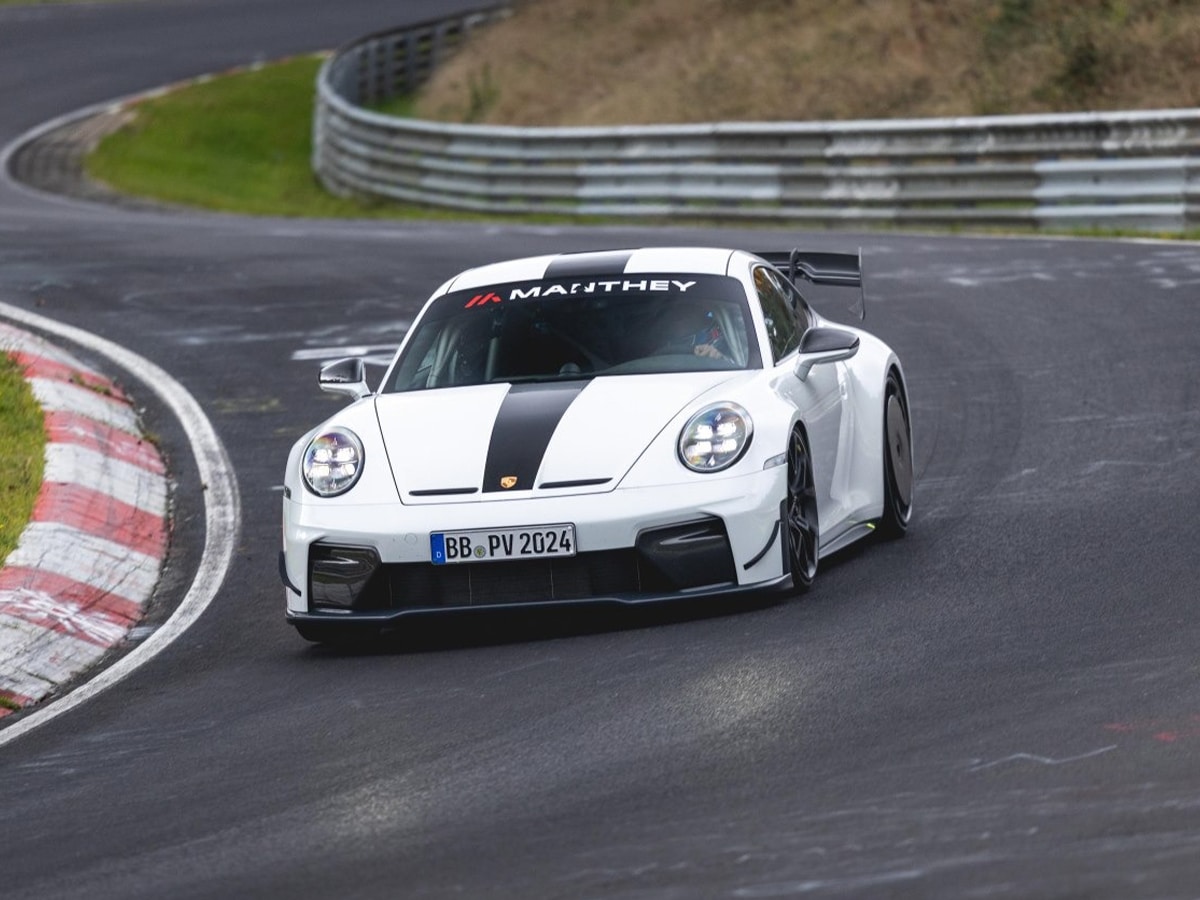
While Mercedes-AMG holds the absolute record, Porsche dominates the top ten list with an unparalleled volume of high-performance entries. This dominance is bolstered by Porsche’s collaboration with Manthey Racing. The "Manthey Kits" are factory-backed performance packages that include aerodynamic upgrades, adjustable coilover suspension, and enhanced braking systems. Because these kits can be ordered and installed through official Porsche centers, they are classified under the production car category.
The 911 GT2 RS and GT3 RS Legacy
The Porsche 911 GT2 RS Manthey Performance Kit (991.2) held the top spot for several years with a time of 6:43.300, set by Lars Kern in June 2021. This 700-horsepower rear-engine machine averaged 185.87 km/h, showcasing that raw power, when combined with optimized downforce, remains a potent formula.
Following closely are the newer iterations of the GT3 RS. The 992.1 generation GT3 RS, fitted with the Manthey Kit, recorded a 6:45.389 in April 2026. This vehicle is a masterclass in atmospheric engine performance. Despite having significantly less horsepower than its turbocharged rivals, the GT3 RS utilizes an active drag-reduction system (DRS) and a central roof fin to generate over 1,000 kg of downforce at 285 km/h. Its ability to carry extreme speeds through the "Pflanzgarten II" section highlights why Porsche remains the benchmark for track-focused handling.
The American Challenger: Ford Mustang GTD
A significant shift in the Nürburgring hierarchy occurred in April 2025 when the Ford Mustang GTD entered the sub-seven-minute club. Driven by Dirk Müller, the 815-horsepower Mustang clocked an official time of 6:52.072, making it the fastest American production vehicle to ever lap the circuit.

The Mustang GTD represents a departure from traditional muscle car philosophy. It features a rear-mounted transaxle for near 50/50 weight distribution, carbon-ceramic brakes, and a semi-active suspension system. Ford CEO Jim Farley stated that the GTD was designed to take on the best of Europe on their own soil. The achievement fulfills a multi-year development goal for Ford, proving that American engineering can compete in the highly technical environment of the Eifel mountains. Farley noted, "We aren’t satisfied. We know the Mustang GTD can set a faster lap. We’ll be back."
The Electrification of the Nordschleife
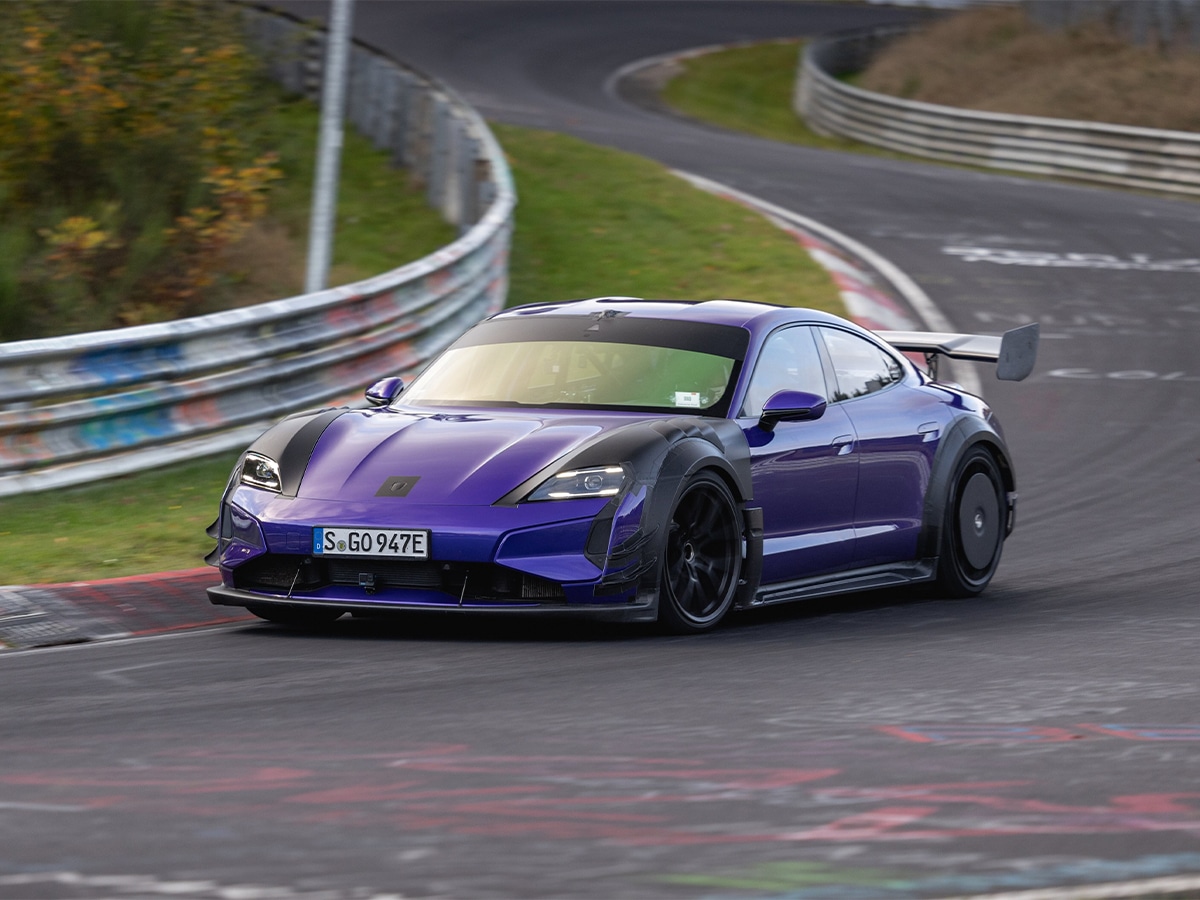
The inclusion of electric vehicles (EVs) in the record books marks the beginning of a new era. The Porsche Taycan Turbo GT with the Manthey Kit became the first four-door sedan and the first road-legal EV to break the seven-minute barrier, recording a 6:55.533 in April 2026.
This record is significant because it addresses the traditional weakness of EVs: weight and thermal management. By utilizing advanced cooling systems and lightweight carbon components, Porsche demonstrated that high-performance EVs can maintain peak power output over the grueling 12.9-mile distance. The Taycan’s performance places it in direct competition with traditional internal combustion engine (ICE) supercars, signaling a shift in the performance car landscape.
Specialized Category Benchmarks
Beyond the overall production car rankings, several manufacturers have set records in specific segments, illustrating the diversity of engineering challenges presented by the Nürburgring.
- Fastest SUV: The Audi RS Q8 Performance set a time of 7:36.698 in June 2024. This record highlights the advancements in active roll stabilization and torque vectoring, allowing high-center-of-gravity vehicles to navigate the circuit’s 73 corners with sports-car-like agility.
- Fastest Front-Wheel Drive (FWD): The Volkswagen Golf GTI Edition 50 reclaimed the FWD crown with a 7:44.523 lap in May 2026. It narrowly defeated the Honda Civic Type R, proving that specialized differential tuning and semi-slick tires can extract immense performance from a front-wheel-drive platform.
- Fastest Compact: The Mercedes-AMG CLA 45 4MATIC+ set a new benchmark for the compact segment with a time of 7:32.070. Utilizing an all-electric powertrain and active aerodynamics, it demonstrated that the future of small, high-performance cars may lie in electrification.
Chronological Overview of Key Records (2018–2026)
The following timeline highlights the rapid progression of lap times over the last several years:
- June 2018: Porsche 919 Hybrid Evo (Non-production prototype) sets the absolute track record of 5:19.546.
- July 2019: Jaguar XE SV Project 8 sets the ICE production sedan record at 7:23.164.
- November 2020: Mercedes-AMG GT Black Series records a 6:48.047, briefly holding the production title.
- June 2021: Porsche 911 GT2 RS MR takes the crown with a 6:43.300.
- October 2022: Porsche 911 GT3 RS (992.1) sets a baseline of 6:49.328.
- August 2024: Mercedes-AMG ONE breaks the 6:30 barrier with a 6:29.090.
- April 2025: Ford Mustang GTD records a 6:52.072.
- April 2026: Multiple records fall, including the Porsche Taycan Turbo GT (EV record) and the Golf GTI Edition 50 (FWD record).
Analysis of Implications
The pursuit of Nürburgring records has profound implications for the automotive industry. Firstly, it drives tire technology. Almost every record on this list was achieved using bespoke compounds from Michelin or Pirelli, which eventually trickle down to consumer-grade high-performance tires.
Secondly, the focus on aerodynamics has shifted from mere drag reduction to sophisticated downforce management. The use of active aero, once reserved for the highest echelons of motorsport, is now a standard feature in sub-seven-minute production cars. This technology improves high-speed stability and braking performance, which has broader applications for vehicle safety.
Finally, the "Ring" serves as a brutal validator for the transition to electric mobility. As manufacturers like Porsche and Mercedes-AMG prove that EVs can survive and thrive on the Nordschleife, consumer confidence in the performance capabilities of electric cars is likely to increase.
Conclusion
The Nürburgring Nordschleife remains the ultimate arbiter of automotive excellence. While the Mercedes-AMG ONE currently holds the throne, the rapid pace of development suggests that the 6:20-minute mark may soon be the next target. As Porsche continues to refine its Manthey-enhanced models and American manufacturers like Ford enter the fray, the competition for the title of "Fastest Production Car" shows no signs of slowing. For the engineers, drivers, and fans, the Green Hell continues to be the place where legends are notarized in asphalt and sweat.



 Yuyun Lusiyani
 Joko Widodo
 Eva Lovia
 Pevita Pearce
 admin
admin