
 Eva Lovia
The story of Maria Amelia of Portugal, the last queen consort of a nation that transitioned from monarchy to republic, is once again being brought into the historical spotlight with the upcoming auction of exquisite emerald jewelry that once graced her person. Sotheby’s in Geneva will present these significant pieces in November, offering a tangible link to a queen who navigated a turbulent era, witnessing the twilight of her dynasty amidst political upheaval and profound personal tragedy. Her life, a tapestry woven with royal duty, political intrigue, and heartbreaking loss, culminated in the end of a centuries-old monarchy, a fate she strove to avert with both political acumen and, in a poignant moment, a desperate gesture of peace.
Maria Amelia’s early life was shaped by the complex currents of European royalty and the precarious existence of deposed or claimant dynasties. Born in Twickenham, Middlesex, on September 28, 1865, she was the eldest child of Philippe, Count of Paris, and his wife, Marie-Isabelle of Orléans. Her father, a pretender to the French throne, meant their family lived in a state of perpetual political maneuvering and exile, only returning to Paris after the fall of Napoleon III. This environment instilled in young Amélie a keen awareness of dynastic ambitions and the delicate dance of royal alliances. Negotiations among various claimants to the French crown were a constant backdrop to her childhood, a stark reminder of the fragility of monarchical power.
The search for advantageous royal marriages was a critical component of dynastic survival, and it was in this context that Amélie’s future was charted. In 1884, her aunt proposed a union with Carlos, the heir to the Portuguese throne. The prospect of such a marriage held significant appeal, offering a stable alliance and the potential to strengthen both royal houses. The couple met at Chantilly, a picturesque setting that proved conducive to romance, and their engagement was formally celebrated with a grand gala in Paris in February 1886, a spectacle that nonetheless foreshadowed later political complications.
The Road to the Portuguese Throne
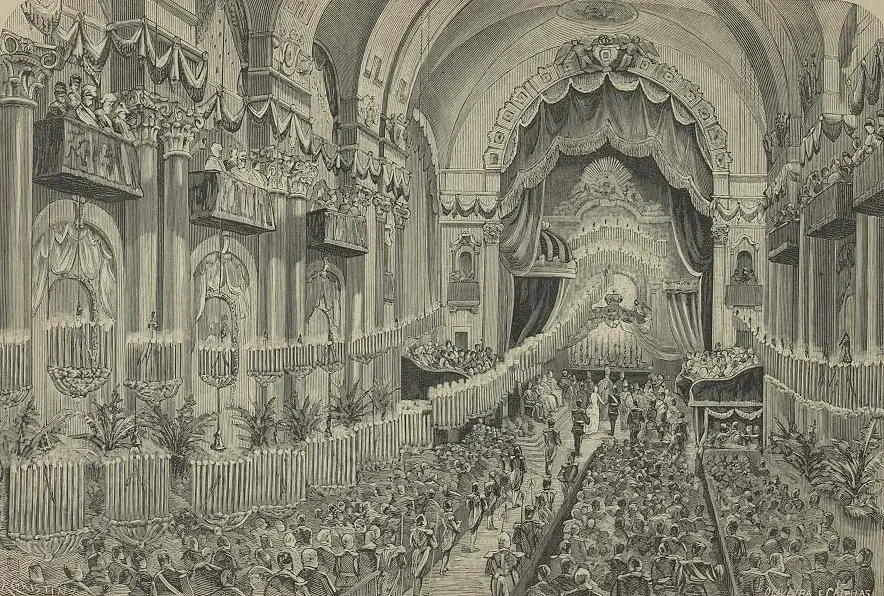
Amélie arrived in Portugal on May 19, 1865, for her marriage to the Prince Royal, Carlos. Her reception was marked by the fervent hopes of a nation looking towards its future monarch. The wedding ceremony, a grand affair, took place on May 22nd at St. Dominic’s Church in Lisbon, a venue steeped in the tradition of Portuguese royal nuptials. Escorted down the aisle by her father, Amélie was a vision in a meticulously crafted gown of white silk faille, its fitted bodice and full skirt adorned with delicate blossoms. Her veil, fashioned from fine French lace, was held in place by a cascade of flowers, a bridal ensemble that spoke of elegance and hopeful beginnings.
However, the grandeur of the occasion was tinged with political discord. The extensive celebrations surrounding Amélie’s engagement had inadvertently fueled opposition to her father’s claim to the French throne. This political fallout resulted in Philippe, Count of Paris, being denied permission to return to France, forcing him to depart for a new period of exile shortly after his daughter’s wedding, a somber note against the backdrop of a royal union.
Embracing Queenship and a Nation’s Turmoil
Upon her arrival in Portugal, the future queen adopted the more Portuguese-sounding name, Maria Amelia. Her primary royal duty, as was customary for the time, was to secure the succession. She fulfilled this expectation by giving birth to their first child, Prince Luis Filipe, on March 21, 1887. Tragically, their brief joy was marred by the loss of their infant daughter, Maria Ana, on the very day of her birth in 1887. The family was completed with the arrival of their second son, Manuel, on November 15, 1889.
Meanwhile, the Portuguese monarchy found itself increasingly under siege. A period of political stagnation and a lack of substantial economic growth created fertile ground for discontent. Successive governments struggled to address the nation’s challenges, leading to widespread public dissatisfaction. This precarious stability was further tested when Carlos’s father, King Luis I, passed away in 1889, leaving his son to inherit a throne facing mounting unrest.
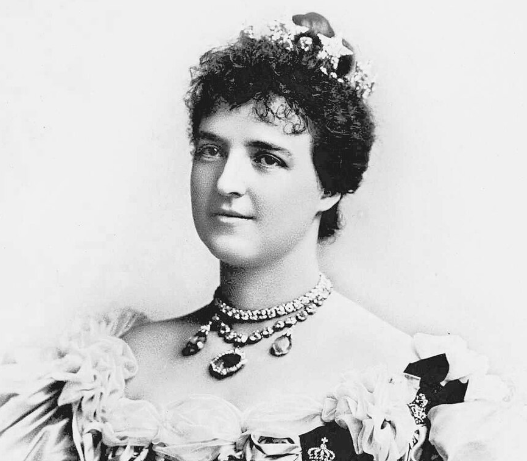
Maria Amelia ascended to the position of Queen Consort on October 19, 1889, at the young age of 24. From the outset, she demonstrated a profound commitment to social reform and public health. Her patronage extended to initiatives aimed at eradicating diseases such as tuberculosis, and she cultivated a notable interest in the arts. During her husband’s absences, she served as regent, earning a reputation as a popular and engaged royal figure. Nevertheless, her considerable spending on various projects also drew criticism, particularly in a nation grappling with financial difficulties.
Indeed, the economic health of Portugal was a persistent concern throughout Carlos’s reign. The country was declared bankrupt on two occasions, triggering strikes and intensifying the anti-monarchist sentiment. In an attempt to regain control, King Carlos appointed João Franco as Prime Minister in 1907. Franco’s subsequent dissolution of parliament ushered in an authoritarian government, a move that further alienated segments of the population. As criticism of the monarchy reached a fever pitch, the king was compelled to agree to legislation that allowed for the imprisonment or deportation of dissenters. With a heavy heart, he reportedly remarked to his advisors as he signed the decree on January 30, 1908, "I sign my sentence of death, but you, gentlemen, want it that way."
The Fatal Ambush and the End of an Era
This ominous pronouncement proved tragically prescient. Plans for the assassination of King Carlos were already in motion. On February 1, 1908, Queen Maria Amelia was traveling in an open carriage with her husband and their two sons when they were ambushed by gunmen. The royal family was subjected to a hail of gunfire. King Carlos was killed instantly. In a desperate attempt to shield her family, Queen Maria Amelia reportedly brandished a bouquet of flowers she had been given, a symbolic gesture of peace against a torrent of violence. Her eldest son, Prince Luis Filipe, sustained grievous wounds and succumbed to his injuries approximately twenty minutes later. Prince Manuel, the younger son, miraculously escaped with only minor injuries, while the Queen Consort remained physically unharmed.
The assassination sent shockwaves through Portugal and across Europe. The nation plunged into mourning and uncertainty. The following day, Maria Amelia, devastated by the loss of her husband and eldest son, witnessed the proclamation of her surviving son as King Manuel II. However, the monarchy, already weakened by years of political instability and economic hardship, was mortally wounded. The regicide marked the beginning of the end for the Braganza dynasty.
In 1910, the monarchy was overthrown by a republican revolution. Queen Maria Amelia joined her son, Manuel II, in exile, initially settling in Twickenham, England, the place of her birth. When Manuel married in 1913, his mother relocated to France. Despite his exile, Manuel continued his efforts to reclaim the Portuguese throne, a lifelong ambition that ultimately remained unfulfilled. He died unexpectedly in 1932, and his remains were returned to Portugal to be interred at the Pantheon of the Braganzas, a final resting place befitting a king.
A Lasting Legacy in Emeralds and Memory
Queen Maria Amelia made one final journey to Lisbon in 1945, a poignant return to the country she had once ruled. During her visit, she revisited many of her former residences and inspected the health projects she had championed, ensuring the continuation of her charitable work. She passed away on October 25, 1951, in Le Chesnay, France. Her final resting place is in Lisbon, alongside her husband and sons, a testament to the enduring bonds of family even in the face of historical upheaval.
The story of Maria Amelia, the last Queen of Portugal, is one of courage, resilience, and the profound impact of political events on personal lives. Her efforts to support her husband and son, her dedication to social causes, and her tragic experience during the assassination of 1908 have cemented her place in Portuguese history. The reappearance of her emerald jewels at auction offers a tangible connection to this remarkable woman, allowing a new generation to contemplate the grandeur, the struggles, and the ultimate demise of a monarchy through the legacy of its final queen. The enduring allure of these emeralds is not merely in their intrinsic value, but in the historical narrative they carry, a silent echo of a queen who faced down tragedy with a posy of flowers, a queen who, in the end, could not hold back the tide of history.




 Nila Kartika Wati

 Lina Irawan

 Yuyun Lusiyani

 Ana Megawati

 Joko Widodo
