
 Yuyun Lusiyani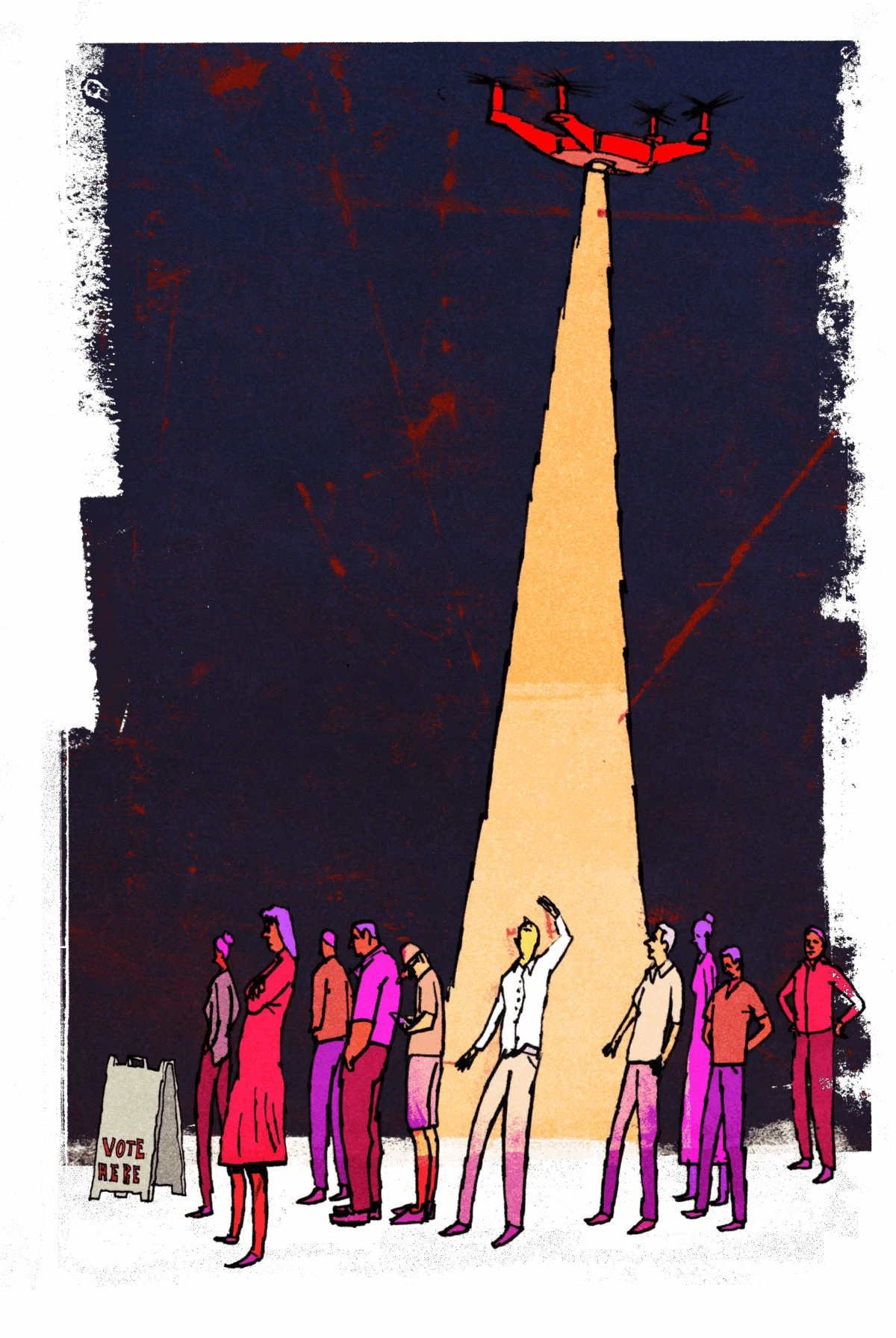
In a revelation underscoring the Trump administration’s concerted drive to validate unsubstantiated claims of widespread noncitizen voting, a ProPublica investigation has exposed how Homeland Security Investigations (HSI) was pressed into service for election fraud inquiries, diverting significant resources and personnel from its traditional mandates with remarkably meager outcomes. The effort, initiated despite internal warnings regarding its efficacy and potential legal and privacy infringements, has resulted in a disproportionately low number of prosecutions compared to the vast federal resources expended.
The unprecedented campaign began to intensify in late March, when Joe Teirab, the second-in-command at the U.S. attorney’s office in Minnesota, received an urgent directive from Washington. The federal government, under pressure from President Donald Trump, was actively seeking criminal cases to substantiate his long-held assertions that illegal voting by noncitizens was corrupting American elections. Agents from HSI, a formidable federal law enforcement agency traditionally tasked with combating drug cartels, terrorism, and other cross-border criminal enterprises, had been deployed across the nation to pursue hundreds of leads, including many in Minnesota.
Teirab, a former Marine and Harvard Law graduate, found himself under immediate duress. An earlier communication from Nick Davis, a high-ranking Justice Department appointee spearheading the election fraud initiative, had emphasized the paramount importance of these cases, explicitly stating that Teirab and his staff were forbidden from declining them without express approval from senior agency officials. On March 24, Davis escalated his demands, requiring a comprehensive status report within mere hours.
Teirab’s response was a blunt assessment of the chaotic reality on the ground. “Bottom line up front,” he began in an email reviewed by ProPublica. After subpoenaing records for approximately 130 individuals, his staff could only refer a single case for prosecution. He highlighted that HSI agents had inundated local election offices with calls and demands for voting histories, betraying “a complete lack of understanding” of illegal voting investigations. Teirab did not mince words, describing the HSI task force as “disjointed and disorganized” and the entire process as “dysfunctional.”
The Administration’s Unprecedented Campaign
President Trump’s administration has consistently intensified its pursuit of noncitizen voting, a phenomenon he has repeatedly, and without substantial evidence, claimed to be rampant. This push has escalated significantly in recent weeks, with Trump declaring in a nationally televised speech that the American election system was “so vulnerable that no one can possibly defend it.” To buttress this assertion, the Department of Homeland Security (DHS), HSI’s parent agency, released documents claiming to have identified over 250,000 noncitizens on voter rolls in just four states, all led by Democrats. Crucially, these documents provided no methodological explanation for how this substantial figure was calculated.
The public was already aware of HSI’s redirection to lead this domestic election fraud campaign. However, ProPublica’s investigation offers the first comprehensive insight into the internal mechanisms and the extent to which the Trump administration leveraged HSI’s personnel, sophisticated technology, and extensive legal authority for its political agenda. The findings starkly illustrate the meager tangible results, despite the prodigious resources poured into the endeavor.
Interviews and internal emails obtained by ProPublica reveal significant internal resistance. Career staffers within the Justice Department voiced concerns that transferring voter rolls to HSI for noncitizen voter searches could constitute violations of federal privacy laws. Similarly, seasoned HSI insiders cautioned that utilizing the agency’s powerful databases and tools for such broad searches would inevitably generate numerous mismatches and wildly inflated, unreliable results. These warnings, however, were reportedly disregarded as the administration pressed forward.
The Repurposing of HSI: “The Swiss Army Knife of Federal Law Enforcement”

The enlistment of HSI in the administration’s election integrity campaign was a deliberate strategic choice. Established in the wake of 9/11, HSI boasts 7,100 armed, highly trained agents and an additional 800 criminal analysts. Critically, it possesses unparalleled access to vast troves of confidential data concerning hundreds of millions of Americans. While a component of Immigration and Customs Enforcement (ICE), HSI had historically maintained a distinct operational separation from routine immigration enforcement. During the first Trump administration, leaders from 19 HSI regional offices—virtually its entire top field hierarchy—had even signed a letter advocating for HSI to become a standalone agency, arguing that ICE’s deportation focus hampered HSI’s ability to foster cooperation in its criminal investigations. With Trump’s return to the White House, however, it swiftly became apparent that HSI would be central to his twin obsessions: illegal immigration and noncitizen voting.
The individual chosen to spearhead HSI’s transformation was Anthony Salisbury, a 50-year-old career agent who had previously directed the agency’s Miami office. Appointed in December 2024 as a deputy homeland security adviser reporting to White House policy chief Stephen Miller, Salisbury also assumed a dual appointment as head of HSI. Salisbury was known for his colorful demeanor; a mixed martial arts enthusiast, he once appeared at headquarters with a bruised face and blackened eye from a recent bout and occasionally entertained colleagues by removing a bridge that covered his missing front teeth.
However, agency veterans more acutely associated Salisbury with a 2011 operation in Mexico under his command, where one agent was killed and another wounded in a cartel ambush. An agency review submitted to Trump in April 2020 concluded that supervisory errors, including Salisbury’s, contributed to the tragic outcome, recommending disciplinary action. None was taken against Salisbury, who was subsequently described by a White House official as a “critical member of the Trump administration” who had been “cleared” in all reviews and promoted multiple times.
Upon assuming his new roles, Salisbury promptly took charge of implementing the administration’s agenda for HSI. Current and former agency officials, many speaking anonymously due to fears of reprisal, confirmed that he personally issued staffing directives, reassignments, and promotions. Beginning in early 2025, Salisbury oversaw the unprecedented reassignment of over 6,000 agents to immigration enforcement, effectively diverting the majority of the agency from its conventional duties. He then pivoted HSI’s focus towards noncitizen voting, presiding over numerous meetings with officials from the Justice Department and DHS concerning election fraud, as corroborated by internal emails and accounts from supervisors who worked with him.
“Stephen Miller has an HSI deputy for a reason,” stated Eric Balliet, a high-level HSI manager who retired in 2024 after 23 years, maintaining close contact with former colleagues. “Salisbury is going to salute and execute, and he is going to make sure that from the HSI side, they fall in line, and there’s going to be no resistance or pushback. HSI has been turned into the Swiss Army knife of federal law enforcement.”
The “HSI Tool” and Data Privacy Concerns
The origins of HSI’s direct involvement in the hunt for election fraud cases can be traced to summer 2025. In early July of that year, Frank Quiñones, an HSI special agent who had served under Salisbury in Florida, approached the HSI Innovation Lab with a proposal. Quiñones, who had been transferred to Washington to oversee a unit repurposed for voting investigations, suggested using the agency’s advanced technology to identify noncitizen voters on state voter rolls. Quiñones was a vocal proponent of Trump’s election fraud claims, having publicly promoted assertions that the 2020 presidential vote was stolen through multiple Facebook posts and reposts.
The Innovation Lab, discreetly located in a D.C. suburb, housed sophisticated software tools and access to the government’s most sensitive databases, including suspicious activity reports and arrest records. Quiñones pitched the idea of leveraging the lab’s technology to identify illegal voters, even though the agency lacked voter rolls containing critical identifiers like partial Social Security numbers. Lab staff, according to sources, found the idea “a little insane,” deeming it both unreliable and improper. They recognized that linking public voter rolls, which lack unique identifiers, to HSI’s data would inevitably produce an “ungodly” number of false positives, akin to the 99% false positive rates reported in other voter fraud detection systems. Furthermore, the lab team harbored serious concerns about violating long-standing safeguards limiting the use of private citizen data. As one staffer recalled, “They didn’t want to touch this,” but Quiñones reportedly reiterated, “The president wants this!”
Despite these reservations, Tom Hodge, an HSI data analyst at the meeting, proposed running the voter information through the Athena Toolbox, an analytical platform developed by Sandia National Laboratories with access to all HSI databases. Hodge and the Sandia team dedicated six weeks to the project, subsequently reporting a significant number of noncitizens on Quiñones’s 2021 New Jersey public voter list. One former HSI official claimed they found “5,000 high-confidence illegal voters” in just a single New Jersey county—a figure that New Jersey election officials deemed impossibly high.
This apparent breakthrough arrived at a crucial juncture for the Trump administration, whose other efforts to identify noncitizens on state voter rolls had encountered numerous obstacles. Many states had resisted requests to check citizenship status using the Systematic Alien Verification for Entitlements (SAVE) system and refused Justice Department demands for unredacted voter rolls, including partial Social Security numbers, citing constitutional provisions granting states primary control over elections.

By August 21, Quiñones was actively promoting his solution, the “HSI Tool,” in an email to administration officials, touting its potential to fuel both criminal and immigration investigations. By month’s end, top election-related officials at DHS and the Justice Department, including Heather Honey, a prominent election denier appointed as a senior counselor at DHS, were actively endorsing the HSI Tool as a superior alternative to SAVE. The White House also embraced the initiative, with Special Assistant to the President J. Brian Sikma enthusiastically noting in a November email that the New Jersey trial appeared to have identified a “very significant number” of “potential non-citizens,” urging expedited review of public voter rolls obtained from other states.
Running “Roughshod” Over Privacy Laws
As momentum built for using HSI’s technology to search voter information, a significant legal and ethical challenge emerged. Career attorneys within the Justice Department, particularly specialists in privacy law, raised profound concerns that the wholesale transfer of voter rolls from the DOJ to DHS might be illegal. Internal emails reviewed by ProPublica and interviews with former DOJ lawyers confirm these anxieties.
The voter rolls collected by the DOJ contained sensitive personal information on millions of Americans, even the public versions including addresses, birth dates, and party affiliations. For the 16 states that had complied with requests for unredacted voter lists, the DOJ possessed partial Social Security numbers or driver’s license information. Federal laws, most notably the Privacy Act of 1974, meticulously govern the collection, use, sharing, and protection of government data, requiring agencies to disclose their plans and gather public comment. Crucially, an individual’s information generally cannot be released or shared without their explicit consent, subject only to limited, narrowly defined exceptions.
The Trump administration’s broader efforts to combine data across federal agencies had already faced repeated criticism from courts and whistleblowers for failing to adhere to privacy and security restrictions. In June, a federal judge prohibited the government from using SAVE for mass searches, ruling that the administration had violated federal privacy laws by granting DHS access to Social Security data to enhance the tool—a ruling currently under appeal.
In July 2025, as rumors of the impending voter data transfer to DHS circulated, half a dozen career attorneys reassigned to the voting section voiced their unease to supervisors. These concerns were reportedly disregarded, prompting most of them to resign. Instead, the DOJ’s Office of Legal Counsel pushed forward, asserting that a Privacy Act exception allowed HSI to receive such data for law enforcement purposes without public notice, provided DHS submitted an official request letter.
However, critics like Nikhel Sus, chief counsel for Citizens for Responsibility and Ethics in Washington (CREW), argue that this exception was intended for obtaining information on individual criminal suspects, not for granting mass access to data on individuals not suspected of wrongdoing. Peter Winn, a 29-year Justice Department veteran and former acting privacy chief, drafted a letter intended to establish a data-sharing agreement. In a February 12 email to two top DOJ officials, Winn stated he had rewritten an initial draft to “make the information sharing arrangement far easier to defend, if and when it is challenged in court.” He proposed a more restricted process where DHS would request “pertinent and relevant” information on specific individuals from the DOJ, with technical staff from both agencies coordinating to fulfill the requests.
“Having slept on it,” Winn wrote, “I ended up deciding that our initial idea of sending a huge amount of raw unprocessed voter registration data to DHS, involved taking far too much unnecessary legal risk, given that 99% of the data would implicate the privacy and civil liberties of United States Citizens, and would risk adding to the false narrative in the establishment press of DOJ and DHS being unconcerned with the privacy and civil liberties of Americans.”
Winn’s suggested restrictions were quickly abandoned. A subsequent draft of the letter dated March 4 altered the language to permit the “transfer” of voter information to HSI, with a sole exception for redacting party affiliation where possible. The final letter, signed by Todd Lyons, then acting director of ICE, and sent to the DOJ just two days later, removed even this limitation. A mere three paragraphs long, it broadly authorized HSI to use the voter rolls for any “appropriate investigation of potential violations of federal election law.”
Winn declined to comment on internal drafts. A Justice Department spokesperson defended the actions, stating that “no one should oppose intergovernmental data sharing and coordination that enable swift investigations and prosecution of illegal alien voting.” DHS echoed this, calling such sharing “essential to protecting America’s election process” and “an easy step to secure our elections.”

Nikhel Sus of CREW countered that by pooling sensitive personal identifiers, along with party and voting histories, the administration has “run roughshod” over privacy laws, potentially creating a “1984-style database” for surveilling political participation. CREW filed a lawsuit in April on behalf of Common Cause, arguing the illegality of using the law enforcement exception for mass sharing of voter information. Former HSI agent Eric Balliet similarly expressed alarm, viewing the transfer of voter rolls as “a mass data-collection effort by the government against its own citizens in a non-criminal setting,” which elevates the risk of data breaches and identity theft for law-abiding citizens.
Collapsing Claims and Meager Results
By January 2026, scores of HSI agents were fanning out nationwide to investigate thousands of leads concerning illegal voting. Approximately 25,000 leads stemmed from individuals identified by SAVE as potential noncitizens on state voter rolls. Another 15,000 were routed to HSI’s cross-border financial crimes unit, which was reportedly instructed to prioritize these over money laundering and fraud cases, according to a former high-level HSI official. Quiñones’s unit initiated a separate effort, reviewing whether newly naturalized citizens had voted prior to their naturalization and subsequently lied about it during interviews. Additional leads were generated by running public voter rolls through the HSI lab’s databases, including those from New Jersey and Pennsylvania. DHS’s claim of over 250,000 noncitizens on voter lists in four Democrat-led states included “as many as” 35,152 in New Jersey and 14,576 in Pennsylvania, though both states have requested the source of these figures.
However, as federal investigators began to delve into these cases, they frequently disintegrated. A ProPublica analysis of Justice Department data and federal court filings shows that through May, prosecutors had charged fewer than four dozen individuals with crimes related to noncitizen voting, securing convictions or guilty pleas in only 14 cases. This is a stark contrast to the more than 150 million people who voted in the most recent presidential election.
The largest concentration of cases emerged from the Southern District of Florida, headed by Jason Reding Quiñones (no relation to the HSI agent), a known Trump ally who has previously led investigations into the president’s political opponents. This office has seen eight voters sentenced, with seven other cases pending. In the four states where DHS claimed to have found over a quarter-million noncitizens on the rolls, with a collective 40 million registered voters, only seven noncitizen voting cases were initiated as of May.
The paltry numbers underscore the operational realities HSI investigators encountered. A ProPublica review of records obtained by voting-advocacy groups Campaign Legal Center and Democracy Forward indicates that much of the federal information on purported noncitizens was inaccurate, a direct consequence of flawed data matching. Agents frequently discovered that individuals were not registered in the counties HSI believed them to be. While voters attest to U.S. citizenship upon registration, agents found instances where individuals had been erroneously placed on voter rolls after disclosing their noncitizen status. Many identified individuals had never even voted.
Most HSI agents, accustomed to complex international criminal investigations, lacked experience in voting fraud. Joe Teirab’s email to Nick Davis at the Justice Department vividly described the ensuing chaos in Minnesota after subpoenas for voter records were issued to the state and at least six counties. “An unknown number of agents are constantly arriving in Minnesota without any knowledge of the investigation, the issues already discussed and decided, and the processes they need to follow,” Teirab complained. “Instead of getting up to speed and learning, they have demanded many calls and subpoenas, most of which demonstrate a complete lack of understanding of the investigation.” In Stearns County, for example, HSI agents subpoenaed voting histories for 13 people, but only six actually resided there.
Minnesota Secretary of State Steve Simon, a Democrat, criticized the federal effort for revealing investigators’ “ignorance about the nuance of elections administration.” Simon emphasized that purposeful election crime is “microscopic,” and that “the very human errors that can happen are not some sort of plot or scheme to dirty up the voting rolls, but are just everyday human beings making mistakes, not intending at all to violate any law.” As of May, only one illegal voting case has been referred for prosecution in Minnesota, which has over 3.8 million registered voters.
Even Republican-led states like Ohio, which shared unredacted voter rolls with the DOJ and utilized the SAVE system, struggled to meet the administration’s demands for cases. In October, the Ohio secretary of state referred over 1,000 voters identified as possible noncitizens to the federal government, claiming 167 had voted since 2018. At least nine HSI agents in Cincinnati and Cleveland launched investigations, bombarding local election officials with extensive requests for voting histories. Mohamed Al-Hamdani, a Democratic member of Montgomery County’s Board of Elections, described these inquiries as “witch hunts” that consumed valuable staff time. In February, Davis pressed Ohio’s two U.S. attorneys’ offices for an “election integrity” update. Yet, as of May, only two voting cases had been referred for prosecution in Ohio, with no charges filed, despite the state having nearly 8 million voters.
Historically, federal prosecutors rarely pursued charges against noncitizen voters who genuinely did not understand the illegality of their actions, prioritizing resources for cases involving coordinated efforts or plots. However, U.S. attorneys’ offices are now adopting a different approach, pursuing prosecutions that could lead to prison terms or deportation. In May 2025, federal prosecutors in Florida filed illegal voting charges against a Ukrainian mother and daughter who registered and voted in the 2024 presidential election after becoming permanent U.S. residents. They have pleaded not guilty, with the mother claiming she believed a green card conferred voting rights. They are scheduled for trial in September.

Far-Reaching Consequences for National Security and Democracy
Experts in both election integrity and national security warn of profound longer-term costs associated with deploying the federal government’s investigative and prosecutorial power to validate presidential claims about noncitizen voting. Current and former HSI agents report that critical investigations—including task forces targeting drug rings, human trafficking, and money laundering—have languished due to the agency’s pivot towards noncitizen voting and immigration enforcement.
For instance, in February 2026, an HSI agent in Ohio leading a multistate child sex abuse investigation was abruptly reassigned for months to pursue dozens of suspected noncitizen voter leads. It was only in May that he made an arrest in the child sex abuse case, leading to child exploitation and pornography charges against a 38-year-old man involving at least five 14-year-old girls. “Cases like this don’t just stop,” warned Eric Balliet, the 23-year HSI veteran. “When you pull people off them for an extended period of time, those criminal networks will adapt, and people get killed and kidnapped.”
Federal data corroborates a broader slowdown in HSI’s most urgent work. An annual government report revealed that the number of wiretaps obtained by DHS, often crucial for drug trafficking investigations, plummeted from 133 in 2025 to just 23 in 2025. DHS attributed this decline to several factors, including “changes in administration enforcement and prosecutorial priorities.” John Tobon, a high-ranking HSI official who retired in early 2025, grimly observed, “It’s never been a better time to be involved in transnational organized crime.”
DHS, in its statement, denied any neglect of HSI’s core mission, asserting that the agency has increased its efforts against criminal cartels, gangs, and drug traffickers in response to multiple Trump executive orders.
Despite the minimal number of prosecutions resulting from HSI’s voting-related investigations, voter advocacy groups express deep concern that the Trump administration will leverage these efforts to justify more extreme interventions. Recent tactics include threats to withhold funds from states refusing to check voter rolls for noncitizens and public statements threatening to prosecute state election officials who “knowingly” fail to remove noncitizens. President Trump continues to push for the SAVE America Act, which would mandate proof of citizenship for voter registration—a measure critics decry as a barrier to voting. Democrats are reportedly preparing for the unsettling prospect of federal troops being deployed to polling places, potentially to intimidate voters.
“Those concerns are playing out in real time, with far-reaching consequences,” stated Dax Goldstein, a director at the States United Democracy Center, a nonprofit dedicated to building confidence in elections. “When federal agencies are misused and weaponized, people lose trust in government itself.” The ProPublica investigation thus not only illuminates a campaign of questionable efficacy but also raises profound questions about the integrity of federal law enforcement and the broader implications for American democracy and civil liberties.


 Pevita Pearce
 Eva Lovia
 Nana Wu
 admin
admin
 Nila Kartika Wati