
 Yuyun Lusiyani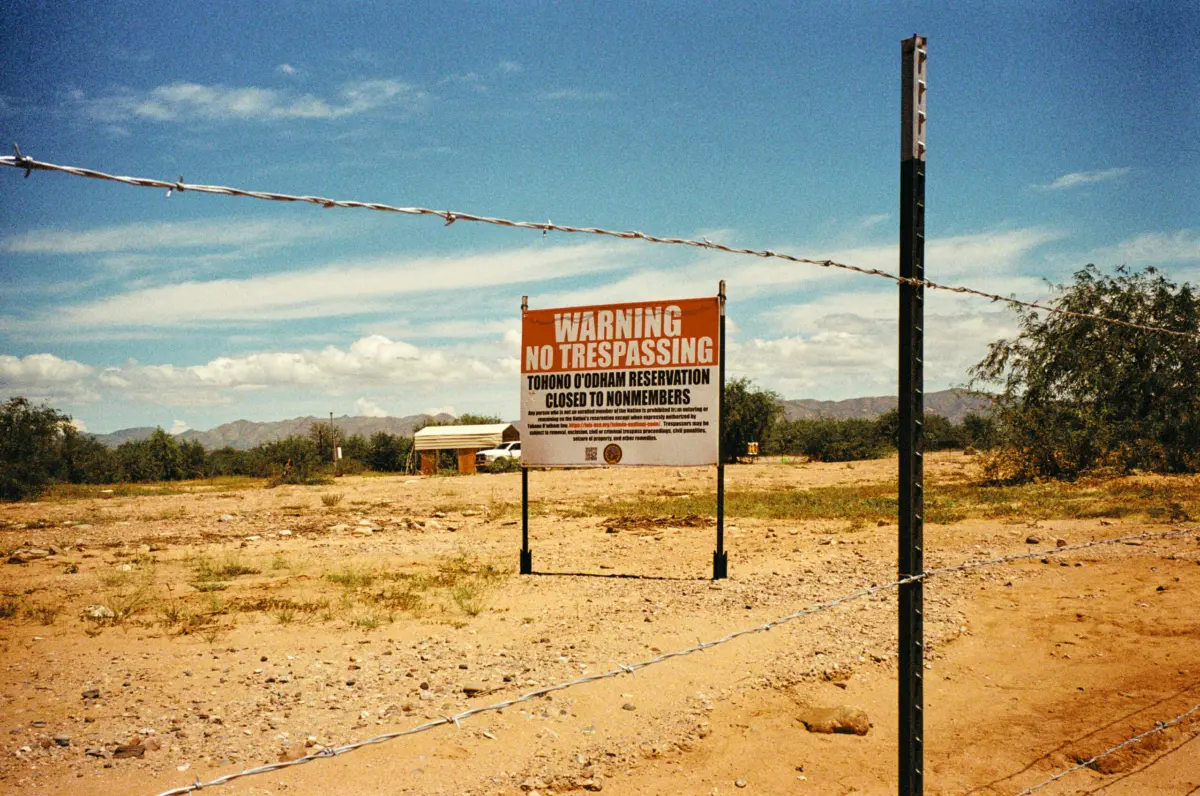
In a stark demonstration of federal authority overriding tribal sovereignty, the Tohono O’odham Nation in Southern Arizona found itself under a de facto siege on August 25, 2026, as U.S. government contractors, backed by heavily armed federal agents, commenced soil tests for a controversial 62-mile border wall. The operation began with a mere 60-second notification to tribal leadership, delivered via email at 4:59 a.m. by Henry N. Laxdal, the acting chief patrol agent for the U.S. Border Patrol’s Tucson Sector. The email, received by Tohono O’odham Nation Chairman Verlon Jose, stated that cultural monitors were welcome to observe but explicitly warned against interference with government operations. This abrupt notification, followed by a swift and militarized incursion, marked a significant escalation in the Trump administration’s determined effort to construct a border barrier across the Nation’s ancestral lands, despite fervent tribal opposition and ongoing legal challenges.
A Pre-Dawn Incursion and a Nation Mobilized
Chairman Jose, 59, was already aware of the impending arrival. An hour before Laxdal’s email, tribal members had begun reporting a large convoy of vehicles, including work trucks, drilling rigs, and numerous Border Patrol vehicles, moving south through the reservation. Social media channels were alight with similar observations, signaling an orchestrated deployment. As daylight broke, the full extent of the operation became clear: federal agents, clad in masks and tactical gear, guarded the contractors. These agents were drawn from a special operations cadre that had previously been deployed in citywide sweeps in Minneapolis and Chicago, operations that tragically resulted in three fatalities, including two U.S. citizens. When the Tohono O’odham Nation’s chief of police attempted to reach the worksite, he was met with a roadblock manned by these federal agents, underscoring the formidable and unyielding nature of the federal presence.
In response, Chairman Jose promptly issued a statement on the Nation’s website, unequivocally declaring the incursion illegal. He further revealed that the Department of Homeland Security (DHS) had deployed a surveillance blimp and enlisted Mexican security forces to assist in protecting the work crews, painting a grim picture of a coordinated, cross-border military-style operation aimed at subduing tribal resistance.

Decades of Cooperation Shattered by a Wall
For a quarter-century, the Tohono O’odham Nation had successfully staved off the construction of a comprehensive border wall by proactively collaborating with DHS. This collaboration transformed their reservation into a testing ground for some of the government’s most advanced homeland security measures. These included the implementation of vehicle barriers along the southern boundary, the deployment of state-of-the-art surveillance towers, and robust law enforcement partnerships with both the Border Patrol and Immigration and Customs Enforcement (ICE), including the famed "Shadow Wolves" unit. The Nation’s leaders believed that by demonstrating a commitment to border security through advanced technology and cooperation, they could prevent the physical division of their ancestral lands.
However, ProPublica’s investigation revealed that despite these extensive collaborations and initial assurances from the Trump administration, DHS had turned its formidable apparatus against tribal members. This included 24-hour surveillance directed at an ongoing border prayer ceremony and the questioning of tribal members about their ceremonial activities outside the reservation. This finding, based on photos, videos, court filings, interviews with tribal leadership, firsthand observations, and over 1,000 contemporaneously written observations compiled by tribal members, exposed a profound betrayal of trust and a cynical disregard for the Nation’s sovereignty and cultural rights.
The proposed 62-mile wall threatened to sever the Tohono O’odham homeland, which straddles the international border, from its members residing in Mexico. Thousands of tribal members live south of the border, and a wall would catastrophically disrupt routine border crossings essential for ceremonies, family visits, and the preservation of sacred landscapes that the O’odham consider their sacred duty to protect. Their lawsuit argued that the Trump administration’s actions constituted an unprecedented attack on tribal sovereignty, a fundamental right enshrined in federal law and treaties.
Government Justifications and Legal Maneuvers

The federal government, through its attorneys, initially provided assurances that it was engaging with the O’odham in good faith. However, these claims were swiftly undermined by subsequent actions. A judge in Washington, D.C., denied the tribe’s request for a preliminary injunction, effectively greenlighting the initial construction activities. Acting Chief Laxdal’s 60-second heads-up email, ironically, highlighted the agency’s "commitment to ongoing coordination" by offering cultural monitors, even as it preempted any meaningful dialogue.
The Department of Homeland Security (DHS) and Customs and Border Protection (CBP) remained largely unresponsive to specific inquiries from ProPublica regarding surveillance and interactions with tribal members. Instead, CBP Commissioner Rodney Scott issued a statement in August, portraying the reservation’s southern boundary as "one of the most dangerous smuggling and trafficking corridors on the Southwest border" and a "remote desert that has facilitated decades of drug loads, migrant deaths, and cartel activity." Scott asserted, "Congress funded this work, a Federal court has affirmed it, and CBP is carrying it out under the legal authorities that apply. Under President Trump’s leadership, we are securing the border and giving our agents the tools and support they need to protect the American people."
This narrative stood in stark contrast to data cited by the Tohono O’odham Nation. The tribe highlighted CBP’s own reporting of border apprehensions being 94% lower than during the Biden presidency, with Border Patrol "encounters" hitting their lowest levels in over 50 years. The Nation’s interim chief of police, James Cook, stated in a sworn declaration that reports of illegal entry had dropped by 90% over the preceding year, leading to a near disappearance of smuggling and other border-related crimes.
Benjamin S. Hollinder, a senior Border Patrol official, countered in his sworn declaration that the absence of a wall created a "funneling effect," channeling smugglers onto the reservation. He argued that this dynamic would intensify once the rest of Arizona was walled off, making the area "a vulnerable and a desirable area for [transnational criminal organizations] to operate."
The Meme and the Message: "Resistance is Futile"

The true nature of the federal government’s stance became unmistakably clear following the judge’s denial of the emergency injunction on August 14. Within hours, James Percival, the Department of Homeland Security’s general counsel, posted a celebratory meme on X (formerly Twitter) depicting "the Borg," the cybernetic supervillains from Star Trek. The meme bore the chilling caption: "RESISTANCE IS FUTILE." Percival’s accompanying text reinforced the message: "We respect tribal sovereignty but not to the detriment of border security. This wall is getting built. Our authority is beyond dispute." This brazen display effectively shattered any pretense of good faith or cooperative engagement, signaling a unilateral and uncompromising federal approach.
A Deeply Rooted Homeland and a Billion-Dollar Contract
The Tohono O’odham people have continuously inhabited the vast expanse of the Sonoran Desert, stretching from what is now Southern Arizona to Mexico’s Sea of Cortez, for thousands of years. Their reservation, at 2.8 million acres, is the largest on the southern border. Approximately 14,000 of its 37,000 enrolled members reside on tribal land west of Tucson, with an additional 3,000 living in Mexico, underscoring the profound cultural and familial ties severed by the border.
During President Donald Trump’s first term, 226 miles of border wall were constructed across Arizona, yet the Tohono O’odham Nation remained the longest unwalled section in the state. The shift came in February 2026, when CBP informed the tribe of its plans to completely seal off the Nation’s 62-mile southern boundary, allocating nearly $52 billion from Trump’s "One Big Beautiful Bill Act."
In April, tribal leaders met with DHS Secretary Markwayne Mullin, the first Native American to lead the department, hoping for a sympathetic ear. Chairman Jose recalled thinking, "Maybe we can work with this guy." However, Mullin’s message was unequivocal: the wall would be built, and Justice Department attorneys were prepared to defend the project to the Supreme Court. Tohono O’odham council member Vivian Juan-Saunders corroborated this, recalling Mullin’s assertive declaration, "Don’t mess with me." Mullin’s office did not respond to ProPublica’s inquiries about this exchange.

The pressure intensified the following month during a meeting with CBP Commissioner Scott. According to Jose, Scott explicitly threatened that if the tribe filed a lawsuit, the Nation could lose access to three critical border gates used by tribal members to travel between the U.S. and Mexico. These gates, accessible only to tribal members, are maintained at CBP’s discretion. Juan-Saunders and another council member, Jesse Navarro, confirmed this threat, which CBP declined to comment on.
In June, a substantial $1.3 billion contract for the wall, known as the "Tucson 5" project, was awarded to Sullivan Land Services Co. (SLS/SLSCO), a Texas firm with a history of Republican political donations and a major recipient of border wall contracts during Trump’s first term. On June 16, the O’odham Nation filed a lawsuit in the U.S. District Court for the District of Columbia, arguing that the wall would illegally reduce the size of its reservation—a power reserved solely for Congress—and constitute an enduring act of trespass on sovereign lands, destroying sacred cultural sites.
Waivers and Legal Battlegrounds
On the eve of a July 22 hearing for the tribe’s request for a preliminary injunction, DHS filed a notice affirming its decision to waive, in whole or in part, over 30 federal laws to accelerate the project. These waivers included several statutes mandating tribal consultation, further cementing the perception of federal disregard for tribal rights.
In court, government attorneys acknowledged their "cooperative" history with the tribal government but asserted that the Nation "does not hold veto power over the United States’ sovereign duty to secure its borders." They argued that an injunction was premature, as planning was ongoing, and any envisioned problems could still be addressed. The government insisted that construction would be limited to the Roosevelt Reservation, a 60-foot-wide zone along the U.S. side of the border where CBP was authorized to construct barriers.

Riyaz Kanji, the tribe’s lead attorney, countered that the Roosevelt Reservation did not extend onto tribal land, and even if it did, the rugged terrain would necessitate construction far beyond the 60-foot boundary. Kanji forcefully argued that DHS, despite its sweeping powers, could not override a sovereign government, describing the administration’s plans as a "blatant and unprecedented disregard for the tribe’s rights." Justice Department attorney Adam R.F. Gustafson, however, contended that the tribe had previously approved a barrier and that the current question was merely about the type of barrier. He assured the court that DHS was "committed" to consultation, stating, "We take very seriously the tribe’s views on this." The judge, appearing swayed by DHS’s assurances, stated, "I don’t think the government is trying to go outside of that 60-foot strip," but reserved judgment.
Broken Promises and the Prayer Camp
The O’odham’s suspicions about the government’s mindfulness were tragically confirmed. Just two days after the meeting with Secretary Mullin, a border wall contractor "inadvertently disturbed a cultural site" west of the reservation. A 70-foot swath was bulldozed through the Las Playas Intaglio, a 200-foot-long earthen etching in the shape of a fish, estimated to be at least 6,500 years old. The site was well-marked and known to archaeologists, making the destruction a particularly egregious act.
This incident fueled the resolve of tribal members like Wynona P. Larson Yazzie, a tribal elder, Marine Corps veteran, and former tribal police officer, who had visited the intaglio the day before its destruction. On August 6, when a filing from the tribe’s attorneys revealed that contractors would enter the reservation in four days, Larson Yazzie began making plans.
She was joined by Amy Juan, a 40-year-old O’odham activist. Juan recounted growing up crossing the border at Ko:li Ki:jig, a traditional crossing, now marred by a locking gate installed after 9/11. A "forward operating base" with a helipad and detention space had emerged near her grandparents’ home, and checkpoints proliferated on roads leading north. Human rights groups had documented arrests and deportations of U.S.-born tribal members, along with verbal and physical abuse by Border Patrol agents. For Juan, the Nation’s decades of collaboration had come at the cost of safety and civil liberties. "We want safety and the same respect as the next person," Juan stated. "We’ve never been against keeping people safe, but at what cost?"

In response to the imminent federal incursion, Larson Yazzie and Juan organized a prayer fire, an important O’odham tradition convened in times of communal struggle. The chosen site was symbolic: the border gate at Ko:li Ki:jig. They named it Tadai Me:i – "roadrunner on fire." The camp, with its basic amenities, centered around a continuously burning fire, tended by participants who focused on morning prayers and nightly cleanses. The fire was lit on August 9, just as federal contractors prepared to enter the reservation.
A Militarized Surveillance State
The prayer camp immediately became a focal point for intense federal surveillance. The first drone sighting was recorded on August 10 at 11:43 p.m., documented in meticulous activity logs kept by tribal members. These spiral notebooks, shared with ProPublica, offered a minute-by-minute account of sightings and sounds over 13 days, charting a steady escalation of DHS presence.
The logs recorded nearly 665 observations in the camp’s first seven days, predominantly federal agents buzzing around their location. While some agents drove past, others parked and watched, with at least one observed snapping photos of campers. Mexican security forces, both military and police, were also seen conversing with Border Patrol agents across the international boundary. "It appeared that the 2 BPs were showing the Mexicans pictures on their phones," an August 11 entry read.
"Surveillance has heightened," Juan noted. "Drones, helicopters, a lot of air activity." The aerial surveillance included marked CBP choppers and what appeared to be military Black Hawks, alongside handheld quadcopters hovering directly over the camp, even during prayer songs.

On the fourth night of the prayer fire, a gathering of over 100 people, including members of distant sister tribes, was held. The evening was peaceful until an elder couple reported being stopped at a checkpoint a half-mile outside the reservation on their way home. Border Patrol agents, conducting an "immigration check," asked for tribal IDs and inquired about their participation in the "ceremony down south." This encounter, unusual for a checkpoint rarely staffed, instilled fear, prompting many attendees to pack up, wary of late-night interactions with Border Patrol.
The August 25 operation confirmed the government’s disregard for the judge’s call for "consultation and cooperation." Larson Yazzie, racing to the border to document the contractors, was stopped by an agent who had laid a spike strip ahead. The tribal police chief was also blocked, only allowed to record after promising not to interfere. He observed three drilling rigs operating outside the 60-foot zone the government had assured the judge they would respect. The presence of Bureau of Indian Affairs agents, sent "to preserve the peace and monitor activities," highlighted the multi-agency coordination of the federal response.
The prayer fire was re-lit, a symbol of unwavering resistance. Davy Cross, a 57-year-old camp participant, described being surrounded by over 30 vehicles, including Border Patrol and Mexican state police, forming a semicircle around the camp at 4:33 a.m. on August 26. "We got surround[ed] by over 30 vehicles," he wrote in the log. A video of this moment quickly went viral across social media in the borderlands. The tribe’s attorneys appealed the judge’s order, arguing that the Trump administration was making "a mockery" of the court’s expectation of consultation.
A Double Standard: Big Bend vs. Tohono O’odham
The situation on the Tohono O’odham Nation stood in stark contrast to developments elsewhere along the border. In Texas, the Trump administration’s plans for a wall through Big Bend National Park sparked an unusual coalition of environmental nonprofits, river guides, hunters, ranchers, and local sheriffs in opposition. Just one week before the armed convoy rolled onto the Tohono O’odham reservation, Republican Governor Greg Abbott announced a pause on the controversial Big Bend project after discussions with the DHS Secretary. Abbott stated, "There are technology tools that don’t include barriers. Think of drones, think of fiber optics." In October, a judge granted a preliminary injunction halting construction in the Big Bend area.

For Amy Juan, this disparity was a "darkly ironic" testament to a profound double standard. For two and a half decades, the Tohono O’odham Nation had been a living laboratory for the very technologies Abbott now championed. Yet, when tribal leaders made that case, they were told to stand down. "What makes Texas the exception to us is very clear," Juan asserted. "It’s good old boy conversations that are happening between the politicians and the CBP commissioners and Markwayne Mullin." This pointed to a systemic inequity in how different communities are treated by federal authorities regarding border security.
Unwavering Resolve Amidst Dystopia
The early morning of September 26 saw Nate Sosa, a young Pascua Yaqui member, on fire watch. At 3:28 a.m., he heard a weapon being chambered as a Border Patrol agent exited his vehicle, shining a light into Mexico and walking within feet of sleeping campers. A drone and helicopter followed, then a convoy of dozens of vehicles. At 6:02 a.m., during prayer songs led by Larson Yazzie, a helicopter passed overhead, followed an hour later by a drone ascending above the fire.
Liz Quiroga, a 28-year-old tribal member and regular at the prayer site, observed the escalating surveillance. Over five days, the logbook filled with 379 observations, nearly two-thirds involving Border Patrol units near the fire. Mexican authorities were documented six times, and 39 entries referenced unmarked vehicles and suspected "undercovers." A dozen aircraft sightings, including four helicopters, three planes, and five drones, underscored the constant aerial monitoring. "Nobody has any idea what’s actually happening out here," Quiroga said, reflecting the pervasive sense of unease. "This is true dystopia."
Despite the immense federal pressure and the ongoing legal challenge, the Tohono O’odham Nation has ceased attempts to physically remove border wall contractors from its lands. However, the Tadai Me:i prayer camp endures, a resilient beacon of resistance. The constant surveillance and militarized presence remain, a stark reminder of the ongoing struggle for sovereignty, cultural preservation, and basic human dignity against the relentless march of federal border enforcement. The future of the 62-mile wall and the fate of the Tohono O’odham Nation’s unbroken land remain uncertain, but the spirit of resistance, symbolized by the prayer fire, continues to burn.



 Ana Megawati
 Joko Widodo
 Eva Lovia
 Jia Lissa
 Pevita Pearce