
 Nana Wu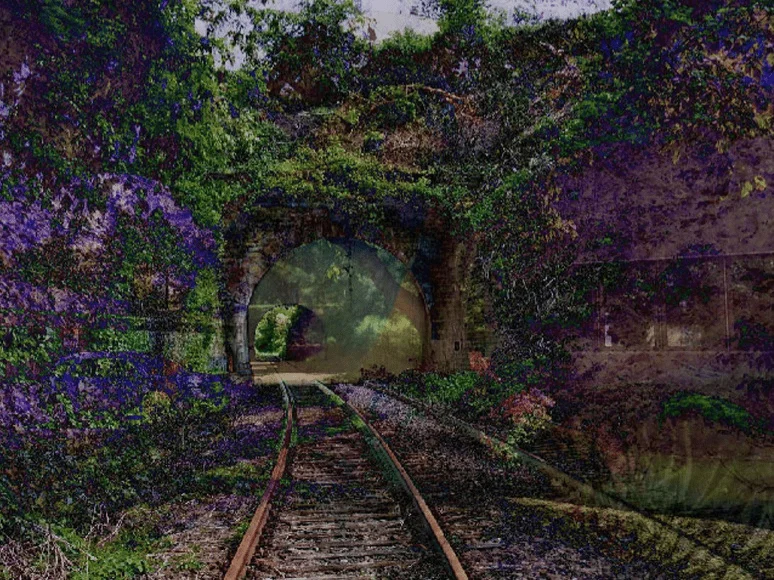
The United States Supreme Court has definitively closed the door on Stephen Thaler’s persistent legal campaign to secure copyright protection for works generated solely by his artificial intelligence system, DABUS. In a decisive move, the nation’s highest court declined to review Thaler’s appeal, effectively upholding a series of lower court rulings and the U.S. Copyright Office’s long-standing stance that human authorship is an indispensable prerequisite for copyright eligibility. This refusal marks the culmination of a protracted and largely unsuccessful legal journey for Thaler, underscoring a significant legal precedent regarding the copyrightability of AI-generated content.
A Persistent Pursuit Against Legal Hurdles
Stephen Thaler has, for several years, pursued a highly ambitious and, as it turns out, ultimately unsuccessful legal strategy centered on the idea that his AI system, DABUS, should be recognized as an author and therefore eligible for copyright and patent protection. His efforts have spanned multiple legal avenues, encountering consistent rejection at every level of the American judicial system. The U.S. Copyright Office initially denied his applications, a decision subsequently affirmed by federal district courts and the U.S. Court of Appeals for the District of Columbia Circuit. Parallel efforts to secure patent protection for DABUS-generated inventions have also been unsuccessful, facing similar dismissals from the U.S. Patent Office and various courts. Even the Trump administration, through its Department of Justice, advised the Supreme Court against hearing Thaler’s appeal in a related patent case, signaling a broad consensus against his arguments.
The specific case that reached the Supreme Court involved a visual artwork titled "A Recent Entrance to Paradise." Thaler claimed this piece was created entirely by DABUS, with no human creative input whatsoever. The artwork depicts train tracks leading into a portal, surrounded by intricate plant-like imagery in green and purple hues. Thaler’s core argument was that the AI itself was the author and that he, as the owner of the AI, should be granted the copyright. This maximalist approach, which sought copyright for works autonomously generated by a machine, fundamentally clashed with established copyright principles.
The Bedrock Requirement: Human Authorship
The consistent thread through all the legal challenges faced by Thaler has been the fundamental requirement of human authorship for copyright protection. The U.S. Copyright Office, in its rejections, consistently cited the Copyright Act’s implicit and explicit reliance on human creativity. A federal judge in Washington, upholding the Copyright Office’s decision in August 2023, explicitly stated that human authorship is a "bedrock requirement of copyright." This ruling was later affirmed by the U.S. Court of Appeals for the District of Columbia Circuit in March 2025.
Thaler’s legal team, in their appeal to the Supreme Court, argued that the stakes were exceptionally high. They contended that a refusal to hear the case would allow the Copyright Office to "irreversibly and negatively impacted AI development and use in the creative industry during critically important years." They posited that even if the Copyright Office’s strict interpretation were later overturned in a different case, the damage to AI innovation in the creative sector would already be done.
However, legal observers note that Thaler’s chosen strategy, while bold, presented a narrow path to legal victory. By framing the case as one where an AI acted as the sole creator, he presented a scenario that was easily distinguishable from the more complex and nuanced questions arising from the use of AI as a tool by human creators. This maximalist, all-or-nothing approach allowed courts to rule against him on the narrowest possible grounds – the absence of human authorship – without needing to delve into the intricate legal territory of AI-assisted creation.

Historical Precedents and the Evolution of Copyright Law
The legal framework governing copyright has historically been rooted in the concept of human creativity. Landmark Supreme Court cases have established this principle over decades. In Burrow-Giles Lithographic Co. v. Sarony (1884), the Court affirmed that copyright protects original works of authorship, a principle that has been consistently upheld. Later, in Feist Publications, Inc. v. Rural Telephone Service Co. (1991), the Court further clarified that copyright demands original creative expression, not mere compilation of facts.
These foundational principles can be readily applied to the evolving landscape of AI. Consider the analogy of photography. A photographer who meticulously frames a landscape, selects an angle, and chooses the opportune moment to capture an image exercises significant creative control. The copyright protection extends to these human creative decisions – the composition, timing, and perspective. However, the natural landscape itself, which no human created, is not subject to copyright. Similarly, when a human uses AI as a creative tool, the copyrightable elements lie in the human’s contribution. This could manifest through a highly specific and expressive prompt, the judicious selection and arrangement of AI-generated outputs, or a series of iterative creative choices made in collaboration with the AI. The parts of the work that the AI generates autonomously, without direct human creative direction, are analogous to the unauthored landscape.
The legal system is already grappling with the more intricate questions surrounding AI-assisted creativity. The Copyright Office is actively processing applications where humans have demonstrably used AI tools in their creative process. These cases involve evaluating the extent and nature of human input to determine eligibility for copyright. The challenge lies in defining the threshold of "sufficiently specific and expressive" prompting or the level of creative control that elevates AI-assisted output to copyrightable status. However, the fundamental legal architecture for addressing these situations already exists, drawing parallels to how copyright has adapted to previous technological advancements, such as the advent of photography and digital editing software like Photoshop. The guiding principle remains consistent: copyright protects human creativity, irrespective of the tools employed in its expression.
Implications and the Path Forward
Stephen Thaler’s persistent legal battles, though unsuccessful for him, have inadvertently served a purpose by generating a clear and consistent body of legal authority. His numerous defeats have solidified the precedent that works generated entirely by AI, without any discernible human creative input, are not eligible for copyright protection. This clarity is valuable for creators, developers, and the legal community as they navigate the burgeoning field of AI in creative industries.
The Supreme Court’s decision to deny certiorari means that the lower court rulings stand, reinforcing the current interpretation of copyright law. While Thaler’s lawyers expressed concern about the impact on AI development, many in the industry view this outcome as a necessary clarification. It provides a degree of certainty, allowing for continued innovation within established legal frameworks. The focus now shifts to the Copyright Office and the courts to address the more intricate questions of how to attribute copyright when AI is used as a tool in the creative process.
The image at the heart of Thaler’s case, "A Recent Entrance to Paradise," now stands as a symbol of this legal resolution. Like the famous "monkey selfie" case, which established that non-human entities cannot hold copyright, this AI-generated artwork, lacking human authorship, is now definitively in the public domain. This outcome is not a barrier to AI development but rather a validation of the enduring importance of human creativity in the realm of intellectual property. The legal system, through this protracted case, has reaffirmed that while AI can be a powerful tool, the spark of authorship, and thus the protection of copyright, remains firmly rooted in human ingenuity.

 Yuyun Lusiyani
 Joko Widodo
 Eva Lovia
 Jia Lissa
 Pevita Pearce
 admin
admin