
 Eva Lovia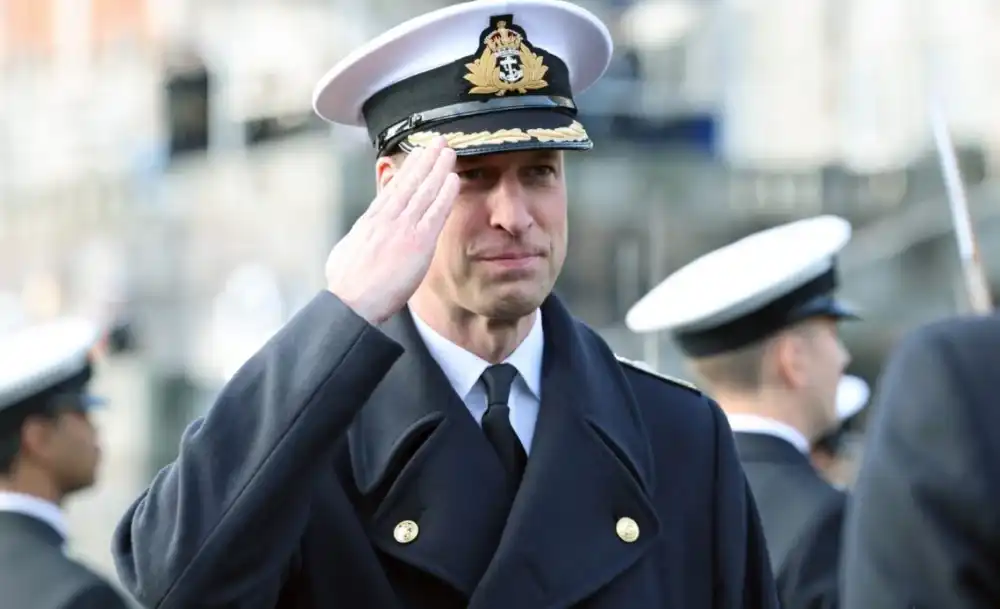
Whispers of a changing of the guard within the British monarchy, a narrative as old as the institution itself, have once again resurfaced with a renewed, albeit unfounded, sense of urgency. The latest iteration of these persistent rumours posits that King Charles III is poised to abdicate his throne in the very near future, making way for his eldest son, Prince William, to ascend to the monarchy within a matter of months. This cyclical pattern of speculation, amplified by the digital age, consistently gains traction, presenting itself as an inevitable outcome, yet it remains fundamentally detached from the realities of royal governance and constitutional tradition.
The Echo Chamber of Succession Speculation
These recurring rumours typically gain momentum through online channels, where they are disseminated with increasing conviction but a conspicuous lack of verifiable evidence. The sources often cited are invariably unnamed "insiders," vague allusions to constitutional intricacies, or misinterpretations of established royal reporting. The predictable conclusion drawn from these fragmented narratives is a supposed imminent transfer of the Crown. However, a sober examination of the facts reveals that nothing of the sort is currently in motion.
This is not an unprecedented phenomenon. Following Queen Elizabeth II’s Diamond Jubilee in 2012, similar speculation became a near-constant undercurrent in commentary surrounding the Royal Family. For years, a segment of observers and commentators consistently predicted that the long-reigning monarch would abdicate in favour of her heir, Charles III. The rationale presented was endlessly repeated: her extraordinary service had spanned decades, the next generation was prepared, and a transition would usher in a modernised monarchy. Yet, this anticipated abdication never materialised.
Queen Elizabeth II remained the steadfast sovereign until her passing in September 2022, having dedicated her life to her duties. While the concept of abdication was indeed a subject of frequent discussion within certain circles, it was never grounded in the operational framework of the British monarchy. The institution does not function on the premise that a reigning monarch will relinquish their duties based on public sentiment or the ebb and flow of media speculation. This fundamental principle has not undergone any alteration.
Navigating Health and Duty: A Delicate Balance
It is undeniable that King Charles III has experienced a period of significant personal and public challenge. Like many individuals in their seventies, he has had to address health concerns while concurrently fulfilling his extensive public engagements. However, there exists a profound distinction between the adjustment of workloads, a common practice for individuals in demanding roles, and the preparation for an outright abdication of the throne. His Majesty’s commitment to his royal duties remains unwavering, with strategic adjustments to his schedule reflecting the realities of age and health, rather than an intention to step down.
Similarly, there is no discernible indication that Prince William is preparing for an imminent accession to the throne. The Prince of Wales occupies a clearly defined constitutional position: he acts as a vital support to the reigning monarch and undertakes the crucial role of preparing for a future reign, a transition that will occur only when the time is constitutionally appropriate. This preparatory phase, a cornerstone of royal training, is fundamentally different from active anticipation of immediate succession.
The Enduring Fascination with Royal Succession
The inherent fascination with royal succession is entirely understandable. A change of monarch represents one of the most significant moments in a nation’s history, a period that encapsulates continuity, tradition, and the future direction of the Crown. Because such events are inherently rare, they invariably become the subject of extensive speculation and anticipation long before they transpire.
What is currently being observed is simply the latest manifestation of this enduring speculative cycle. The truth, stripped of sensationalism, is far less dramatic than the prevailing rumours suggest. King Charles III is the reigning monarch. Prince William is the Prince of Wales, the heir apparent. And the constitutional position of the monarchy remains precisely as it has been for centuries, a testament to its enduring stability and established order.
Historical Precedents and Constitutional Framework
To comprehend the current wave of speculation, it is beneficial to look at historical precedents. The British monarchy, while evolving, has largely operated on a principle of continuity. The last instance of an English monarch abdicating voluntarily was Edward VIII in 1936, a decision driven by profound personal reasons related to his desire to marry Wallis Simpson, a woman twice divorced, which was incompatible with his role as Supreme Governor of the Church of England. This event, a significant constitutional crisis, led to widespread debate about the monarchy’s future. The ensuing succession of his brother, George VI, was a testament to the monarchy’s ability to weather profound challenges and reaffirm its commitment to duty.
Queen Elizabeth II’s reign, spanning 70 years, set a new benchmark for longevity and dedication. Her unwavering commitment to her role, even in her advanced years, solidified the expectation of a sovereign serving until their death. This long period of stability meant that the "succession question" became a persistent topic of discussion, particularly as Prince Charles, the longest-serving heir apparent in British history, reached an age where such discussions were natural. However, as noted, Queen Elizabeth II’s reign was characterised by an unwavering dedication to her constitutional obligations, dispelling notions of an early abdication.
The Role of the Heir Apparent
Prince William’s current role as Prince of Wales is multifaceted. He is not merely waiting in the wings; he is actively engaged in preparing for the responsibilities that will one day fall upon him. This preparation involves a deep understanding of statecraft, foreign policy, domestic issues, and the intricate workings of the Commonwealth. His public engagements, often undertaken with the Princess of Wales, Kate Middleton, are designed to familiarize him with the diverse array of issues that affect the nation and its people.
Furthermore, Prince William has increasingly taken on more significant royal duties, a natural progression for an heir apparent. This includes representing the King at certain events, engaging with charitable organisations, and advocating for causes close to his heart. These actions are indicative of a monarch-in-waiting fulfilling his constitutional obligations and demonstrating his readiness for future leadership, not an immediate takeover.
The Unseen Machinery of Royal Governance
The perception of the monarchy can often be shaped by public appearances and media narratives. However, the underlying constitutional framework is a complex and robust system that prioritises stability and continuity. The King, as head of state, is supported by a dedicated team of advisors, civil servants, and parliamentary bodies that ensure the smooth functioning of government. The succession is governed by strict legal and constitutional protocols, ensuring a seamless transition when the time comes, without the need for public speculation or undue haste.
The King’s recent health concerns, while a cause for public concern and a natural point of focus, have been managed with transparency, allowing for necessary adjustments to his schedule. This approach underscores the monarchy’s commitment to open communication while upholding its duties. The narrative of abdication, therefore, appears to be an attempt to inject drama into a process that is, by its very nature, designed for measured and constitutional progression.
The Enduring Appeal and Future of the Monarchy
The enduring appeal of the British monarchy lies in its ability to represent continuity and tradition in a rapidly changing world. While adapting to modern sensibilities and societal expectations, the core principles of service and duty remain paramount. The current speculation, while persistent, ultimately serves to highlight the public’s deep-seated interest in the institution and its future.
However, the reality is that the British monarchy is not a business that undergoes leadership changes based on rumour or convenience. It is a constitutional institution with a deeply ingrained system of succession. King Charles III is currently fulfilling his role with dedication, and Prince William is diligently preparing for his future responsibilities. When the inevitable day of transition arrives, it will be a moment of national significance, guided by constitutional order and historical precedent, not by the ephemeral whispers of online speculation. The most accurate response to these recurring predictions remains a simple acknowledgment of their cyclical nature: here we go again.




 Yuyun Lusiyani
 Joko Widodo
 Pevita Pearce
 admin
admin
 Lina Irawan