
 Amara Maple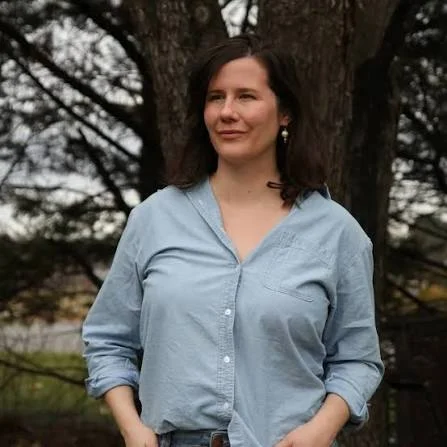
The contest for the West Virginia State Senate in the 15th District, pitting Democratic challenger Elizabeth Ferris against incumbent Senator Darren Thorne, has distilled into a singular, defining issue: data centers. This localized debate, encompassing all of Hampshire County, Morgan County, and the western portion of Berkeley County, mirrors a growing national discourse on the environmental, economic, and social implications of these burgeoning technological hubs.
The Data Center Divide: A Defining Election Issue
At the heart of the 15th District’s political landscape, the proposed proliferation of data centers has ignited a fervent discussion, polarizing communities and shaping campaign platforms. For many residents, the issue transcends typical partisan lines, touching directly on quality of life, environmental stewardship, and the fundamental principle of local governance. Elizabeth Ferris has positioned herself as a staunch advocate for community autonomy and environmental protection, making data centers the cornerstone of her campaign. Conversely, Senator Darren Thorne, whose legislative record includes a pivotal vote on state policy regarding data centers, has maintained a notable silence on the issue, drawing criticism and fueling speculation about his stance.
This district, characterized by its scenic rural landscapes, proximity to the Potomac River watershed, and a strong sense of community identity, finds itself at a critical juncture. The promise of economic development often associated with data centers clashes with deep-seated concerns over resource consumption, particularly water and electricity, potential noise pollution, and the alteration of cherished natural environments. The stark contrast in candidate approaches to this issue underscores its potent ability to sway voters in the upcoming November election.
Understanding House Bill 214: Stripping Local Control
The intensity of the data center debate in West Virginia, and specifically within the 15th District, is largely a direct consequence of House Bill 214. Passed in 2025, this legislation fundamentally reshaped the regulatory landscape for data center development across the state. Uniquely among U.S. states, HB 214 effectively stripped local municipalities and counties of their inherent authority to challenge, regulate, or even meaningfully influence the establishment of data centers within their communities. Prior to this bill, local planning commissions and county commissions typically held significant sway over zoning, land use permits, and environmental impact assessments, providing a mechanism for community input and local control.
Under the provisions of HB 214, a substantial portion—70%—of the revenue generated by these centers is directed back to Charleston, the state capital, rather than remaining predominantly within the host localities. This revenue allocation further diminishes the direct financial benefits for the communities bearing the brunt of the data centers’ operational impacts, creating a perceived imbalance between local burden and state-level gain. The stated legislative intent behind HB 214 was to streamline the development process, attract high-tech investment, and diversify West Virginia’s economy, potentially creating new jobs and tax revenue. Proponents argued that a uniform state-level approach would reduce red tape and make West Virginia more competitive in attracting these large-scale technology investments. However, critics, including Ferris, contend that this approach sacrifices local democratic principles and environmental safeguards for the sake of state-driven economic initiatives, often without adequate consideration for localized consequences.
Public Opinion and Local Sentiment: A Red-Hot Issue
The concerns voiced within the 15th District are not isolated; they resonate with a broader national sentiment. A recent Gallup poll revealed that a significant majority of Americans, 71%, actively oppose the construction of AI data centers in their immediate areas, with only a scant 7% strongly favoring such projects. This widespread apprehension highlights a growing public awareness of the externalities associated with these facilities.
In the 15th Senatorial District, this national trend manifests as a "red-hot" local issue. The concerns are multifaceted and deeply personal for residents:
- Water Consumption: Data centers, particularly those supporting artificial intelligence, require immense quantities of water for cooling server racks. In a region reliant on groundwater and sensitive river systems like the Potomac, this raises fears of aquifer depletion, strain on municipal water supplies, and potential impacts on aquatic ecosystems.
- Energy Demands: These facilities are voracious consumers of electricity, often requiring dedicated power substations and placing significant strain on local and regional grids. Residents worry about the potential for increased electricity rates and the carbon footprint associated with powering these energy-intensive operations.
- Noise Pollution: The constant hum of cooling fans and other operational machinery can be a significant source of noise pollution, particularly in quiet, rural communities, impacting quality of life and property values.
- Land Use and Aesthetic Impact: Data centers are typically large, industrial-scale facilities, often requiring substantial land parcels. Their construction can transform rural landscapes, altering the aesthetic character of communities and potentially impacting tourism, a vital industry in parts of the 15th District.
- Limited Local Economic Benefit: While data centers can provide a few high-tech jobs, they are often highly automated, and their overall employment impact on local economies can be relatively modest compared to their resource demands. Furthermore, the revenue-sharing model under HB 214 means a smaller slice of the tax pie remains locally.
Evidence of this strong local opposition emerged clearly at the Morgan Messenger candidate forum held in Berkeley Springs earlier this year. During the forum, candidates from both Republican and Democratic parties expressed opposition to the current data center policies, reflecting the widespread community concern. Senator Thorne, however, remained conspicuously silent on the issue, a stance that has since become a focal point of his challenger’s campaign.
Candidate Stances and Campaign Strategies
Elizabeth Ferris: Championing Local Voices
Elizabeth Ferris has made the restoration of local control over data center development the bedrock of her campaign. Her platform directly challenges the provisions of HB 214, advocating for policies that would empower communities to make decisions regarding land use, environmental protections, and the allocation of revenues from such projects. On her campaign website, Ferris states unequivocally, "In 2025, my opponent voted with the super majority in Charleston to strip local communities of all decision-making power when it comes to AI data centers and to send 70% of the revenue from these centers back to Charleston." She pledges, "I will vote to restore community voices, keep data centers away from neighborhoods, and enforce strong protections for our water, electricity rates, and quality of life."
Ferris’s political identity as a "lifelong Democrat" who believes the party should represent "working folks" has allowed her to forge an unlikely alliance across the political spectrum on this issue. Her appearance on the local conservative radio talk show, "Eastern Panhandle Talk," earlier this year demonstrated her ability to connect with voters beyond traditional party lines. Advocating for local control, a principle often cherished by conservatives, she garnered praise from the hosts, Rob Mario, John Gilstrap, and Bill Stubblefield. Gilstrap notably remarked, "The things you have spoken about today don’t seem very left wing to me. There are only three Democrats in the West Virginia Senate. Why not run as a Republican?" Ferris’s response underscored her consistent ideological commitment: "I’m a lifelong Democrat. My grandmother on my dad’s side – she was born to a house painter in South Dakota. And when I grew up, I saw that it was the Democratic Party that was the working folks’ party. Now that has shifted. But I would like to see it shift back." This exchange highlights the potential for the data center issue to transcend partisan divides, uniting voters around shared concerns for local autonomy and resource protection.
Darren Thorne: A Vote and Silence
In stark contrast to Ferris’s outspoken position, Senator Darren Thorne has adopted a strategy of silence regarding the data center controversy. His critical vote in favor of HB 214 in 2025 is a matter of public record, placing him directly at odds with the sentiments expressed by a significant portion of his constituency. Despite attempts to elicit comment for this article, Senator Thorne did not return calls, leaving questions about his current perspective on the legislation unanswered. Specifically, inquiries regarding whether he regrets his vote or would vote for the bill again given current public sentiment went unaddressed.
This lack of engagement on a pressing local issue contrasts with his willingness to discuss other community matters. For instance, earlier this year, Thorne reportedly engaged happily when contacted about the condition of bunkers at the golf course at Cacapon State Park. His communicative approach on such localized, albeit less contentious, issues makes his silence on data centers all the more conspicuous. Political analysts suggest several potential reasons for an incumbent’s silence on a controversial issue: it could stem from a desire to avoid alienating a segment of voters, a strategic decision to avoid drawing further attention to a politically vulnerable vote, or a steadfast commitment to the economic development strategy embodied by HB 214, even if unpopular locally. Regardless of the underlying motive, Thorne’s reticence on data centers has provided Ferris with a clear line of attack, framing the election as a referendum on local control versus state overreach.
The Broader Context: West Virginia’s Economic Development vs. Environmental Concerns
The data center debate in West Virginia is a microcosm of a larger national challenge: how states balance the imperative for economic development and diversification with the preservation of environmental quality and local autonomy. For West Virginia, a state historically reliant on extractive industries, attracting high-tech industries like data centers represents a strategy to modernize its economy and create new opportunities. State leaders often highlight the potential for job creation, albeit limited, and the prestige associated with hosting major technology infrastructure.
However, West Virginia’s rich natural resources—its mountains, forests, and waterways—are also central to its identity and appeal, including a growing tourism sector. The 15th District, in particular, benefits from its natural beauty and recreational opportunities, making residents acutely sensitive to industrial development that could degrade these assets. The state’s unique landscape and hydrology, including the Potomac River basin, mean that high water and energy demands from data centers could have disproportionately significant impacts. The ongoing dialogue in West Virginia reflects a broader national tension: whether to prioritize rapid industrial growth driven by state-level incentives or to empower local communities to shape their own development pathways with an emphasis on sustainability and quality of life.
National Trends in Data Center Proliferation
The increasing demand for data centers is a global phenomenon, driven by the explosive growth of cloud computing, artificial intelligence, streaming services, and the Internet of Things (IoT). Companies like Amazon Web Services, Microsoft Azure, and Google Cloud are continually expanding their physical infrastructure to meet these escalating computational needs. AI, in particular, requires massive processing power and sophisticated cooling systems, making AI-focused data centers even more resource-intensive than their predecessors.
This relentless demand has led to a fierce competition among states and regions to attract these facilities, often through substantial tax incentives, streamlined permitting processes, and promises of reliable, affordable power. States like Virginia, Arizona, and Oregon have become major data center hubs, but not without significant local pushback over water scarcity, energy strain, and environmental concerns. The West Virginia situation, with HB 214, represents an aggressive attempt to secure a share of this booming industry, but it also highlights the potential pitfalls when state-level ambitions override local democratic processes and environmental considerations. The national conversation increasingly focuses on the sustainability of this growth, exploring innovations in cooling technologies, renewable energy integration, and more equitable revenue-sharing models.
Implications for the 15th District and Beyond
The outcome of the 15th District State Senate race in November will have profound implications, not only for the communities of Hampshire, Morgan, and Berkeley counties but also for the broader political landscape of West Virginia. For the residents of the 15th District, the election represents a direct opportunity to affirm or reject the state’s current approach to data center development. A victory for Ferris would be a clear mandate for restoring local control, potentially paving the way for future legislative efforts to amend or repeal HB 214. This could empower communities to implement their own zoning ordinances, conduct rigorous environmental impact studies, and negotiate community benefit agreements that ensure local residents truly benefit from any industrial development.
Conversely, a victory for Thorne might be interpreted as an endorsement of the existing state-centric policy, or at least an indication that voters prioritize other issues. However, even if Thorne retains his seat, the intensity of the data center debate ensures that the issue will remain a prominent feature of legislative discussions in Charleston. The race serves as a bellwether, demonstrating how a single, highly localized issue, when framed around fundamental principles like local autonomy and environmental protection, can galvanize public opinion and potentially reshape electoral outcomes, even in districts with established political leanings. It underscores the growing power of grassroots movements to influence policy, particularly when directly impacting quality of life and community identity.
In conclusion, the West Virginia State Senate race in the 15th District is more than just a contest between two candidates; it is a critical referendum on the future of West Virginia’s development strategy. The debate over data centers embodies the tension between state-led economic ambitions and the cherished values of local self-determination and environmental stewardship, making it one of the most compelling and closely watched elections of the cycle.




 Yuyun Lusiyani
 Joko Widodo
 Eva Lovia
 Pevita Pearce
 admin
admin
 Lina Irawan