Pevita Pearce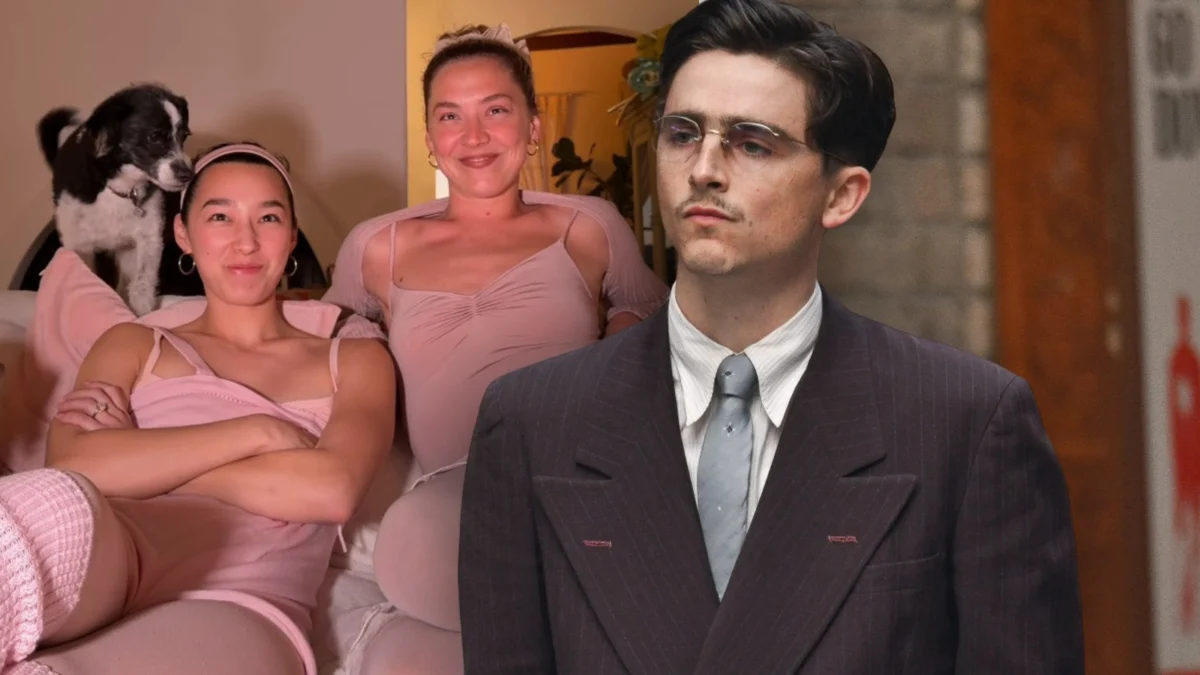
The 98th Academy Awards, held at the Dolby Theatre in Los Angeles, was expected to be a career-defining night for Timothée Chalamet, yet it has instead become a focal point for a heated cultural debate regarding the intersection of celebrity influence and the performing arts. While Chalamet entered the season as a heavy favorite for his transformative portrayal of professional table tennis player Marty Reisman in the Josh Safdie-directed biopic Marty Supreme, the evening concluded with a surprising victory for Michael B. Jordan. Jordan’s performance in the supernatural thriller Sinners, directed by Ryan Coogler, secured him the Best Actor trophy, leaving Chalamet and the Marty Supreme production team without a single win across their multiple nominations.
The fallout from the ceremony has been compounded by a viral social media backlash originating from the global dance community. The tension stems from a pre-Oscars interview Chalamet conducted with Matthew McConaughey, during which the actor allegedly remarked that "no one cares" about opera or ballet in the modern era. These comments, intended perhaps as a commentary on the niche status of certain classical arts compared to mainstream cinema, were met with swift and organized condemnation from professionals and enthusiasts within the high-arts sectors.
The Viral Roast: Luna Montana and the Dance Community’s Response
The most prominent reaction came from professional ballerina and social media influencer Luna Montana. Shortly after Michael B. Jordan was announced as the winner of the Best Actor category, Montana uploaded a video to her social media platforms that has since garnered over 130,000 likes and thousands of shares. In the footage, Montana and a colleague are seen dressed in full ballet attire—tutus and pointe shoes—watching the telecast with focused intensity.
As the presenter read Jordan’s name, the two dancers exchanged a pointed, knowing smile before breaking into enthusiastic applause and laughter. The caption accompanying the video, "Looks like ‘nobody cares’ about your ping pong movie," directly referenced Chalamet’s earlier comments while taking a jab at the subject matter of Marty Supreme. The video became a rallying point for the arts community, with high-profile figures such as Misty Copeland being cited in the comments as symbols of the "ballet revenge" that supposedly took place on the Oscar stage.
Public sentiment in the comments section reflected a mix of glee and vindication. One user noted the irony of Chalamet having to watch a live ballet performance during the ceremony’s entertainment segments, while others argued that the actor’s dismissal of classical arts showed a lack of awareness regarding the discipline and athleticism required for such crafts—traits that are often mirrored in the "method" acting Chalamet himself employs.
Official Reactions and Ceremony Commentary
The controversy was not limited to social media; it permeated the actual Oscar telecast. Host Conan O’Brien, known for his topical and often biting monologues, addressed the elephant in the room early in the evening. "Security is extremely tight tonight," O’Brien told the star-studded audience. "I’m told there are concerns about attacks from both the opera and ballet communities." The joke landed with a mixture of laughter and audible gasps, signaling that the industry was well aware of the friction Chalamet’s comments had caused.
Furthermore, during the presentation of the short film categories, the "ballet vs. cinema" narrative resurfaced. Alexandre Singh, the director of the Live-Action Short winner Two People Exchanging Saliva, used his acceptance speech to advocate for the unity of the arts. "We can change society through art, through creativity, through theater and ballet," Singh stated. The specific inclusion of "ballet" was widely interpreted as a direct rebuttal to Chalamet, drawing significant applause from the back rows of the theater where many technical and artistic branch members were seated.
Chronology of the Controversy and Voting Timeline
To understand the potential impact of the controversy on the final Oscar results, it is necessary to examine the timeline of the 98th Academy Awards voting period. The Academy of Motion Picture Arts and Sciences (AMPAS) follows a strict schedule for its balloting process:
- January 2026: Official nominations are announced. Timothée Chalamet is listed as a frontrunner for Best Actor, with Marty Supreme also receiving nods for Best Director and Best Original Screenplay.
- February 24, 2026: The interview featuring Chalamet and Matthew McConaughey is published. The "no one cares about ballet" quote begins to circulate on niche arts blogs and Twitter (X).
- February 26, 2026: Final Oscar voting opens for the nearly 10,000 members of the Academy.
- March 5, 2026 (5:00 PM PT): Final Oscar voting closes.
- March 5–12, 2026: The "media storm" regarding the ballet comments reaches a fever pitch, transitioning from arts-centric circles to mainstream entertainment news outlets.
- March 15, 2026: The 98th Academy Awards ceremony takes place.
Analysts are divided on whether the controversy influenced the outcome. One school of thought suggests that since the majority of the "backlash" went viral only after the voting had officially closed, the results were based purely on the merits of the performances. Michael B. Jordan’s turn in Sinners was a powerhouse performance that resonated with the Actors Branch, which makes up the largest voting bloc of the Academy.
However, others argue that Academy voters—many of whom are older and have deep ties to traditional theater and classical arts—may have been aware of the comments during the active voting window (Feb 26 – March 5). In a preferential ballot system where margins can be razor-thin, a shift of even a few hundred votes due to a perceived lack of humility or respect for the broader artistic community can be decisive.
Supporting Data: The Competitive Landscape of Best Actor
The 2026 Best Actor race was one of the most competitive in recent memory. According to industry tracking data from Variety and The Hollywood Reporter, Chalamet held a slight lead in the "Gold Derby" odds for most of February. His portrayal of Marty Reisman was lauded for its idiosyncratic energy and technical precision, marking a departure from his previous roles in Dune and Wonka.
In contrast, Michael B. Jordan’s victory represents a significant milestone. Jordan had previously been overlooked for roles in Creed and Black Panther, and his win for Sinners—a film that combined high-concept horror with deep character study—was seen as a "career achievement" win as much as a reward for the specific role. Data suggests that Sinners had a stronger "campaign momentum" in the final weeks, bolstered by Ryan Coogler’s visibility and the film’s box office success, which exceeded $400 million globally.
Marty Supreme, while a critical darling, struggled to find the same level of commercial resonance. Produced by A24, the film’s niche focus on the world of 1950s professional ping pong may have worked against it when compared to the visceral, broad-appeal narrative of Sinners.
Broader Impact and Implications for Chalamet’s Career
The "ballet-gate" incident serves as a cautionary tale for modern A-list celebrities. In an era where social media can amplify a single sentence into a global controversy within hours, the perceived "elitism" of Hollywood stars is under constant scrutiny. For Chalamet, who has long been positioned as the "Golden Boy" of his generation, this represents one of his first significant public relations hurdles.
The incident also highlights the protective nature of the classical arts community. As government funding for the arts continues to be a point of political contention, practitioners of ballet and opera are increasingly sensitive to the narrative that their mediums are "obsolete." When a figure with Chalamet’s reach—boasting tens of millions of followers across platforms—dismisses these art forms, it is viewed not just as an opinion, but as a threat to the cultural capital of those institutions.
Moving forward, industry insiders suggest that Chalamet may need to engage in a "reconciliation tour" with the arts community. This could involve supporting arts education initiatives or clarifying his comments to emphasize that his intent was to discuss the challenges of marketing classical arts to Gen Z, rather than a dismissal of the art forms themselves.
Other Notable Events of the 98th Academy Awards
The Chalamet snub was not the only point of contention during the 2026 ceremony. The evening was marked by several other notable controversies that contributed to a sense of turbulence within the Academy:
- KPop Demon Hunters Speech: The winners for Best Original Song, the team behind the hit KPop Demon Hunters, had their acceptance speech abruptly cut off by the orchestra. This led to a massive social media outcry from the K-pop fandom, accusing the Academy of cultural insensitivity.
- Geoff Keighley’s Criticism: Video game industry veteran Geoff Keighley publicly slammed the Academy for the omission of his father from the "In Memoriam" segment. Keighley’s father had been a respected producer with ties to both the film and television industries, and the snub was cited as evidence of the Academy’s increasingly fragmented relationship with industry veterans.
- Sean Penn’s Absence: Veteran actor Sean Penn notably snubbed the ceremony, choosing instead to visit Ukraine for a documentary project. His absence was seen as a protest against what he characterized as the "frivolity" of Hollywood in the face of global conflict.
As the dust settles on the 2026 Oscars, the narrative surrounding Timothée Chalamet remains a complex mix of professional disappointment and cultural friction. While his talent remains unquestioned, the events of the past week have demonstrated that in the high-stakes world of the Academy Awards, what an actor says off-camera can sometimes be just as impactful as what they do on it. For now, the "ping pong movie" will go down in history as a critical success that was ultimately eclipsed by a few ill-timed words and a very determined community of dancers.



 Jia Lissa
 Yuyun Lusiyani
 Joko Widodo
 Eva Lovia