
 Lina Irawan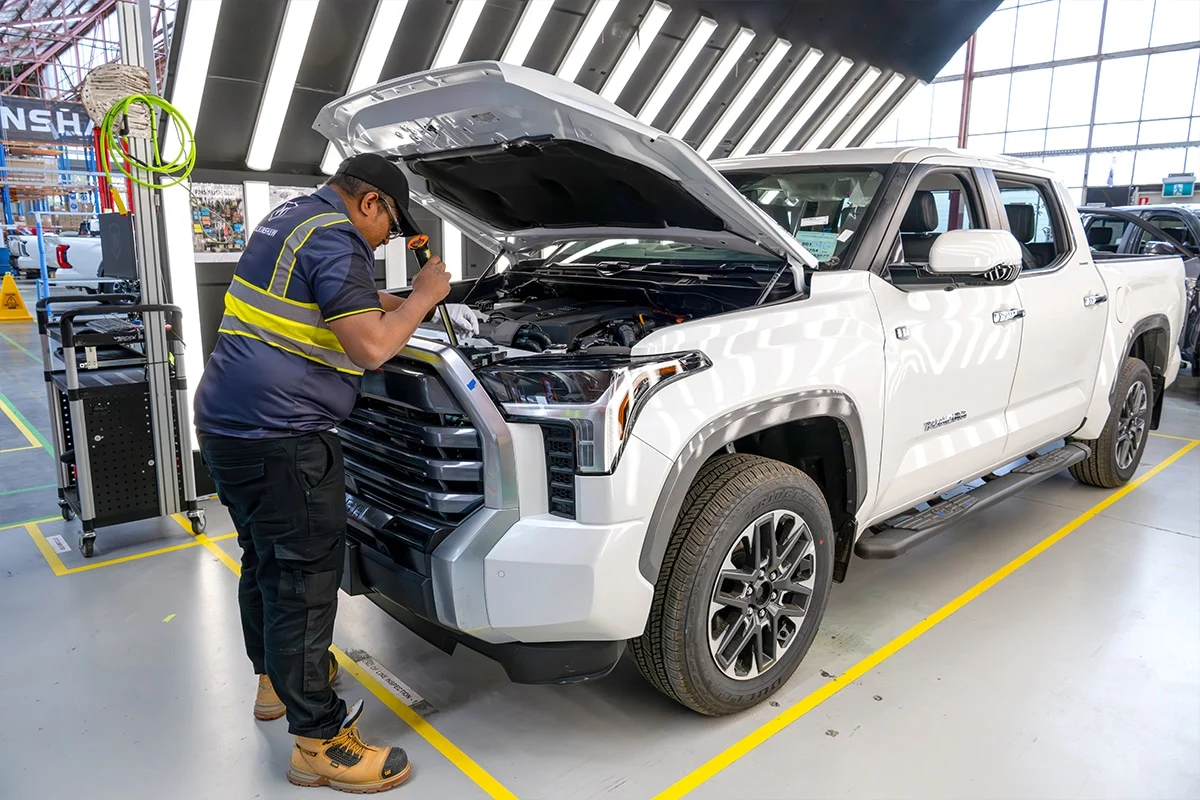
In an era defined by artificial intelligence, cloud computing, and ultra-precise robotic manufacturing, the automotive industry generally relies on digital sensors and non-invasive scanning to diagnose mechanical failures. However, Toyota Motor Corporation has recently introduced a diagnostic procedure for a major engine recall that blends rudimentary "percussive maintenance" with sophisticated frequency analytics. To address a manufacturing defect involving stray metal shavings in its 3.4-liter twin-turbo V6 engines, Toyota has instructed dealership technicians to utilize a certified 250-gram plastic mallet to strike the engine block, capturing the resulting acoustic data for cloud-based analysis.
This unconventional approach is the centerpiece of a massive recovery effort involving more than 100,000 vehicles in the United States and thousands more globally, including the Toyota Tundra pickup truck and the Lexus LX600 luxury SUV. The recall, which targets the V35A-FTS engine, aims to identify powerplants at risk of catastrophic failure due to internal contamination. While the image of a mechanic hitting a high-performance engine with a hammer may seem archaic, the underlying science represents a highly efficient application of acoustic resonance testing.
The Scope of the Recall: Models and Manufacturing Origins
The recall, officially designated by the National Highway Traffic Safety Administration (NHTSA) as Recall No. 24V-387, primarily affects 2022-2023 model year Toyota Tundras and Lexus LX600s. In total, approximately 102,000 vehicles are covered by the initial North American filing, though the implications extend to other markets where these vehicles are sold, including Australia, where the Tundra has recently seen a significant local conversion and launch program.
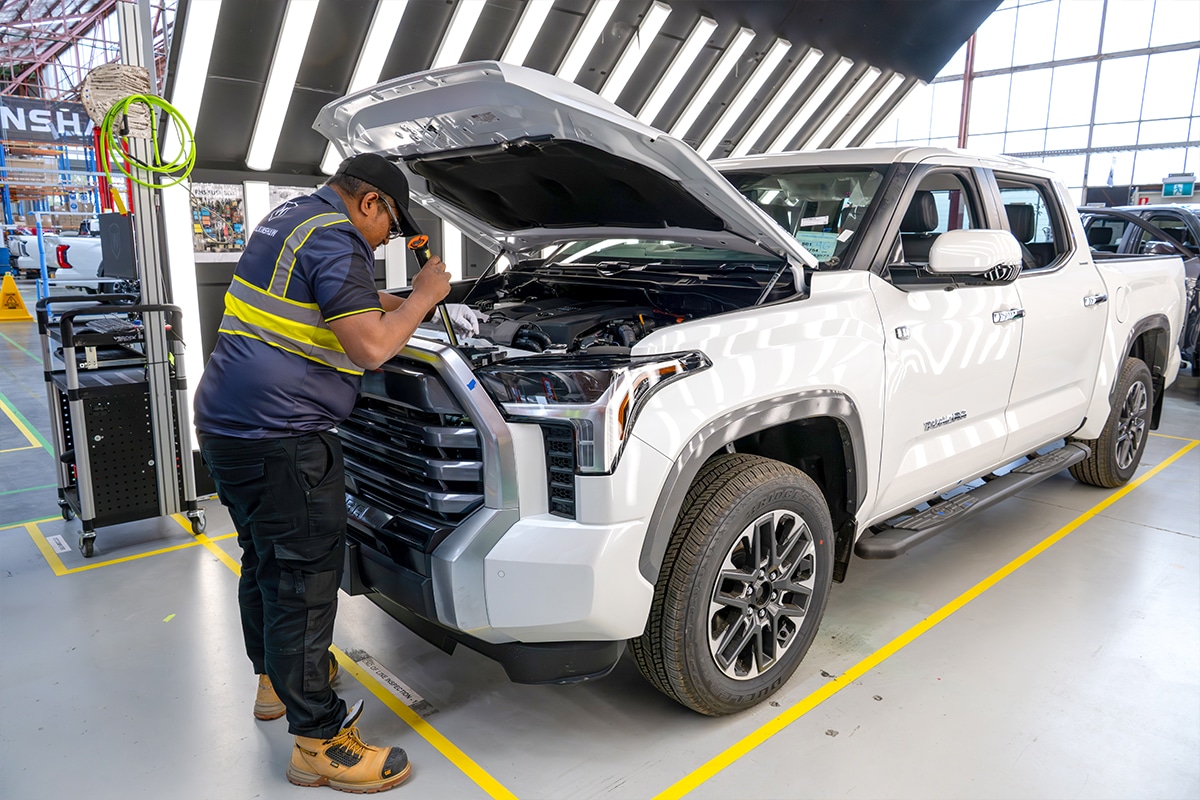
The root cause of the issue has been traced back to the engine manufacturing process at Toyota’s plant in Alabama. According to internal investigations, machining debris—specifically small metal shavings—was not properly cleared from the engine block during the production of the V35A-FTS V6. These shavings can eventually migrate into the engine’s main bearings. If the debris becomes embedded in the number-one main bearing, it can lead to increased friction, knocking, engine vibration, and, in the most severe cases, a total loss of motive power while the vehicle is in motion. Such a failure at highway speeds presents a significant safety risk, which prompted the federal safety recall.
The "Mallet Test": Merging Primitive Force with Acoustic Science
Rather than opting for a blanket replacement of over 100,000 engines—a logistical and financial undertaking that would cost billions of dollars—Toyota developed a diagnostic routine intended to isolate only the contaminated units. The procedure, uncovered by industry analysts at Pickup Truck + SUV Talk, involves a specific set of instructions that have quickly become a point of fascination within the automotive community.
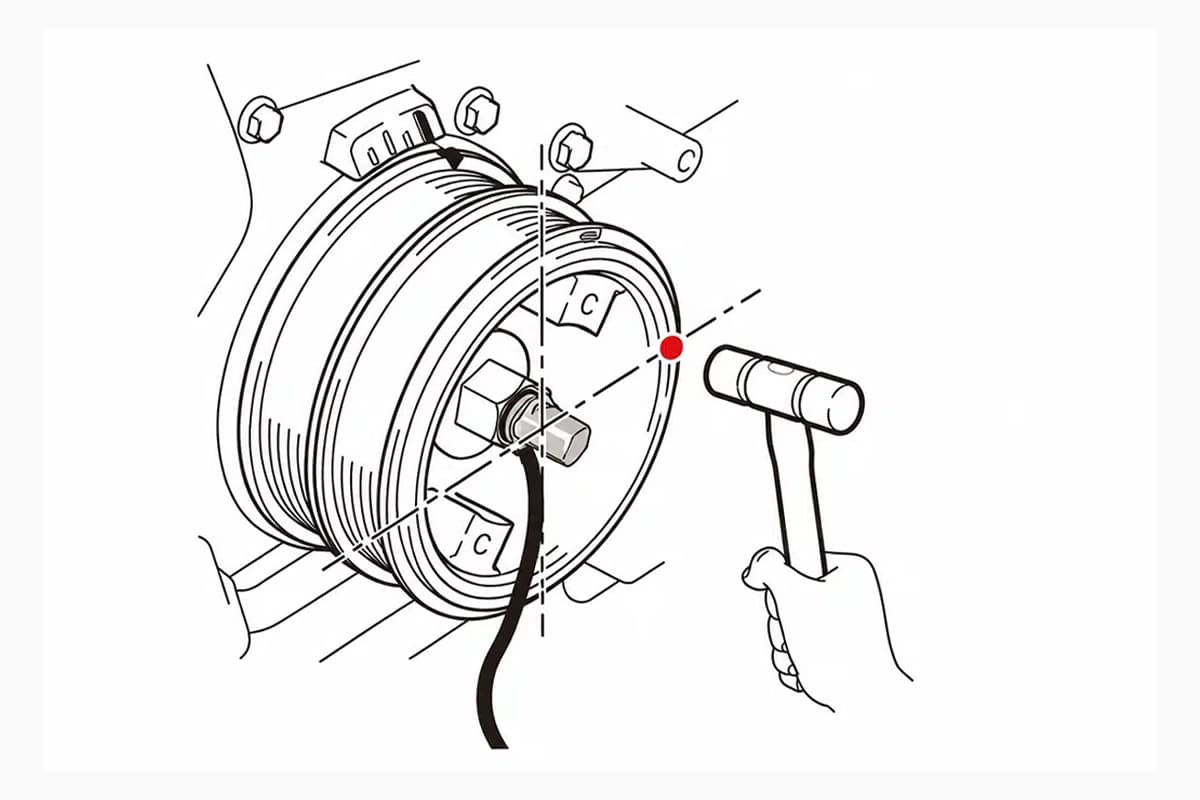
Service technicians are required to use a "certified" 250-gram plastic mallet. The process is not a random application of force; it is a controlled diagnostic strike. The technician must hit the engine block or a designated mounting point exactly three times. During these strikes, a high-sensitivity accelerometer is attached to the engine. This device captures the vibrations and sound waves generated by the mallet strikes.
The science behind this is known as acoustic resonance analysis. A clean, structurally sound engine bearing has a specific "acoustic signature" or resonant frequency. When a bearing is compromised by foreign objects like metal shavings, or if the bearing has already begun to suffer microscopic damage, the frequency of the vibration changes. The sound "rings" differently, much like a cracked bell sounds different from a whole one.
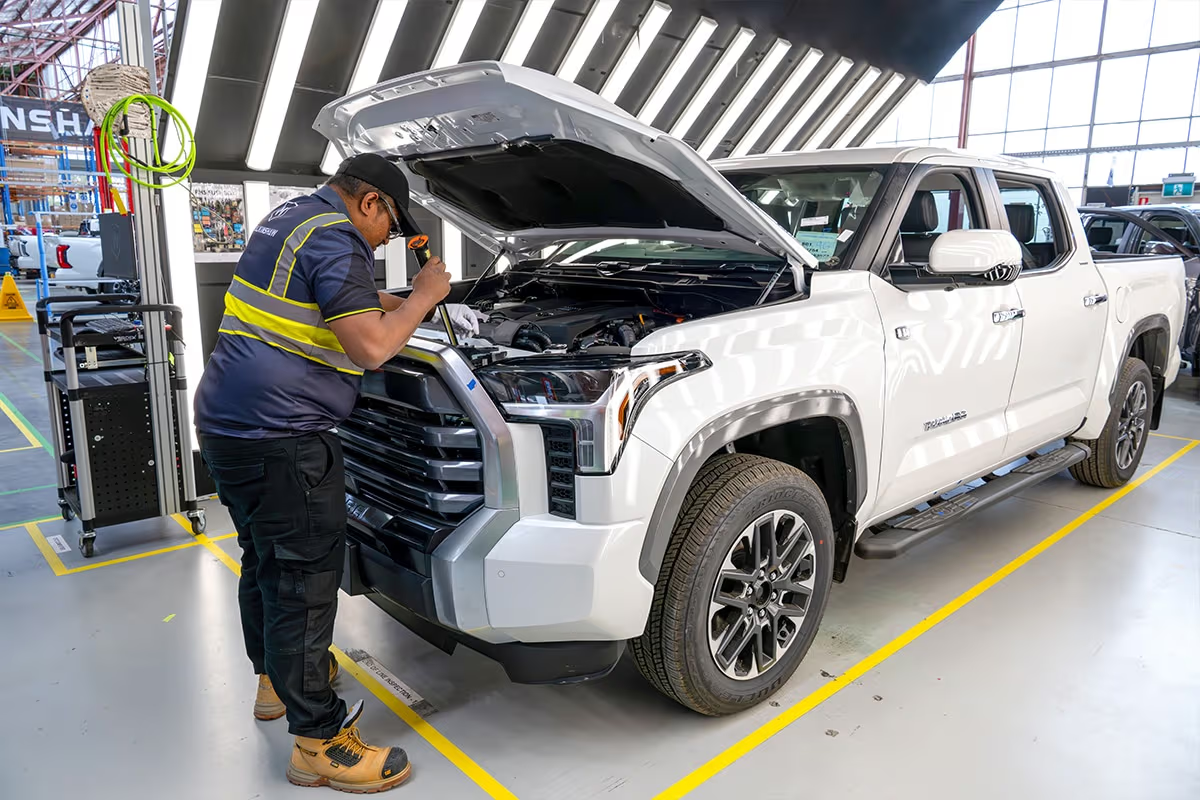
Once the three strikes are completed, the technician uploads the recorded data file to a Toyota cloud server. An algorithm then compares the vehicle’s specific acoustic signature against a database of known "healthy" and "failed" engine profiles. Within minutes, the system returns a verdict: a pass or a fail.
Chronology of the V35A-FTS Engine Issues
The path to this unique diagnostic solution began shortly after the launch of the current-generation Tundra. The transition from the legendary, naturally aspirated 5.7-liter V8 to the twin-turbocharged 3.4-liter V6 was already a point of contention for Toyota purists, making the subsequent reliability issues particularly sensitive for the brand’s reputation.
- Late 2021 – Early 2022: The new V35A-FTS engine enters mass production for the redesigned Tundra and Lexus LX600.
- 2023: Reports begin to surface in consumer forums and dealership service bays regarding "knocking" sounds and sudden engine stalls in low-mileage vehicles.
- May 2024: Toyota officially files a recall notice with the NHTSA, acknowledging that manufacturing debris may be present in the engines. At this stage, the company advises that a remedy is under development.
- July 2024: Toyota announces that the "remedy" for confirmed failures will be a full engine assembly replacement. However, the challenge remains how to identify which engines need replacement without a full teardown.
- August 2024: The acoustic mallet test is rolled out to North American dealerships as the primary screening tool.
Economic and Logistical Implications
The financial stakes of this recall are monumental. A complete engine replacement for a vehicle like the Tundra or Lexus LX600 is estimated to cost between $15,000 and $25,000 per unit, including labor and parts. If Toyota were forced to replace all 102,000 engines in the initial recall group, the cost could exceed $2 billion.
By utilizing the mallet test, Toyota can significantly reduce this expenditure. If the acoustic test can accurately clear 90% of the recalled vehicles, the company saves billions while still addressing the high-risk units. However, this strategy is not without its critics. Some owners of the Tundra—which retails for approximately $155,990 AUD in flagship trims—have expressed concern that a "hammer test" may not be sensitive enough to detect debris that has not yet caused measurable bearing wear but could still cause a failure after the warranty period expires.

To mitigate these concerns, Toyota has offered extended warranties on the engine components for affected vehicles and has committed to a full "long block" replacement for any engine that fails the acoustic test. This means owners receive a brand-new engine from the factory, rather than a refurbished unit or a repair of their existing block.
Industry Reaction and the "Percussive" Precedent
While the "mallet test" has been mocked on social media as "caveman engineering," professional engineers have defended the logic. Acoustic testing is a staple in the aerospace and rail industries, where it is used to detect microscopic cracks in turbine blades or train wheels. The use of a plastic mallet provides a consistent, repeatable "impulse" to the system, allowing the software to analyze how that energy dissipates through the metal.
"Percussive maintenance" has a long, often humorous history in mechanical repair, but this marks one of the few times a major global manufacturer has codified it into an official, cloud-connected service bulletin. It represents a pragmatic solution to a complex manufacturing error, allowing Toyota to maintain its "Just-in-Time" efficiency even when dealing with a massive "Just-in-Case" safety scenario.
Brand Reputation and the Road Ahead
For decades, Toyota’s brand identity has been synonymous with the "Toyota Production System" and the concept of Kaizen (continuous improvement). The Tundra and LandCruiser platforms are the bedrock of this reputation. A failure of this magnitude on their flagship V6 engine is a significant blow to the "unbreakable" image.
However, the clinical and transparent nature of the recall response—using high-tech data analysis to verify the results of the mallet strikes—is a classic Toyota move. By taking responsibility and replacing entire engines rather than attempting "patch" repairs, the company is attempting to preserve customer loyalty.
As of late 2024, Toyota dealerships are processing thousands of vehicles per week using this method. For the owners of the affected Tundras and Lexus LX600s, the sound of a plastic mallet striking their engine may be jarring, but it is currently the most advanced line of defense against a catastrophic mechanical failure. The success of this program will likely determine the future of the V35A-FTS engine’s legacy and whether Toyota can quickly put this machining error in the rearview mirror.
For now, the automotive world watches as one of the world’s most advanced manufacturers proves that sometimes, the best way to talk to a computer is with a hammer.


 Yuyun Lusiyani
 Joko Widodo
 Jia Lissa
 Pevita Pearce
 admin
admin
