
 Lina Irawan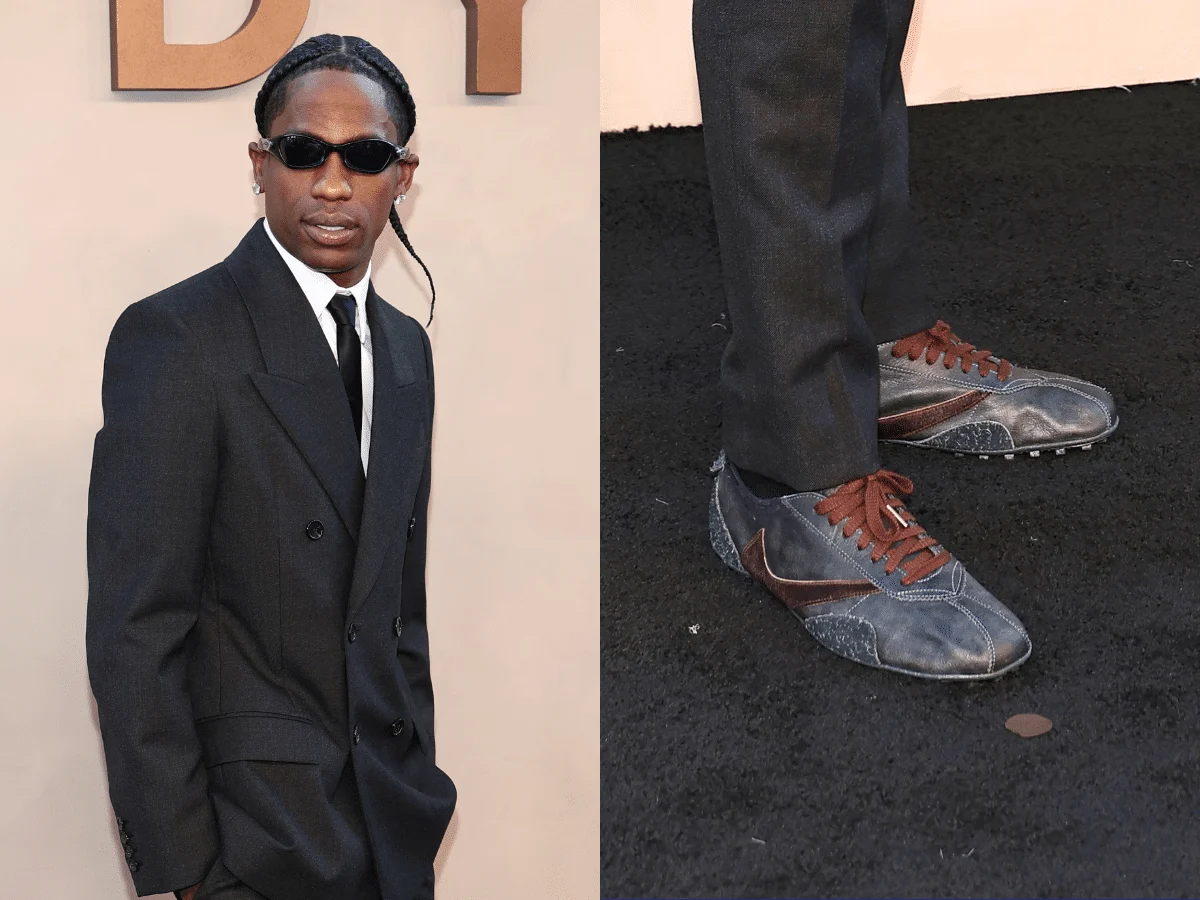
The intersection of high cinema and global streetwear reached a new milestone this week at the New York City premiere of Christopher Nolan’s latest cinematic effort, The Odyssey. While the film itself drew significant attention for its casting choices—most notably the inclusion of multi-platinum recording artist Travis Scott in the role of a bard—the red carpet provided a first look at a significant development in the footwear industry. Scott arrived at the event wearing a previously unseen iteration of the Nike Moon Shoe, a silhouette that predates the modern era of the brand and carries profound historical weight within the sporting world. Dressed in a black double-breasted suit, the artist utilized the high-profile platform to showcase a collaboration that appears to merge the heritage of Nike’s 1970s running department with the contemporary aesthetic of his Cactus Jack creative house.
Design Specifications and Aesthetic Overhaul
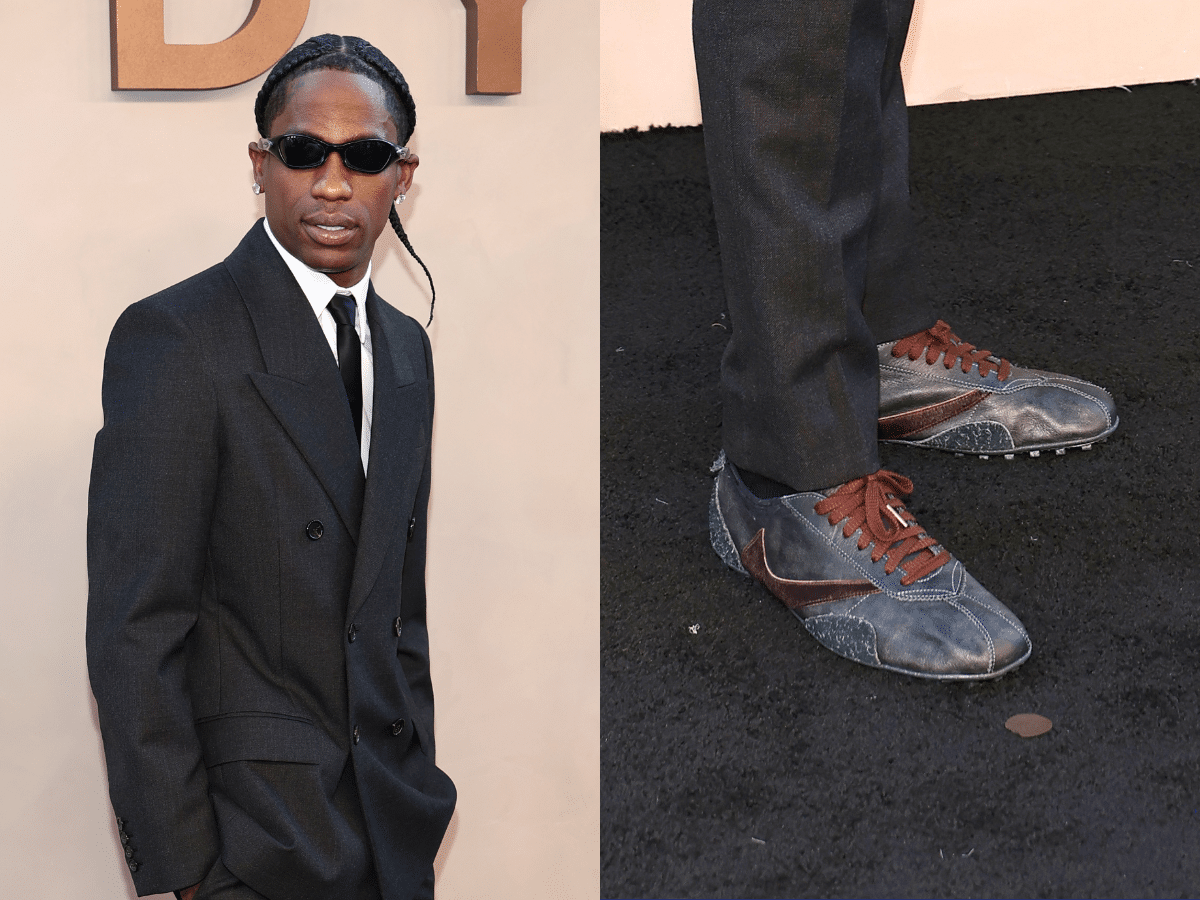
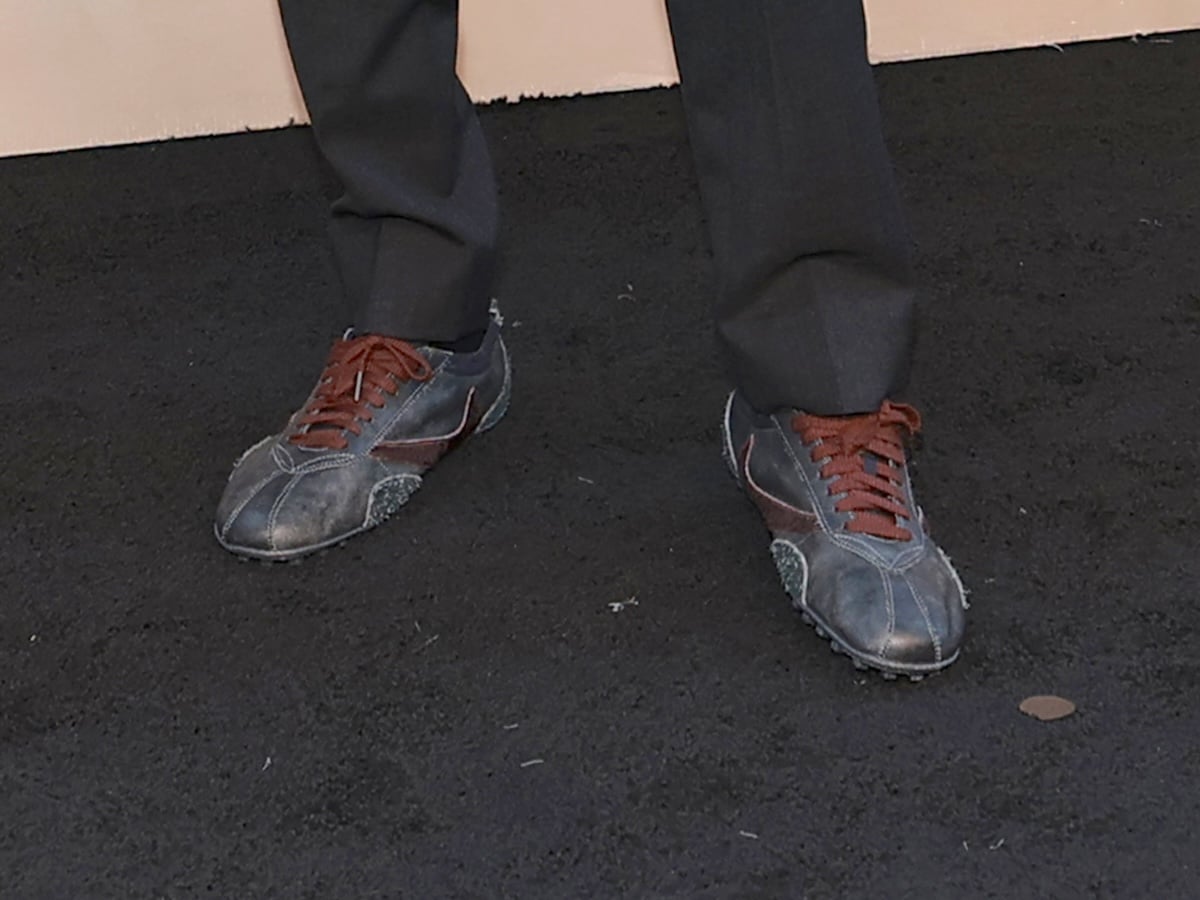
The footwear in question appears to be a heavily modified version of the Nike Moon Shoe, a design originally conceptualized by Nike co-founder Bill Bowerman. While the original 1972 version was defined by its hand-cobbled appearance and utilitarian function, the version worn by Scott features several high-end material upgrades and branding signatures. The upper construction utilizes a combination of washed black leather and high-pile "shaggy" suede, predominantly featured on the toe box and heel counter. The color palette is muted, consisting of deep charcoal and off-black tones, contrasted by burgundy laces and matching burgundy accents on the heel tab.
A defining characteristic of this unreleased pair is the inclusion of the "Reverse Swoosh" on the lateral side. This design choice has become a hallmark of Travis Scott’s collaborations with Nike and Jordan Brand, first appearing on his Air Jordan 1 High OG in 2019. The medial side maintains the traditional Swoosh orientation, creating an asymmetrical visual profile. Additional details include contrast white stitching throughout the paneling, giving the shoe a vintage, "deconstructed" appearance reminiscent of early 20th-century athletic spikes or traditional baseball footwear. The silhouette remains low-profile, adhering to the narrow forefoot and thin midsole architecture that defined early track shoes.
The Historical Context of the Nike Moon Shoe
To understand the significance of this collaboration, one must look back to the origins of the Nike brand. The Moon Shoe holds a singular place in sneaker history as one of the first shoes designed under the Nike name. In 1972, Bill Bowerman, the legendary track coach and Nike co-founder, famously used his wife’s waffle iron to create a new type of rubber sole. This "waffle sole" provided superior traction on various surfaces and became the foundation for the Nike Waffle Racer and the subsequent global expansion of the company.
Only about 12 pairs of the original 1972 Moon Shoes were hand-made for runners at the Olympic Trials. Because of their scarcity and historical importance, original pairs have become some of the most expensive sneakers ever sold at auction. In 2019, an unworn pair of the original Moon Shoes sold at a Sotheby’s auction for $437,500, setting a then-record for the most expensive sneakers in history. By selecting this specific model, Scott and Nike are signaling a shift away from the basketball-centric hype of the Air Jordan line and toward a "heritage-first" approach that highlights the brand’s origins in track and field.
Chronology of Travis Scott’s Footwear Influence
The appearance of the Moon Shoe at The Odyssey premiere is the latest chapter in a prolific partnership between Travis Scott and Nike, Inc. that began in 2017. The timeline of this collaboration reveals a strategic evolution of design:
- 2017–2018: Early collaborations focused on the Air Force 1 and the Air Jordan 4, utilizing "Cactus Jack" branding and interchangeable patches.
- 2019: The release of the Air Jordan 1 "Mocha" introduced the reverse Swoosh, a design element that would go on to redefine the secondary market for sneakers.
- 2020–2022: Scott expanded into the Nike SB Dunk and the Air Max 270 React, experimenting with outdoor-inspired materials and "aged" midsoles.
- 2023–2024: The partnership shifted toward more niche silhouettes, including the Nike Mac Attack (the signature shoe of tennis legend John McEnroe) and the Jumpman Jack, Scott’s first signature shoe with Jordan Brand.
- 2025–2026: The pivot toward the Moon Shoe suggests a move into the "terrace" and "low-profile" runner trend that has dominated the fashion landscape over the last 24 months.
This progression indicates that Scott’s design team is increasingly looking toward the Nike archives to revitalize older, often forgotten models, rather than relying solely on the established popularity of the Dunk or the Jordan 1.

Market Trends and the Shift to Low-Profile Silhouettes
The footwear industry is currently undergoing a structural shift in consumer preference. For much of the 2010s, the market was dominated by "maximalist" designs, including the "dad shoe" trend and high-top basketball sneakers. However, recent data from retail analysts suggests a resurgence in "minimalist" and "low-profile" silhouettes. This trend is largely driven by the massive success of the Adidas Samba and Gazelle, as well as the Onitsuka Tiger Mexico 66.
Nike’s decision to allow Scott to rework the Moon Shoe is likely a strategic response to this market shift. The Moon Shoe, with its slim profile and lack of bulky padding, fits perfectly within the current "slim sneaker" aesthetic. While Nike has the Cortez and the Waffle Racer in its permanent catalog, the Travis Scott endorsement provides the necessary cultural capital to compete with the dominance of European "terrace" styles in the luxury and streetwear sectors.
Production and Release Status
Despite the high-visibility debut on the red carpet, neither Nike nor Travis Scott’s representatives have issued a formal statement regarding a retail release. This lack of information is consistent with the "seeding" strategy often employed by Nike, where high-profile athletes or artists wear "samples" months before a public announcement to gauge consumer interest and build digital engagement.
Currently, the Nike Moon Shoe OG—a standard reproduction of the 1972 design—is available through select retailers and the Nike website for approximately $160 AUD ($110 USD). Should the Travis Scott version reach production, industry insiders anticipate a retail price point between $150 and $190 USD, though secondary market valuations would likely exceed $1,000 USD within hours of release, based on previous Cactus Jack performance metrics.
Broader Implications for the Industry
The collaboration serves as a case study in the modern marketing of heritage brands. By placing the shoe at a film premiere for a director as critically acclaimed as Christopher Nolan, Nike is positioning the product not just as athletic gear or streetwear, but as a piece of cultural equipment. This aligns with Nolan’s own reputation for historical accuracy and technical precision, traits that mirror the story of the Moon Shoe’s invention.
Furthermore, the involvement of Scott in a Nolan production suggests a deepening of the ties between the music, film, and fashion industries. This "triple-threat" marketing approach ensures that the product is visible to diverse demographics: cinephiles, music fans, and sneaker collectors.
Conclusion and Future Outlook
The Travis Scott Nike Moon Shoe represents more than just another celebrity sneaker collaboration; it is a calculated homage to the foundation of the world’s largest sportswear company. By taking a silhouette that was once a prototype made in a kitchen and placing it on a global stage in New York City, Nike is bridging the gap between its DIY past and its multi-billion-dollar future.
Whether the shoe will see a general release remains a subject of speculation among industry analysts. However, the design’s success in blending vintage aesthetics with modern branding cues suggests that the appetite for "heritage-plus" products remains high. As the footwear industry continues to move away from oversized silhouettes, the Moon Shoe stands as a testament to the enduring relevance of Bill Bowerman’s original vision, albeit viewed through the contemporary lens of one of the most influential figures in modern pop culture. For now, the sneaker remains a "Player Exclusive" or "Friends and Family" sample, but its impact on the cultural conversation is already measurable, cementing the Moon Shoe’s place in the 21st-century fashion canon.


 Jia Lissa
 Yuyun Lusiyani
 Joko Widodo
 Eva Lovia

 Pevita Pearce