
 Jia Lissa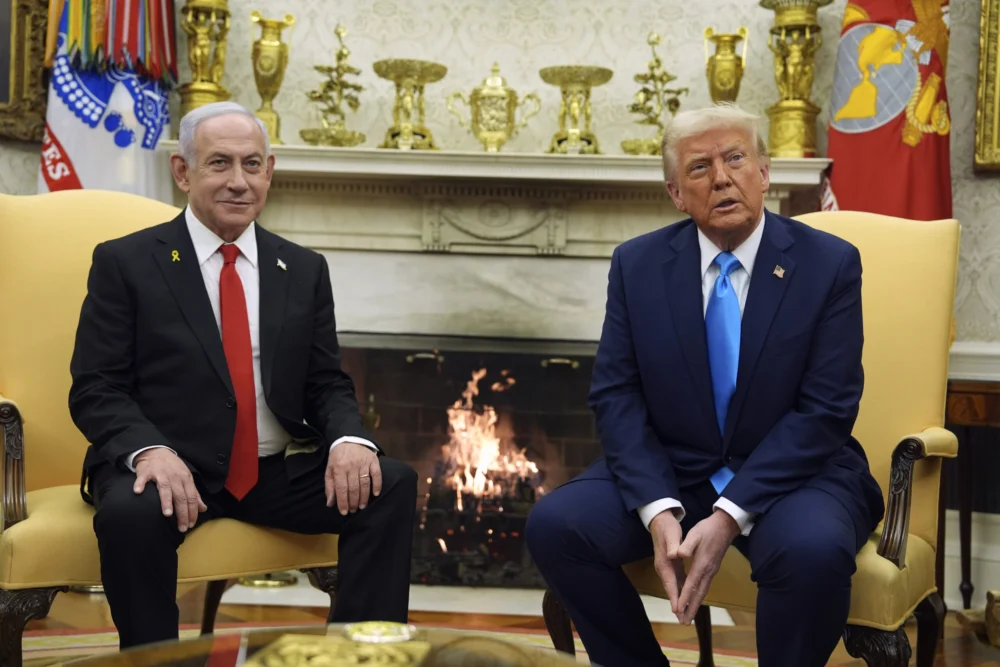
The Trump administration has formally requested that the Israeli government halt its ongoing bombardment of Iran’s energy infrastructure, signaling a significant rift in the strategic objectives of the two allies just ten days into their joint military campaign. According to reports finalized on Tuesday, White House officials communicated this request to their counterparts in Jerusalem on Monday, following a series of high-profile Israeli airstrikes that targeted Iranian oil refineries and distribution hubs, sending massive plumes of black smoke over the capital city of Tehran.
The request, first detailed by Axios and corroborated by various diplomatic sources, highlights a growing concern within the United States government that Israel’s tactical choices may be undermining broader American regional interests. While the U.S. and Israel launched the military operation in tandem, the divergent approaches to targeting and the definition of "victory" have created a palpable tension between President Donald Trump’s administration and the government of Prime Minister Benjamin Netanyahu.
The Three Pillars of the U.S. Request
According to three sources familiar with the high-level discussions, the Trump administration’s plea for restraint regarding Iran’s energy sector is rooted in three primary strategic considerations. These factors illustrate the White House’s attempt to balance immediate military pressure with long-term geopolitical and economic goals.
First, U.S. officials argued that the destruction of Iran’s energy infrastructure disproportionately harms the Iranian civilian population. The administration maintains that a significant portion of the Iranian public remains ideologically opposed to the ruling clerical regime. By crippling the nation’s power and heating capabilities, the U.S. fears that the coalition risks alienating the very population it hopes might eventually rise up or support a transition of power.
Second, the Trump administration has expressed a desire to preserve Iran’s oil production capacity for the "day after" the conflict concludes. Sources indicate that President Trump views Iran’s vast energy reserves as a critical asset for future economic cooperation and regional stabilization. This approach mirrors the administration’s policy toward Venezuela, where the goal has been to pressure the leadership while keeping the underlying industrial infrastructure intact to facilitate a rapid economic recovery under a more favorable government.
Third, and perhaps most urgently, there is a deep-seated fear in Washington that continued strikes on Iranian oil facilities will trigger a "contagion of retaliation." U.S. intelligence suggests that if its own energy sector is decimated, Tehran may see no further reason for restraint and could launch massive retaliatory strikes against the energy infrastructure of neighboring Gulf states, such as Saudi Arabia and the United Arab Emirates. Such an escalation would likely cause a global energy crisis and destabilize the world economy.
Strategic Divergence: Decapitation vs. Degradation
The friction between Washington and Jerusalem is further complicated by a fundamental disagreement over the scope and duration of the war. While President Trump has publicly asserted that the conflict is "nearly won," the Israeli defense establishment appears to be operating under a different timeline and set of priorities.
The Wall Street Journal reported on Tuesday that White House officials are increasingly concerned that Israel intends to prolong the bombing campaign well beyond the point the U.S. deems necessary. According to officials, the Israeli message has been blunt: the Israel Defense Forces (IDF) will continue their campaign in Iran for as long as U.S. military involvement persists. This "lock-step" demand places the Trump administration in a difficult position, as it seeks to wind down kinetic operations while Israel remains committed to a broader dismantling of the Iranian state apparatus.
This divergence is most visible in the selection of targets. To date, U.S. strikes have largely focused on conventional military assets, including air defense systems, missile silos, and command-and-control centers. In contrast, Israeli operations have aggressively pursued a "decapitation" strategy, targeting the top echelons of Iranian leadership and the economic heart of the country.
The Humanitarian and Leadership Toll
The intensity of the ten-day conflict has resulted in a staggering loss of life and a total upheaval of the Iranian political landscape. Current estimates suggest that more than 1,000 Iranians have been killed in the bombings. Most notably, the strikes have successfully targeted Supreme Leader Ali Khamenei, whose death has left a massive power vacuum in the Islamic Republic. Dozens of other high-ranking officials within the Islamic Revolutionary Guard Corps (IRGC) and the central government have also been confirmed dead.

However, the campaign has not been without significant civilian tragedy and controversy. In southern Iran, an elementary school was struck during an aerial bombardment, resulting in the deaths of at least 175 people, the majority of whom were children. This incident has become a focal point of international condemnation and internal finger-pointing within the coalition.
While Trump administration officials have reportedly seen internal investigations suggesting that U.S. munitions may have been responsible for the school strike, the President has publicly denied these claims. In recent press interactions, Trump has suggested that the school may have been hit by an Iranian malfunction or a deliberate "false flag" operation by the regime, a claim that has been met with skepticism by international observers and journalists.
The cost of the war has also been felt domestically in the United States. Iranian retaliatory strikes, primarily involving drone and missile attacks on regional bases, have resulted in the deaths of seven American service members. These casualties have added domestic political pressure on the Trump administration to find an exit strategy that does not involve an open-ended regional conflagration.
Netanyahu’s Long-Term Objectives
The current friction is the culmination of years of advocacy by Prime Minister Benjamin Netanyahu. For over two decades, Netanyahu has utilized various international forums, including the United Nations General Assembly, to urge the United States to take direct military action against the Iranian regime and its nuclear program.
From the Israeli perspective, the current conflict represents a historic opportunity to permanently neutralize the "existential threat" posed by Tehran. Having successfully eliminated the Supreme Leader and many top commanders, the Israeli government appears reluctant to stop before the regime’s economic engine—its oil and gas industry—is completely disabled. For Netanyahu, the goal is not merely the degradation of military capabilities, but the total collapse of the current Iranian system.
Regional Chronology of the 10-Day Conflict
The speed at which the conflict has escalated has caught many international observers by surprise. A brief timeline of the last ten days illustrates the rapid shift from limited strikes to total war:
- Day 1: Joint U.S.-Israeli strikes are launched against Iranian air defense batteries and radar installations following a period of heightened regional tensions.
- Day 3: The coalition expands targets to include drone manufacturing plants and ballistic missile storage sites.
- Day 5: Reports emerge of the death of Supreme Leader Ali Khamenei following a precision strike on a secure bunker in Tehran.
- Day 7: The tragedy at the elementary school in southern Iran occurs, sparking global protests and calls for a ceasefire.
- Day 8: Israel begins targeting the energy sector, specifically the Abadan refinery and facilities near Kharg Island.
- Day 9: Seven U.S. soldiers are killed in a retaliatory drone strike on a base in the region.
- Day 10: The Trump administration officially asks Israel to halt strikes on energy infrastructure as smoke continues to billow over Iranian cities.
Implications for Global Energy and Regional Stability
The outcome of this diplomatic tug-of-war between Trump and Netanyahu will have profound implications for the global economy. Iran remains one of the world’s largest oil producers, and its total removal from the market—or the destruction of its facilities—could lead to a sharp spike in crude prices.
Furthermore, the stability of the Abraham Accords and the burgeoning relationships between Israel and various Arab states are at risk. While many Gulf nations share a mutual enmity toward Iran, they are also highly vulnerable to Iranian asymmetric warfare. A scenario in which Iran retaliates by mining the Strait of Hormuz or attacking the Ras Tanura refinery in Saudi Arabia is a "nightmare scenario" for the U.S. State Department.
The Trump administration’s "Venezuela model" for Iran suggests a desire for a controlled regime change that leaves the industrial bones of the country intact for a Western-friendly successor. However, as the smoke continues to rise over Tehran and the Israeli government remains committed to its course, the window for such a controlled transition may be closing.
As of Tuesday evening, the Israeli government has not officially responded to the U.S. request. Military analysts suggest that the next 48 hours will be critical in determining whether the coalition can harmonize its goals or if the divergence will lead to a solo continuation of the bombing campaign by the IDF, potentially forcing the United States to reconsider its level of active participation in the conflict.



 Yuyun Lusiyani
 Joko Widodo
 Eva Lovia
 Pevita Pearce
 admin
admin