
 Jia Lissa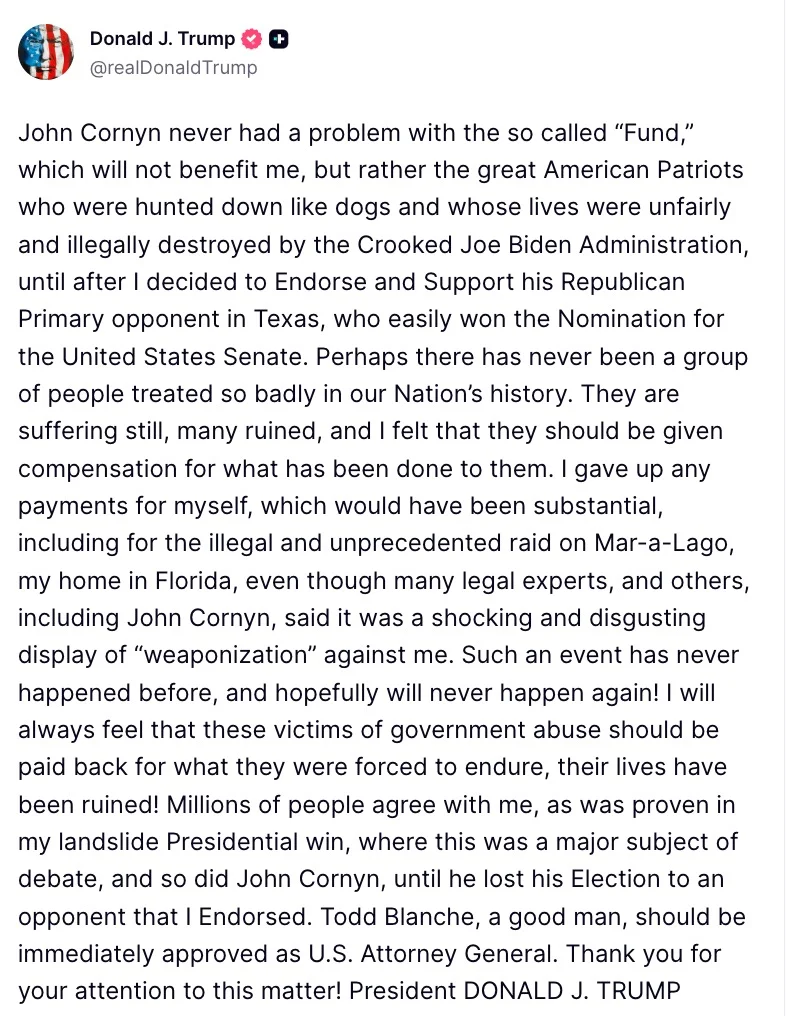
President Donald Trump has launched a public and pointed critique of Senator John Cornyn, a prominent Republican from Texas, accusing him of obstructing the confirmation of Todd Blanche as the United States Attorney General. The friction between the executive branch and the veteran legislator centers on a contentious proposal by the Trump administration to establish a $1.776 billion compensation fund for individuals prosecuted in connection with the events of January 6, 2021. This legislative stalemate has created a significant bottleneck in the Senate Judiciary Committee, highlighting deep-seated divisions within the Republican Party regarding the legal aftermath of the Capitol riot and the future leadership of the Department of Justice.
The dispute reached a new level of intensity on Friday when President Trump utilized his Truth Social platform to issue a lengthy statement directed at Cornyn. In the post, the President alleged that Cornyn’s opposition to the nomination and the compensation fund is rooted in political retribution rather than policy concerns. According to Trump, Cornyn’s stance shifted only after the President threw his support behind Ken Paxton, the Texas Attorney General, in a high-stakes Republican primary for Cornyn’s Senate seat. The President asserted that Cornyn had previously expressed no reservations about the fund, which Trump describes as a necessary measure to rectify "government abuse" perpetrated during the Biden administration.
The Nomination of Todd Blanche and the Senate Impasse
Todd Blanche, who currently serves as the Acting Attorney General, has been a central figure in President Trump’s legal circle for years. Before entering government service, Blanche was a high-profile defense attorney who represented the President in several significant legal battles, including the Manhattan hush-money trial and the federal classified documents case. His nomination to lead the Department of Justice on a permanent basis was intended to signal a new era for the agency, one focused on what the administration calls "restoring the rule of law" and dismantling the "weaponization" of federal law enforcement.
However, the path to confirmation has been blocked by the Senate Judiciary Committee. Under Senate rules and traditions, individual senators, particularly those on the committee of jurisdiction, hold substantial power to delay or derail executive appointments. Senator Cornyn is one of two Republican senators who have reportedly used their influence to prevent Blanche’s nomination from moving to a full floor vote. The primary point of contention is the administration’s insistence on the $1.776 billion "Patriot Compensation Fund."
The fund, symbolically named after the year of American independence, is designed to provide financial restitution to defendants who were charged and convicted for their roles in the January 6 Capitol breach. President Trump argues that these individuals were "hunted down like dogs" and subjected to "unfair and illegal" treatment by the previous administration. Critics, including some members of his own party, argue that such a fund would undermine the judicial process and provide a taxpayer-funded windfall to individuals who committed crimes against the state.
The Political Context: The Trump-Cornyn-Paxton Triangle
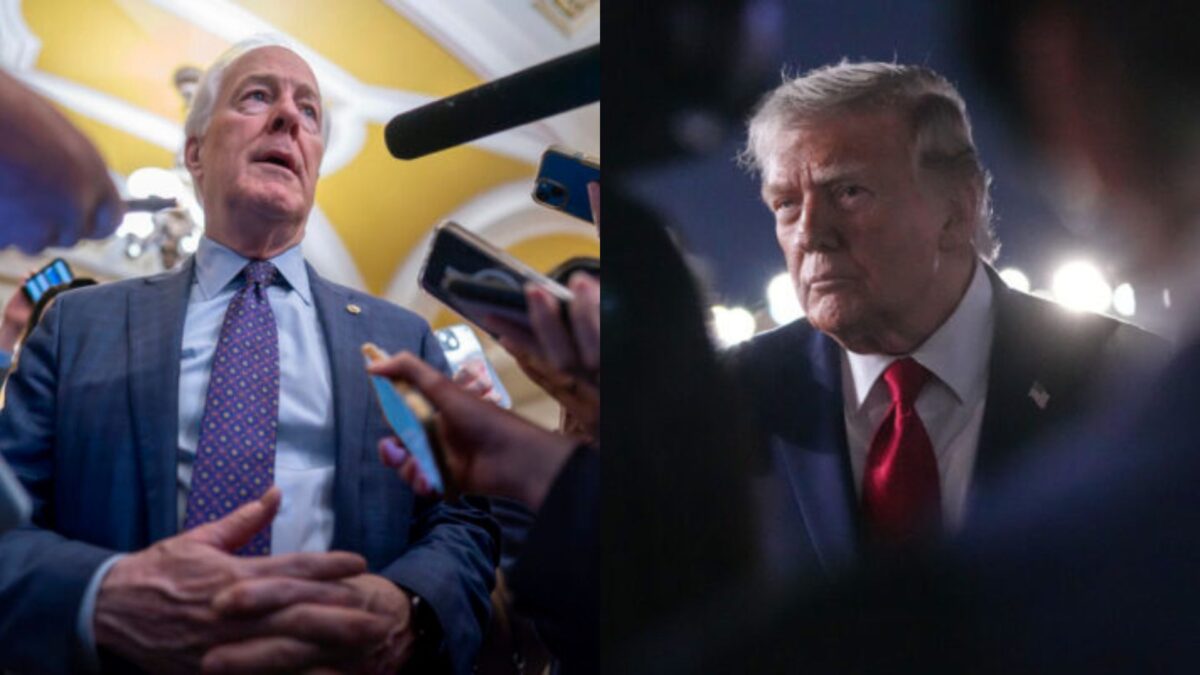
The animosity between Trump and Cornyn is not a new phenomenon, but it has sharpened significantly following the recent Texas primary elections. John Cornyn, who has served in the Senate since 2002, was long considered a pillar of the Republican establishment. However, as the party has moved toward the "Make America Great Again" (MAGA) ideology, Cornyn has occasionally found himself at odds with the President’s more populist impulses.
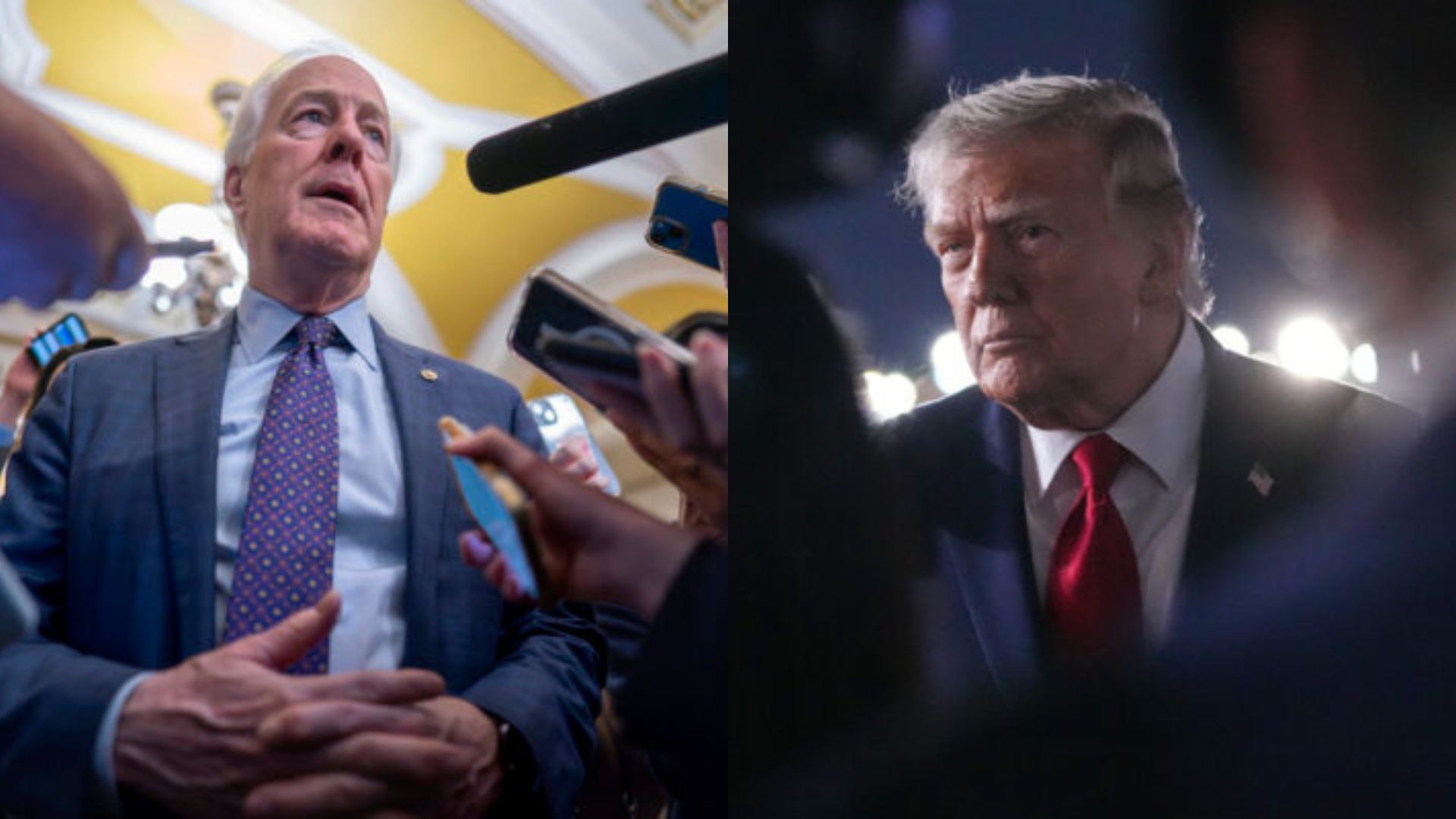
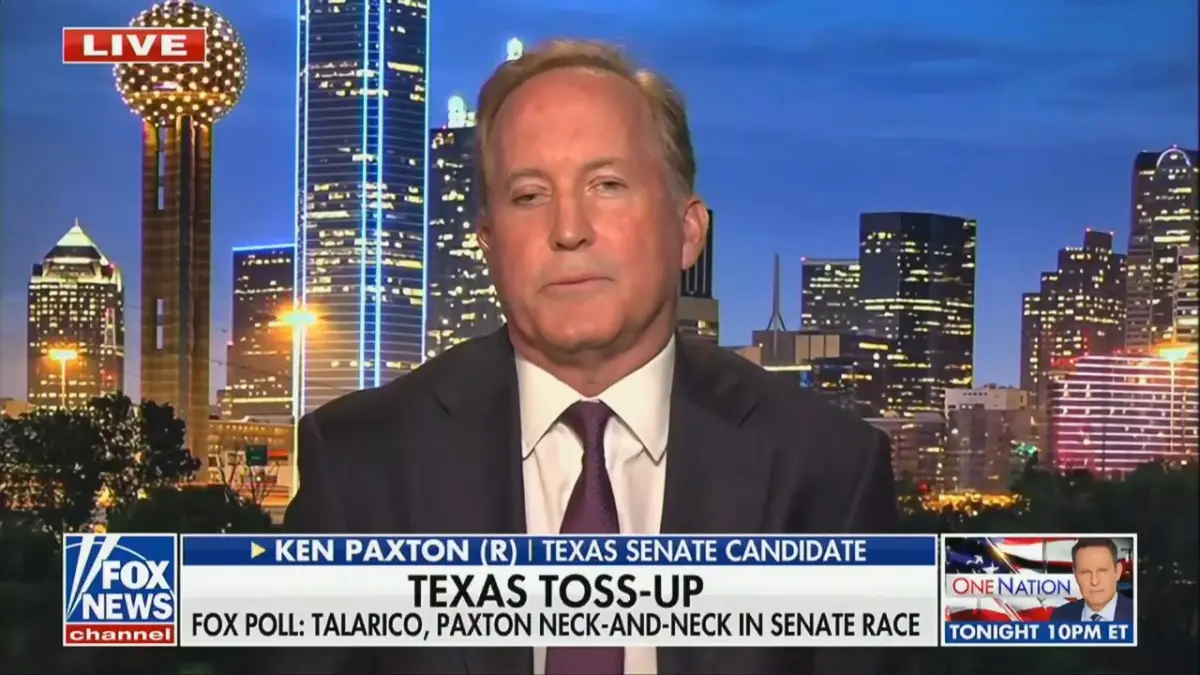
The breaking point appears to have been the primary challenge mounted by Ken Paxton. Paxton, a staunch Trump ally who has faced his own share of legal and political controversies in Texas, received a full-throated endorsement from the President. Trump’s support was instrumental in Paxton’s primary victory, a result that effectively signaled the end of Cornyn’s long tenure in the Senate, as the incumbent faced a difficult path to re-election without the President’s base.
In his Friday statement, Trump explicitly linked Cornyn’s legislative obstruction to this electoral defeat. "John Cornyn never had a problem with the so-called ‘Fund’… until after I decided to Endorse and Support his Republican Primary opponent in Texas, who easily won the Nomination," Trump wrote. The President’s narrative suggests that Cornyn is using his remaining time in the Senate to settle a personal score, a claim that Cornyn’s office has denied, pointing instead to constitutional and fiscal concerns regarding the $1.776 billion expenditure.
The January 6 Compensation Fund: Legal and Fiscal Implications
The $1.776 billion figure proposed for the compensation fund is unprecedented in the context of federal criminal justice. Typically, compensation funds are reserved for victims of crimes, such as the 9/11 Victim Compensation Fund, or for individuals who have been proven to be wrongfully convicted through DNA evidence or the discovery of prosecutorial misconduct.
The Trump administration’s proposal seeks to redefine "wrongful" treatment to include the broad swathes of prosecutions handled by the Department of Justice under the Biden administration following the Capitol riot. Since January 6, 2021, more than 1,200 individuals have been charged with federal crimes, ranging from misdemeanor trespassing to seditious conspiracy. The administration contends that the sheer scale of the arrests and the severity of the sentencing were politically motivated.
"They are suffering still, many ruined, and I felt that they should be given compensation for what has been done to them," Trump stated in his post. He emphasized that the fund would not benefit him personally but would serve the "great American Patriots" whose lives were "unfairly and illegally destroyed."
From a fiscal perspective, the $1.776 billion request has drawn scrutiny from budget hawks in the Senate. Opponents argue that allocating such a large sum of money without a clear mechanism for vetting individual claims of "abuse" would be a dereliction of fiduciary responsibility. Furthermore, legal scholars have raised concerns that compensating convicted felons for the consequences of their crimes would set a dangerous precedent, potentially inviting similar demands from other groups who claim political persecution.
Timeline of the Conflict
The current standoff is the culmination of several years of escalating tension between the executive branch and the "institutionalist" wing of the GOP.
- January 2021 – December 2023: The Department of Justice conducts an extensive investigation into the Capitol riot, resulting in hundreds of convictions. President Trump repeatedly vows to pardon many of the defendants if re-elected.
- Early 2024: During the presidential campaign, Trump introduces the concept of a massive compensation fund for January 6 defendants, framing it as a central pillar of his justice reform agenda.
- November 2024: Donald Trump wins the presidency in a landslide victory, interpreting the result as a mandate to implement his "justice" platform.
- January 2025: Trump nominates Todd Blanche for Attorney General. Blanche immediately begins serving in an acting capacity.
- March 2025: The Texas Republican primary concludes with Ken Paxton defeating the Trump-opposed faction, dealing a blow to Senator Cornyn’s political standing.
- June 2025: Senator Cornyn and other Republican colleagues begin raising formal objections to the $1.776 billion fund during Senate Judiciary Committee hearings, effectively halting the Blanche confirmation.
- July 2025: President Trump issues his most direct attack on Cornyn to date, accusing him of "flip-flopping" due to political spite.
Broader Implications for the Department of Justice and the GOP
The impasse over Todd Blanche’s confirmation has left the Department of Justice in a state of relative limbo. While Blanche exercises the powers of the office as Acting Attorney General, the lack of a permanent, Senate-confirmed leader can hamper long-term policy implementation and weaken the agency’s standing in inter-departmental negotiations.
Furthermore, this conflict underscores the ongoing transformation of the Republican Party. The clash between Trump and Cornyn is a microcosm of the struggle between the "old guard," which emphasizes traditional legal processes and institutional norms, and the "new guard," which prioritizes loyalty to the President’s vision and the perceived need to dismantle established bureaucracy.
For the January 6 defendants, the outcome of this political battle has tangible consequences. If the fund is established, it would represent a historic shift in how the U.S. government handles the aftermath of civil unrest and political violence. If it is blocked, it will likely remain a rallying cry for the President’s supporters, who view the judicial system’s handling of the Capitol riot as a fundamental miscarriage of justice.
In his concluding remarks on Truth Social, President Trump remained firm in his support for his nominee and his proposed fund. "Todd Blanche, a good man, should be immediately approved as U.S. Attorney General," he wrote. He also reiterated his belief that the American people are on his side, citing his electoral victory as proof that his views on the "weaponization" of the FBI and DOJ are shared by the majority.
As the Senate returns to session, the pressure on the Judiciary Committee is expected to mount. With the President refusing to back down on the compensation fund and Senator Cornyn showing no signs of relenting on the nomination, the stage is set for a protracted legislative battle that will test the unity of the Republican majority and the limits of executive influence over the Senate’s "advice and consent" role.



 Yuyun Lusiyani
 Joko Widodo
 Pevita Pearce
 admin
admin
