
 Jia Lissa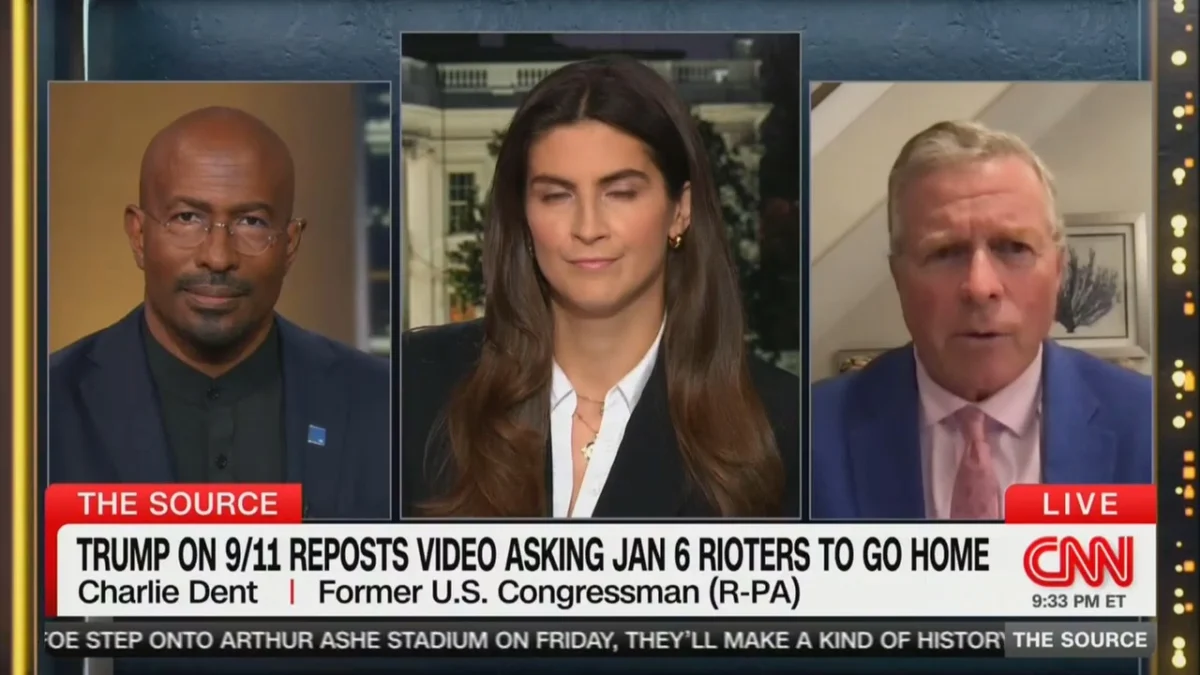
The decision by former President Donald Trump to repost a video originally recorded during the January 6, 2021, Capitol riot on the anniversary of the September 11 terrorist attacks has ignited a wave of criticism from across the political spectrum. During a day traditionally reserved for national unity and the remembrance of the nearly 3,000 victims of the 2001 attacks, the former president utilized his Truth Social platform to reshare a message in which he addressed the mob that breached the United States Capitol. The move has been described by political commentators and former members of Congress as a significant departure from the solemnity expected of a former commander-in-chief on one of the nation’s most somber days.
Appearing on CNN’s "The Source with Kaitlan Collins," former Republican Congressman Charlie Dent of Pennsylvania and veteran political commentator Van Jones expressed bewilderment and sharp disapproval of the timing and content of the post. The discussion centered on the perceived incongruity between the commemoration of a foreign terrorist attack that unified the country and the reminder of a domestic insurrection that remains a point of deep national division.
The Nature of the Reposted Content
The video in question was originally released by then-President Trump on the afternoon of January 6, 2021, after hours of violence at the U.S. Capitol. In the footage, Trump told his supporters, who had disrupted the certification of the 2020 Electoral College results, to "go home in peace." However, the message was also notable for its sympathetic tone toward the rioters, with Trump stating, "We love you, you’re very special," and reiterating unsubstantiated claims that the election had been stolen.
On the anniversary of September 11, this video was reshared without additional context, appearing on Trump’s social media feed alongside posts related to the 2001 attacks. The juxtaposition of the two events—one a coordinated strike by Al-Qaeda and the other a domestic breach of the seat of American democracy—has raised questions regarding the former president’s communication strategy and his efforts to reframe the narrative of the Capitol riot.
Analysis from the CNN Panel
During the broadcast, anchor Kaitlan Collins noted that the post appeared just hours after Trump had visited the Pentagon and other memorial sites to honor those lost in 2001. Van Jones, a longtime political analyst, reacted with visible confusion, questioning why the former president would choose to highlight a day of domestic strife during a period of national mourning.
"I was kind of thrown by that," Jones remarked. "I don’t understand. These are people who are not patriotic, who are not heroes, who are traitors, who are treasonous, who attacked our Capitol. And you’re reminding us of this on a day when we should be celebrating the actual patriots and heroes of 9/11." Jones further suggested that the move indicated a disconnect between the former president and the broader American public, questioning who would wake up on the anniversary of September 11 wanting to revisit the events of January 6.
Charlie Dent, a moderate Republican who represented Pennsylvania’s 15th district for over a decade, provided a historical and political critique of the decision. Dent emphasized the fundamental differences between the two dates, noting that while both were "horrible days," they represent entirely different threats to the American experiment.
"9/11 was about a terrorist attack designed to disrupt our way of life," Dent explained. "January 6th was a mob trying to prevent the peaceful transfer of power. The two really aren’t related. And frankly, from a political standpoint, I don’t know why you would try to mix your messages." Dent added that the day should remain focused on the victims and their families rather than being used to litigate other political issues.
Historical Context: September 11 vs. January 6
To understand the weight of the criticism, it is necessary to examine the historical significance of both dates. September 11, 2001, remains the deadliest foreign attack on American soil. It led to a massive overhaul of domestic security, the creation of the Department of Homeland Security, and two decades of military engagement in the Middle East. The day is characterized by non-partisan ceremonies at Ground Zero in New York, the Pentagon in Virginia, and the Flight 93 National Memorial in Shanksville, Pennsylvania.
In contrast, January 6, 2021, represents a singular event in modern American history involving a domestic attempt to overturn election results. According to the Department of Justice, more than 1,200 individuals have been charged with federal crimes relating to the Capitol breach, with charges ranging from trespassing to seditious conspiracy. While September 11 resulted in a period of unprecedented national cohesion, January 6 has become a focal point of partisan debate, with legal proceedings and congressional investigations continuing to shape the political landscape.
Supporting Data on Public Perception
Public opinion data highlights the diverging ways Americans view these two events. According to a 2023 Pew Research Center study, an overwhelming majority of Americans—regardless of political affiliation—continue to view September 11 as a defining moment of national tragedy and resilience.
However, views on January 6 remain deeply polarized. A Washington Post-University of Maryland poll conducted in early 2024 found that about 55% of Americans believe the actions of those who entered the Capitol were "a threat to democracy." Conversely, a significant minority of the population, largely aligned with the former president’s rhetoric, views the participants more sympathetically or believes the events have been exaggerated by political opponents. By reposting the January 6 video on September 11, analysts suggest Trump may be attempting to merge these narratives or elevate the perceived "patriotism" of his supporters to the level of those honored on 9/11.
Timeline of the Anniversary Observance
The timing of the social media post is particularly notable when compared to the official schedule of the day’s commemorations:
- 8:46 AM: National moment of silence marking the time the first plane struck the North Tower of the World Trade Center.
- Morning Hours: Former President Trump, alongside other political figures, attends a commemorative event at Ground Zero.
- Mid-Day: Trump visits the Pentagon and a local firehouse to pay respects to first responders.
- Afternoon: The Truth Social post featuring the January 6 "Go Home" video is published.
- Evening: Political commentators and news outlets begin analyzing the implications of the post as the nation concludes its day of remembrance.
Broader Political Implications and the 2024 Campaign
The decision to revisit January 6 on a day of national mourning comes as the 2024 presidential campaign intensifies. Trump has frequently integrated the events of January 6 into his campaign rhetoric, often referring to those imprisoned for their roles in the riot as "hostages" and "patriots." This strategy appears designed to solidify his core base of supporters who believe the 2020 election was illegitimate.
However, political strategists note that such messaging may alienate moderate and independent voters. "From a political standpoint, I don’t know why you would try to mix your messages," Charlie Dent observed during his CNN appearance. The concern among some Republicans is that by constantly tethering himself to the events of the Capitol riot, Trump makes it difficult for the party to pivot toward broader economic or policy-based issues that might appeal to a wider electorate.
Furthermore, the act of resharing the video serves as a reminder of the legal challenges facing the former president. Federal prosecutors have cited Trump’s social media activity and his delayed response on January 6 as evidence in cases related to election interference. By reasserting his "love" for the rioters on a day of national tragedy, he reinforces the very narrative that his critics and legal opponents use to argue he is unfit for office.
Official Responses and Silent Reactions
While the Biden-Harris administration and other prominent political figures did not issue a direct formal response to the specific social media post, their actions on September 11 stood in stark contrast. President Joe Biden, Vice President Kamala Harris, and former Mayor Michael Bloomberg participated in traditional, non-partisan ceremonies focused exclusively on the 2001 victims.
The silence from many high-ranking Republican officials regarding the Truth Social post suggests a continued hesitance to confront the former president’s rhetoric directly, even when it deviates from established norms of presidential conduct. Nevertheless, the commentary from figures like Dent indicates a persistent "old guard" of the GOP that remains deeply uncomfortable with the conflation of domestic political violence and national tragedies.
Conclusion: A Breach of Protocol or a New Standard?
The controversy surrounding the reposting of the January 6 video on the anniversary of September 11 underscores the ongoing transformation of American political discourse. Historically, the anniversary of the 9/11 attacks has been a "sacred" day on the political calendar, where partisan grievances are set aside in favor of collective mourning.
By introducing the imagery and rhetoric of the Capitol riot into this space, Donald Trump has once again challenged the traditional boundaries of political behavior. Whether this move was a calculated effort to energize his base or an impulsive social media share, the result has been a renewed debate over the nature of patriotism, the definition of a "hero," and the enduring impact of two of the most significant days in 21st-century American history. As the nation moves closer to the next election cycle, the tension between these competing narratives of national identity is likely to remain a central theme in the American consciousness.




 Yuyun Lusiyani
 Joko Widodo
 Eva Lovia
 Pevita Pearce
 admin
admin
 Lina Irawan