
 Pevita Pearce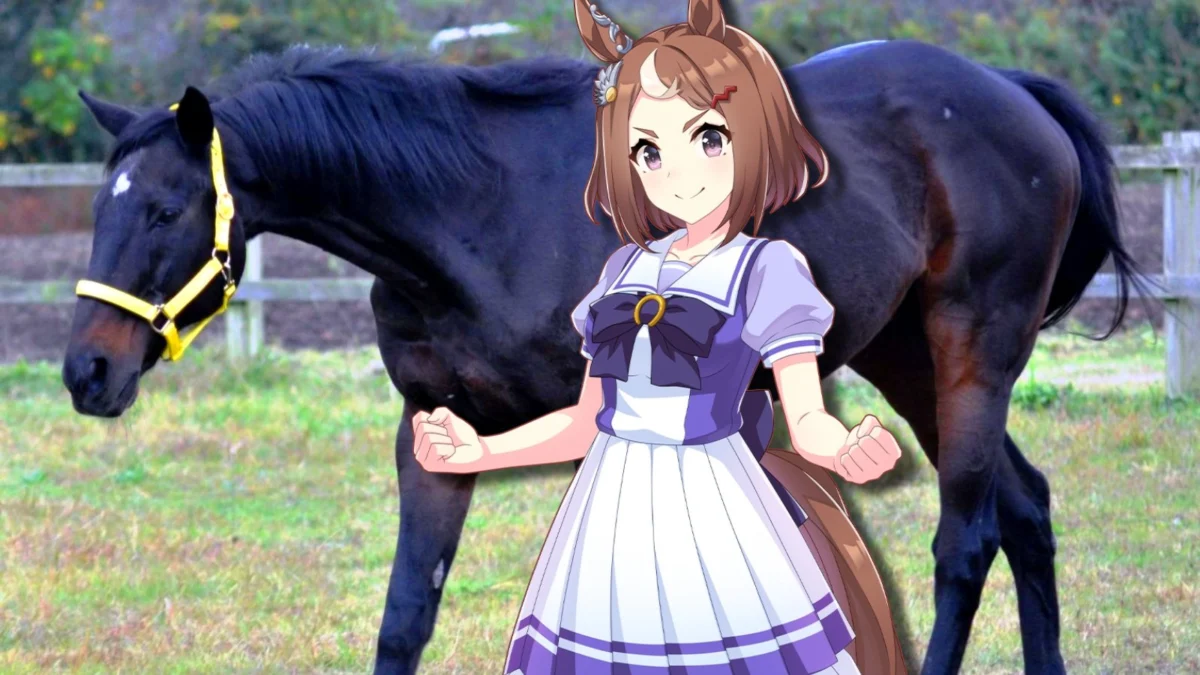
Tsurumaru Tsuyoshi, the celebrated Japanese Thoroughbred whose racing career and subsequent retirement captured the hearts of sports enthusiasts and anime fans alike, has died at the age of 31. The news was confirmed on August 2, 2026, by the Tsurumaru Tsuyoshi Association, a dedicated support group that had overseen the horse’s welfare for over a decade. Representative Shigeo Nakanishi reported that the stallion passed away peacefully at approximately 10:15 AM local time at Yoshino Farm in the Miyazaki Prefecture. The horse’s passing marks the end of an era for the Japanese racing community and the massive global fan base of the Umamusume: Pretty Derby franchise, which immortalized the horse as a popular character.
According to statements released by the farm and the support association, Tsurumaru Tsuyoshi’s final hours were consistent with his long-standing routine. He had been released into his pasture as usual on the morning of August 2, where he was observed grazing. Approximately one hour later, staff found him lying down and unable to regain his footing. A veterinarian was summoned immediately to the scene, but despite medical intervention, the horse’s condition did not improve. To prevent further suffering, the decision was made to euthanize him. Nakanishi noted that the horse was surrounded by the family of Yoshino Farm during his final moments, ensuring a quiet and dignified transition.
A Pedigree of Excellence: The Early Years and Racing Career
Born on April 6, 1995, Tsurumaru Tsuyoshi carried a prestigious lineage that set high expectations from the outset of his career. He was the son of the legendary Symboli Rudolf, often referred to in Japan as "The Emperor," who was the first undefeated Triple Crown winner in Japanese racing history. His dam, Tsurumaru Girl, was herself a descendant of the influential sire Hard-to-Beat. This genetic background provided Tsurumaru Tsuyoshi with the physical tools necessary for elite competition, though his career would eventually be defined as much by his physical fragility as his undeniable speed.
Tsurumaru Tsuyoshi’s professional record, as maintained by the Japan Racing Association (JRA), reflects a career of high peaks interrupted by injury. Over the course of 11 starts, he secured five victories, earning a total of 203,711,000 yen in prize money. His most prolific period occurred in 1999, a year in which he solidified his status as a top-tier contender in the Grade 2 circuit. In September 1999, he won the Asahi Challenge Cup (G3), which served as a springboard to his most famous victory: the Kyoto Daishoten (G2).
The 1999 Kyoto Daishoten remains a centerpiece of his legacy. In that race, Tsurumaru Tsuyoshi faced an exceptionally deep field that included several future Hall of Fame horses. He managed to outpace Special Week, the 1998 Tokyo Yushun (Japanese Derby) winner; Mejiro Bright, the 1998 Tenno Sho (Spring) winner; and T.M. Opera O, who would go on to achieve a historic undefeated season in 2000. This victory demonstrated that when healthy, Tsurumaru Tsuyoshi possessed the talent to compete with—and defeat—the greatest horses of his generation.
The Arima Kinen and Forced Retirement
The trajectory of Tsurumaru Tsuyoshi’s career changed irrevocably during the 2000 Arima Kinen, one of Japan’s most prestigious year-end "All-Star" races. Entering the race with high expectations, the horse suffered a severe injury to his left-front leg mid-race. The injury was significant enough to necessitate his immediate withdrawal from active competition. While many horses of his caliber might have transitioned immediately to a lucrative stud career, Tsurumaru Tsuyoshi’s path took a different turn.
Following his recovery, he served as a "lead horse" or "induction horse" at the Kyoto Racecourse. In this role, he was responsible for leading younger, more temperamental racehorses onto the track, helping to maintain order and calm during the pre-race ceremonies. His calm demeanor and striking physical presence made him a favorite among racegoers for years. Eventually, he moved to Yoshino Farm in Miyazaki to spend his twilight years in retirement.
The Umamusume Phenomenon and Cultural Resurgence
The latter half of Tsurumaru Tsuyoshi’s life was marked by an unexpected surge in popularity due to the "Umamusume: Pretty Derby" media franchise. Developed by Cygames, the franchise reimagines famous Japanese racehorses as "horse girls"—anime characters who compete in races and live as idols. The project is noted for its meticulous attention to historical detail, often incorporating the real-life personalities, race histories, and health struggles of the horses into the character designs.
The character of Tsurumaru Tsuyoshi, voiced by actress Yoshino Aoyama, was introduced to the franchise as an energetic and optimistic runner. Her character profile on the official Umamusume website describes her as having "enormous potential," but notes that her body often struggles to keep up with her intense determination—a direct homage to the real-life horse’s history of leg injuries.
The inclusion of Tsurumaru Tsuyoshi in the game and anime led to a massive influx of interest from a younger demographic. Fans of the franchise, often referred to as "Trainers," began researching the history of the real horses that inspired their favorite characters. This digital-to-physical connection had a profound impact on the welfare of the real Tsurumaru Tsuyoshi.
Advocacy and the Tsurumaru Tsuyoshi Association
The survival and comfort of Tsurumaru Tsuyoshi in his later years were largely the result of grassroots advocacy. Following the death of his original owner in 2011, the horse’s future became uncertain. Many retired racehorses face difficult prospects if they are not successful as stallions or if they lack a wealthy benefactor to cover the high costs of equine boarding and medical care.
In response, Shigeo Nakanishi established the Tsurumaru Tsuyoshi Association. This support group functioned as a collective of fans and donors who provided the necessary funds for his upkeep at Yoshino Farm. The association reported that the rise of Umamusume significantly bolstered their efforts, as new fans contributed donations and visited the farm (within permitted guidelines) to see the living inspiration for the anime character.
Nakanishi’s statements following the horse’s death emphasized the importance of this community support. He noted that because of the association and the fans, Tsurumaru Tsuyoshi was able to live a full life, reaching the age of 31—a remarkable age for a Thoroughbred, given that the average lifespan for the breed is typically between 25 and 28 years.
Official Reactions and Tributes
The news of the horse’s passing triggered an immediate wave of tributes from across the Japanese entertainment and sporting sectors. The official Umamusume: Pretty Derby social media accounts released a formal statement acknowledging the horse’s contribution to the franchise’s identity.
"We have received the news of the passing of Tsurumaru Tsuyoshi, who served as the motif for a character in this work," the statement read. "We extend our deepest condolences to everyone involved and sincerely pray for the repose of this great racehorse."
Fans across social platforms shared archival footage of the 1999 Kyoto Daishoten, as well as fan art of the Umamusume character. At Yoshino Farm, a memorial area has been established where members of the public can leave flowers and tributes. However, the farm management has requested that fans refrain from contacting the farm directly via telephone or visiting outside of designated areas to respect the privacy of the staff and the welfare of the other animals on the property.
Analysis: The Evolving Landscape of Racehorse Aftercare
The death of Tsurumaru Tsuyoshi highlights a significant shift in how retired racehorses are treated in Japan. Historically, the fate of horses that did not enter the breeding shed was often precarious. However, the intersection of sports history and modern pop culture has created a new model for equine welfare.
The "Umamusume effect" has been credited by organizations like the Retired Horse Association (RHA) for a surge in donations to "foster parent" programs for retired Thoroughbreds. Tsurumaru Tsuyoshi’s case serves as a primary example of how media representation can translate into tangible financial and emotional support for animals in their post-competitive lives. By turning a horse’s "story"—including its failures and injuries—into a relatable narrative, the franchise has fostered a culture of empathy that extends beyond the betting window.
Furthermore, the longevity of Tsurumaru Tsuyoshi (31 years) provides valuable data for equine geriatric care. His ability to remain active in a pasture until his final day suggests that the combination of consistent community funding and specialized farm care can significantly extend the life expectancy of high-performance athletes.
Chronology of Tsurumaru Tsuyoshi
- April 6, 1995: Born at the Tsurumaru Farm, sired by Symboli Rudolf.
- 1998: Begins professional racing career.
- September 1999: Wins the Asahi Challenge Cup (G3).
- October 1999: Achieves his greatest victory in the Kyoto Daishoten (G2), defeating Special Week and T.M. Opera O.
- December 2000: Suffers a career-ending leg injury during the Arima Kinen.
- 2001–2010: Serves as a lead horse at Kyoto Racecourse.
- 2011: Original owner passes away; Tsurumaru Tsuyoshi Association is formed by Shigeo Nakanishi to fund his retirement.
- 2021–2022: Gains renewed international fame following his inclusion in the Umamusume: Pretty Derby franchise.
- August 2, 2026: Passes away at Yoshino Farm at the age of 31.
Conclusion
Tsurumaru Tsuyoshi’s legacy is twofold. In the annals of Japanese horse racing, he will be remembered as the spirited underdog who, for one brilliant afternoon in Kyoto, outran the giants of the "Golden Age" of the late 90s. In the realm of modern culture, he remains a symbol of the enduring bond between humans and horses—a bond that survived the end of his racing days and flourished through the support of a new generation of admirers. His death is a loss to the racing world, but his 31-year journey stands as a testament to the success of modern equine retirement initiatives.




 Yuyun Lusiyani
 Joko Widodo
 Eva Lovia
 admin
admin
 Lina Irawan