
 Jia Lissa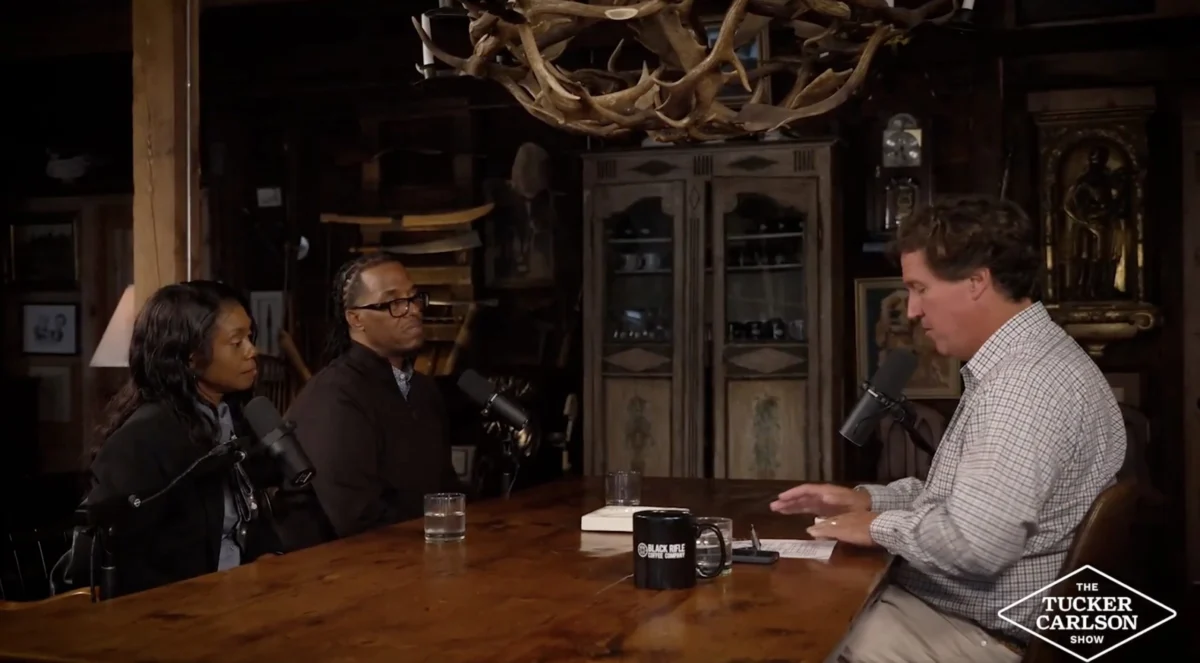
In a high-profile interview set to release on The Tucker Carlson Show, former Fox News host Tucker Carlson sat down with Brian Cole Sr. and Delicia Cole, the parents of Brian Cole Jr., the man federal authorities have charged with planting explosive devices in Washington, D.C., on the eve of the January 6 Capitol riot. During the preview of the interview, which was shared on social media platform X, Carlson expressed a firm belief that the younger Cole was framed by the federal government, a sentiment echoed by the suspect’s parents. The case, which remained one of the most high-profile unsolved mysteries of the January 6 investigation for nearly five years, has taken a contentious turn as the defense challenges the validity of the evidence and the circumstances surrounding Cole’s arrest and subsequent confession.
The interview focuses heavily on the physical evidence used to identify the suspect, specifically surveillance footage of a masked individual in a gray hooded sweatshirt and Nike Air Max Speed Turf sneakers. Carlson presented the footage to the Coles, asking if the individual’s gait and physical movements matched those of their son. Delicia Cole responded emphatically in the negative, stating that the person in the video did not move like her son. Carlson, who has frequently questioned the official narrative of the January 6 events, described the situation as a "made-for-TV-movie-type conspiracy," alleging that the Department of Justice (DOJ) targeted an "autistic guy" to close a case that had become an embarrassment for the Federal Bureau of Investigation (FBI).
The Chronology of the Pipe Bomb Investigation
The investigation into the January 6 pipe bombs began on the afternoon of January 6, 2021, though the devices themselves were planted the previous evening. According to the FBI and the DOJ, an unidentified individual placed two functional pipe bombs near the headquarters of the Republican National Committee (RNC) and the Democratic National Committee (DNC) between 7:30 p.m. and 8:30 p.m. on January 5, 2021.
The devices were constructed using 1-by-6-inch galvanized steel pipes, kitchen timers, and homemade explosive powder. They were discovered on January 6—the first at the RNC at approximately 12:45 p.m. and the second at the DNC at 1:07 p.m.—just as the situation at the U.S. Capitol began to escalate. The discovery of the bombs diverted critical law enforcement resources, including K-9 units and bomb technicians, away from the Capitol during the initial breach. For years, the FBI maintained a $500,000 reward for information leading to the arrest of the suspect, reviewing thousands of hours of surveillance footage and conducting over 1,000 interviews.
The case saw little public movement until December 2025, when authorities announced the arrest of Brian Cole Jr. in Virginia. The arrest was a significant breakthrough for the FBI, which had faced intense scrutiny for its inability to identify the suspect despite the clear surveillance images and the high stakes of the investigation.
The Arrest and Confession of Brian Cole Jr.
Following his arrest, the DOJ reported that Brian Cole Jr. provided a confession to investigators. According to court filings, Cole allegedly stated that he felt "compelled to speak up" for individuals who believed the 2020 presidential election was fraudulent. He reportedly expressed frustration with the political climate, specifically the labeling of election skeptics as "fascists" or "Nazis."
However, the defense has since moved to distance Cole from this confession. In the interview with Carlson, the parents suggested that their son’s neurological condition—autism—may have played a role in how he was handled by investigators. Carlson’s narrative suggests that the confession may have been coerced or influenced by the suspect’s vulnerability. The defense has also pointed to the timing of the arrest, noting it occurred shortly after independent journalists, such as Steve Baker, began publishing reports alleging that the pipe bomber may have been a federal employee or an individual with ties to government agencies. These claims, while unverified by mainstream investigative bodies, have gained significant traction in circles skeptical of the DOJ’s January 6 prosecutions.
Legal Maneuvers and the Presidential Pardon Argument
The legal battle surrounding Brian Cole Jr. took an unprecedented turn in 2026. Following the inauguration of Donald Trump for a second term, the President issued a series of blanket pardons for individuals involved in the January 6 Capitol riot. Cole’s defense attorney filed a motion arguing that Cole should be covered under these pardons, asserting that his alleged actions were politically motivated and intrinsically linked to the events of January 6.

In July 2026, a federal judge rejected this argument in a scathing ruling. The court determined that the act of planting explosive devices—even if they did not detonate—constituted a separate and more severe category of criminal activity than the trespassing or disorderly conduct charges faced by the majority of those pardoned. The judge noted that the pardons were intended for "participants" of the riot at the Capitol, whereas the planting of bombs was an act of domestic terrorism that occurred the night before. This ruling kept Cole in federal custody as he awaits trial, leading to the current public campaign by his parents and media figures like Carlson to assert his innocence.
Technical Data and Forensic Discrepancies
A central point of contention in the case involves the forensic data used to track the suspect. In the years following 2021, it was revealed that the FBI struggled with "corrupted" cell tower data from the area where the bombs were planted. This data, known as a "geofence warrant," is typically a primary tool for investigators to identify individuals in a specific location at a specific time.
Critics of the investigation, including Carlson, have highlighted the absence of a "digital exhaust" for the suspect. They argue that it is highly improbable for a person to navigate that area of Washington, D.C., without leaving a trace on cell towers or Wi-Fi networks unless they were trained in counter-surveillance or were not carrying a mobile device. The defense has used this lack of direct electronic evidence to cast doubt on the DOJ’s assertion that Cole is the individual seen in the surveillance videos.
Furthermore, the defense has raised questions about the viability of the bombs. While the FBI classified them as "functional," some independent explosive experts have noted that the use of 60-minute kitchen timers to delay an explosion for over 15 hours is technically inconsistent. This has led to theories that the devices were never intended to explode, but were instead "props" used to create a diversion—a theory that Carlson alluded to during his interview with the Coles.
Reaction and Broader Implications
The interview with the Coles has sparked a renewed debate over the integrity of the January 6 investigations. Supporters of the DOJ argue that the evidence against Cole, including his initial confession and the physical evidence recovered during his arrest, is substantial. They view the "framing" narrative as a dangerous attempt to undermine the rule of law and shield a domestic terrorist from justice.
Conversely, skeptics of the investigation view Brian Cole Jr. as a victim of a "weaponized" justice system. They point to the long delay in his arrest and the lack of clear biometric matches as evidence of a desperate attempt by federal agencies to provide a "scapegoat" for a high-profile failure. The involvement of Tucker Carlson, who commands a massive audience, ensures that these claims will reach millions, potentially influencing public perception of the DOJ’s credibility.
The case also highlights the ongoing friction between the executive and judicial branches during the second Trump administration. The President’s use of pardons for January 6 defendants has created a complex legal landscape where the definitions of "rioter," "protester," and "terrorist" are being litigated in the court of public opinion as much as in the courtroom.
Conclusion and Future Proceedings
As the episode of The Tucker Carlson Show featuring the Coles prepares to air, the legal community is closely watching for any new revelations that might impact the upcoming trial. Brian Cole Jr. remains held without bail, having pleaded not guilty to all charges. His defense is expected to lean heavily on the "misidentification" argument, utilizing gait analysis experts and digital forensics to counter the government’s narrative.
The DOJ has not issued a formal response to the claims made in the Carlson interview preview, typically adhering to a policy of not commenting on ongoing litigation. However, the outcome of this trial will likely serve as a landmark moment in the history of the January 6 investigations, either vindicating the FBI’s multi-year effort or providing fuel for those who believe the federal government has overreached in its pursuit of those connected to the events of 2021. For the Coles, the battle is personal, as they continue to maintain that their son is an innocent man caught in the crosshairs of a national political firestorm.




 Yuyun Lusiyani
 Joko Widodo
 Eva Lovia
 Pevita Pearce