Pevita Pearce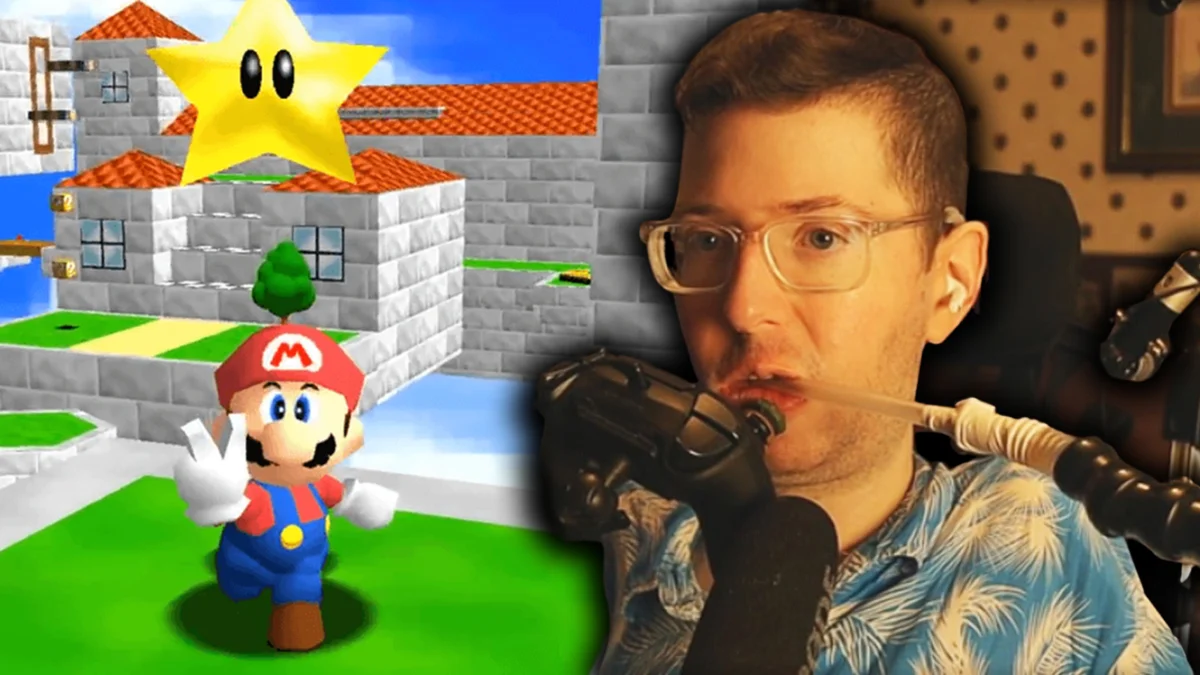
The landscape of digital broadcasting and competitive gaming has witnessed a profound demonstration of resilience as the disabled Twitch streamer known as HandicapableSean made a highly anticipated return to the platform this week. Sean, who rose to prominence for his ability to conquer notoriously difficult titles such as Elden Ring using only his chin, has successfully transitioned to a new control scheme involving sophisticated eye-tracking technology to play the Nintendo 64 classic, Super Mario 64. This return marks a significant milestone in the intersection of assistive technology and gaming, particularly as the streamer confronts the rapid progression of Duchenne Muscular Dystrophy (DMD), a condition that has necessitated a total overhaul of his interactive setup.
The Medical Context of Duchenne Muscular Dystrophy
To understand the magnitude of Sean’s achievement, it is necessary to examine the clinical nature of Duchenne Muscular Dystrophy. DMD is a severe, X-linked recessive genetic disorder characterized by the progressive degeneration of muscle tissue. It primarily affects males, occurring in approximately one out of every 3,500 to 5,000 live male births worldwide. The condition is caused by a mutation in the gene that encodes for dystrophin, a vital protein that acts as a structural stabilizer for muscle cell membranes. Without dystrophin, the everyday contractions of muscles cause microscopic damage, leading to inflammation and the eventual replacement of muscle fibers with fibrotic and adipose tissue.
The clinical progression of DMD is predictable but devastating. Symptoms typically manifest in early childhood, often between the ages of two and five, starting with difficulties in running, jumping, and climbing stairs. By the age of 12, most patients lose the ability to walk independently and require the use of a wheelchair. As the disease advances into late adolescence and early adulthood, the deterioration spreads to the respiratory muscles and the heart, leading to life-threatening complications. For content creators like Sean, the loss of fine motor skills in the hands and fingers is one of the many hurdles the condition presents, eventually rendering traditional controllers and even specialized chin-operated joysticks unusable.
Technological Evolution in Assistive Gaming
Sean’s return to Twitch was prompted by a necessity to adapt to his changing physical capabilities. In 2022, he gained international attention for his "chin-gaming" prowess, demonstrating that physical limitations do not equate to a lack of skill or competitive drive. However, in a recent broadcast, Sean revealed that his condition had progressed faster than anticipated over the last two years, making chin-based control increasingly difficult and fatiguing.
To combat this, Sean has integrated a suite of high-tech solutions to maintain his presence in the gaming world. His current configuration utilizes the Tobii Eye Tracker 5, a hardware peripheral originally designed for head tracking and eye-gaze interaction in mainstream gaming and productivity. However, for a user with severe mobility impairment, the hardware is only the foundation. Sean pairs the tracker with "Iris," a specialized software that translates gaze coordinates into mouse movements and keyboard inputs.
Supplementing this is SensePilot, an innovative program that allows for hands-free computer control through a combination of head movements and facial gestures. By calibrating these tools to recognize specific ocular movements and micro-gestures, Sean is able to navigate the complex three-dimensional environment of Super Mario 64. This game, while older, requires precise timing and spatial awareness—tasks that are significantly more difficult when the traditional tactile feedback of a joystick is replaced by the invisible interface of an infrared eye tracker.
A Chronology of Resilience and Community Impact
The timeline of Sean’s journey reflects the broader struggle and triumph of the disabled gaming community.
- Early 2022: Sean goes viral after successfully defeating several high-difficulty bosses in FromSoftware’s Elden Ring. His use of a custom chin-controller serves as an inspiration for accessibility advocates.
- May 2024: After a period of consistent streaming, Sean posts his last update on social media before entering a nearly two-year hiatus. This period was marked by the accelerated progression of his DMD, requiring him to step away from the public eye to focus on health and the recalibration of his life and equipment.
- April 2026: Sean officially returns to Twitch and X (formerly Twitter), announcing his new eye-tracking setup. His return stream attracted thousands of viewers, many of whom had followed his journey since his early Elden Ring days.
- Present: Sean is actively working through Super Mario 64, using his platform to educate viewers on the realities of living with a progressive disability while showcasing the power of assistive technology.
The reaction from the gaming community has been overwhelmingly positive. With over 8,700 followers on Twitch, Sean’s return has sparked discussions regarding the importance of accessibility in game design. Many fans expressed that his "never-give-up" attitude provides a stark contrast to the often-toxic atmosphere found in some corners of the gaming world, offering instead a narrative of perseverance and technological empowerment.
The Broader Landscape of Adaptive Gaming
Sean is not an isolated figure in the realm of adaptive gaming; he is part of a growing movement of "handicapable" gamers who are redefining what it means to be a "pro." One notable contemporary is Brolylegs, a legendary figure in the fighting game community (FGC). Despite being born with Arthrogryposis Multiplex Congenita, which limits the use of his limbs, Brolylegs became one of the top-ranked Street Fighter players in the world by using his mouth to manipulate a standard controller.
The success of individuals like Sean and Brolylegs has put pressure on major hardware manufacturers to prioritize accessibility. In recent years, Microsoft released the Xbox Adaptive Controller, a highly customizable hub designed to meet the needs of gamers with limited mobility. Sony followed suit with the Access controller for PlayStation 5. These devices allow users to plug in external switches, buttons, mounts, and joysticks to create a peripheral that fits their specific physical needs.
Furthermore, organizations such as AbleGamers and SpecialEffect have been instrumental in providing consultations and custom hardware to disabled individuals, ensuring that the social and psychological benefits of gaming are accessible to everyone, regardless of physical ability.
The Future of Neural Interfacing: Neuralink and Beyond
Looking toward the future, Sean has expressed interest in emerging technologies that could bypass physical movement entirely. He specifically mentioned Neuralink, the neurotechnology company founded by Elon Musk that is developing implantable brain-computer interfaces (BCIs).
The potential for BCIs in the gaming sector was recently highlighted by the case of Noland Arbaugh, the first human recipient of a Neuralink implant. Arbaugh, who is paralyzed from the shoulders down, has successfully used the implant to play World of Warcraft and Civilization VI using only his thoughts. For patients with late-stage DMD, where even eye movement may eventually become labored, the ability to control a digital interface via neural signals represents the ultimate frontier of accessibility.
Industry analysts suggest that while eye-tracking is the current gold standard for non-invasive assistive gaming, the integration of BCI technology could revolutionize the field within the next decade. For Sean, the interest in Neuralink is not merely a fascination with science fiction but a pragmatic consideration for a future where his physical autonomy may continue to diminish.
Analytical Implications: Gaming as a Vital Lifeline
The story of HandicapableSean underscores a critical but often overlooked reality: for many individuals with severe physical disabilities, gaming is more than a hobby; it is a vital lifeline to the outside world. It provides a level playing field where physical limitations are mitigated by technology, allowing for social interaction, competitive achievement, and a sense of agency that may be lacking in other aspects of daily life.
From a journalistic perspective, Sean’s return serves as a case study in the rapid evolution of human-computer interaction. It highlights the necessity for software developers to include robust accessibility options, such as remappable keys, high-contrast modes, and support for non-traditional input devices, in every major release.
As Sean continues his journey through the Mushroom Kingdom in Super Mario 64, he carries with him the hopes of a community that refuses to be sidelined by biology. His statement to his viewers—"I shall overcome hardship with my love of gaming and technology"—serves as a definitive manifesto for the modern era of inclusive digital entertainment. The intersection of human spirit and technological innovation continues to push the boundaries of what is possible, proving that while a disability may change how a game is played, it cannot change the heart of the player.




 Jia Lissa
 Yuyun Lusiyani
 Joko Widodo
 Eva Lovia