
 Joko Widodo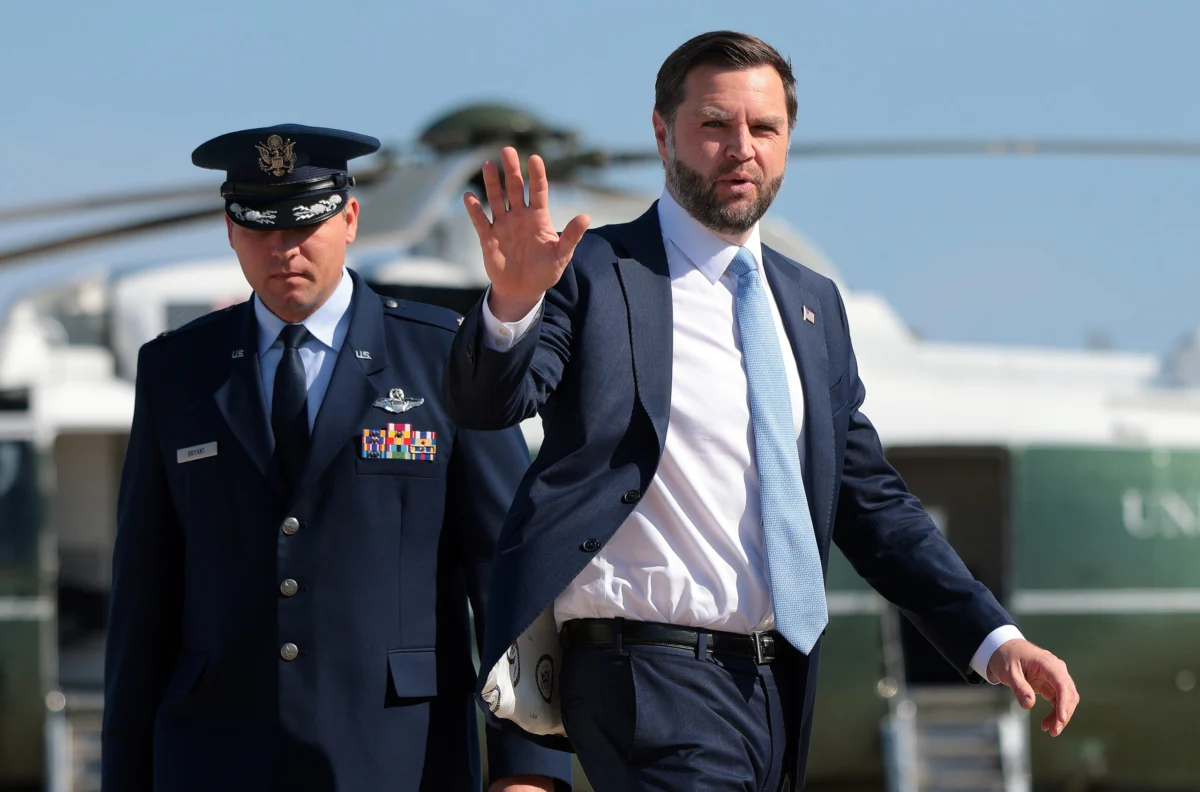
Vice President JD Vance, a prominent figure within the Trump administration’s often contentious trade negotiations, recently made an inadvertent verbal misstep during a public address in Maine, referring to Canada as a "state" before swiftly correcting himself. The incident occurred on Monday, August 24th, at Compotech headquarters in Brewer, Maine, a location chosen to underscore the administration’s focus on domestic manufacturing and trade relations with neighboring countries. While discussing trade policies and tariffs, Vance stated, "We have to remember Canada is a state," a remark that was quickly followed by an immediate retraction. "Sorry, Freudian slip," he acknowledged, as captured in a video shared by Forbes, emphasizing that the error was unintentional.
This momentary lapse in nomenclature, while seemingly minor, occurred within a broader context of escalating trade disputes between the United States and Canada, a relationship historically characterized by close economic and political ties. Vance’s speech was aimed at criticizing what he described as Canada’s unfavorable trade practices and tariffs on products originating from Maine. He specifically cited Canada, alongside China, as countries employing detrimental trade policies. Prior to the "state" comment, Vance had articulated his expectations, stating, "China, you of course expect. They’re our biggest economic competitor. I would expect that from China. I would not expect that from Canada."
The Vice President’s remarks underscore a significant shift in the rhetoric surrounding US-Canada trade under the current administration. For decades, the two nations have operated under a framework of largely collaborative trade, most notably exemplified by the North American Free Trade Agreement (NAFTA), which was later renegotiated and replaced by the United States-Mexico-Canada Agreement (USMCA). However, the Trump administration has adopted a more protectionist stance, frequently questioning the fairness of existing trade deals and implementing tariffs on goods from key allies, including Canada.
Background of US-Canada Trade Relations
The economic interdependence between the United States and Canada is vast. In 2023, bilateral trade in goods and services reached an estimated $893 billion, making Canada the largest trading partner for the United States. This intricate web of commerce includes critical sectors such as automotive, energy, agriculture, and manufactured goods. Historically, both nations have benefited from this close trading relationship, fostering job creation and economic growth on both sides of the border.
However, disagreements have periodically arisen. Key points of contention have often revolved around agricultural subsidies, intellectual property rights, and, more recently, the automotive sector. The USMCA, while aiming to modernize NAFTA, introduced new rules of origin for automobiles, requiring a higher percentage of North American content to qualify for tariff-free trade. This provision, along with other elements of the agreement, has been a source of ongoing negotiation and adjustment.
Chronology of Recent Trade Tensions
The friction highlighted by Vice President Vance’s remarks is not an isolated incident but rather a continuation of a broader trend. The Trump administration has consistently voiced its dissatisfaction with certain Canadian trade practices, particularly those perceived as disadvantaging American businesses.
- 2017-2018: The initial renegotiation of NAFTA, under President Trump’s directive, marked a significant period of uncertainty for bilateral trade. The administration frequently employed aggressive negotiation tactics, including the threat of tariffs, to pressure Canada and Mexico into accepting revised terms.
- 2018: Tariffs were imposed on Canadian steel and aluminum imports into the United States, prompting retaliatory tariffs from Canada on a range of American goods, including agricultural products and manufactured items. This period saw considerable disruption to supply chains and increased costs for businesses on both sides.
- 2020: The USMCA officially came into effect, replacing NAFTA. While intended to provide a more stable trading framework, the implementation and interpretation of its various provisions have continued to be a source of discussion and, at times, dispute.
- Present Day (as of August 24th): Vice President Vance’s speech in Maine reflects ongoing concerns about specific Canadian tariffs impacting American producers. The administration’s focus on "unfair trade practices" suggests a continued commitment to addressing perceived imbalances.
Vance’s Criticisms and Supporting Data
Vice President Vance’s critique extended beyond a simple misstatement, delving into specific grievances regarding Canada’s trade policies and its perceived reliance on US defense. He argued that Canada has "underinvested in its military" and benefits significantly from the security umbrella provided by the United States. This sentiment taps into a broader debate within the US about the defense spending commitments of NATO allies and the allocation of resources for collective security.
Vance’s assertion about "ridiculous" Canadian tariffs on Maine products likely refers to specific retaliatory measures implemented by Canada in response to earlier US tariffs. For instance, following the US imposition of Section 232 tariffs on steel and aluminum in 2018, Canada retaliated with its own tariffs on a variety of US goods, impacting sectors such as agriculture and manufactured goods. These tariffs, while intended to exert pressure on the US, also created economic headwinds for Canadian consumers and businesses reliant on American imports.
Moreover, Vance’s reference to Canada’s military underinvestment touches upon a long-standing NATO objective for member states to spend at least 2% of their GDP on defense. While Canada has committed to increasing its defense spending, it has historically fallen below this benchmark, leading to criticism from some US officials who argue that allies are not shouldering their fair share of the security burden. Data from the Stockholm International Peace Research Institute (SIPRI) consistently shows Canada’s defense spending as a percentage of GDP to be lower than that of the United States and several other NATO members.
President Trump’s Stance and Broader Implications
The Vice President’s remarks echo the consistent messaging from President Donald Trump, who has frequently characterized Canada as a difficult trading partner and, at times, has used similar rhetoric about its status in relation to the United States during trade disputes. President Trump’s approach has often involved leveraging tariffs as a primary tool for negotiation, aiming to force concessions from trading partners.
The recent threat by President Trump to increase US tariffs on Canadian cars, trucks, and automotive parts to 50% exemplifies this strategy. Such a move would have significant implications for the deeply integrated North American automotive industry, potentially leading to higher prices for consumers, job losses, and disruptions to complex supply chains that span both countries. The automotive sector alone accounts for a substantial portion of the bilateral trade, and any significant disruption could have cascading economic effects.
Canadian Prime Minister Mark Carney’s statement that Canada would match any such tariffs "dollar for dollar" signals a willingness to engage in a retaliatory trade war, a scenario that would be detrimental to both economies. Such a tit-for-tat escalation of tariffs could lead to a substantial decline in bilateral trade, impacting businesses, workers, and consumers across North America.
Analysis of the "State" Slip and its Significance
While Vice President Vance’s "state" slip was quickly corrected, its occurrence is noteworthy within the context of the administration’s broader approach to foreign policy and trade. It can be interpreted in several ways:
- Unconscious Bias: The slip might reflect an unconscious bias or a deeply ingrained perception within certain circles of the administration that Canada, due to its close proximity and economic integration, should align more closely with US interests and policies.
- Rhetorical Amplification: In a political environment often characterized by strongman rhetoric, such a statement, even if accidental, could be seen as an attempt to amplify the administration’s message of asserting American interests and demanding greater reciprocity from trading partners.
- Focus on Sovereignty: The emphasis on Canada’s trade practices and defense contributions could be interpreted as a subtle assertion of US economic and strategic dominance, highlighting perceived imbalances in the bilateral relationship.
The immediate correction, however, suggests an awareness of the potential diplomatic repercussions of such a statement. Nevertheless, the incident serves as a reminder of the delicate nature of international relations and the potential for even minor verbal missteps to be scrutinized and amplified, particularly in the charged atmosphere of trade negotiations.
Expert Reactions and Potential Diplomatic Fallout
While official statements from the Canadian government have not yet directly addressed Vice President Vance’s specific slip of the tongue, the broader context of escalating trade tensions is a significant concern. Canadian trade officials and business leaders have consistently advocated for a predictable and stable trading relationship with the United States. They often emphasize the mutual benefits derived from this partnership and express apprehension about policies that could disrupt this equilibrium.
Economists and trade policy experts have warned about the potential negative consequences of a full-blown trade war. They point to historical examples where escalating tariffs have led to reduced economic growth, increased consumer prices, and a decline in overall trade volumes. The interconnectedness of the US and Canadian economies means that any significant disruption to trade flows would likely have ripple effects across various sectors, impacting employment and investment decisions on both sides of the border.
The incident underscores the importance of careful communication and diplomacy in managing complex bilateral relationships. As the Trump administration continues to pursue its "America First" trade agenda, the rhetoric surrounding key trading partners like Canada will remain under close observation. The Vice President’s slip, while possibly unintentional, serves as a talking point that could be leveraged by various political factions and highlight the underlying tensions that persist in the US-Canada trade dynamic. The long-term implications will depend on how these trade disputes are managed and whether a path towards mutually beneficial resolutions can be found.




 Yuyun Lusiyani
 Eva Lovia
 Pevita Pearce
 admin
admin
 Lina Irawan