
 Ana Megawati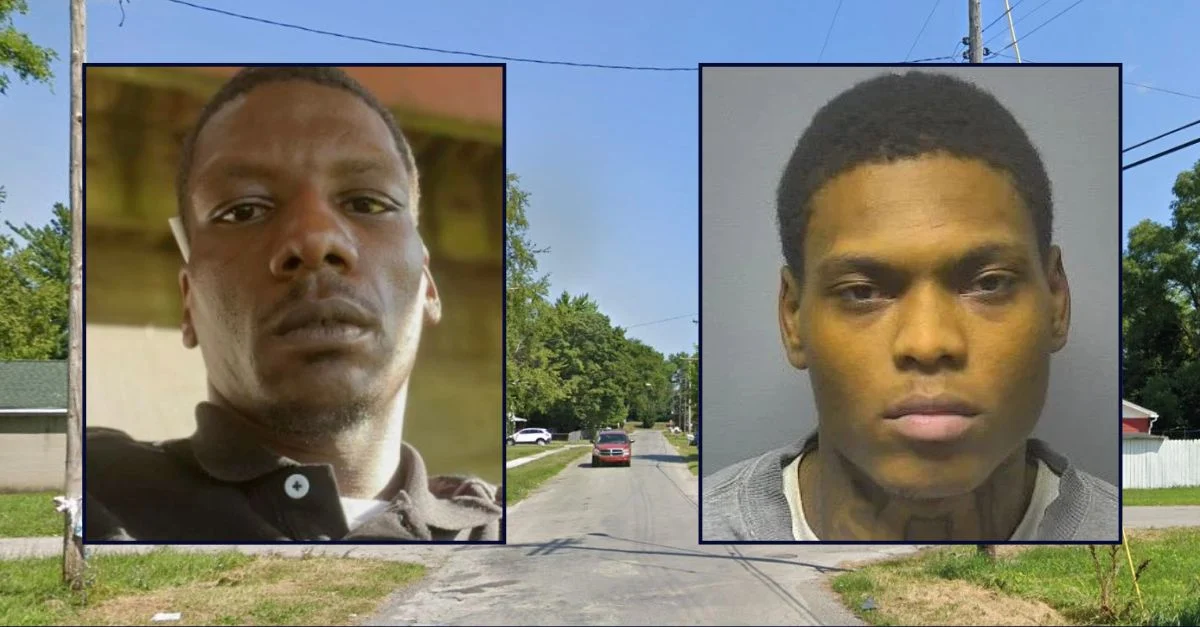
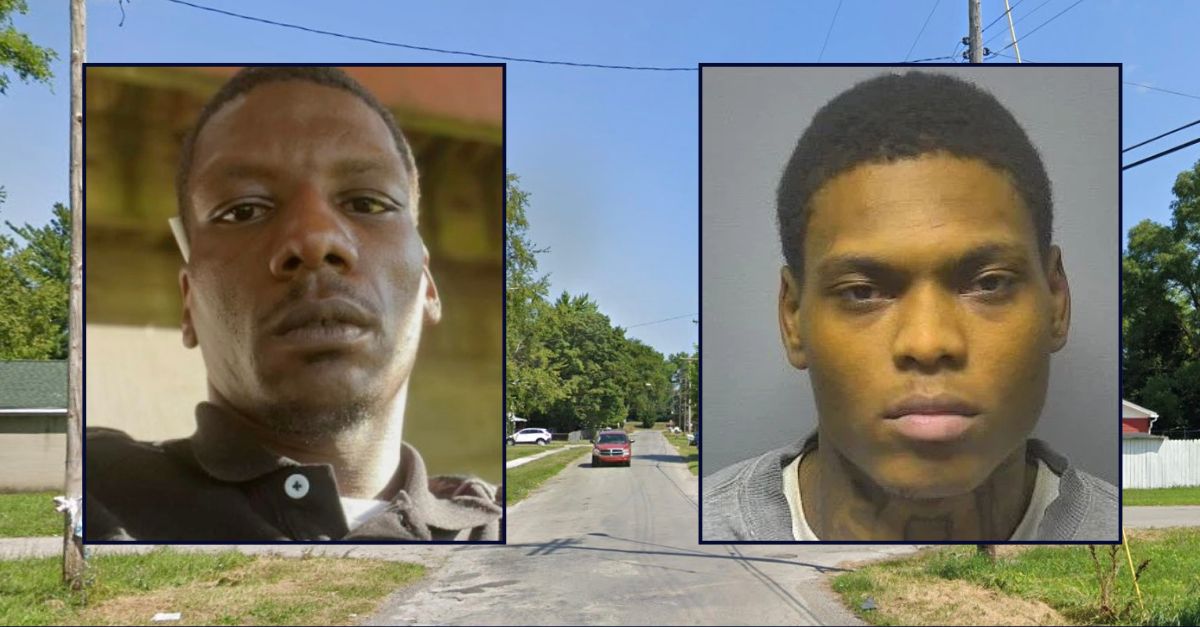
Saginaw, Michigan – Zakeem F. Jones, an Indiana man convicted of the premeditated, execution-style murder of 33-year-old Devon L. Williams inside a Buena Vista Township home where Williams was babysitting, has been ordered to spend the remainder of his life incarcerated without the possibility of parole. The severe sentence, handed down by Saginaw County Circuit Judge Andre R. Borrello on Wednesday, March 13, 2026, marks the culmination of a harrowing legal process stemming from the brutal killing in March 2023, a crime prosecutors argued was a calculated act of jealousy designed to "obliterate the competition."
The Verdict and Sentencing Details
The judicial pronouncement came nearly two months after a Saginaw County jury delivered a guilty verdict against Jones in January 2026. He was found responsible for first-degree premeditated murder, Michigan’s most serious homicide charge, along with multiple firearm-related felonies. Under Michigan law, a conviction for first-degree premeditated murder carries a mandatory sentence of life imprisonment without the possibility of parole, reflecting the state’s stringent stance on crimes deemed to be carried out with prior intent and deliberation. In addition to the life sentence, Judge Borrello imposed three consecutive two-year sentences for the firearm offenses, underscoring the gravity of using a weapon in the commission of such a violent crime. Jones was also ordered to pay a fine totaling $1,218. The courtroom, filled with the palpable tension of years of anticipation, experienced a moment of release as applause erupted from the gallery following the judge’s decision, before order was swiftly restored.
Defendant’s Demeanor and Victim Family’s Outcry
During the sentencing hearing, Jones exhibited a striking lack of emotion, a demeanor that further inflamed the grief and anger of Williams’ family. When offered the opportunity to address the court, Jones’s response was chillingly detached. "I’m cool, man," he reportedly stated, adding, "It is what it is." This casual dismissal of the profound consequences of his actions drew immediate and sharp criticism. Shontele Lockett, Devon Williams’ mother, appeared via Zoom to deliver an impassioned plea to the court, advocating for the harshest possible punishment. Her testimony painted a picture of a senseless act of violence against an innocent man. "He needs to get as much time as is permitted," Lockett urged, her voice heavy with sorrow and indignation. "He doesn’t show any remorse for anything that he did. He didn’t know the person he killed. He just chose to kill somebody and make jokes about it." Her words underscored the family’s profound suffering and their desperate need for justice to be served unequivocally. The stark contrast between Jones’s apparent indifference and the family’s raw anguish highlighted the deep chasm that often exists between perpetrators and victims in such tragic cases.
Unraveling the Crime: A Jealousy-Fueled Plot
The tragic events leading to Devon Williams’ death began to unfold on March 29, 2023, rooted in a toxic mix of jealousy and past relationships. Zakeem F. Jones and his then-fiancée, Markeisha R. Burns-Cross, had traveled from their home in Indiana to mid-Michigan to attend a family event. Unknown to Jones, or perhaps a source of simmering resentment, Burns-Cross shared a child with the victim, Devon L. Williams, and the two had a romantic history. The evening of March 29 saw Jones and Burns-Cross consuming alcohol in Bay City, a prelude to the explosive argument that would ignite the night’s deadly trajectory. Testimony from Burns-Cross revealed that the dispute began over Jones allegedly speaking to other women, sparking her anger. In response, Burns-Cross began texting Williams, and the two made plans to meet, a seemingly innocuous act that would soon become a catalyst for murder.
The situation escalated dramatically when Jones, fueled by alcohol and suspicion, accessed Burns-Cross’s phone. There, he discovered the messages between her and Williams. Enraged by what he perceived as a betrayal and a threat to his relationship, Jones’s jealousy transformed into a murderous intent. He forcefully ordered Burns-Cross to contact Williams again, this time to direct him to meet them, effectively luring Williams into a deadly trap. The couple then drove to Williams’ duplex located in Buena Vista Township, setting the stage for the premeditated ambush.
The Fatal Encounter in Buena Vista Township
Upon arriving at Williams’ residence, the scene quickly became a nightmare. Williams was inside, innocently babysitting children, unaware of the deadly confrontation awaiting him. Outside the duplex, Jones armed himself with a 9mm handgun, his intent now clear. He demanded that Burns-Cross get Williams to come out of the house. When Williams did not emerge, Jones, driven by his consuming rage, followed his girlfriend inside the home.
The prosecution’s narrative during the trial painted a chilling picture of the moments leading up to the shooting. Williams was seated at a table when he suddenly realized Jones had entered his home. A prosecutor vividly described the shift in Williams’ facial expression: "[Williams] looks up and all of a sudden his facial expression changes. He sees Zakeem in that moment." The realization of imminent danger prompted Williams to attempt an escape, but the front door, his only immediate path to safety, was locked. "There’s no escape," the prosecutor emphasized, highlighting Williams’ helpless situation.
Burns-Cross’s testimony provided a harrowing account of the shooting itself. She recalled hearing "pop, pop, pop" and feeling the heat from the muzzle flashes as Jones fired his weapon multiple times. Williams was struck by several bullets, collapsing to the floor. Investigators later recovered numerous shell casings and bullet fragments from the scene, providing irrefutable physical evidence of the brutal assault. Williams was found on the floor, struggling to breathe, and despite efforts to save him, he succumbed to his injuries later at a hospital. The prosecution eloquently summarized the victim’s plight: "Devon Williams was unarmed in his own home and had no idea what was coming. He lost a battle he didn’t know he was fighting… in a cold-blooded, premeditated ambush." This statement underscored the defenselessness of Williams and the calculated nature of Jones’s attack.
The Aftermath and Pursuit of Justice
Immediately after the shooting, Jones and Burns-Cross fled the scene of the crime. They returned to Indiana the following day, attempting to escape the consequences of Jones’s violent act. For over a year, Jones remained at large, evading justice for the murder of Devon Williams. The extensive manhunt eventually led authorities to him in September 2024. Jones was taken into custody not for Williams’ murder initially, but as he was being released from prison in Illinois on an unrelated case. This serendipitous timing allowed law enforcement to finally apprehend him. Following his arrest, Jones was extradited to Michigan to face the murder charges, bringing him back to the jurisdiction where his heinous crime was committed. The period of over a year between the crime and Jones’s apprehension undoubtedly added to the agony and uncertainty for Williams’ family, highlighting the often protracted and complex nature of criminal investigations and inter-state cooperation in apprehending fugitives.
The Legal Journey: Trial and Conviction
The trial that led to Zakeem Jones’s conviction was a critical phase in the pursuit of justice. Prosecutors meticulously presented their case, building a narrative around Jones’s intense jealousy and the premeditated nature of the killing. Central to the prosecution’s strategy was the testimony of Markeisha R. Burns-Cross, Jones’s then-fiancée, who was present during the entire horrific sequence of events. Her testimony provided crucial eyewitness accounts of the argument, the discovery of the text messages, Jones’s demand to lure Williams, his arming himself, and the actual shooting. Burns-Cross reportedly testified against Jones without a plea deal in place, a decision that could carry significant weight in her own pending legal battles. The prosecution also relied on forensic evidence, including the recovered shell casings and bullet fragments, as well as the detailed account of Williams’ attempt to flee, all of which corroborated the narrative of a cold-blooded ambush. The jury, after hearing weeks of testimony and reviewing presented evidence, ultimately found Jones guilty of first-degree premeditated murder, affirming the prosecution’s argument that the act was not one of passion but of calculated intent.
The Role of Markeisha Burns-Cross and Pending Charges
Markeisha R. Burns-Cross’s involvement in the events of March 29, 2023, has placed her in a precarious legal position. She is currently facing five criminal charges, including first-degree murder, for her alleged role in the incident. While she testified against Zakeem Jones, her decision to do so without a formal plea agreement in place raises complex questions about her legal strategy and potential outcomes. In Michigan, individuals who are found to have participated in a felony that results in a death, even if they did not directly commit the murder, can be charged under the felony murder rule. Her alleged actions of luring Williams to his home and being present during the crime could be construed as aiding and abetting, or as part of a larger criminal enterprise, depending on the specific legal interpretations and evidence presented against her. Burns-Cross is currently scheduled to appear in court on April 15, 2026, for a settlement conference, an indication that her legal team may be exploring options for a resolution, potentially a plea agreement, or preparing for her own trial. Her case remains a significant component of the broader legal fallout from Devon Williams’ murder, highlighting the intricate web of culpability that can arise in such violent crimes.
Broader Context: Domestic Violence, Jealousy, and Premeditated Murder
The murder of Devon L. Williams serves as a stark reminder of the devastating consequences that can arise from unchecked jealousy and domestic disputes. While Williams was not directly involved in a relationship with Jones, his prior connection to Burns-Cross placed him tragically in the crosshairs of Jones’s violent rage. Crimes fueled by jealousy, particularly those escalating to premeditated murder, underscore a deeper societal issue concerning emotional regulation, control, and the perception of relationships as possessions.
Michigan’s legal framework for first-degree premeditated murder requires prosecutors to prove that the defendant formed the intent to kill, however brief that period of deliberation might have been, before committing the act. This legal standard distinguishes it from second-degree murder, which involves an intent to kill but without the element of premeditation, or manslaughter, which typically involves a crime committed in the heat of passion. The jury’s finding of premeditation in Jones’s case signifies their belief that he had time to think about his actions and still chose to proceed with the killing, reinforcing the severity of the life-without-parole sentence.
Such incidents also highlight the silent victims often caught in the crossfire of domestic conflicts, as Devon Williams was, who had no direct involvement in the immediate argument but paid the ultimate price. The ripple effects of such violence extend far beyond the immediate victim and perpetrator, impacting families, communities, and the broader sense of safety and security.
Implications for the Community and Justice System
The sentencing of Zakeem F. Jones to life without parole brings a measure of closure to the family and loved ones of Devon L. Williams, albeit one tinged with the enduring pain of their loss. The swift and decisive action of the Saginaw County justice system, from the jury’s conviction to the judge’s mandatory sentence, sends a clear message about the unwavering commitment to holding individuals accountable for premeditated acts of violence. It reaffirms the principle that such heinous crimes will be met with the full force of the law, ensuring that those who commit them are removed from society permanently.
For the Saginaw County community, the conclusion of this high-profile case may offer a sense of restored order and justice. While the underlying issues of jealousy and violence may persist in society, the judicial outcome demonstrates that premeditated murder, especially when carried out in such a cold and calculated manner, will not be tolerated. The meticulous investigation, the diligent prosecution, and the jury’s verdict, followed by the mandatory sentence, collectively reinforce public trust in the legal system’s ability to deliver justice even in the face of profound tragedy. The legacy of Devon L. Williams will now forever be tied to the pursuit of justice that ultimately brought his killer to account, serving as a solemn reminder of a life senselessly cut short by another’s rage.




 Yuyun Lusiyani
 Joko Widodo
 Jia Lissa
 Pevita Pearce
 admin
admin
