
 Pevita Pearce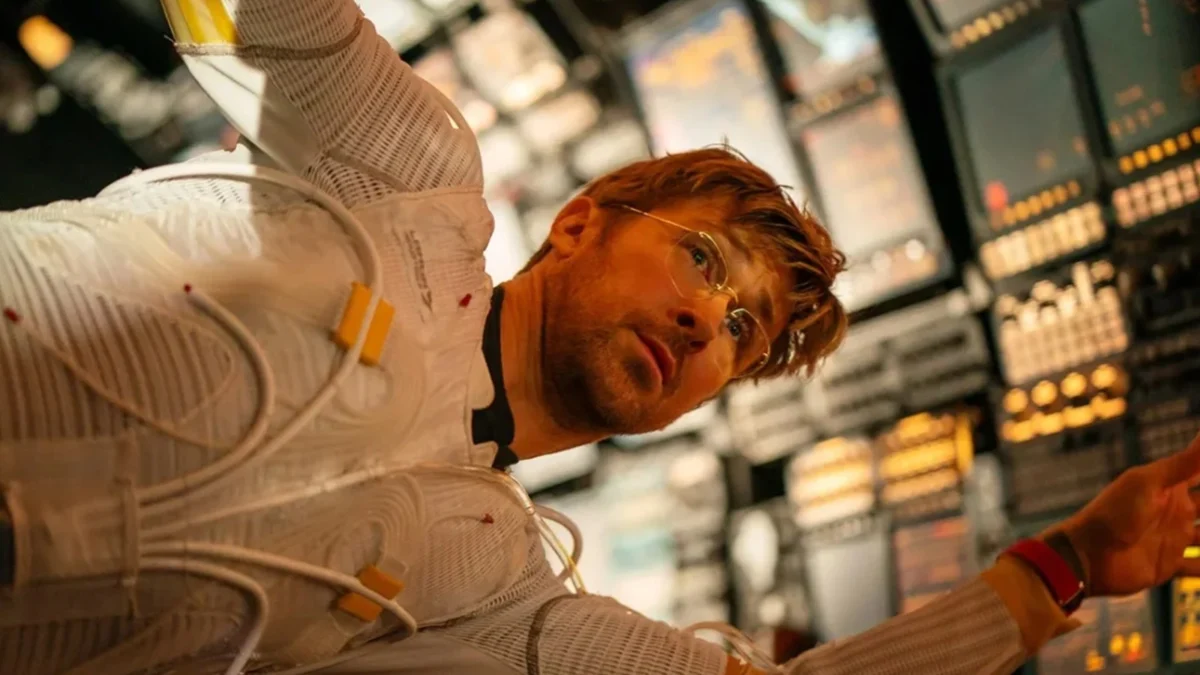
Sony Pictures’ latest cinematic endeavor, Project Hail Mary, has solidified its position as a global cultural phenomenon, dominating the international box office and redefining the potential for high-concept science fiction in the mid-2020s. The film, an adaptation of Andy Weir’s best-selling novel of the same name, enjoyed a record-breaking opening weekend, securing a staggering $140 million in worldwide earnings. This figure marks the most successful debut of the 2026 calendar year to date and represents one of the highest-grossing launches for a non-franchise, standalone property in cinematic history. Directed by the visionary duo Phil Lord and Chris Miller, the production has garnered universal acclaim for its technical precision, narrative depth, and a central performance by Ryan Gosling that critics are already hailing as a career-defining turn.
A Landmark Debut for Original Science Fiction
The commercial success of Project Hail Mary comes at a critical juncture for the film industry, which has seen a heavy reliance on established intellectual properties and long-running franchises. Earning $140 million in its first three days, the film outperformed industry projections by nearly 20%, driven by strong domestic ticket sales and a massive surge in international markets, particularly in Europe and East Asia. The film’s performance is particularly notable given its grounded, scientifically dense source material, suggesting a growing audience appetite for sophisticated "hard" science fiction.
Critical reception has been equally robust. Industry analysts and film critics have awarded the production top honors, frequently comparing it to modern classics such as The Martian and Interstellar. Reviewers have noted that the film successfully synthesizes the problem-solving optimism of Weir’s previous work with the existential grandeur and emotional resonance of Christopher Nolan’s space epics. The narrative follows Ryland Grace, a schoolteacher-turned-astronaut who wakes up on a spacecraft with no memory of his identity or his mission, only to discover that he is humanity’s last hope for survival. This high-stakes premise, anchored by Gosling’s performance, has resonated deeply with audiences, leading to high "CinemaScore" ratings and positive word-of-mouth.
The Psychological Demands of the Solo Shoot
While the film appears seamless on the silver screen, the production process presented significant psychological and physical challenges for its lead actor. Ryan Gosling, who portrays Ryland Grace, spent a substantial portion of the 100-plus-day shoot performing in isolation. Given the narrative’s focus on a solitary survivor in deep space, Gosling was often the only human actor on set for weeks at a time, working against green screens and complex mechanical rigs designed to simulate zero gravity.
The mental toll of portraying such profound isolation led to a unique and widely discussed anecdote from the set involving a makeshift companion. Gosling revealed in a recent interview with IMDb that the directors, Phil Lord and Chris Miller, encouraged a highly collaborative and improvisational environment to help him cope with the rigors of the "solo" performance. Gosling recounted a specific moment where the loneliness of the character began to mirror his own experience on the soundstage.

"There was a scene where I had been working for maybe 100 days alone, and I was just needing company," Gosling stated. "I said to Phil and Chris, ‘I want to make a friend out of a mop, and I want to do the scenes today with this mop friend.’" Rather than dismissing the request as a whim, the directors embraced the idea as a legitimate extension of the character’s deteriorating mental state and the need for levity.
The Creation of Moppy Ringwald
The directors’ response to Gosling’s request highlights the unconventional and supportive atmosphere they fostered on set. Lord and Miller personally sourced materials from the production’s custodial and art departments to construct the "friend" Gosling requested. The result was a character dubbed "Moppy Ringwald," a play on the name of the iconic actress Molly Ringwald.
According to Gosling, the directors did not merely provide a prop; they integrated the object into the day’s creative process. "They were like on it. They both got materials and they made this mop for me… we danced!" Gosling noted, emphasizing that many filmmakers would have been hesitant to pause a high-budget production for such an eccentricity. This willingness to explore the "direction the scene is taking" allowed Gosling to tap into a more authentic sense of cabin fever and companionship, which ultimately enriched the character of Ryland Grace.
The anecdote has become a point of fascination for fans and film historians, illustrating the "Lord and Miller" style of filmmaking. Known for their work on The LEGO Movie and the 21 Jump Street series, the duo is recognized for balancing high-concept storytelling with a playful, humanistic approach. Their ability to pivot from the technical demands of a $200 million space epic to "dancing with a mop" is credited as a primary reason for the film’s unique tone.
Technical Milestones and Rule-Breaking Narrative
Project Hail Mary has also been praised for its adherence to—and occasional subversion of—cinematic conventions. One of the most discussed aspects of the film is its willingness to "break major Hollywood rules," particularly regarding the pacing of scientific discovery and the introduction of non-human characters. Unlike many contemporary blockbusters that prioritize action sequences, Project Hail Mary devotes significant screen time to the process of scientific inquiry, mathematics, and linguistics.
The film’s ending has also sparked intense discussion among audiences. Without venturing into spoilers, the finale is described as an "emotionally charged" departure from standard disaster-movie tropes, focusing on sacrifice and cross-species cooperation rather than simple survival. This narrative bravery, coupled with the film’s visual fidelity, has positioned it as a frontrunner for upcoming technical awards, particularly in the realms of visual effects and sound design.

Industry Implications and the Future of the Genre
The success of Project Hail Mary is expected to have a lasting impact on how studios approach high-budget adaptations of literature. Sony Pictures’ decision to invest heavily in a project that relies so heavily on a single actor’s performance and complex scientific themes has been validated by the box office returns. Analysts suggest that this could lead to a "greenlight" for more cerebral science fiction projects that have previously been deemed too risky for mainstream audiences.
Furthermore, the film’s success reinforces Ryan Gosling’s status as one of the few remaining "bankable" stars capable of carrying a massive production on his shoulders. His ability to move from the comedic heights of Barbie (2023) to the intense, isolated drama of Project Hail Mary demonstrates a versatility that few of his contemporaries can match.
As the film continues its theatrical run, rumors of potential sequels or spin-offs have already begun to circulate, despite the self-contained nature of the original story. While the source novel does not have a sequel, the immense popularity of the "Moppy Ringwald" story and the chemistry between Gosling and the directors have led to lighthearted speculation about future collaborations.
Conclusion: A Triumph of Vision and Collaboration
Project Hail Mary stands as a testament to what can be achieved when a studio trusts creative directors and a committed lead actor to bring a complex vision to life. By blending the isolation of a space odyssey with the warmth of human (and mop-based) connection, Lord, Miller, and Gosling have created a film that is as much about the human spirit as it is about the stars.
As the 2026 box office continues to evolve, Project Hail Mary remains the benchmark for success. Whether it is through the meticulous rendering of alien environments or the simple, improvised dance with a mop, the film captures a sense of wonder that has long been the hallmark of the greatest science fiction. For now, audiences remain captivated by Ryland Grace’s journey, and the industry watches closely to see how this "spectacular space adventure" will influence the trajectory of cinema for years to come.




 Yuyun Lusiyani
 Joko Widodo
 Eva Lovia
 admin
admin
 Lina Irawan