
 Ana Megawati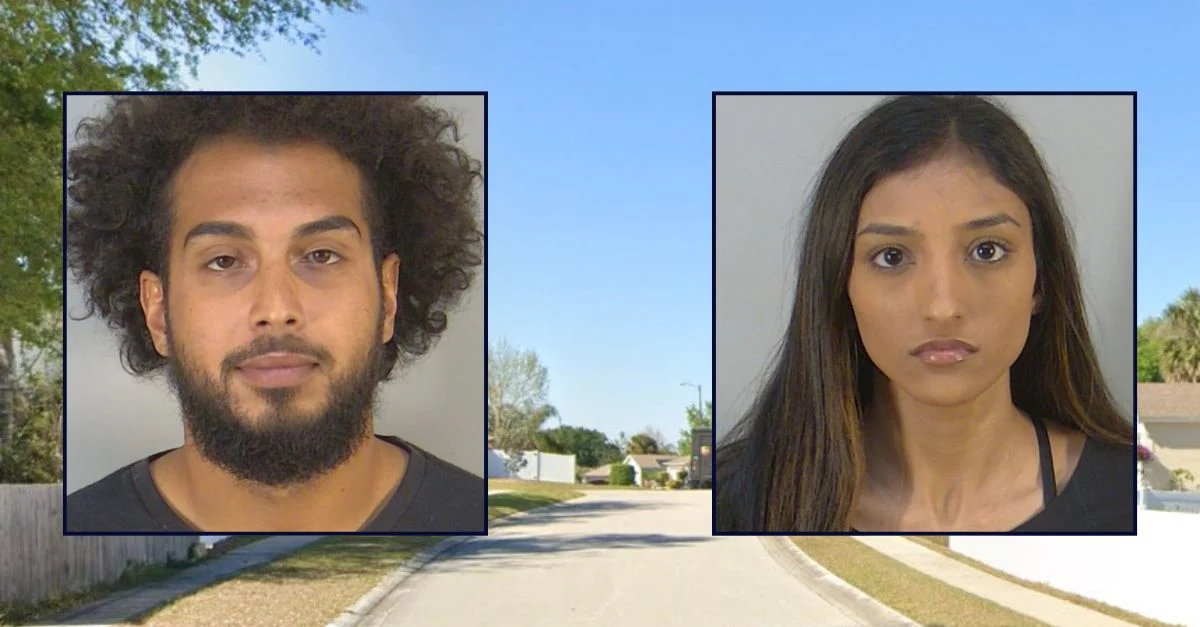
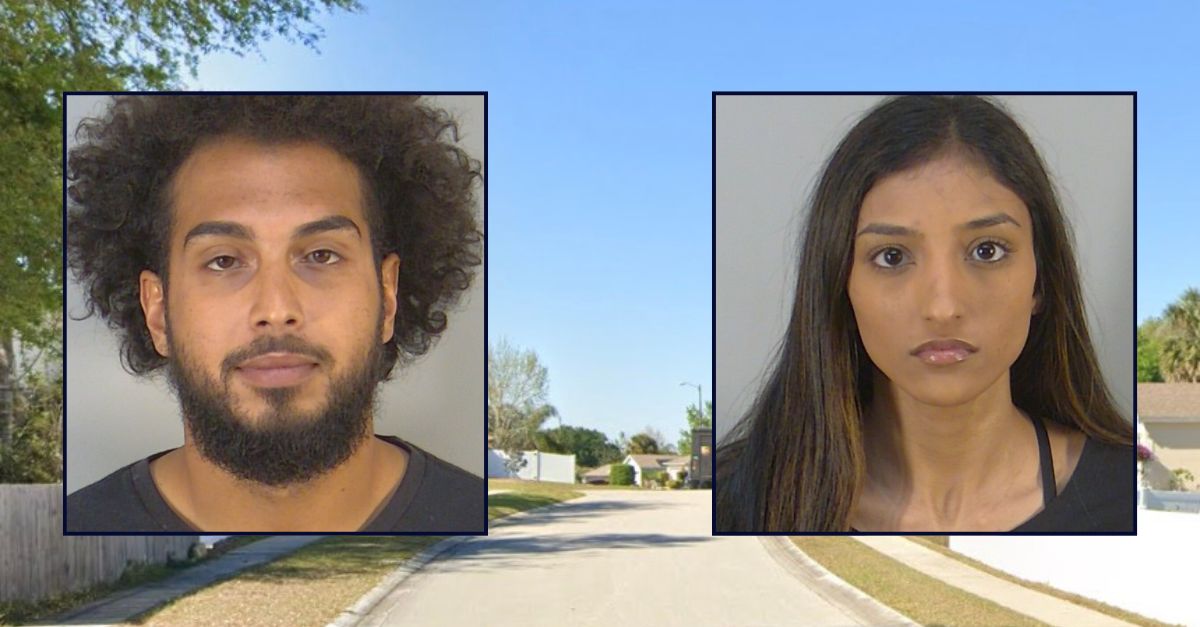
A Florida man, Brandon Pirela, 26, has been sentenced to 25 years in state prison for orchestrating a calculated ambush and firing more than a dozen shots at his girlfriend’s male friend, an attack carried out with the active participation of his girlfriend, Selina Gajraj. The violent incident occurred less than two days after Pirela and Gajraj had reconciled following a monthslong separation, highlighting a volatile relationship dynamic that culminated in a near-fatal shooting.
Lake County Circuit Judge Cary F. Rada delivered the stringent sentence on Monday, following a jury’s conviction of Pirela on charges of attempted first-degree murder with a firearm and conspiracy to commit murder. Authorities, through a news release from the Office of the State Attorney for Florida’s Fifth Judicial Circuit, announced the outcome, underscoring the severity of the premeditated attack. The victim, whose identity has been withheld for his protection, narrowly escaped the barrage of gunfire in December 2023, a testament to both his quick thinking and a measure of sheer luck amidst a hail of bullets. Prosecutors meticulously detailed how Pirela, in concert with Gajraj, meticulously planned the ambush, luring the unsuspecting victim to a specific, secluded location under false pretenses.
The Chilling Plot Unveiled: A Reconciliation Turned Conspiracy
The investigation into the December 2023 shooting painted a grim picture of premeditation and betrayal. According to court documents and testimony, the plot began to coalesce shortly after Pirela and Gajraj rekindled their relationship. What initially appeared to be a reconciliation between former lovers quickly devolved into a dangerous conspiracy to harm Gajraj’s male friend. This individual had seemingly been a confidant to Gajraj during her breakup with Pirela, a relationship that apparently fueled Pirela’s jealousy and animosity.
Investigators revealed that the plan evolved over several hours, primarily communicated through a text messaging application. Gajraj, initially denying any involvement, was later proven by cellphone records to have been in constant communication with Pirela, discussing strategies to ensnare the victim. The messages chillingly detailed Gajraj’s suggestion of a setup: she would meet the victim, share her live location with Pirela, and strategically position the victim’s vehicle to facilitate the ambush. The conspirators discussed various scenarios, with Pirela explicitly stating his murderous intent, writing messages such as, "no, he’s dying." The final, critical message sharing the victim’s precise location was sent approximately 12 minutes before the gunfire erupted, providing a clear timeline of the calculated aggression.
The Ambush: A Hail of Bullets on Peppermill Trail
The night of the shooting, the victim had picked up Gajraj, ostensibly to talk and smoke marijuana while discussing issues related to Pirela, who had recently reentered her life. The victim later recounted growing increasingly uneasy during their conversation, particularly after Gajraj received a call from Pirela inquiring about her whereabouts. This call, unbeknownst to the victim, was a critical signal in the execution of the ambush.
Moments later, a white Toyota Camry, driven by Pirela and distinguished by its dark tinted windows, pulled directly in front of the victim’s parked vehicle on Peppermill Trail in Clermont. The driver, clad in dark clothing and a mask, immediately exited the Camry and began firing multiple rounds from a handgun equipped with an extended magazine. The victim, recognizing the shooter’s build and believing it to be Pirela – whom he had previously seen in photographs holding a similar weapon – reacted instinctively. He threw his car into reverse, accelerating away from the scene as gunfire continued to rain down.
Deputies with the Lake County Sheriff’s Office, responding to the 911 call around 1:53 a.m., discovered a scene indicative of extreme violence. Forensic teams recovered 21 spent 9mm shell casings scattered across the roadway, underscoring the intensity and volume of the gunfire. Further examination revealed 13 distinct bullet strikes to the victim’s vehicle, along with collateral damage to a nearby work truck and a mailbox, illustrating the sheer force and indiscriminate nature of the attack. The victim, remarkably, managed to escape with his life, dropping Gajraj off nearby before contacting family members and subsequently meeting officers at the Clermont Police Department to report the harrowing incident.
The Unraveling of a Deceptive Plot: Digital Footprints and Critical Evidence
The initial stages of the investigation were met with Gajraj’s denials of involvement. However, the meticulous work of law enforcement, leveraging modern forensic tools and digital evidence, quickly dismantled her fabricated narrative. Cellphone records proved to be the linchpin of the prosecution’s case. The volume and content of communications between Gajraj and Pirela, discussing the plot and sharing the victim’s location, directly contradicted her claims and provided irrefutable evidence of her complicity.
Beyond the digital evidence, the victim’s testimony played a crucial role. He informed deputies that Pirela had been sending him increasingly hostile and threatening messages in the weeks leading up to the shooting. In one particularly chilling exchange provided to investigators, Pirela allegedly wrote, "Do I have to smack the s*** outta you?" and issued a stark warning, "On God when I see you, it’s on sight." These threats established a clear pattern of escalating hostility and provided a motive for the attempted murder. The victim’s ability to identify Pirela, despite the mask, based on his build and prior knowledge of Pirela owning a similar firearm, further solidified the case.
The Judicial Process: Accountability and Consequences
The legal proceedings for Brandon Pirela culminated in a jury trial, where prosecutors presented a compelling body of evidence linking him directly to the attempted murder. The charges of attempted first-degree murder with a firearm and conspiracy to commit murder carry significant penalties under Florida law, particularly given the use of a firearm, which often triggers mandatory minimum sentencing guidelines. The jury, after careful deliberation, found Pirela guilty on both counts, validating the prosecution’s assertion of his culpability.
Judge Rada’s sentence of 25 years in a state correctional facility reflects the grave nature of Pirela’s crimes. In Florida, attempted first-degree murder involving a firearm often falls under the state’s "10-20-Life" statute, which mandates progressively longer minimum sentences for possessing, discharging, or injuring someone with a firearm during certain felonies. While the specific application of this statute wasn’t explicitly detailed in the provided information, a 25-year sentence aligns with the serious implications of using a firearm in a premeditated act of violence. This sentence sends a clear message about the judicial system’s zero-tolerance stance on such egregious acts.
Selina Gajraj, Pirela’s co-defendant and accomplice, faced her own legal reckoning. After initially attempting to evade accountability, she ultimately cooperated with the state and testified against Pirela at trial. Her cooperation, a strategic decision likely made in exchange for a more lenient sentence, resulted in a plea agreement. Gajraj previously pleaded guilty to her role in orchestrating the attack and received a three-year prison sentence, to be followed by six years of probation. This disparity in sentencing highlights the legal distinction between the primary actor in a violent crime and an accomplice, even one critical to the plot’s execution, though both bear significant responsibility.
Broader Implications: Community Safety and Digital Forensics
The Lake County ambush serves as a stark reminder of the potential for interpersonal conflicts to escalate into extreme violence, particularly when fueled by jealousy, resentment, and the accessibility of firearms. The premeditated nature of the attack, meticulously planned and executed with cold calculation, underscores the grave threat such individuals pose to public safety.
The outcome of this case also emphasizes the critical role of modern digital forensics in contemporary criminal investigations. Without the cellphone records detailing the communications between Pirela and Gajraj, the full extent of the conspiracy might have been more challenging to prove. Law enforcement agencies increasingly rely on digital footprints – text messages, call logs, social media interactions, and location data – to reconstruct events, establish motives, and secure convictions in complex cases. This incident highlights how personal devices, often seen as private, can become indispensable tools for justice when used for illicit planning.
Officials from the State Attorney’s Office for Florida’s Fifth Judicial Circuit, while not issuing direct quotes in the provided information, would likely emphasize their commitment to prosecuting violent crimes to the fullest extent of the law. Such a successful prosecution sends a deterrent message to others contemplating similar acts. The Lake County Sheriff’s Office would similarly underscore the diligence and professionalism of their deputies and investigators in bringing justice to the victim and ensuring the safety of the community.
The victim in this case, having survived a near-fatal ambush, will undoubtedly carry the trauma of the experience. While the legal system has delivered a measure of justice, the psychological and emotional scars from such an event can be profound and long-lasting. The case serves as a cautionary tale about the dangers of volatile relationships and the severe, life-altering consequences for all parties involved when personal disputes devolve into criminal violence. The 25-year sentence for Brandon Pirela represents a significant period of incarceration, reflecting society’s condemnation of premeditated violence and its commitment to protecting its citizens from such calculated acts of aggression.

 Yuyun Lusiyani
 Joko Widodo
 Jia Lissa
 Pevita Pearce
 admin
admin
